Auction: 26002 - Orders, Decorations and Medals
Lot: 234
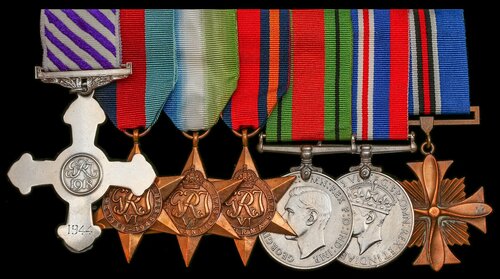
A rare Second World War immediate D.F.C. group of seven awarded to Flight Lieutenant T. O'Gorman, Royal Air Force Volunteer Reserve, who was decorated for his services in Air Sea Rescue operations in Hudsons of No. 279 Squadron
Thanks to his notable navigational skills, at least two downed Flying Fortress crews were plucked to safety, happy outcomes that led to him also being awarded the American D.F.C.
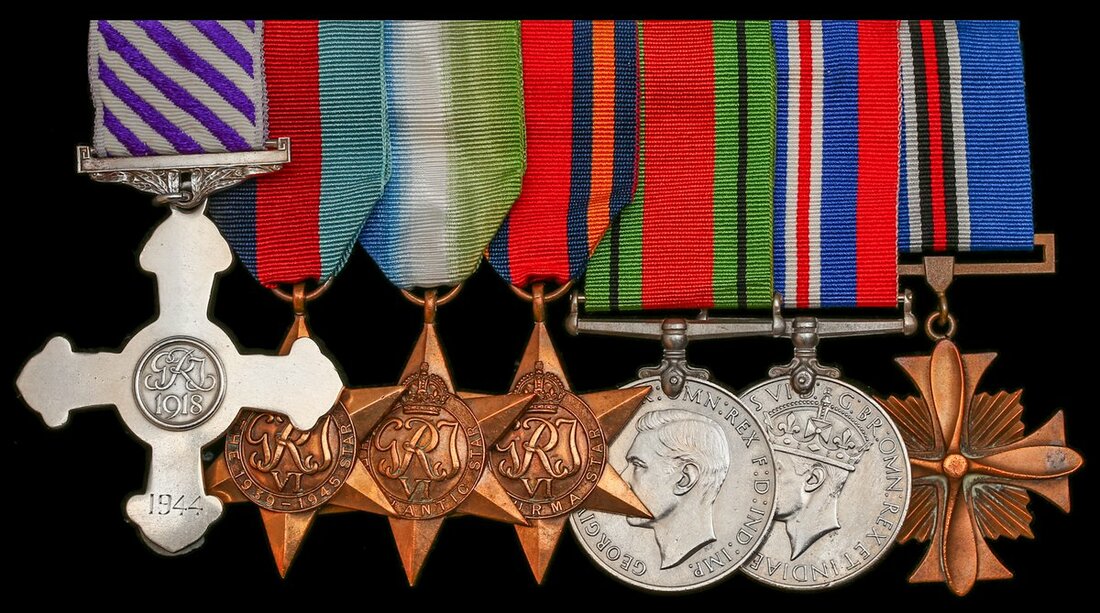
Distinguished Flying Cross, G.VI.R., reverse officially dated '1944'; 1939-1945 Star; Atlantic Star; Burma Star; Defence and War Medals 1939-45; United States of America, Distinguished Flying Cross, mounted as worn, generally good very fine (6)
D.F.C. London Gazette 3 October 1944, the original recommendation states:
'Flight Lieutenant O'Gorman joined No. 279 Squadron on 10 December 1942, since when he has proved himself an excellent Navigator. Together with bis captain, Flight Lieutenant Clarke, he has taken part in numerous rescues and several of the sorites he has flown on have been hazardous in the extreme, but by his skilful navigation he has brought the aircraft safely back to base, after fulfilling the special instructions.
This officer was the Navigator of Flight Lieutenant Clark's aircraft which effected the rescue, in most difficult conditions, of an American crew on 22 February 1944. It was due to his excellent navigation that the dingy was "spotted" and he calculated the most efficient delays to be employed with the marine markers which were successfully used to guide the H.S.L. [High Speed Launch] to the dinghy.
This officer's work as Navigator has been invaluable to his Captain and I recommend him for the immediate award of a D.F.C. for outstanding devotion to duty.'
Covering remarks by Station Commander:
'Strongly recommended. Since this citation was written up, Flying Officer O'Gorman was responsible for navigating the aircraft which successfully dropped the lifeboat which saved a complete Fortress crew on 20 May 1944.'
American D.F.C. London Gazette 15 May 1945, the original recommendation states:
'For extraordinary achievement in affecting many air-sea rescues under the most hazardous conditions. On 22 February 1944, Flight Lieutenant O'Gorman, through expert navigation and outstanding airmanship, located a dinghy bearing an American bomber crew and participated in their rescue. His courage and skill reflect highest credit upon himself and the Armed Forces of his country.'
Thomas O'Gorman joined the Royal Air Force Volunteer Reserve in August 1940 and was embarked for Canada in the summer of 1941, where he qualified as an Air Observer Navigator in December 1941, an Air Observer Armament in January 1942 and an Air Observer Astro in March 1942, prior to being commissioned as a Pilot Officer and re-embarked for the U.K.
In December 1942 he was posted to No. 279 Squadron in Coastal Command, an Air-Sea Rescue (A.S.R.) unit at Bircham Newton, equipped with Hudsons. Teaming up with Flying Officer 'Nobby' Clark's crew, he flew his first search and rescue missions in March 1943, sometimes with Mustang or Lightning aircraft escorts.
Between then and June 1944 he completed a protracted tour of 66 sorties, his Flying Log Book revealing some notable trips, not least those that resulted in the rescue of Flying Fortress crews on 22 February 1944 and 20 May 1944, both incidents being cited in his subsequent D.F.C. recommendation. He was also awarded the American D.F.C. - one of some 209 awards to the Air Force - and promoted to Flight Lieutenant.
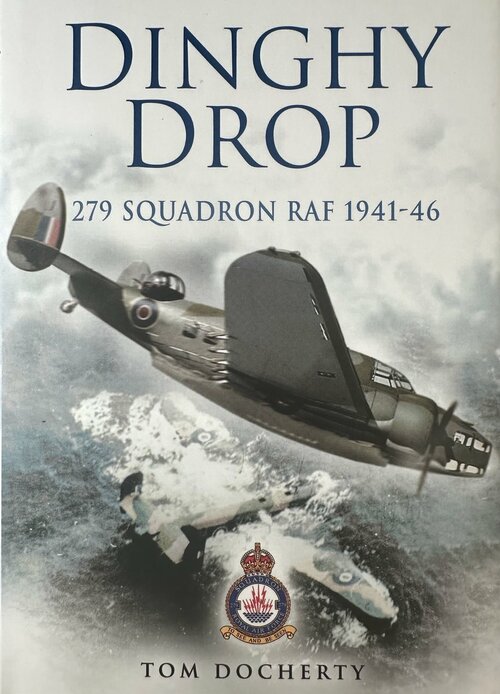
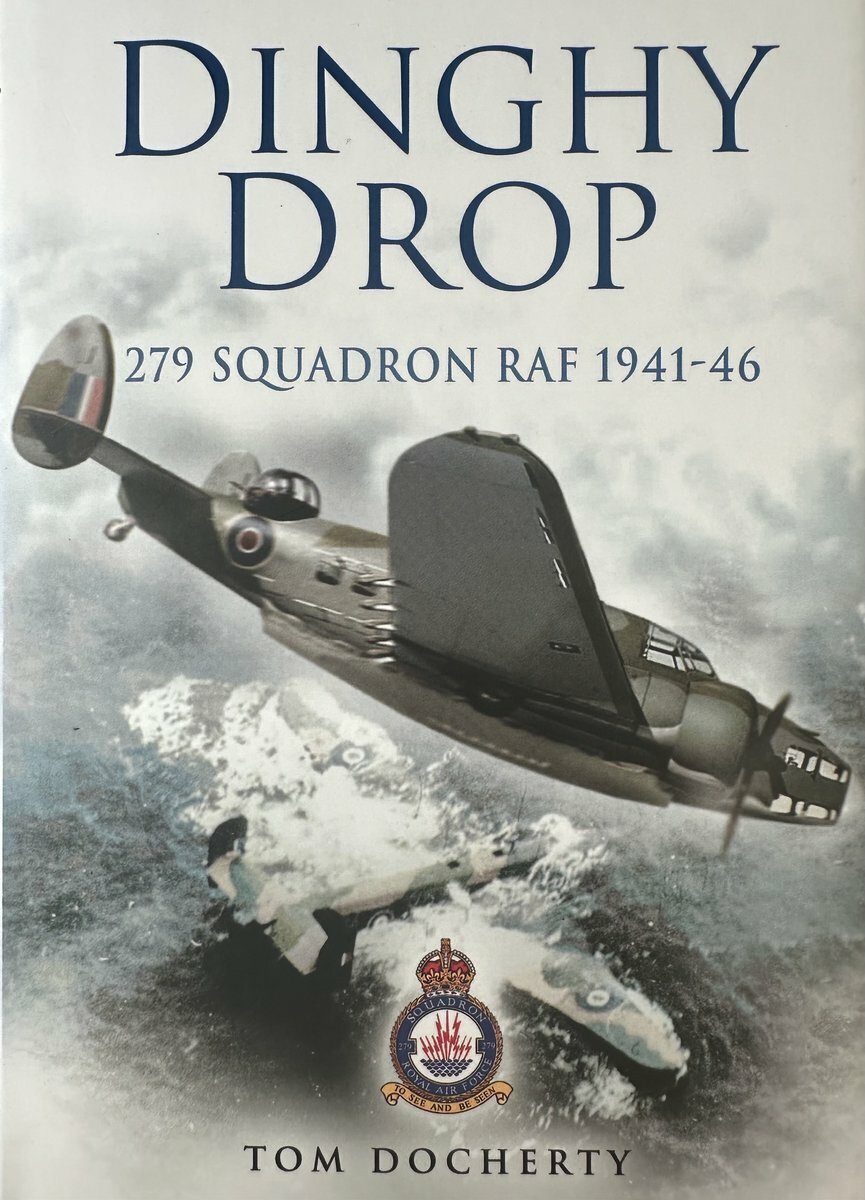
In an earlier sortie on 13 November 1943, Gorman's aircraft suffered a bird strike, an incident described in Tom Docherty's Dinghy Drop - 279 Squadron RAF 1941-46:
'F./O. Clark, piloting the No. 2 Hudson in the formation, hit a seagull on take off, which knocked a large hole in the nose of the Perspex and scattered entrails, feathers and worms all over the cabin. Clark elected to continue and his observer, F./O. O'Gorman, decided to navigate the |Hudson from the aft cabin area. The crew blocked up the hole in the nose as best they could with a cushion, but 'Nobby' Clark reported afterwards that it was '------- cold!'
Reaching the search area the Hudsons commenced their search …'
It turned out to be another successful mission, nine crew of a Flying Fortress being located and then picked up by a rescue launch. Their aircraft had sustained serious damage in a collision over Bremen. Their story - and that of the Fortress crews rescued in February and May 1944 are likewise featured in Tom Docherty's history. The first of them - 'Sugar Blues' piloted by 1st Lieutenant Mariarz - ditched after being attacked by several FW. 190s, and the second - 'Rogers' Rangers' piloted by Lieutenant J. L. Rogers - was ditched after being shot up in a raid on Berlin.
On completion of his tour in No. 279 Squadron, O'Gorman joined No. 111 Operational Training Unit in the Bahamas, in which he instructed in Liberators. But he ended the war back on an operational footing in Liberators of No. 8 Squadron in India and Burma. He was released from the R.A.F.V.R. in February 1946 and later became a member of the Institute of Chartered Accountants in England and Wales.
Sold with the recipient's original Royal Canadian Air Force (R.C.A.F.) Observer's and Air Gunner's Flying Log Book, covering the period September 1941 to October 1945, with inserted Air Ministry Certificate of Release, covers detached owing to loss of spine, contents good.
Also sold with a copy of Tom Docherty's Dinghy Drop - 279 Squadron RAF 1941-46, in which the recipient and his crew receive due recognition.
For the recipient's dress miniatures, please see Lot 279.
Subject to 20% VAT on Buyer’s Premium. For more information please view Terms and Conditions for Buyers.
Estimate
£2,400 to £2,800
Starting price
£1900
Watch, listen and bid as if you were in the room. Now available for auctions worldwide.
Click here to bid live
An exclusive and confidential service for the discerning collector or vendor.
View the Gallery
Download every Spink catalogue on your iPad, iPod or iPhone using free Spink app.
Download From iTunes© 2026 Spink & Son. All rights reserved.