Auction: 26002 - Orders, Decorations and Medals
Lot: 235
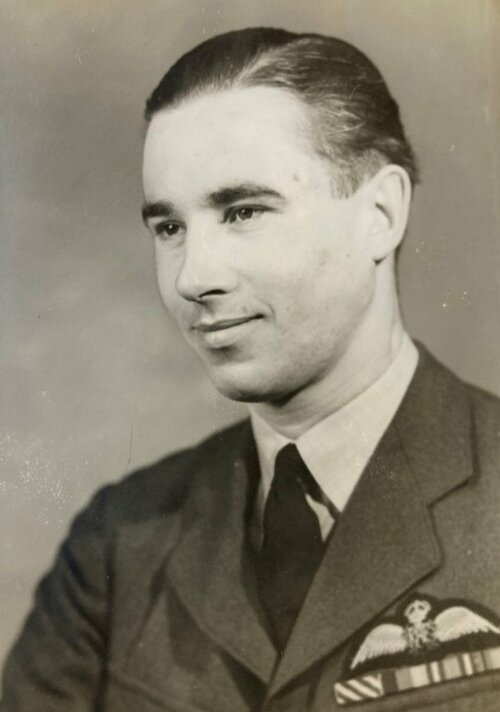
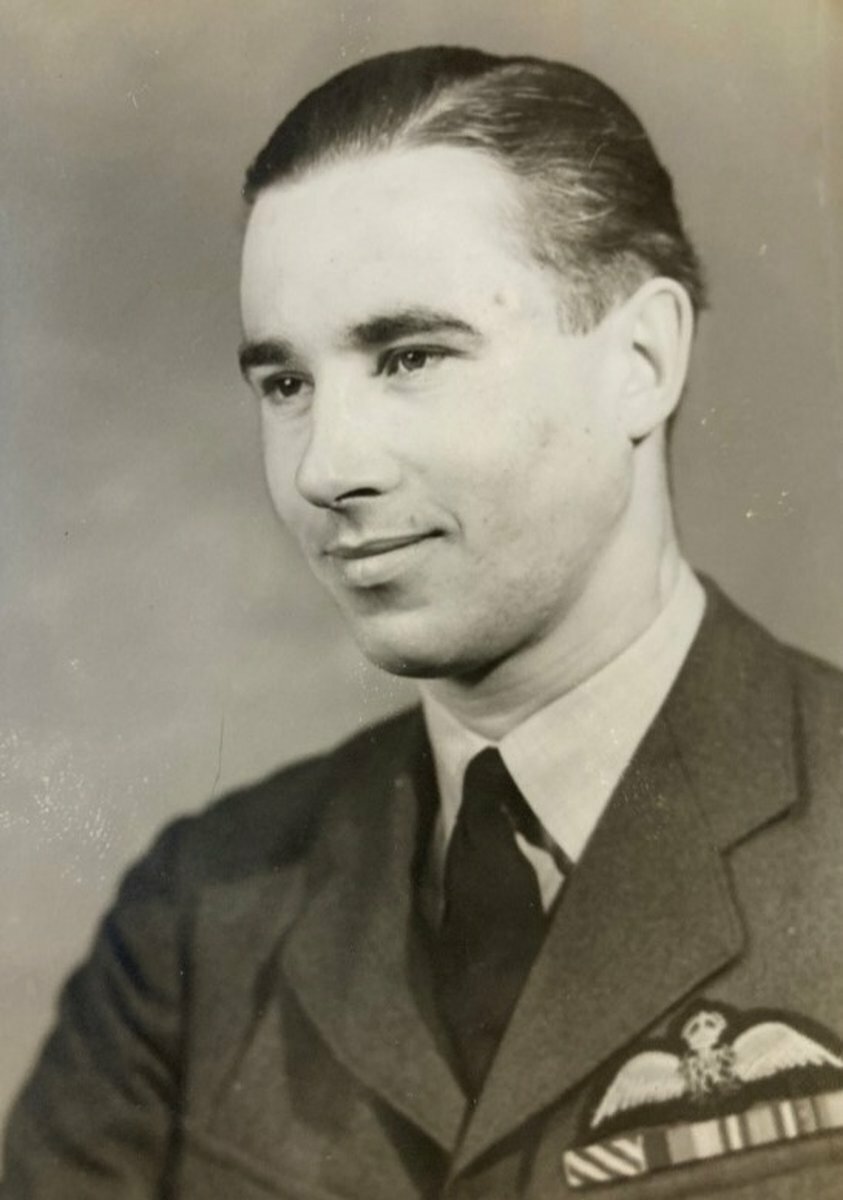
(x) A fine Second World War fighter pilot's Burma operations D.F.C. group of five awarded to Flight Lieutenant C. E. M. B. Hole, Royal Air Force Volunteer Reserve
A veteran of operational tours in Hurricanes and Mohawks of No. 155 Squadron and Spitfires of No. 607 (County of Durham) Squadron, in which he claimed a Japanese Oscar shot down - and several other enemy aircraft as 'probable' or damaged - he otherwise dropped supplies to 'cloak and dagger boys' and undertook numerous strafing sorties
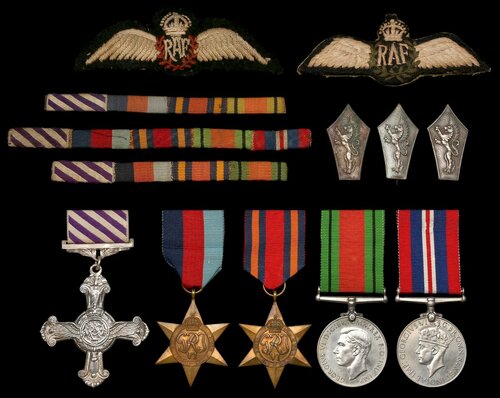
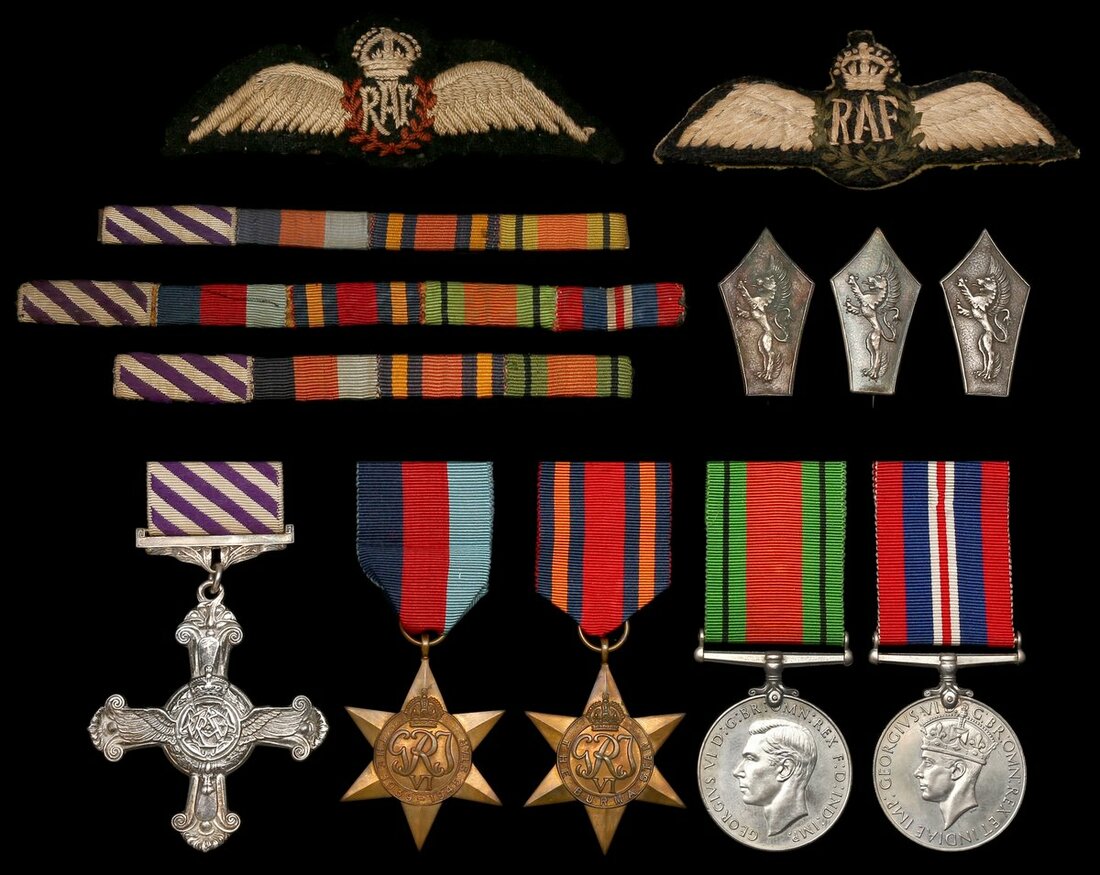
Distinguished Flying Cross, G.VI.R., the reverse officially dated '1945', in its Royal Mint case of issue; 1939-45 Star; Burma Star; Defence and War Medals 1939-45, the campaign medals in card box with ticker tape name label applied to lid, good very fine or better (5)
D.F.C. London Gazette 2 October 1945, the original recommendation states:
'This officer began his operational career in July 1942, with No. 155 Squadron. Flying Mohawks, he carried out a number of patrols and long-range bomber escorts.
In June 1943, he joined No. 607 Squadron, and in the Arakan and later during the siege of Imphal, he was engaged in a number of air combats, destroying one Oscar, sharing one Oscar probably destroyed, and damaging one Sally and four Oscars.
During this time, he also carried out a considerable number of sweeps, escorts, patrols and rhubarbs over mountainous and jungle country and in monsoon conditions.
In January 1945, he rejoined 607 Squadron and since then has successfully carried out a considerable number of sorties during the present campaign. His operational hours now total 306 hours, and his eagerness to engage the enemy, and his keenness to undertake any type of operation, have been outstanding under all circumstances.'
Charles Edwyn Michael Beverley Hole was born on 2 July 1922 and was selected for pilot training on joining the Royal Air Force Volunteer Reserve. Having then qualified for his 'Wings' in November 1941, and attended a conversion course for Hurricanes, he was embarked for India where he joined No. 155 Squadron in April 1942.
A protracted period of operational training flights ensued, the whole under the watchful eye of Squadron Leader D. W. A. 'Dimsie' Stones, D.F.C., who had emerged as a fighter ace from numerous combats in France, the Battle of Britain and Malta. Sadly, however, he did not win a run-in with a red-tape-obsessed provost officer in Imphal, the latter taking his case to higher authority and causing Dimsie's removal from command.
Notwithstanding the loss of their inspirational C.O., Hole and his fellow pilots honed their skills on the unit's Hurri-bombers, prior to the arrival of Corsair Mohawks in the late summer of 1942. A flurry of air defence and convoy patrols, and bomber escort missions, ensued.
In June 1943, Hole transferred to No. 607 (County of Durham) Squadron, an Auxiliary Air Force unit equipped with Hurricanes - but shortly to convert to Spitfires - and following a working up period, he went fully operational towards the end of the year.
But it was in the first half of 1944 that he particularly distinguished himself, when in combats on 26 April he claimed a Jap 'Sally' and an 'Oscar' as damaged. Then in further combats enacted in the Kohima area on 14 May, he claimed one Oscar destroyed and another damaged, followed by similar types as a 'probable' and damaged in combats in mid-June. Such air-to-air successes aside, Hole was regularly flying ground attack sorties, the whole in support of operations in and around Imphal and the Chindwin.
Grounded for a period of rest in July 1944, he attended a conversion unit in which he flew Thunderbolts, but in January 1945, he orchestrated his return to operational flying back in No. 607 Squadron. The unit's Spitfires had by now been converted to carry out dive-bombing sorties in support of Bill Slim's XIV Army, and Hole and his fellow pilots regularly flew two or three such sorties a day, attacking Japanese troops and communications in Meiktila, Mandalay and elsewhere. Hole also flew several clandestine 'Z' Drop missions to 'cloak and dagger boys' in April-May 1945 and, by the end of his second tour in late June, had amassed over 300 operational flying hours. He was awarded a well-deserved D.F.C.
Demobbed in September 1946, Hole finally relinquished his commission as a Flight Lieutenant in the R.A.F.V.R. in May 1949; sold with the following original documentation:
(i)
The recipient's R.A.F. Pilot's Flying Log Book (Form 414), covering the period July 1941 to March 1943, the inside cover with pasted-down 'Ghoulie Chit' and the interior with several photographs, together with his Air Forces of India Pilot's Flying Log Book (Form 414), covering the period April 1943 to November 1945, and ending with a private listing of some 50 aircrew known to him who died on active service, mainly from No. 155 and No. 607 Squadrons. This second log book with numerous enclosures and inserts, including congratulatory messages regarding his award of the D.F.C., and related Buckingham Palace forwarding letter, further examples of 'Ghoulie Chits', assorted pasted-down photographs, some of them with accompanying personnel autographs, a folded silk evasion map, assorted newspaper cuttings and a copy of the signal announcing the Japanese surrender.
(ii)
His R.A.F. Service and Release Book, and his Air Forces of India Officers' Pay Book.
Also sold with assorted tunic ribands and embroidered R.A.F. 'Wings' (2), together with Burmese 'Chinthe' badges (3), as adopted by the Chindits, and an official issue Heliogram, in its linen bag.
Subject to 5% tax on Hammer Price in addition to 20% VAT on Buyer’s Premium.
Estimate
£1,400 to £1,800
Starting price
£1100
Watch, listen and bid as if you were in the room. Now available for auctions worldwide.
Click here to bid live
An exclusive and confidential service for the discerning collector or vendor.
View the Gallery
Download every Spink catalogue on your iPad, iPod or iPhone using free Spink app.
Download From iTunes© 2026 Spink & Son. All rights reserved.