Auction: 26002 - Orders, Decorations and Medals
Lot: 230
'…I followed the Do. 215 sighted flying west at 1500 feet, it signalled with a white light, and I commenced a slight deflection shot, at the same time Yellow 3 called me. On not hearing clearly what he said I looked around and saw 2 aircraft approaching me, one either side. At the same time bullets exploded on my starboard wing, shaking the machine. I immediately turned and saw Yellow 2 & 3 following the aircraft. I lost sight of them due to broken cloud and as I was away from the convoy I returned and patrolled it until Yellow 3 joined me. We patrolled the convoy until relieved by Green Section.'
A close shave off Portland on 18 July 1940, as reported by Flying Officer C. Warren of No. 152 'Hyderabad' Squadron.
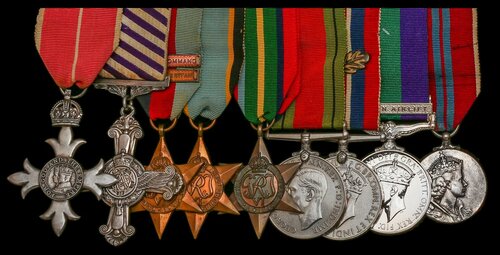
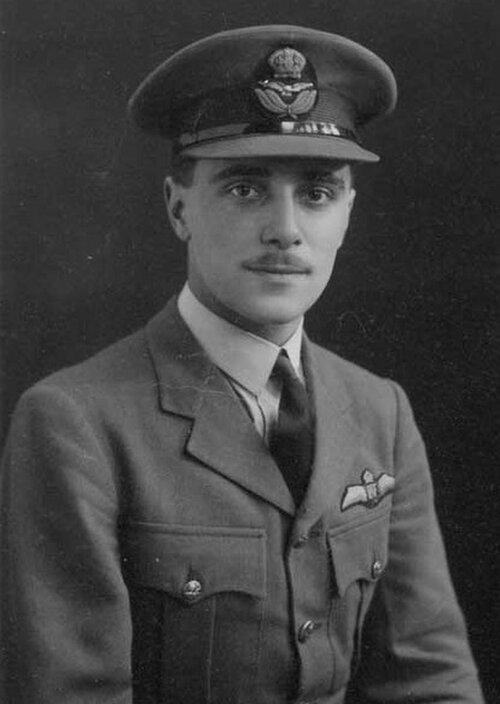
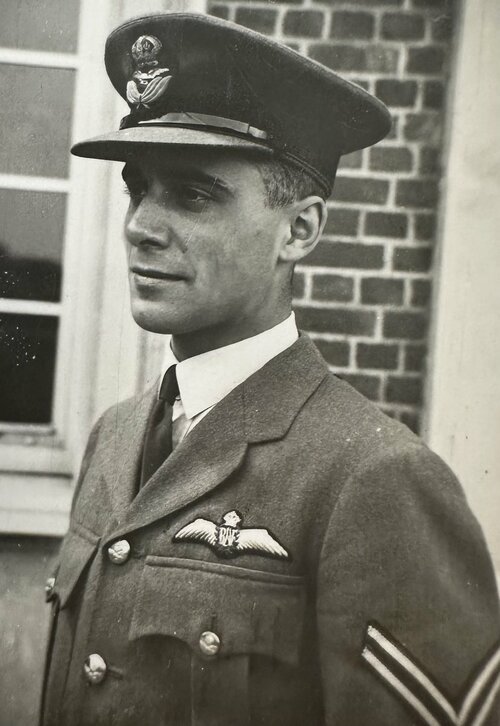
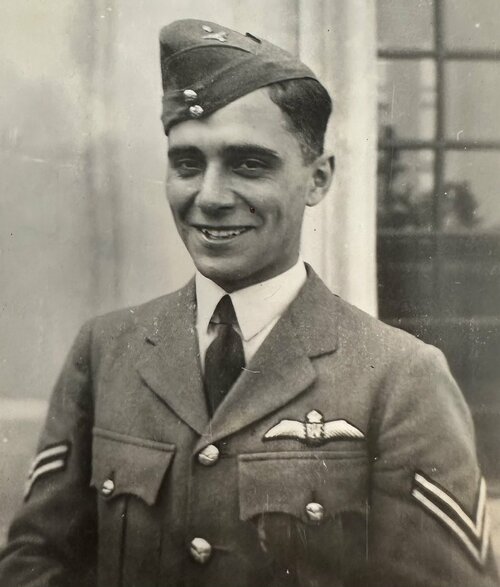
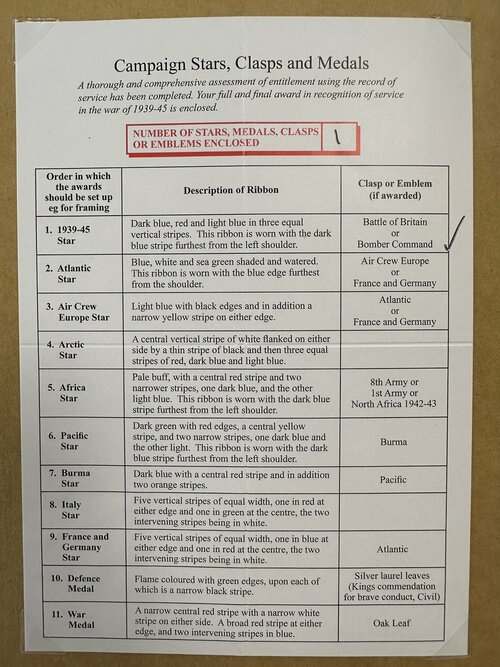
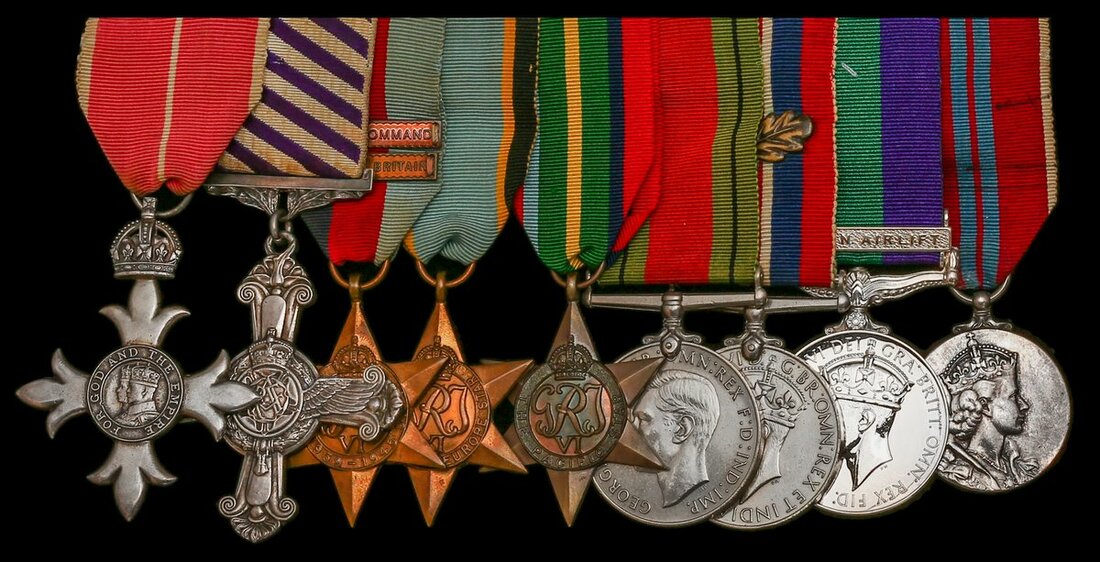
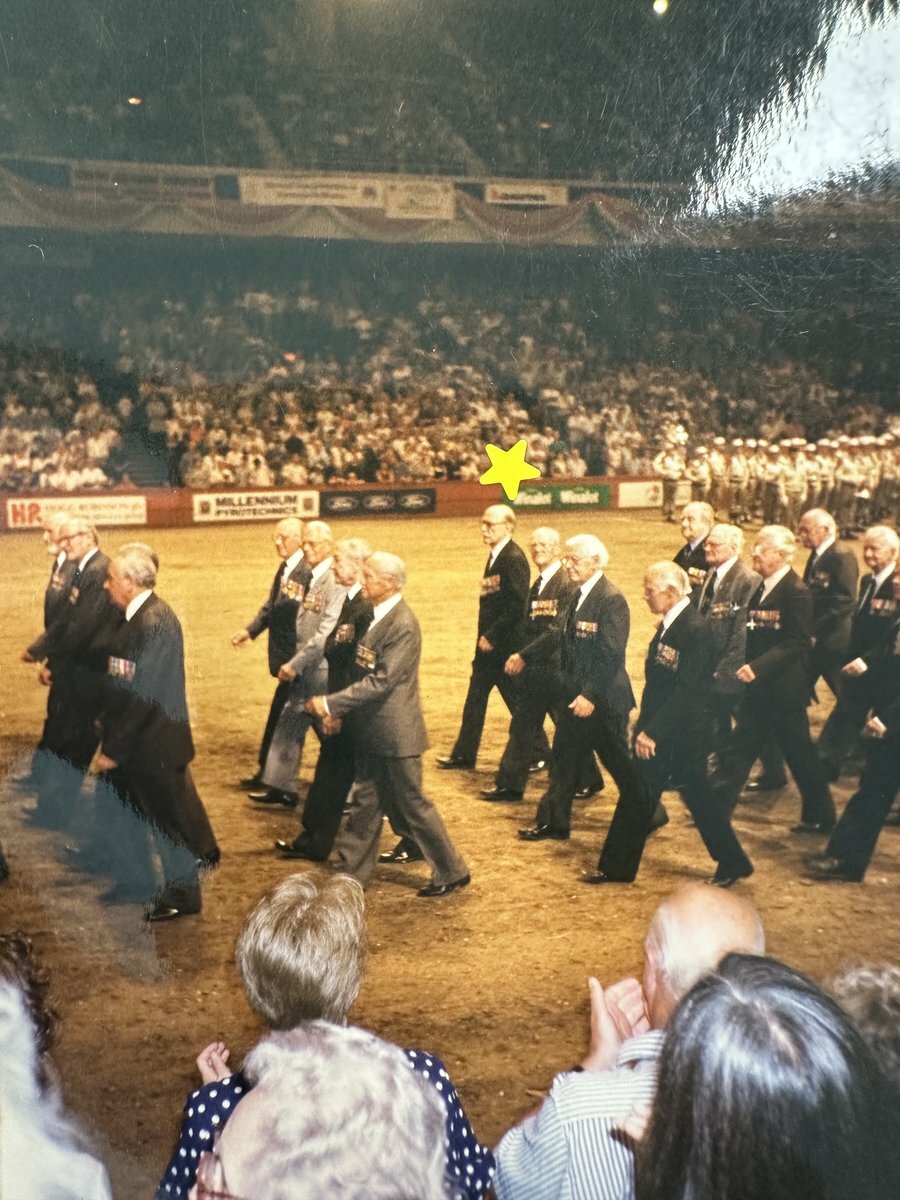
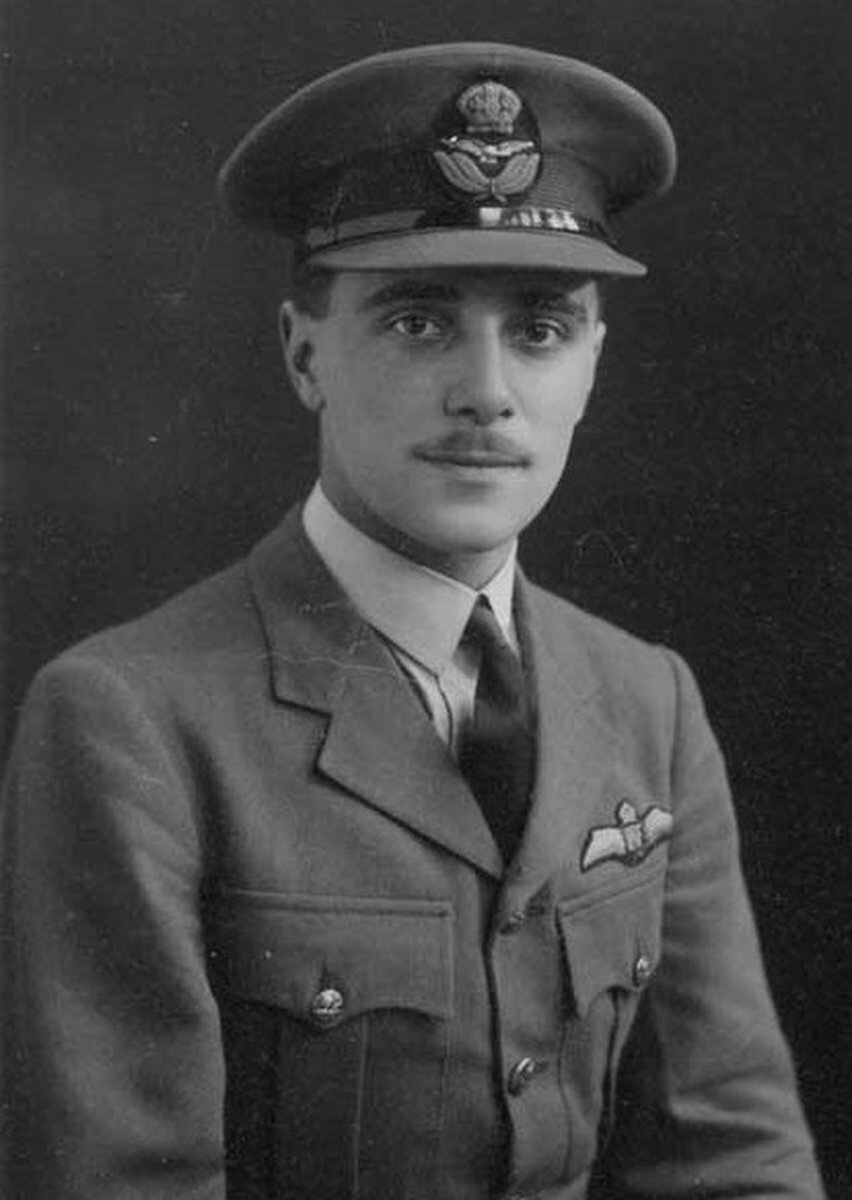
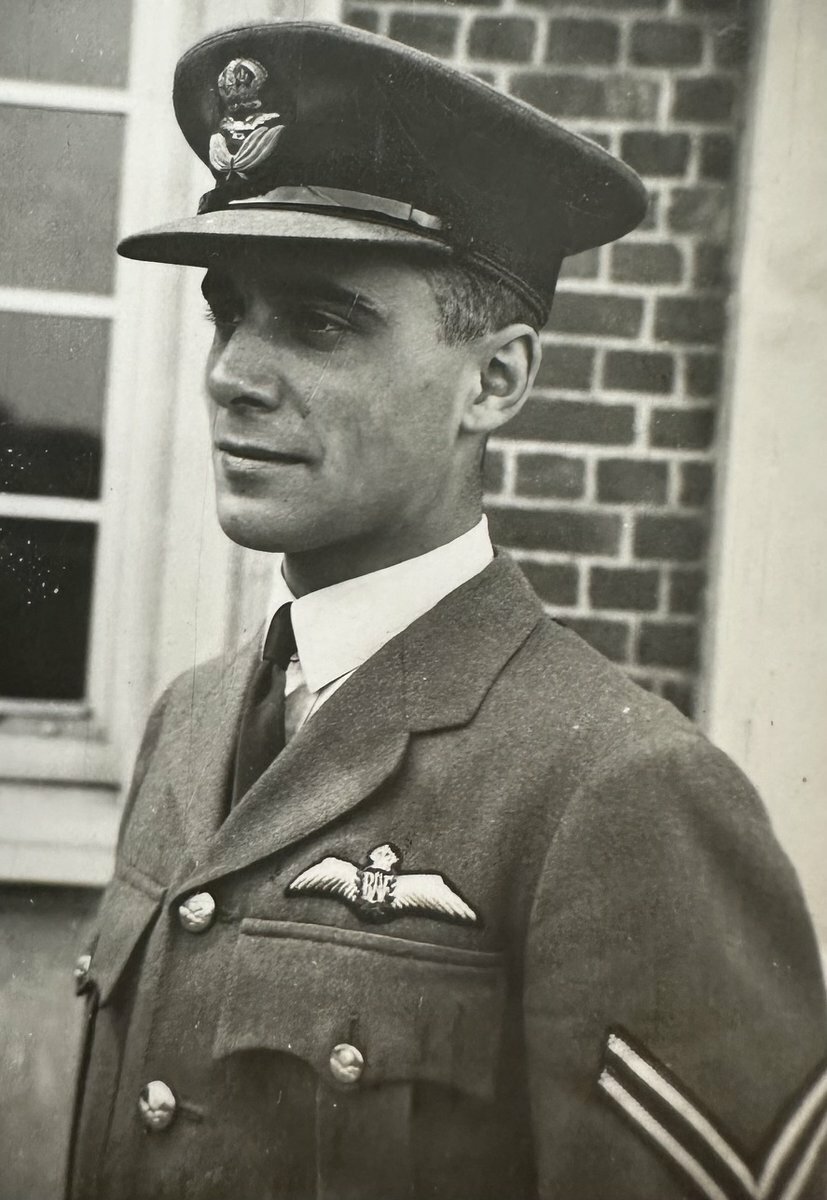
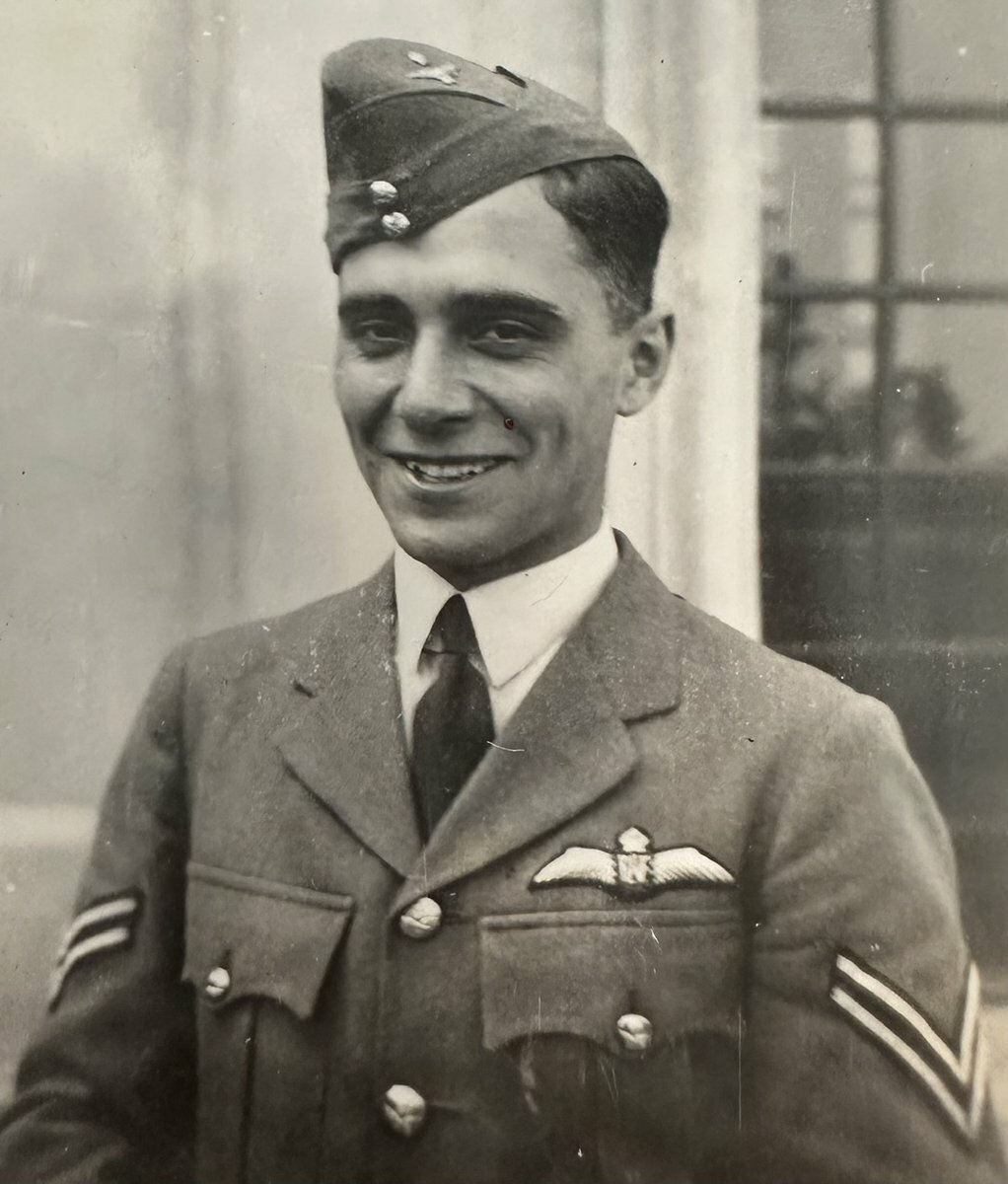
The exceptional Battle of Britain Pilot's post-War M.B.E., Second World War D.F.C., group of nine awarded to Wing Commander C. Warren, Royal Air Force, who was entitled to the exceedingly rare distinction of wearing both the 'Battle of Britain' and 'Bomber Command' clasps on his 1939-45 Star
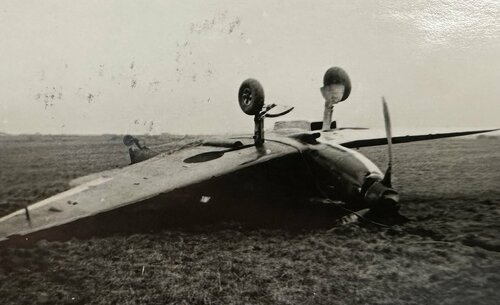
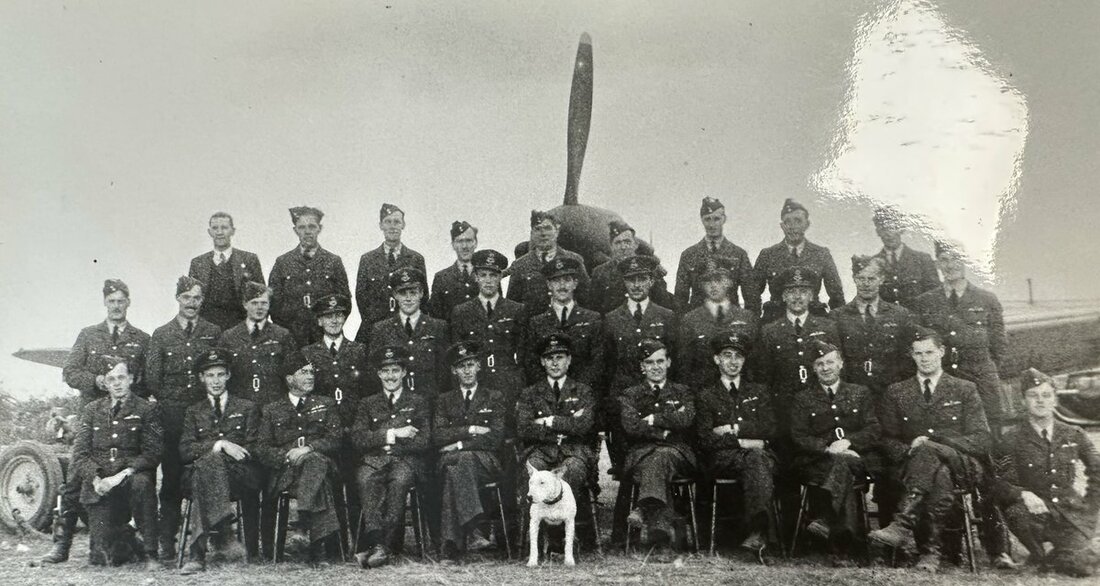
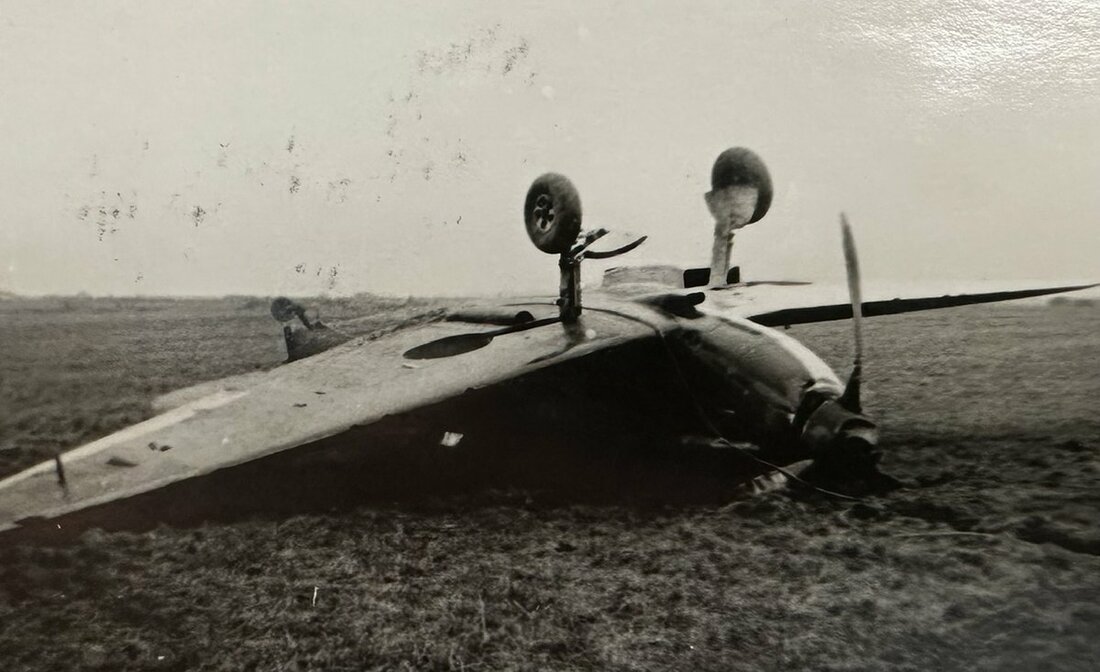
In a long and distinguished career that commenced as a 'Halton brat' in the mid-1930s, he first saw action in a Gladiator of No. 152 'Hyderabad' Squadron in January 1940, when his tracer fire was 'dead on' a Heinkel 111, although his own aircraft had to be written off in consequence of accurate return fire
By the time the Squadron moved south in July 1940, he was a fully-fledged Spitfire pilot and carried out numerous patrols and 'scrambles' over the coming weeks, in which he claimed a half share in a confirmed Do. 17 over Portland - and suffered further damage to his own aircraft in another heated combat over the Isle of Wight
Subsequently transferring to Bomber Command, he carried out an operational tour in Wellingtons of No. 466 (R.A.A.F.) Squadron and later added the 'Berlin Airlift' clasp to his accolades - likely making this a unique combination
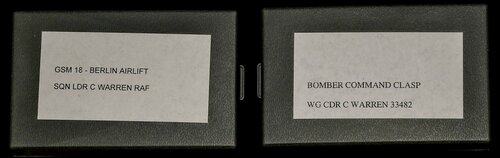
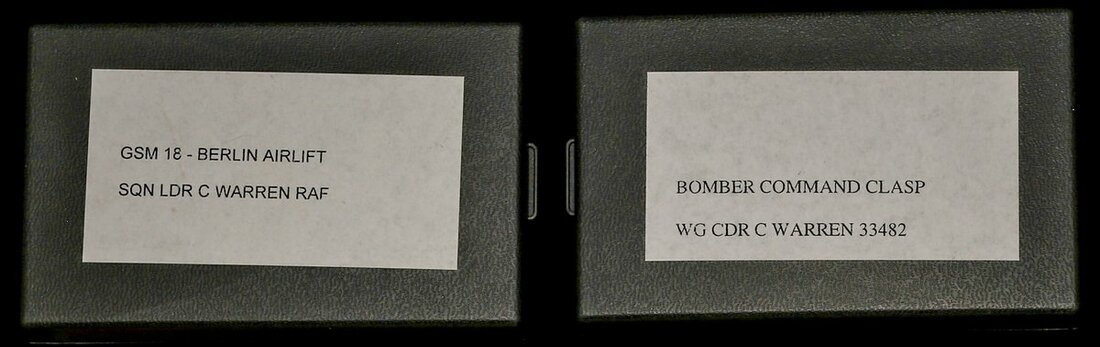
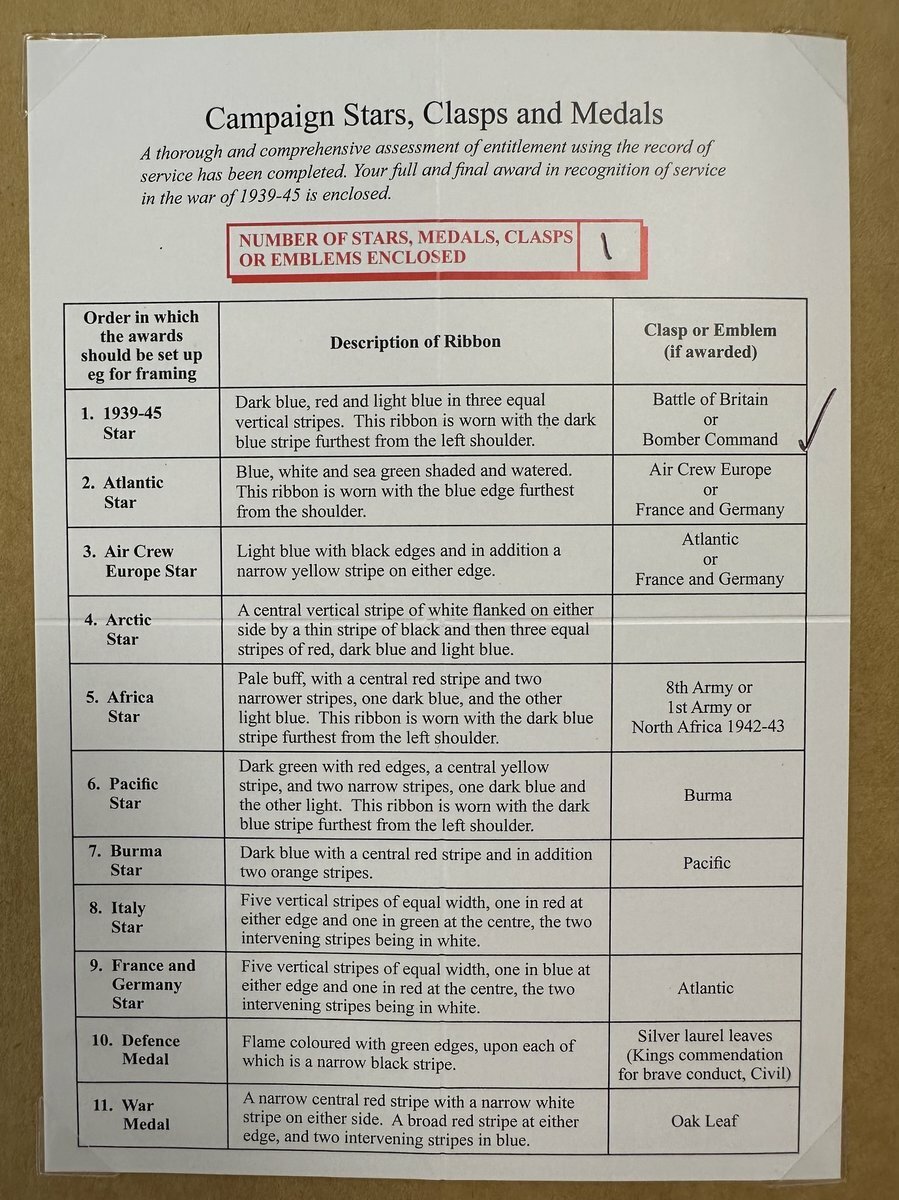
The Most Excellent Order of the British Empire, Military Division, Member’s (M.B.E.) breast Badge, 2nd Type; Distinguished Flying Cross, G.VI.R., reverse officially dated ‘1943’; 1939-45 Star, 2 clasps, Battle of Britain, Bomber Command, with the box of issue for the Bomber Command clasp, the label stating 'Wg Cdr C Warren 33482'; Air Crew Europe Star; Pacific Star, with its late issue claim slip and box; Defence and War Medals 1939-45, with M.I.D. oak leaf; General Service 1918-62, 1 clasp, Berlin Airlift (Sqn Ldr C Warren RAF), with its box of issue, the label stating 'Wg Cdr C Warren 33482', Coronation 1953, these mounted for wear, together with RAF Halton sporting awards (2), one of them inscribed, ‘Cpl./A.A. Warren, C.’, good very fine (Lot)
M.B.E. London Gazette 12 June 1947.
D.F.C. London Gazette 19 September 1943, the original recommendation states:
'Following an arduous operational tour during the Battle of Britain he changed to Bomber Aircraft during which as Flight Commander he displayed considerable skill and courage whilst on operational sorties to some of the most heavily defended objectives. He is a cool and courageous pilot, who by his personal example has sustained the high morale and fighting spirit of the flight'.
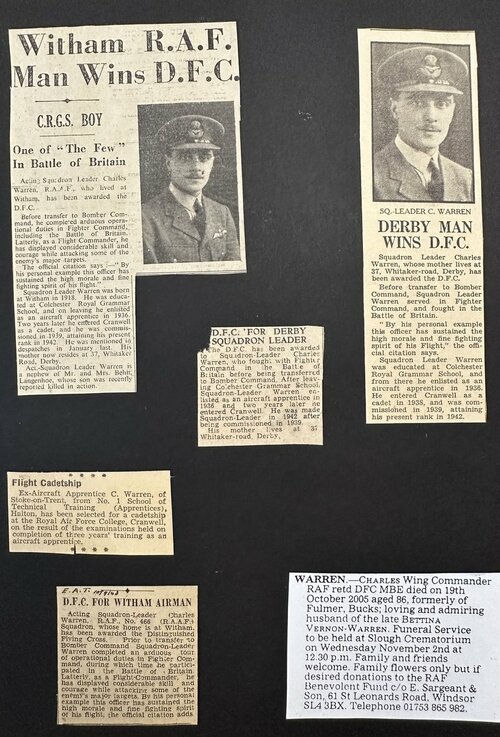
Charles Warren was born at Witham, Essex on 15 November 1918 and was educated at St. Crispin School and the Royal Grammar School, Colchester.
Opting for a career in the Royal Air Force, he joined R.A.F. Halton as an apprentice in January 1935, where he excelled in Fencing and captained the Squadron Rugby XV and, better still, was awarded a Flight Cadetship to R.A.F. Cranwell in January 1938. Once again, he excelled in sports, gaining a College Blue for Fencing and promotion to Flight Cadet Sergeant. He also got to know a number of fellow cadets, among them Timothy Wildblood, who was destined to be killed in action in August 1940 when serving in Warren's Squadron. In fact, it was owing to the outbreak of hostilities that Warren's Cranwell course was cut short, and he was transferred to the Royal Air Force Volunteer Reserve as a 'Pilot u/t' in September 1939. Subsequently commissioned as a Pilot Officer, he was posted to No. 152 (Hyderabad) Squadron at Acklington, on the same day that Wildblood and several other pilots arrived. In the process of converting from Gladiators to Spitfires, the Squadron became operational in January 1940 and commenced a flurry of patrols off the north-east coast.
Opening shots
Warren's first 'scrap' was piloting a Gladiator, when he attacked a Heinkel 111 on 29 January 1940. His Combat Report states:
'At 1150 hours I was flying with A Flight in Red Section 4 miles S.E. of Newcastle at 500 feet when I sighted a He. 111 flying in a N.E. direction circling ships at approximately 100 feet. (Convoy Booty). I carried out No. 1 Fighter Attack and opened fire at 600 yards closing to 200 yards, with one burst of 6 seconds (approx. 700 rounds). My tracers appeared to be hitting the target dead on. As I broke away, the E/A disappeared into cloud, and I could see a swastika on its tail, owing to lack of fuel I returned to base. At no time during combat did I notice the E/A was firing at me but found on landing my aircraft had sustained a small hole in the front spar, a large hole in rear spar and several in leading and trailing edges of wings, also my tailplane. My attack was carried out from astern and slightly above E/A, and I had no difficulty in overhauling the E/A.'
With his tracers hitting the He. 111 'dead on', it is a combat worth noting. So, too, the fact his Gladiator was written off on account of damage sustained.
In February, Warren took part in nine patrols, with an interception of an unidentified enemy aircraft taking place on the 23rd, whilst flying Spitfire K 998; another twelve patrols were flown by him during March, the majority in Spitfire K 9883, and five more in April. This the same month in which he notched up 50 hours in Spitfires and was granted written authority to perform aerobatics from his C.O.
In May, the squadron's Spitfires were fitted with armour plating around the seat, and intense practise and formation flying became the order of the day.
The Battle of Britain
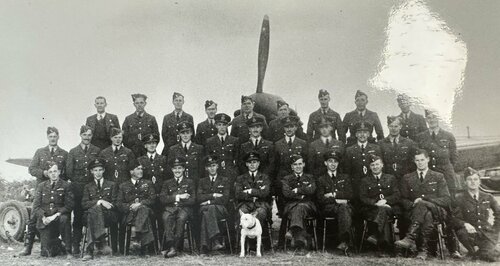
Then on 12 July 1940, the Squadron moved south to Warmwell in Dorset, where, over the weeks and months, it was heavily engaged in the Battle of Britain, Warren having his first brush with the Luftwaffe on the 16th - three Me. 109s - but he lost sight of them in prevailing foggy conditions. Two days later, however - at 1010 hours on 18 July - he was scrambled in Yellow Section to patrol over Portland, where he and his fellow pilots were set upon by a Staffel of Me. 109s. His resultant Combat Report states:
'The Do. 215 sighted flying west at 1500 feet, it signalled with a white light, and I commenced a slight deflection shot, at the same time Yellow 3 called me. On not hearing clearly what he said I looked around and saw 2 aircraft approaching me, one either side. At the same time bullets exploded on my starboard wing, shaking the machine. I immediately turned and saw yellow 2 & 3 following the aircraft. I lost sight of them due to broken cloud and as I was away from the convoy I returned and patrolled it until Yellow 3 joined me. We patrolled the convoy until relieved by Green Section.'
Warren managed to coax his damaged Spitfire P 9640 back to Warmwell.
Having then flown around 10 'X Raids' in the interim, he and his fellow pilots were scrambled to the protection of Convoy CW9 in the English Channel on 8 August. E-Boats had already sunk three merchantmen and then numerous enemy dive bombers from Fliegerkorps VIII arrived on the scene, escorted by Me. 109s and Me. 110s. Warren flew two sorties that day, both lasting for an hour and 50 minutes, but without any conclusive combats, whilst two of his fellow pilots were shot down.
At 1015 hours on Sunday 11 August, Warren - flying as Blue 1 in Spitfire P 9432 - was scrambled with fellow pilots to intercept a major Luftwaffe force approaching Portland. As it transpired, it was to date the largest raid mounted against southern England. A massive dogfight ensued, which spread across the width of Weymouth Bay to Swanage. The Squadron O.R.B. takes up the story:
'Ten to fifteen miles off Swanage ten Me.109s were sighted in a dogfight with another R.A.F. Squadron. They reported this to control, but the Me.109s saw the four Spitfires from 152 coming at them and turned for their base in France. P./O. Warren and another pilot chased these Me. 109s towards the French coast but were unable to get an effective range to engage the enemy aircraft.'
On returning to Warmwell, Warren and two other pilots were ordered to refuel and carry out a search for Pilot Officer Jones, who as Yellow 2 had been shot down between Portland and Swanage; his body was later recovered and buried in Sainte Marie Cemetery, Le Havre, France.
Warren and his fellow Spitfire pilots, meanwhile, came across a sea-rescue Heinkel He59B some 30 miles off Cherbourg, recovering Luftwaffe airmen and protected by six circling Me.109s. The three Spitfires held off the Me.109s whilst some Blenheims destroyed the seaplane.
On 13 August - known as 'Adler Tag' - the Luftwaffe sent over a large force of bombers and fighters to destroy airfields in the South. Flight Lieutenant Boitel-Gill led an attack of Spitfires from No. 152 Squadron on 30 Me.110s from 1/ZG2, trying to form up with Ju. 88s from KG54 at 15,000 ft. over Portland. Over a two-hour period, in which he landed and refuelled, Warren attacked three Me. 110s but without result. His Combat Report states:
'I was Yellow 1, flying at 15,000 feet at 1530 hours, when I attacked in turn 3 Me. 110s 6 miles south of Portland. The first was attacked from directly above with a full deflection burst of 5 seconds at 200 yards. The second a quarter deflection of 5 seconds at 200 yards, shot from above until the E/A disappeared into cloud. The third aircraft was fired at from dead astern at 100 yards until my ammunition was exhausted. None of the E/A showed signs of being damaged.'
At 1240hrs on Friday 16 August, Warren was one of 13 pilots on patrol from No. 152 Squadron at 15,000ft over the Isle of Wight. Fighter Command had sent up a total of 86 fighters to intercept over 300 Luftwaffe aircraft on their way to attack our radar stations and airfields. Warren and his comrades in 156 Squadron intercepted Stukas targeting the radar station at Ventnor on the isle of Wight, but without success, but on a wider front it was a memorable day in the battle, the R.A.F. taking out 45 enemy aircraft for a loss of half that number. And Flight Lieutenant J. B. Nicolson was awarded the V.C. for his gallantry piloting a Hurricane of 249 Squadron over nearby Gosport.
On Sunday 18 August, Warren was back in action in Spitfire P9432, one of 11 from 152 ordered to patrol over Portsmouth at 1400 hours and face-off around 150 Ju. 87s with escorting Me.109s, the whole intent on damaging our radar stations at nearby Poling and Thorney Island. At 1430hrs, Flight Lieutenant Boitel-Gill led eleven Spitfires in line astern over the Isle of Wight, the whole squadron engaging 30 of the Stukas at sea level, as they were on their way back to their bases. P./O. 'Boy' Marrs from 152 reported that 'we dived on them and they dropped down to 100 ft. above the water, then followed a running chase out to sea'. In all 152 Squadron claimed 10 Ju. 87s and one Me.109 destroyed in this combat.
In another combat on Wednesday 21 August, Warren engaged a Ju. 88 and on Thursday 22 August, in a dogfight over Portland, flying as Blue 3 to Pilot Officer E. S. 'Boy' Marrs, he shared in the destruction of a Do. 17. Of his own input on that occasion, his Combat Report states:
'I was Blue 3 when a Do.17 was intercepted 5 miles N.W. of Portland. The E/A immediately turned and dived towards the coast and channel. I opened fire at 300 yards and closed to 150 yards, remaining at that range until all my ammunition was fired. There were no signs of return fire and the E/A did not appear to be damaged, although my rounds were seen to enter it'.
The E/A had in fact been badly damaged and was seen to crash into the sea by the Observer Corps. On 25 August, 12 Spitfires from 152 Squadron were ordered up from Warmwell around 1700 hours, just before the airfield was bombed at 1720 hours. The squadron soon got stuck in west of Portland, running up against 20 Ju. 88s, 30 Me.110s and 40 Me.109s. Warren engaged one of the Ju. 88s, without success, it seems, whilst his old Cranwell colleague, Pilot Officer T. S. Wildblood, was killed in action, last seen chasing enemy aircraft across the Channel. Pilot Officer R. M. Hogg, also of 152 Squadron, was likewise killed on this date.
Casualties were indeed mounting and the Luftwaffe returned to attack Warmwell on the 26 August, Warren noting that he had to land at Farnborough after a patrol. And he flew his last patrol in 152 Squadron on 31 August, when vectored to Swanage.
Having then been rested in September, Warren was advanced to Flying Officer on 1 October 1940 and moved to pastures new.
Bomber Command
A short spell flying Lysanders from North Weald having ensued, he served as an instructor at R.A.F. Benson and R.A.F. Harwell, latterly on Wellingtons, and he was among those pilots chosen to bolster Bomber Command's offensive in September 1942, when he flew a sortie to Dusseldorf.
Meanwhile, he had been promoted and recommended for the Air Force Cross for his services in the period February-July 1941:
'Squadron Leader Warren has served in No. 15 O.T.U. since December 1941 and has been a Flight Commander for the past five months. He has displayed outstanding ability. At all times he has shown the greatest keenness and energy to pass trainees out on schedule, thus keeping up the flow of crews for the Middle East. This officer's enthusiasm and personal example are of a high order and he shows the greatest devotion to duty'.
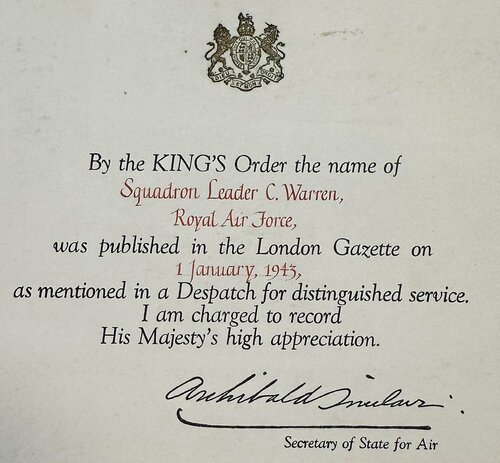
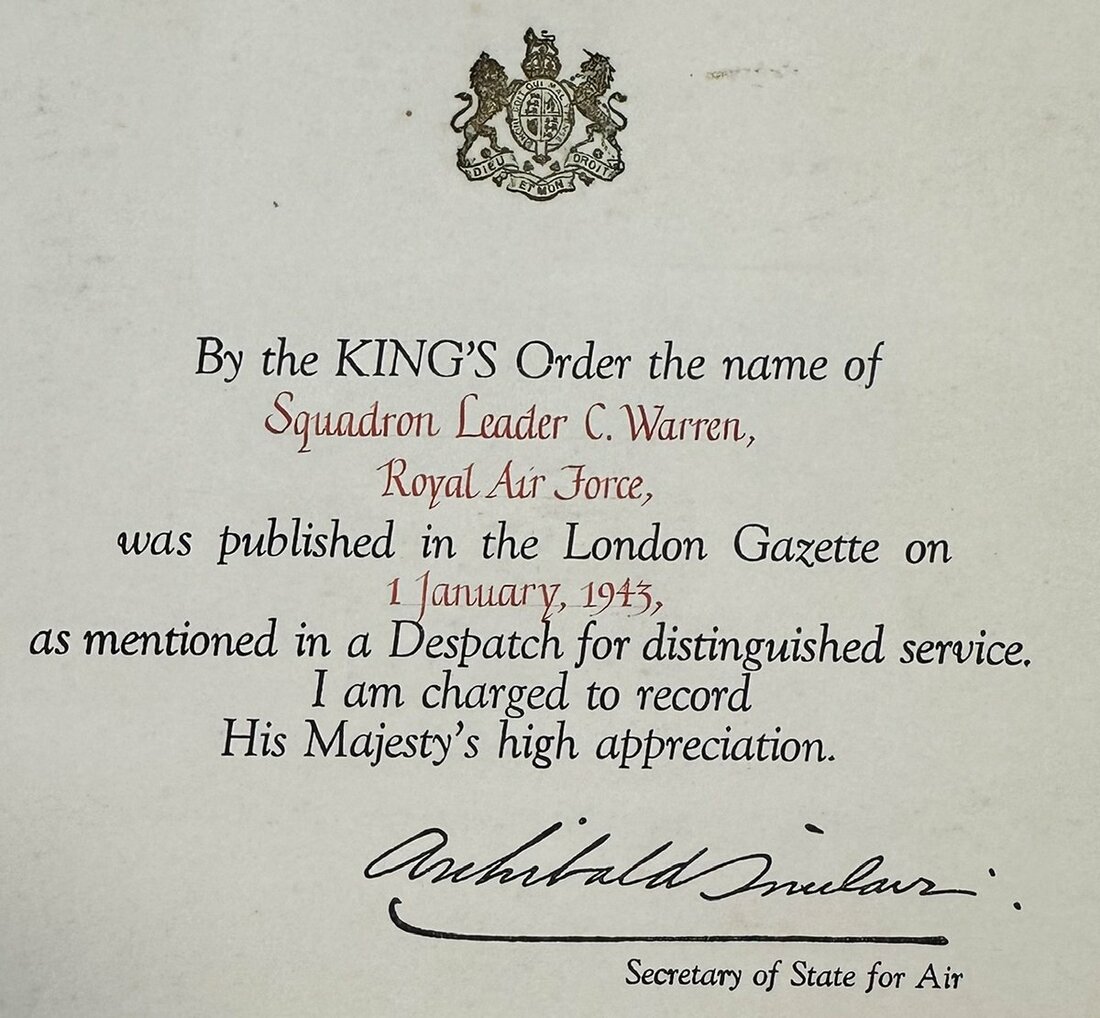
In the event, Warren was 'mentioned' (London Gazette 1 January 1943, refers).
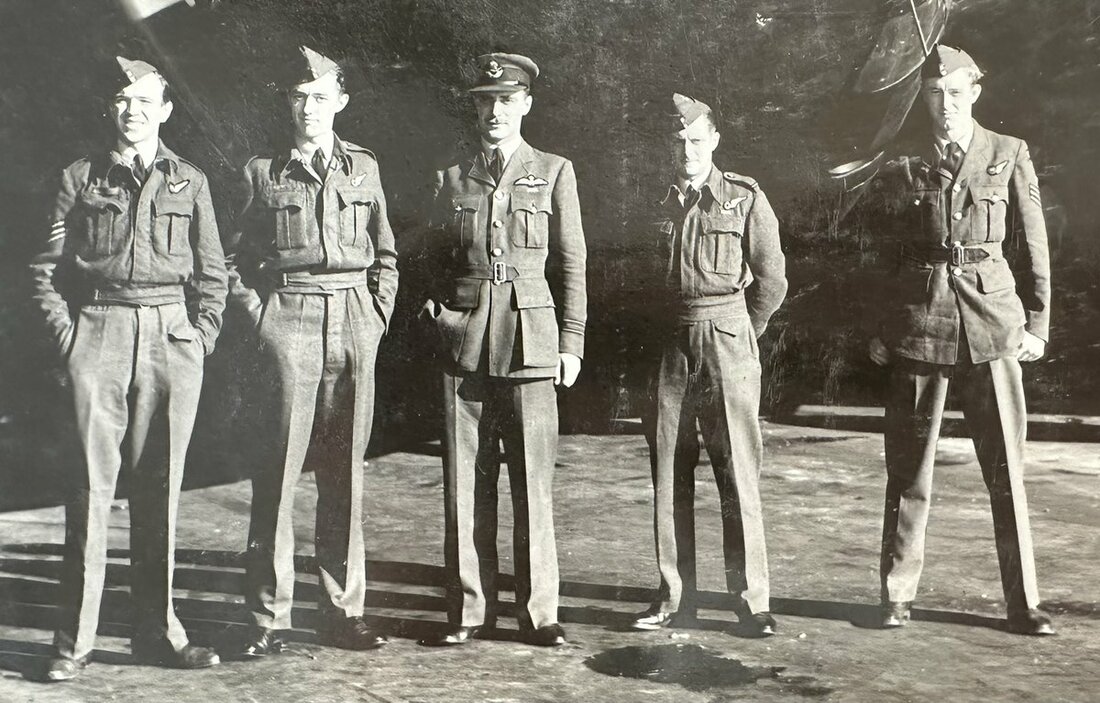
Then in mid-October 1942, he was posted to No. 466 (R.A.A.F.) Squadron, a Wellington unit operating out of R.A.F. Driffield. Appointed a Flight Commander, he flew his first sortie - a 'gardening' trip to Terschelling - on 13 January 1943.
In a subsequent 'gardening' trip to Brest, he was compelled to return to base, with fabric peeling off from the port side of his Wellington's airframe. And he went on to complete a string of operations against French and German targets, including Cologne, Dortmund, Essen and Frankfurt, sometimes in the face of intense and accurate flak.
Tour-expired by mid-September 1943, Warren's Flying Log Book was endorsed by the C.O. of No. 466 Squadron in the following terms:
'Completed second operational tour of 16 sorties - an exceptional Master Bomber Pilot'.
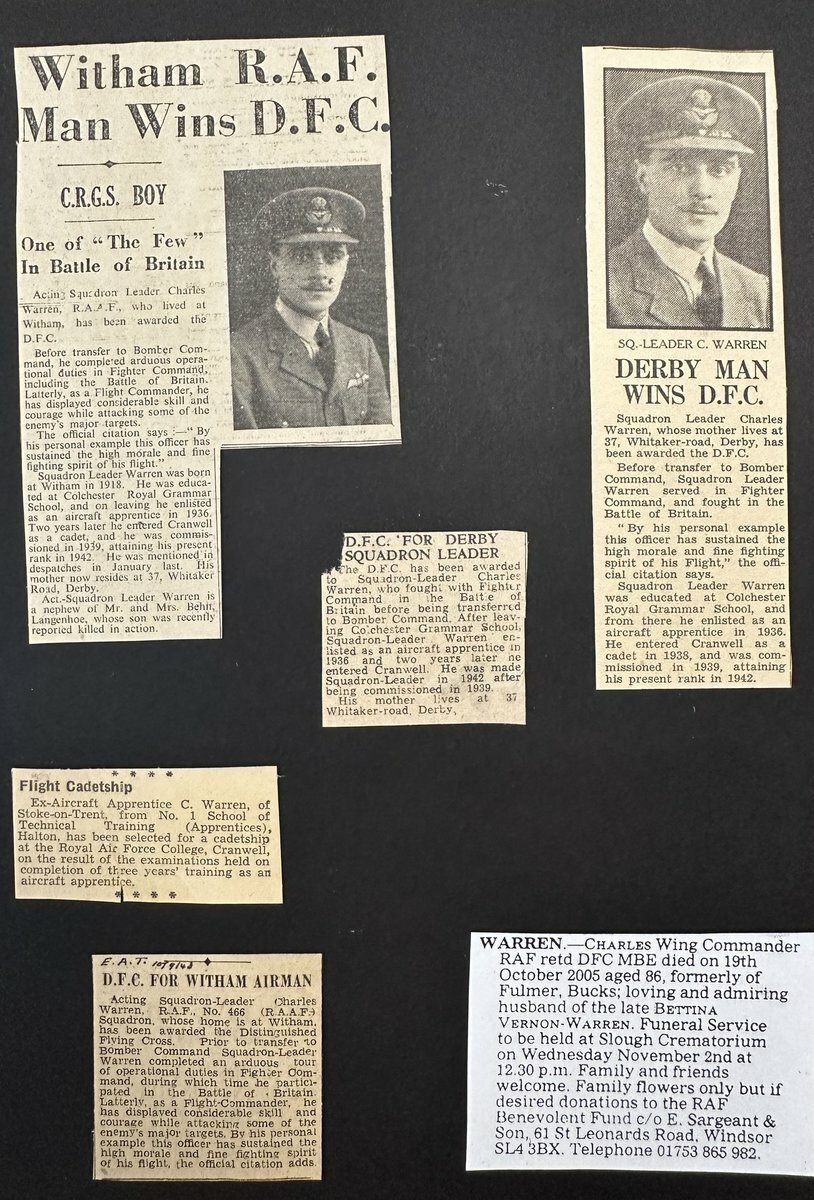
He was awarded the D.F.C., the recommendation also noting his earlier service in the Battle of Britain.
His next appointment was as an instructor at Forres, a satellite airfield on Kinloss, located on Lady Gordon-Cummings estate. On one occasion he had to entertain Prince Bernhard of the Netherlands for three days, as his aircraft was delayed, but otherwise got out and about on his B.S.A. motor bike with 'Pete', his Staffordshire bull terrier, seated on the petrol tank.
A posting to No. 2 Overseas Dispatch Unit at St. Mawgan having ensued, he next joined No. 243 Squadron, a Dakota unit at Merryfield, as a Flight Commander, a role in which he prepared tour-expired R.A.A.F. aircrew for services in the Pacific. And those services would take them to such places as New Guinea, Borneo and the Philippines; their aircraft had to be collected at Dorval, Canada and flown via the U.S.A., Hawaii, and New Zealand to Australia.
Just before VJ Day, Warren and another Squadron Leader joined the Pacific Fleet at Leyte for the Relief of Hong Kong, and they landed with a naval party to take control of Kai Tak airfield; in April 2004, Warren successfully applied for the award of the Pacific Star from the R.A.F. Medal Office which he had certainly earned.
Post-War
After the disbandment of 243 Squadron, Warren was sent with four crews and aircraft to the British Commonwealth Air Force H.Q. at Iwakuni, Japan to form a communication flight with Austers and Dakotas. As acting Station Commander, he was responsible for all flying activities, including Air-Sea Rescue. And he became the personal pilot to Air Vice-Marshal 'Boy' Bouchier, who was Deputy to General McArthur. It was for these latter services he was awarded the M.B.E. in June 1947; whilst in Japan, he met and later married Bettina Vernon, a professional contemporary dancer in the style of Gertrud Bodenwieser.
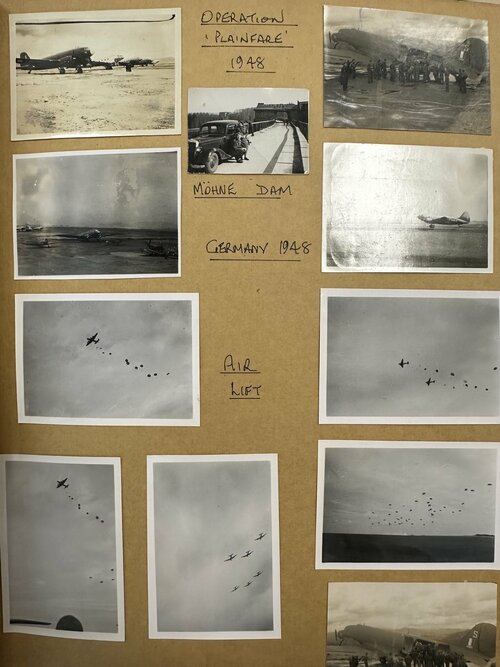
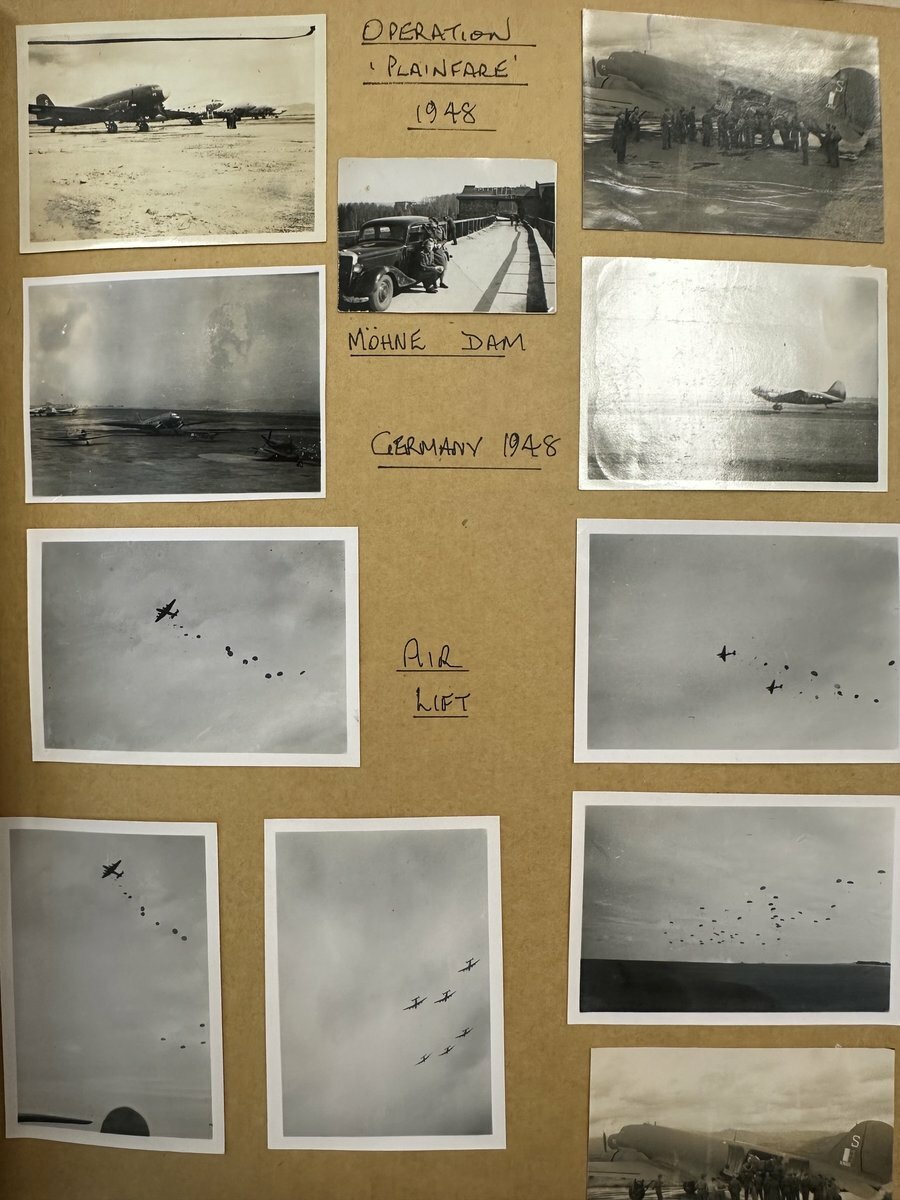
On returning home, Warren was posted to Transport Command and served as Air Accident Officer for the Berlin Airlift, operating from Buckeburg and Luneberg.
His final appointment was as Officer Commanding No. 288 Squadron at Middle Wallop, this being the last piston-engined aircraft squadron in R.A.F. service.
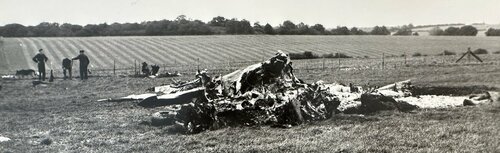
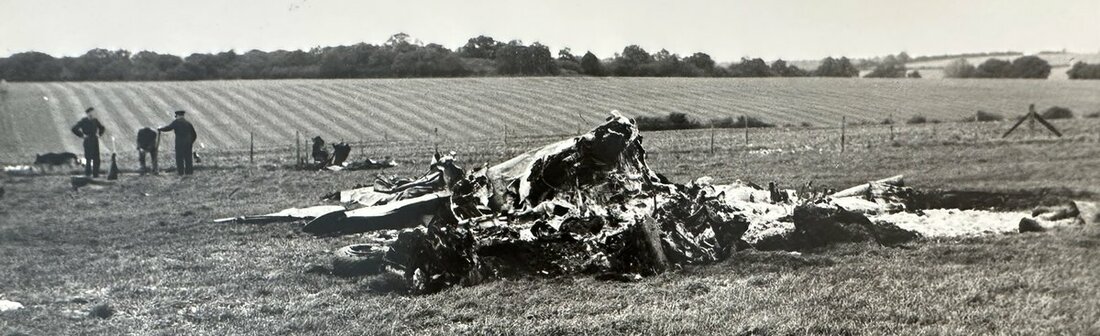
One night in October 1956, Warren piloted a Balliol on a training flight with a former Polish Battle of Britain pilot, Master Pilot Miroslaw Wojciechowski, as his co-pilot. Flying at the same time was Chipmunk and the two aircraft collided at 1500 ft. on the edge of R.A.F. Middle Wallop, all three airmen taking to their parachutes. Sadly, Master Pilot Wojciechowski was killed as his parachute had only partly deployed.
Warren - a newly enlisted member of the Caterpillar Club - was cleared of any blame in the subsequent enquiry, which concluded that the accident had been caused by the divergence of regulations governing civil and military flying, in that the Chipmunk was flying within the airfield traffic zone.
Nonetheless, he decided to take early retirement as a Wing Commander in December 1957, when he took up a career in personnel management. He also co-wrote a book with his wife regarding her dancing career.
The Wing Commander died in October 2005 and his ashes being interred alongside his wife's at Fulmer Churchyard, Buckinghamshire.
Sold with a large quantity of original documentation and photographs, together with related uniform and presentation pieces, comprising:
(i)
The recipient's R.A.F. Pilot's Flying Log Books (3), covering the periods 17 January 1938 to 7 March 1945, 24 March 1945 to 30 January 1952 and 18 February 1952 to 27 September 1957.
(ii)
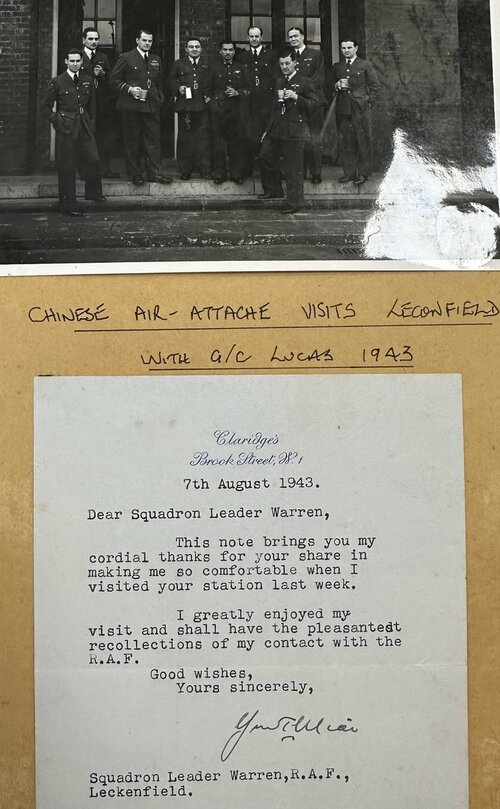
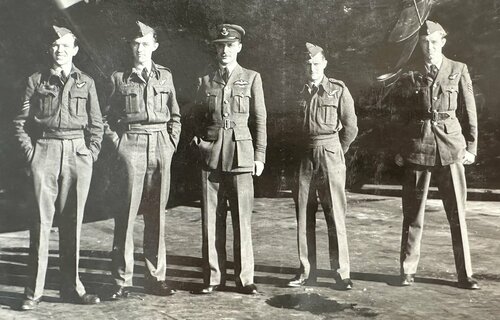
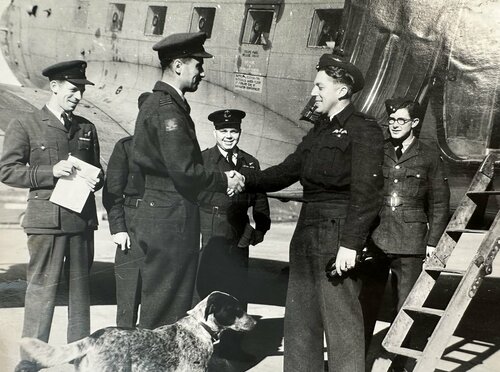
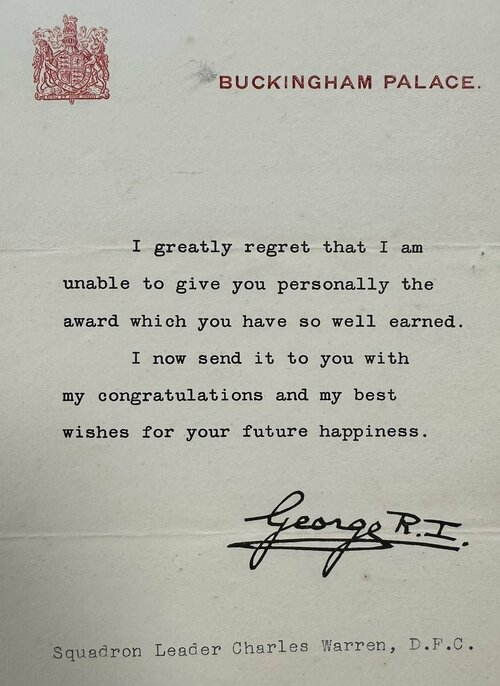
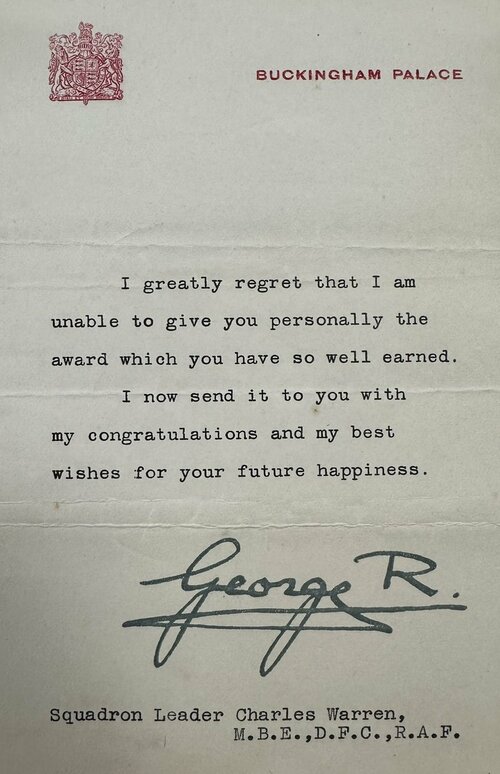
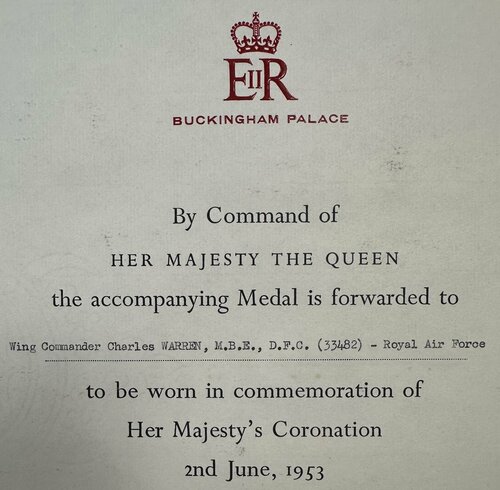
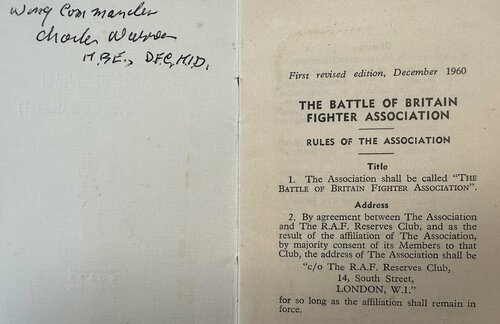
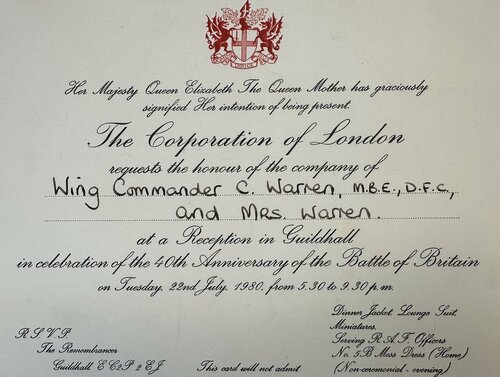
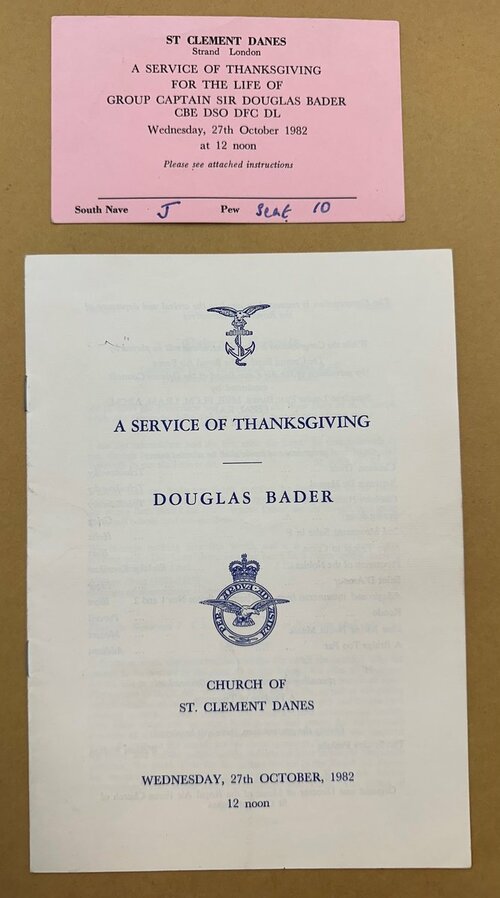
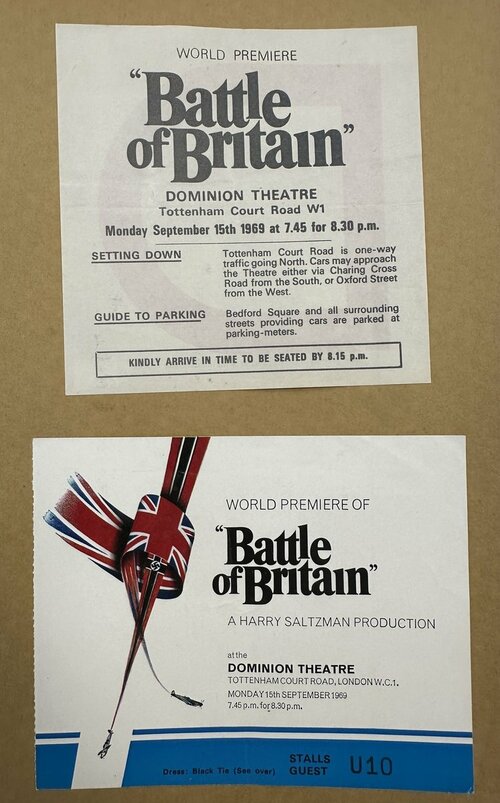
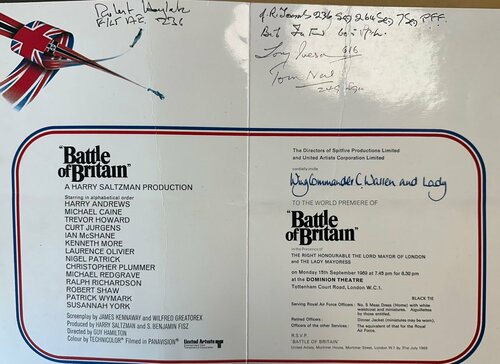
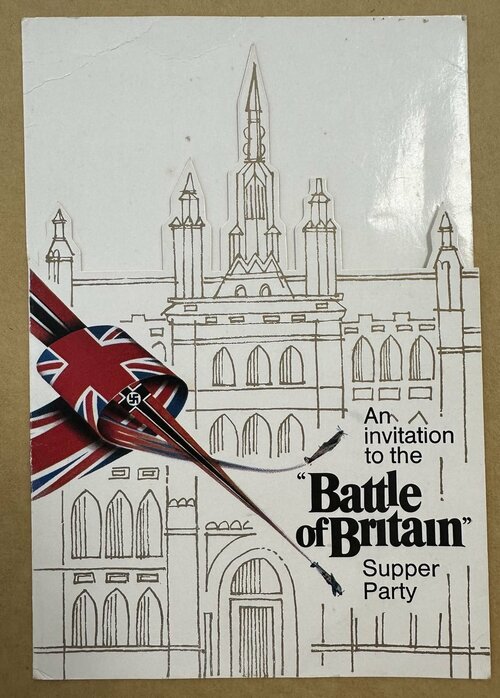
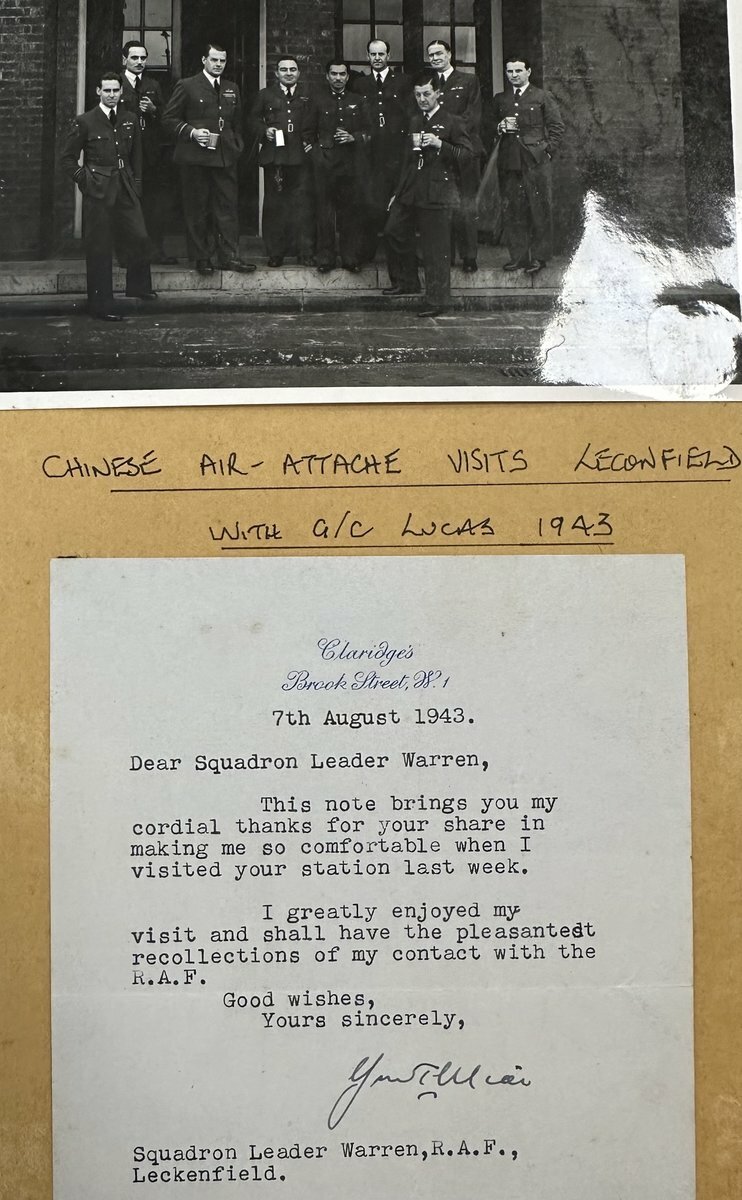
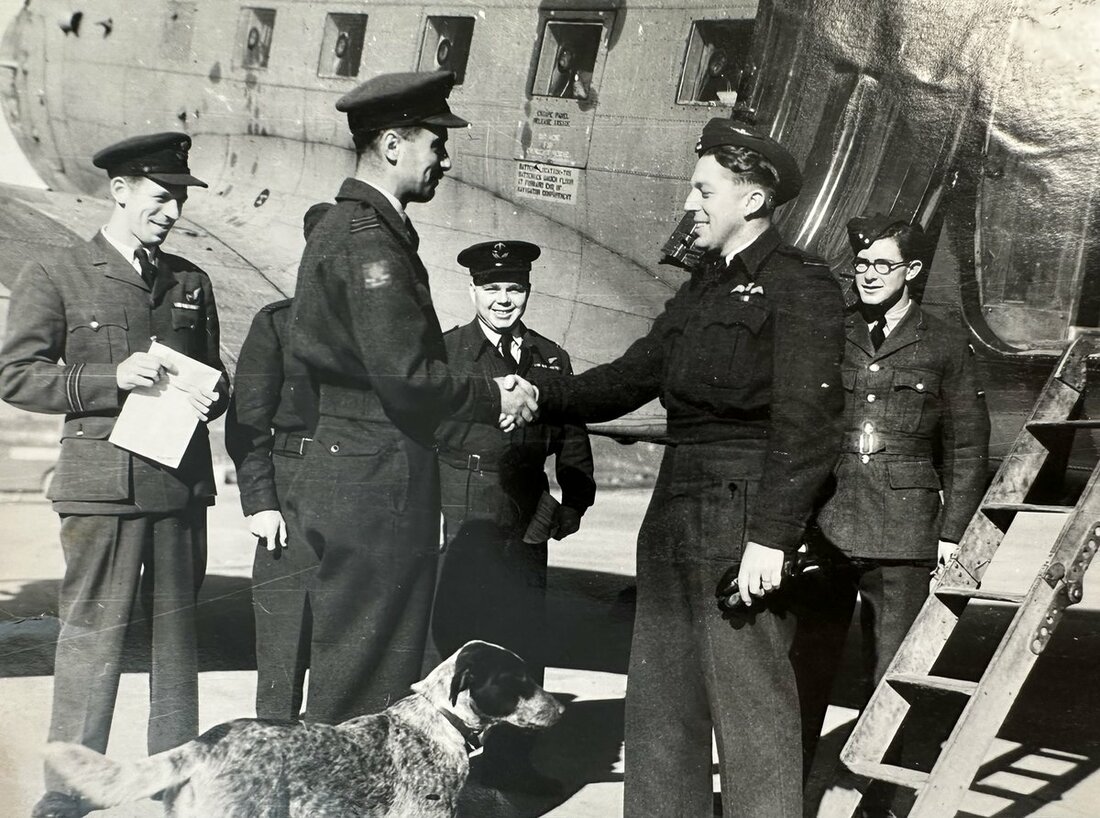
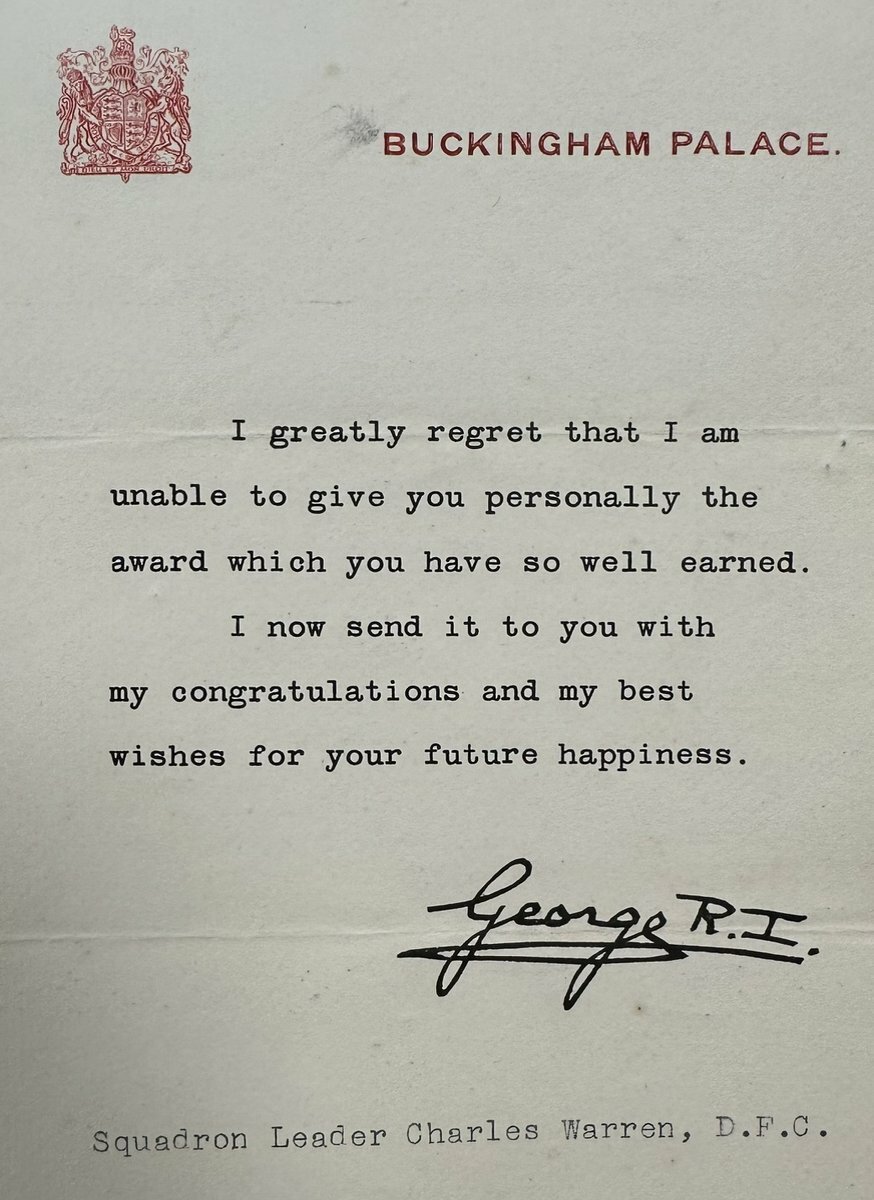
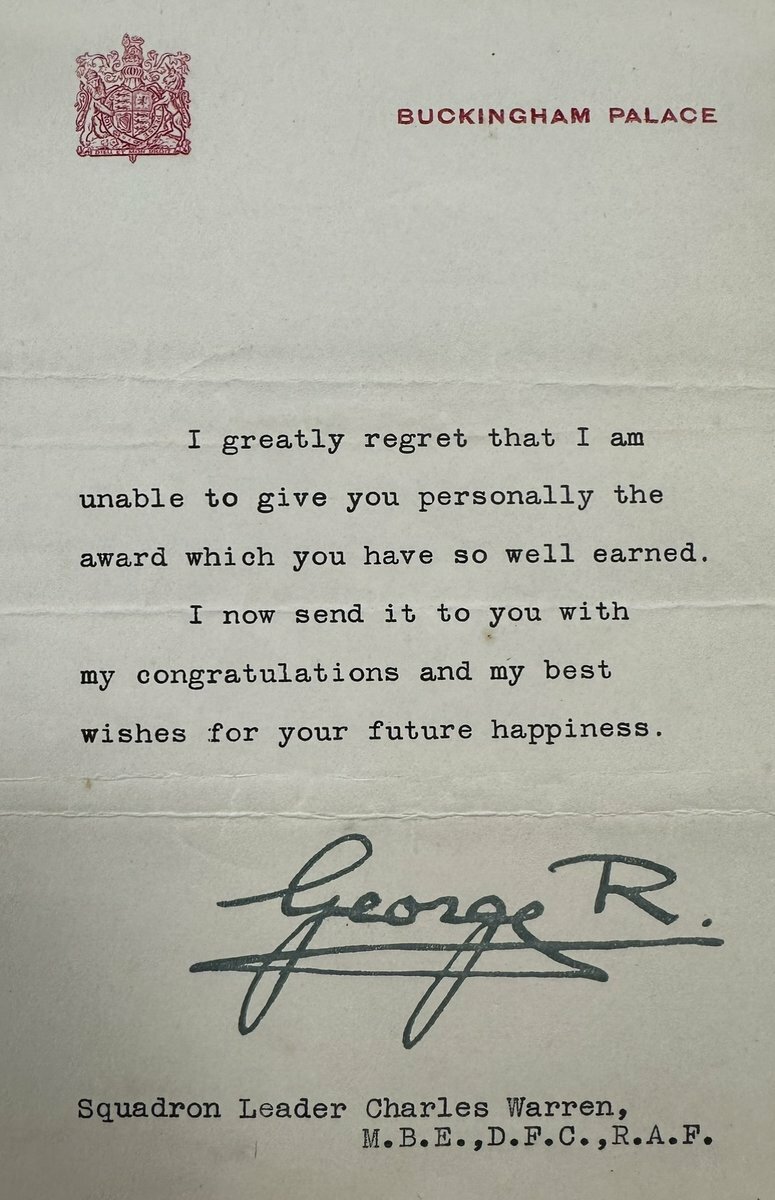
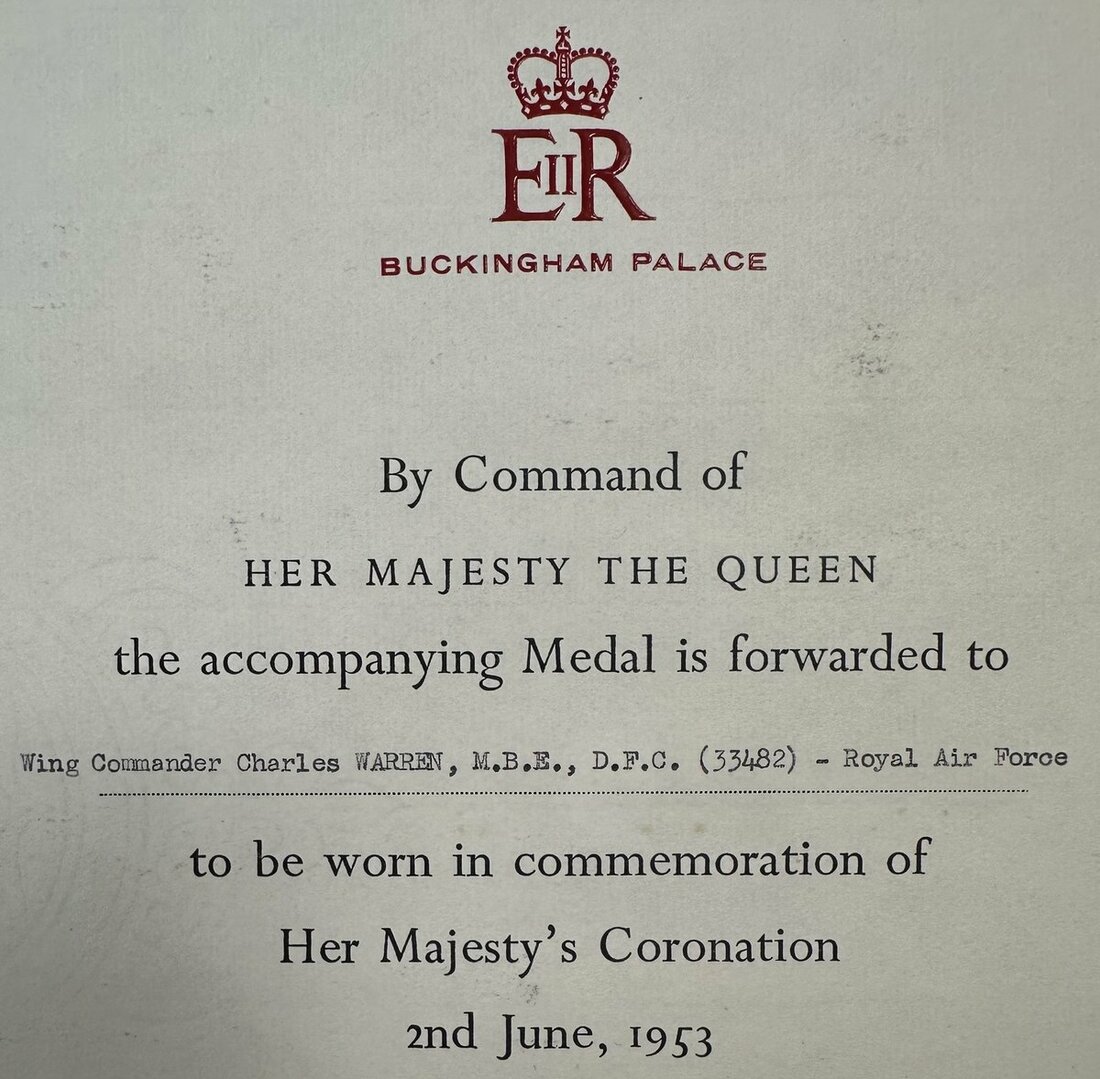
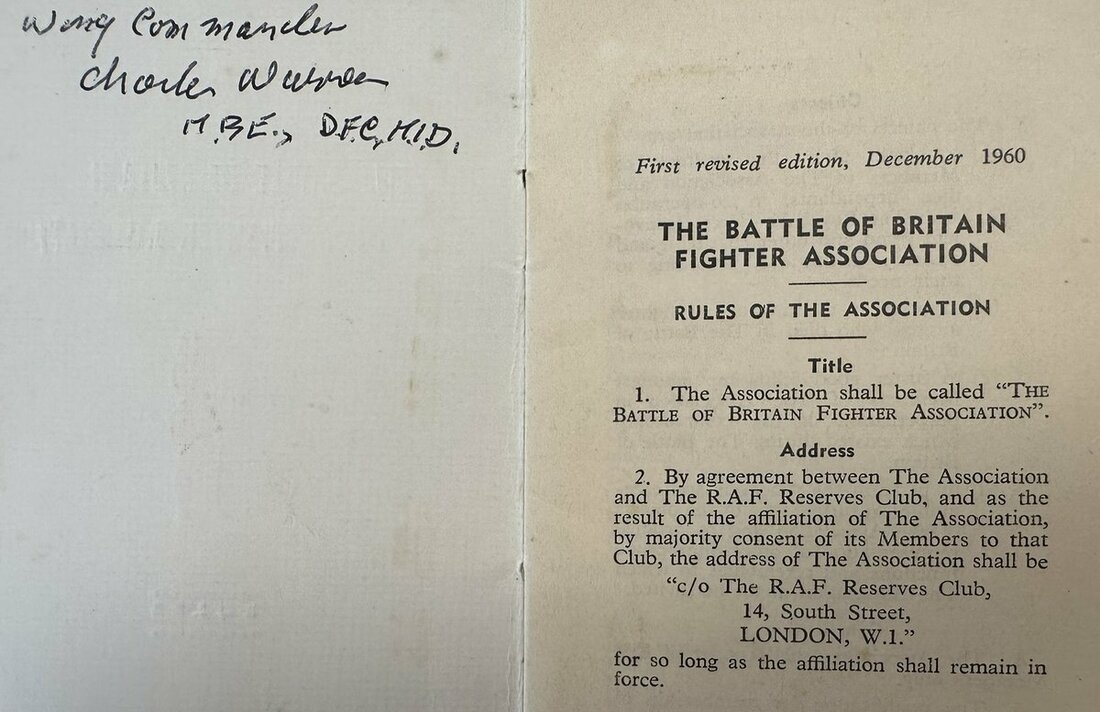
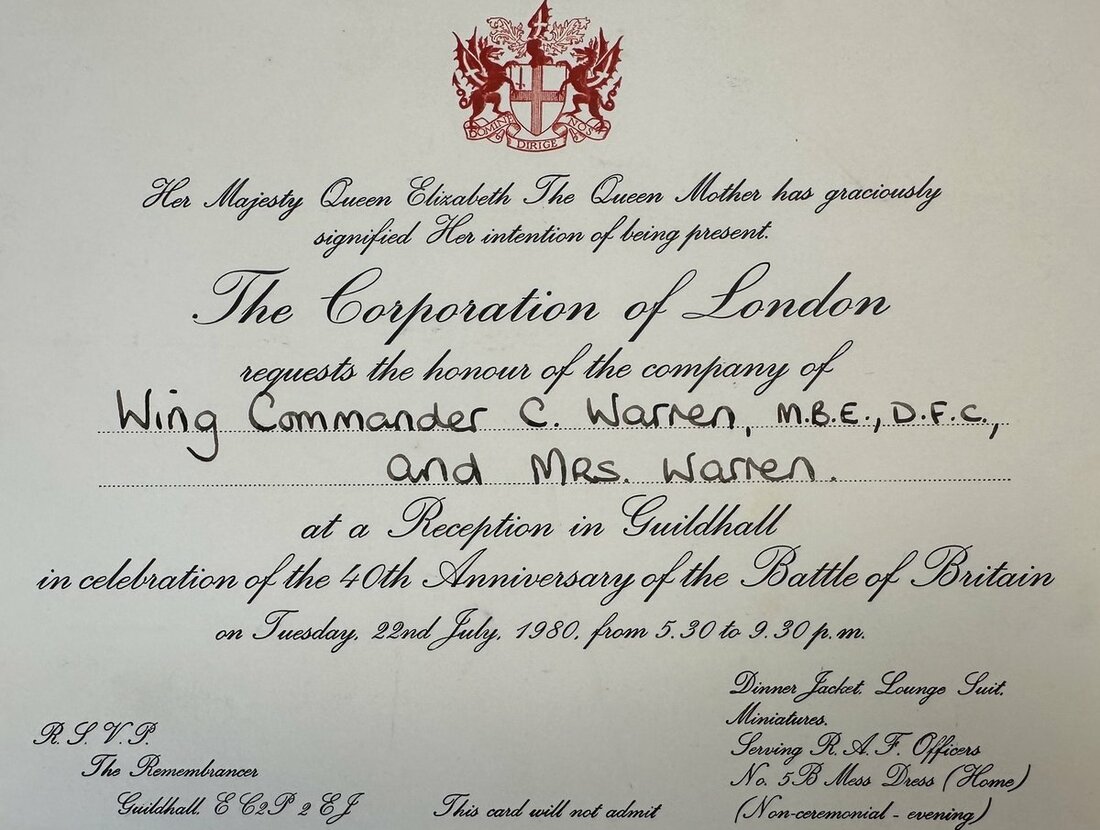
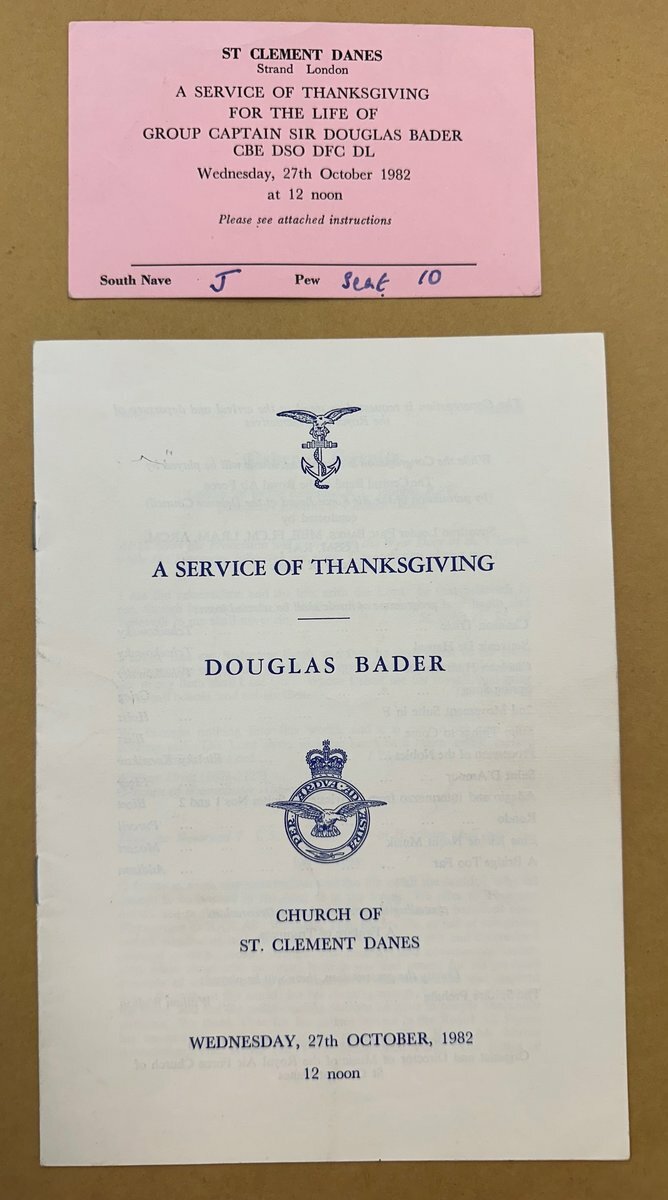
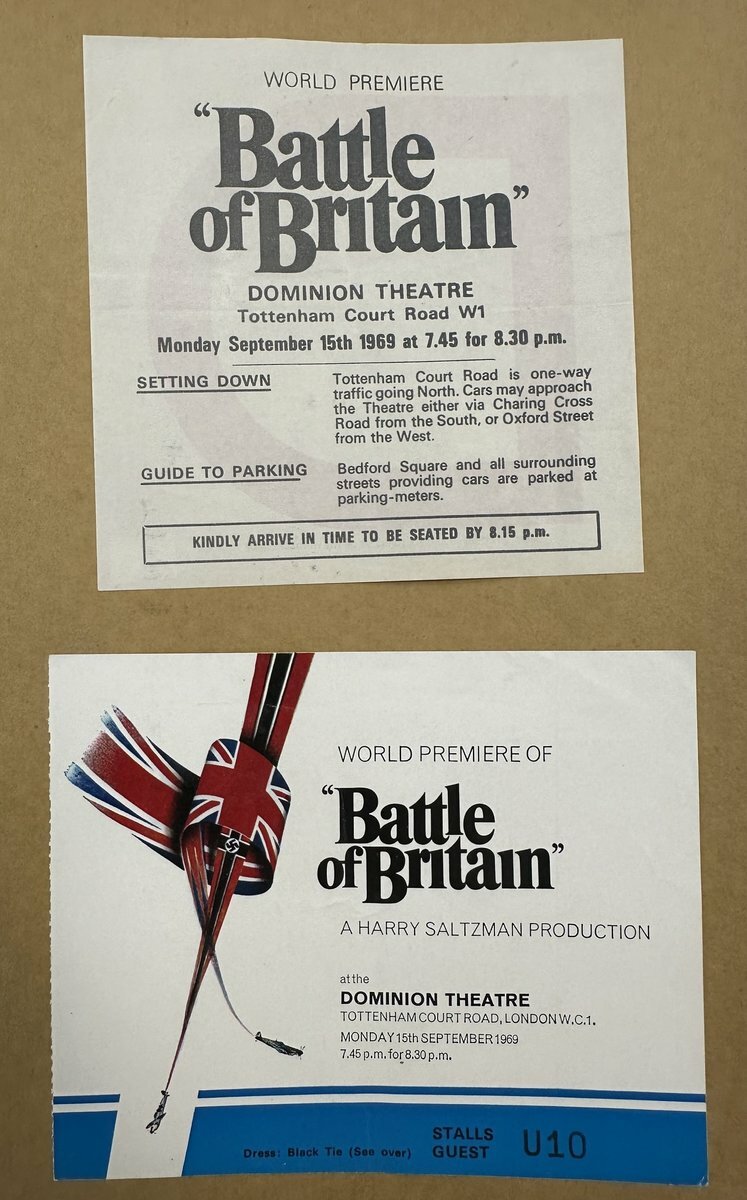
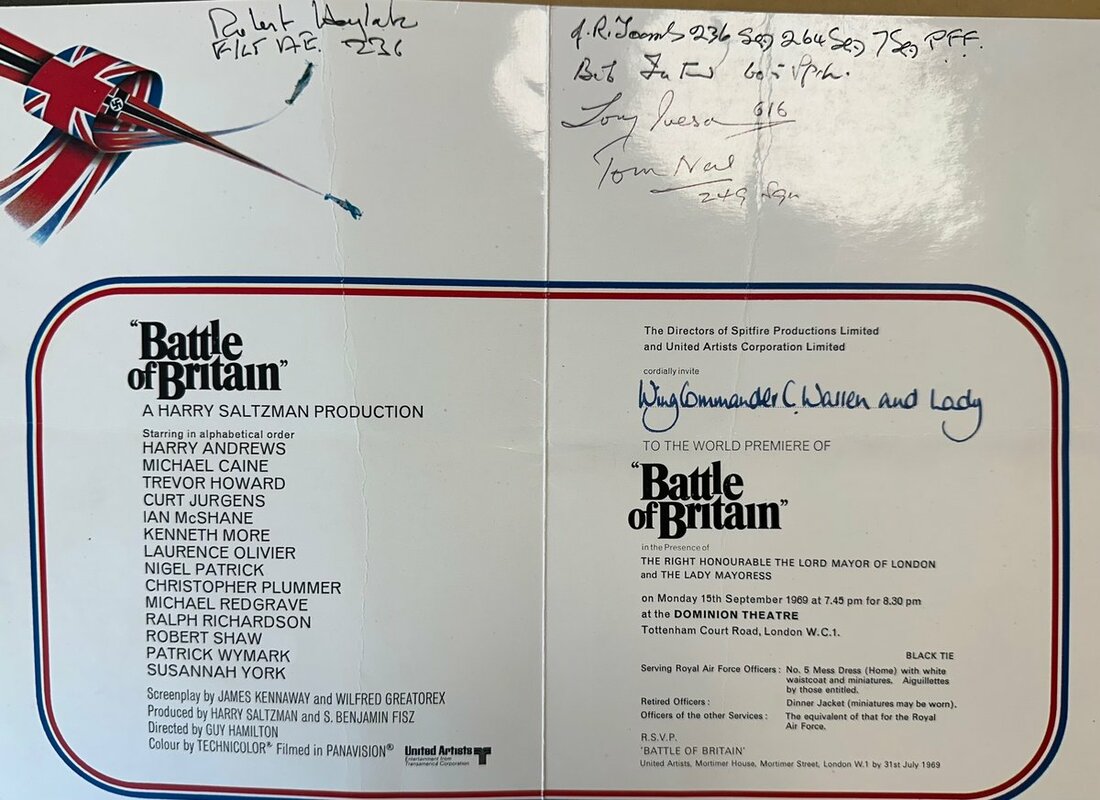
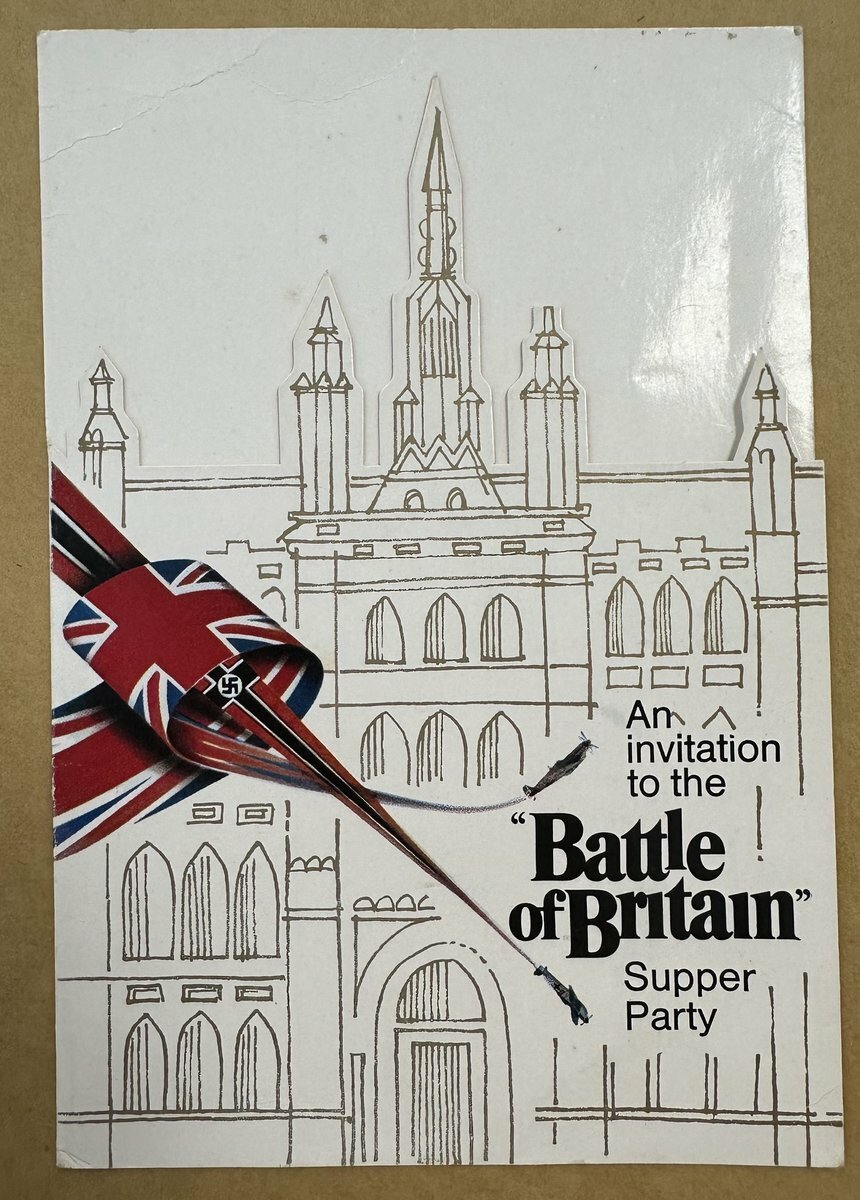
A superb scrap album with much original material covering all the salient points in his remarkable career, with circa 275 photographs, including images relevant to his wartime career and the Berlin Airlift, and documentation including his Buckingham Palace forwarding letters for his M.B.E. and D.F.C., his M.B.E. warrant, his M.I.D. certificate, his Coronation Medal 1953 certificate and his commission warrant for the rank of Pilot Officer, together with banknotes, numerous formal invitations, including one for the premiere of the Battle of Britain film in September 1969, an interesting quantity of post-war correspondence with Warren and assorted wartime newspaper cuttings.
(iii)
A file of comprehensive research, including full biographical details and copied O.R.B. entries, combat reports and letters from wartime veterans of No. 152 Squadron, together with a Berlin Airlift commemorative cover and medallion.
(iv)
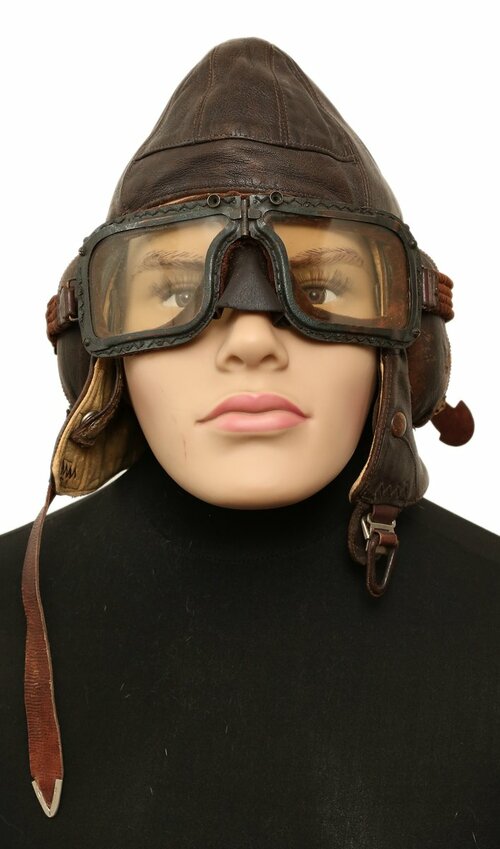
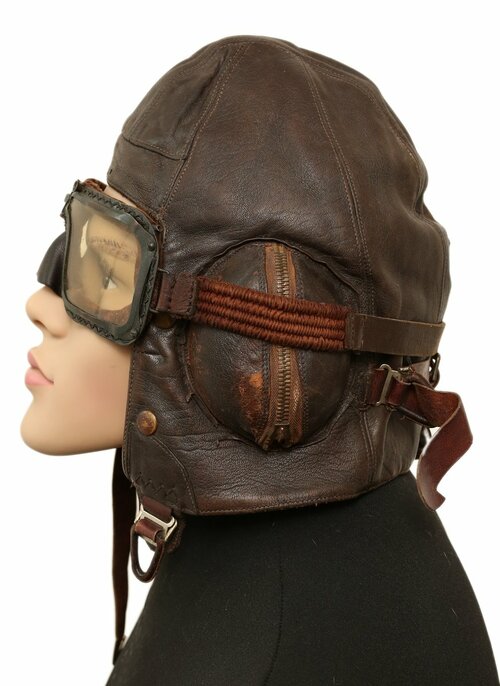
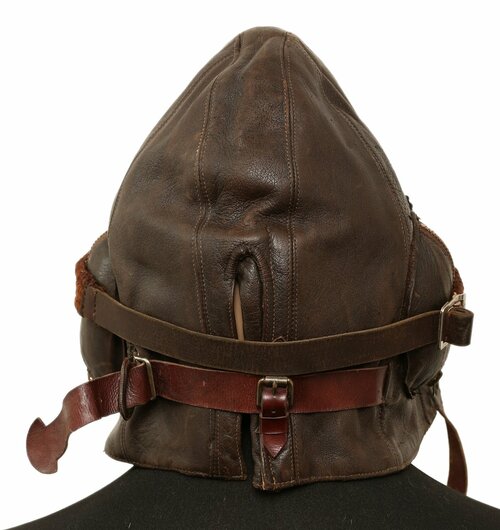
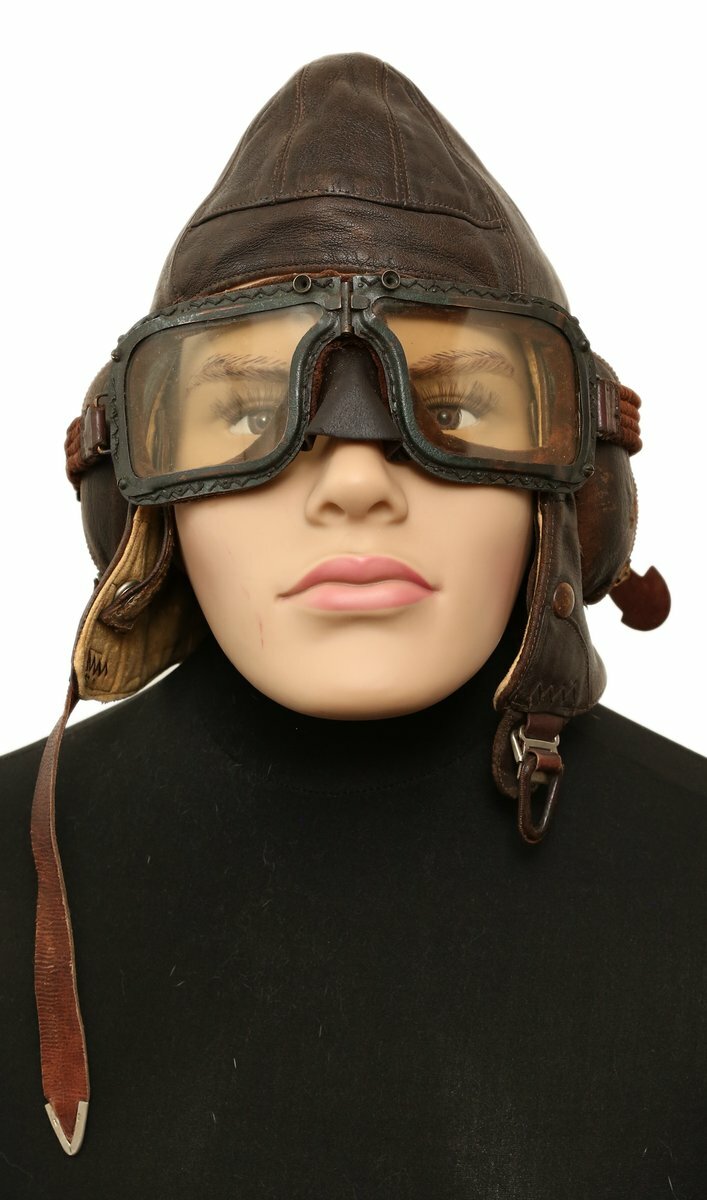
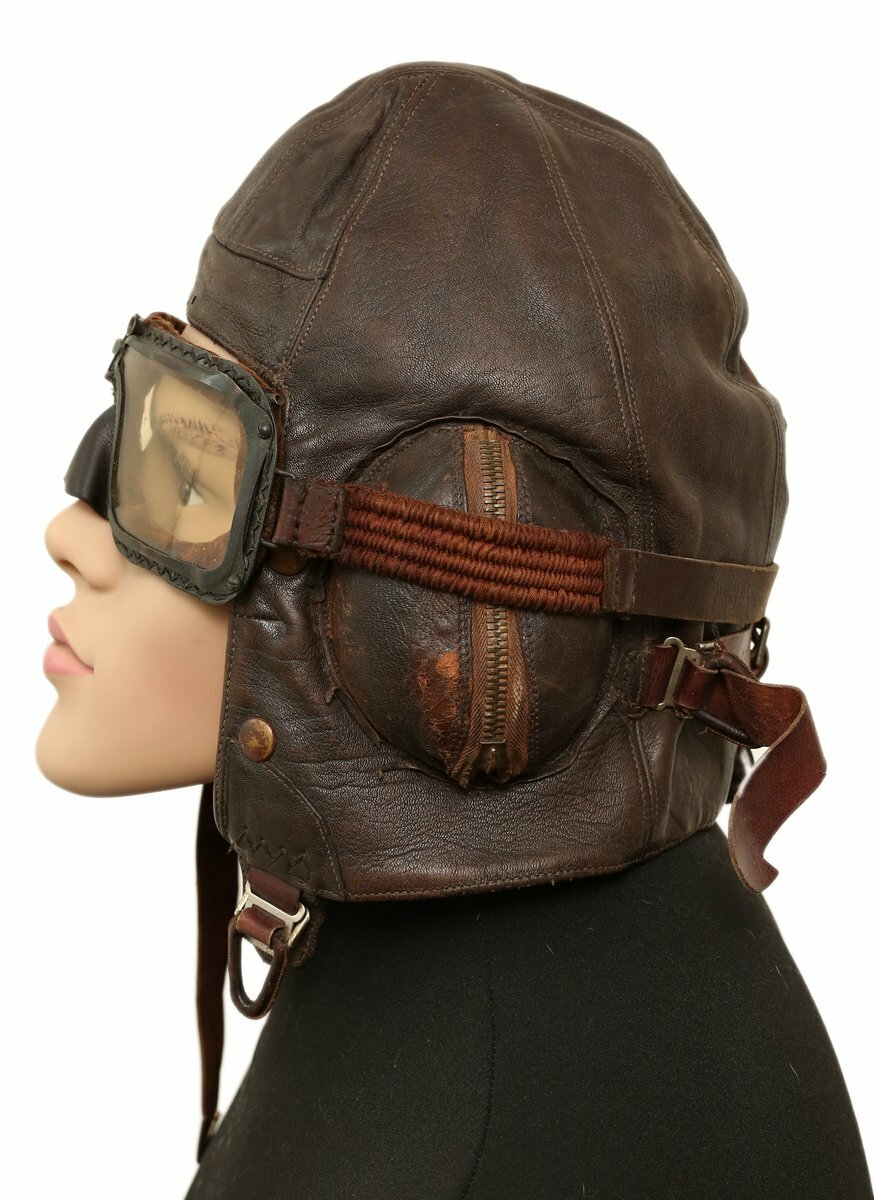
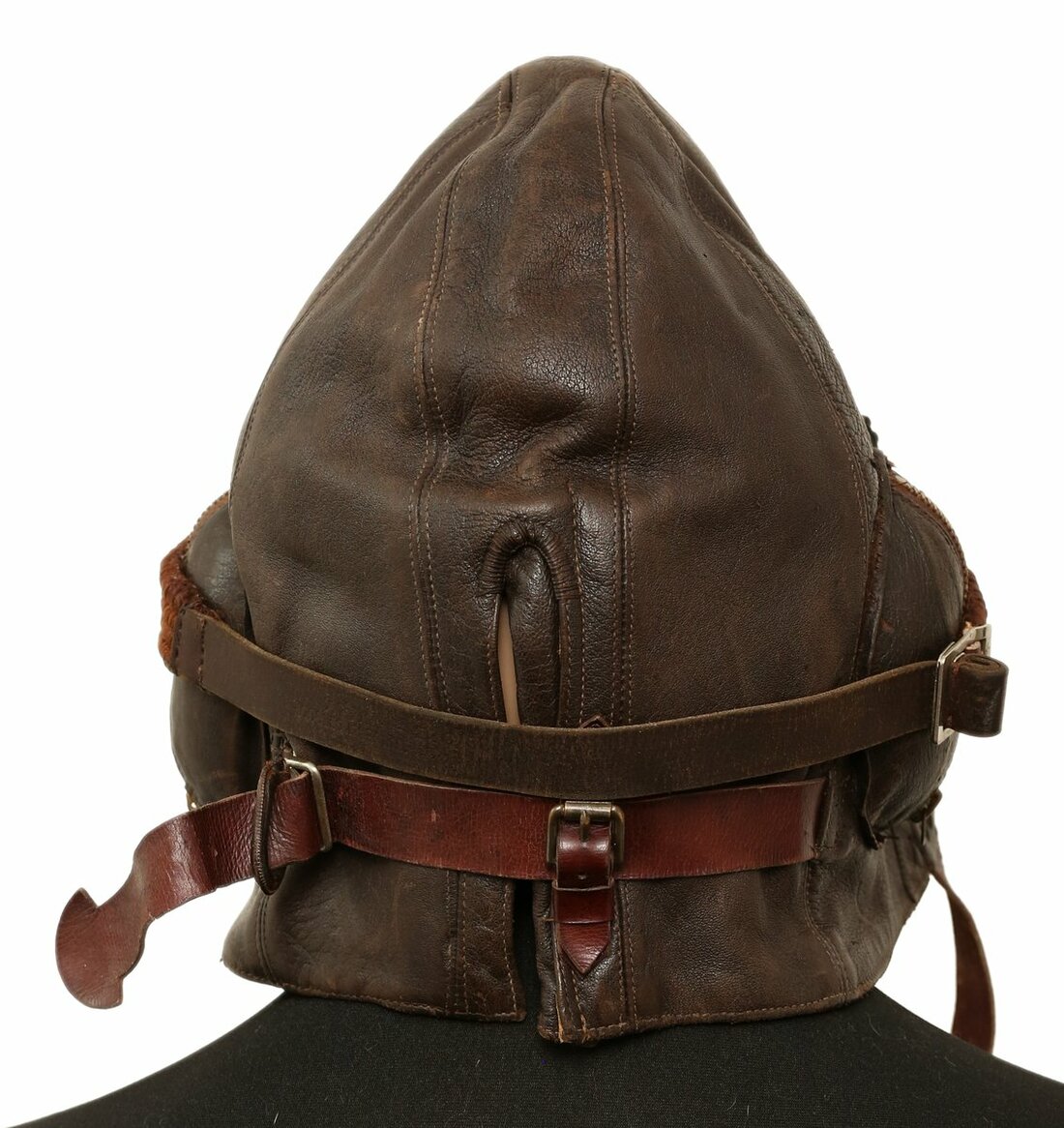
His wartime leather flying helmet and goggles.
(v)
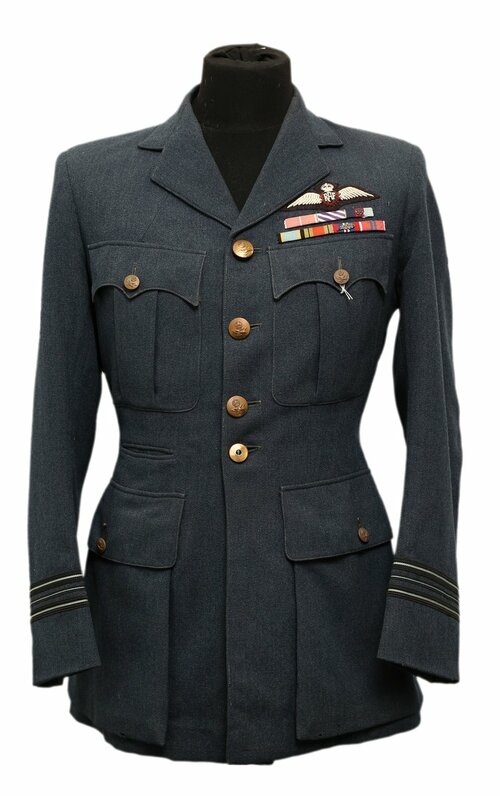
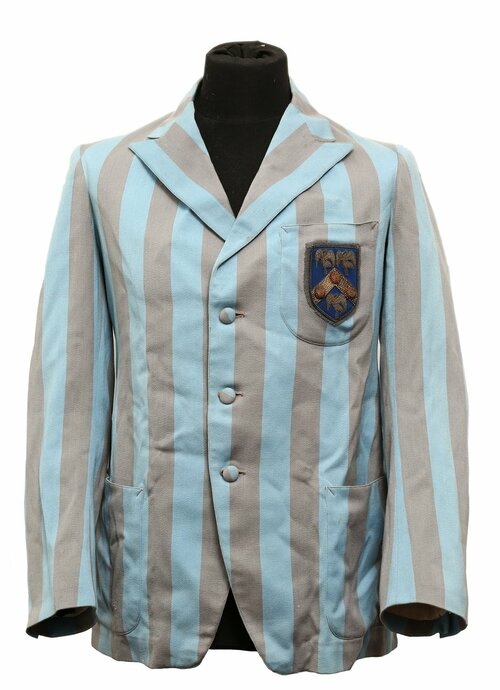
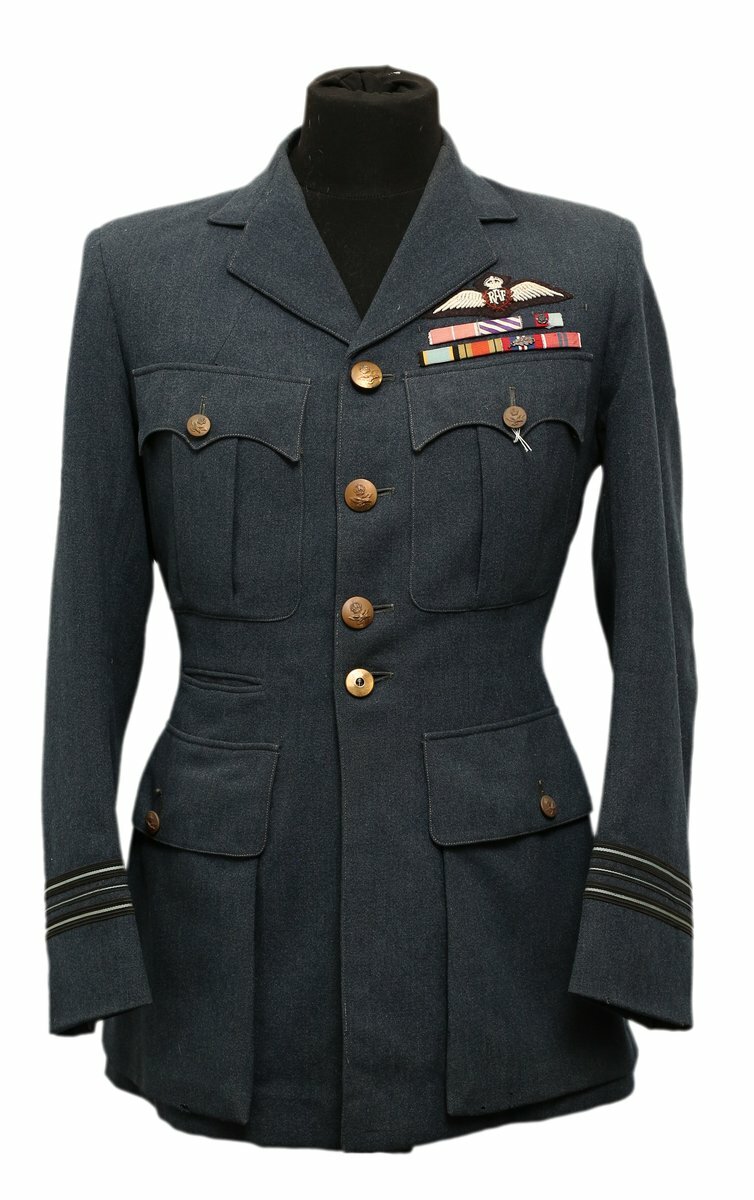
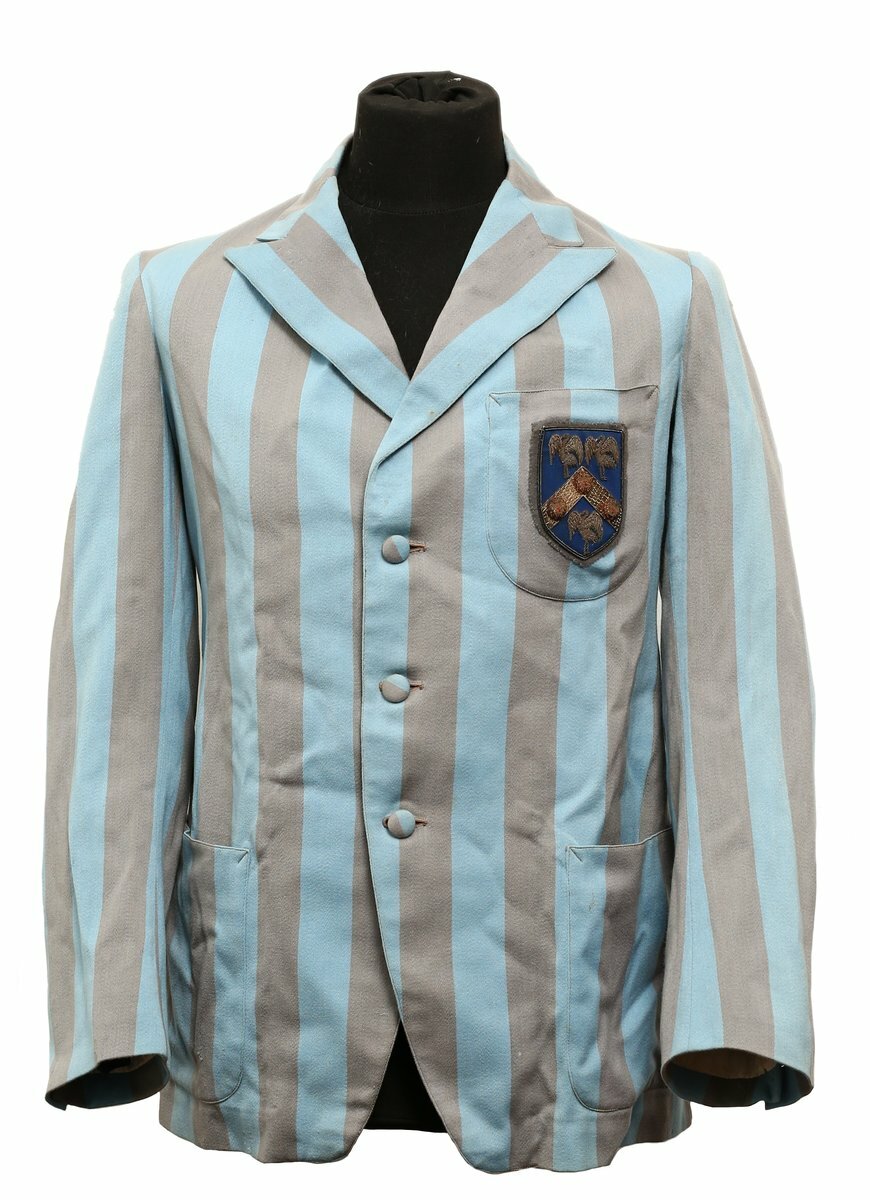
His R.A.F. tunic and trousers, the former with Squadron Leader's rank insignia, 'Wings' and medal ribands, together with his R.A.F. Cranwell blazer with embroidered pocket patch.
(vi)
A pair of commemorative tankards, both with R.A.F. Museum certificates, dated December 1980 and November 1982, the earlier example for the Battle of Britain and impressed inscription, 'Wg. Cdr. Charles Warren, M.B.E., D.F.C.', and the later example for Bomber Command and impressed inscription, 'Wg. Cdr. C. Warren, M.B.E., D.F.C., M.I.D., M.P.I.M., M.B.I.M., R.A.F., Retd.'
(vii)
A pair of prize medals, including an R.A.F. Halton award for rugby, in bronze with central enamelled shield, this named 'Cpl. A. A. Warren, C.'
For the recipient's dress miniatures, please see Lot 282.
Subject to 20% VAT on Buyer’s Premium. For more information please view Terms and Conditions for Buyers.
Estimate
£14,000 to £18,000
Starting price
£12000
Watch, listen and bid as if you were in the room. Now available for auctions worldwide.
Click here to bid live
An exclusive and confidential service for the discerning collector or vendor.
View the Gallery
Download every Spink catalogue on your iPad, iPod or iPhone using free Spink app.
Download From iTunes© 2026 Spink & Son. All rights reserved.