
Auction: 26002 - Orders, Decorations and Medals
Lot: 51
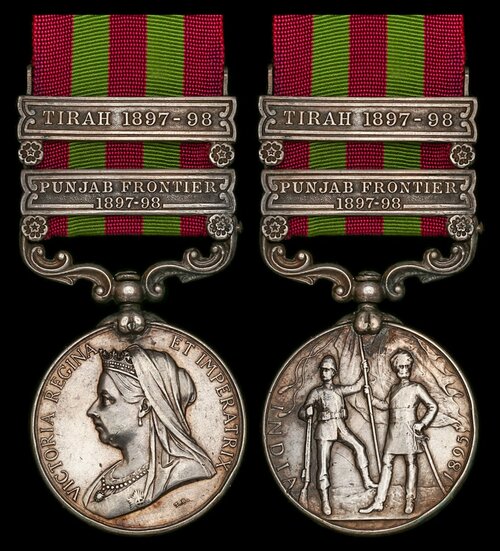
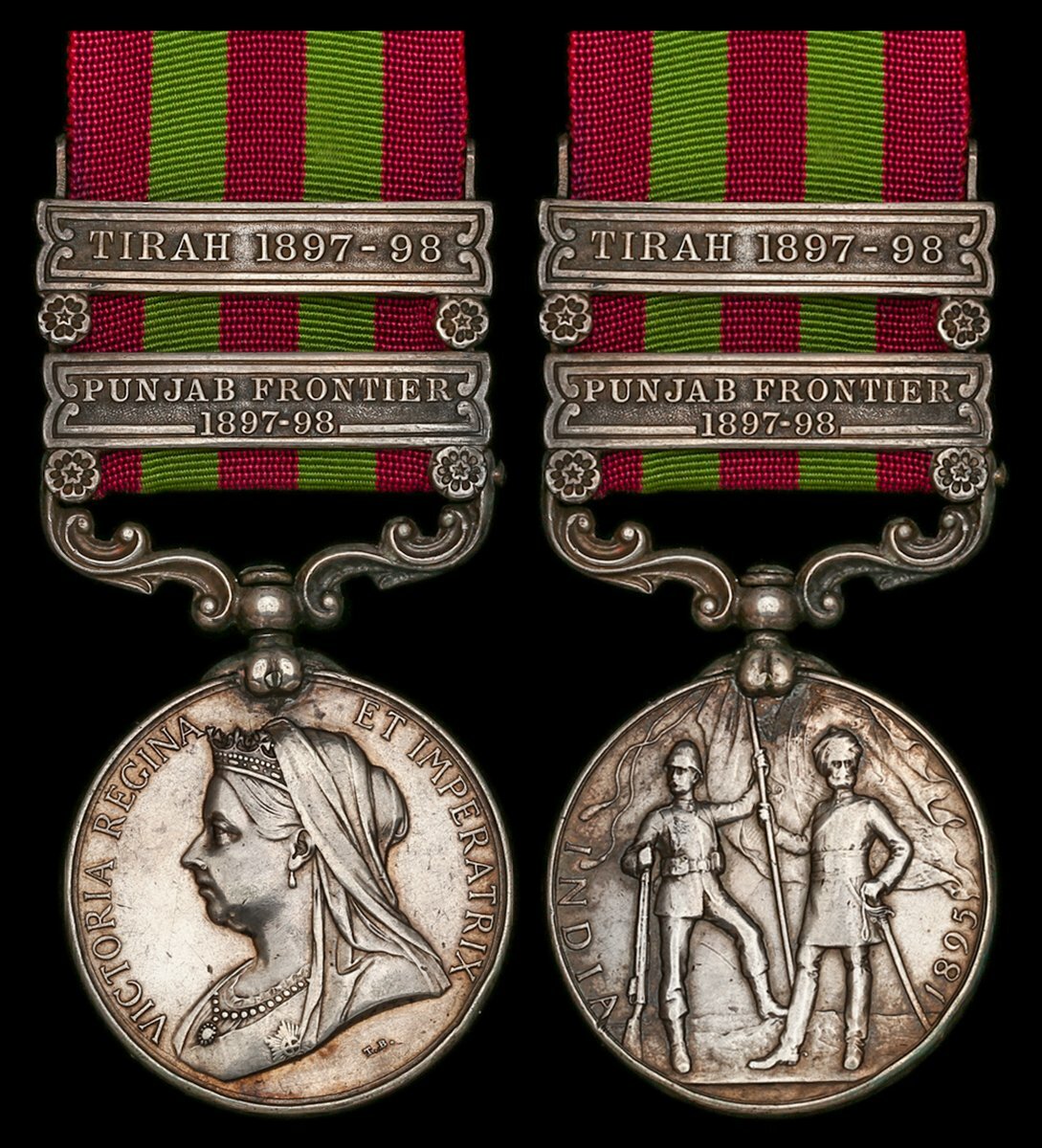
The India General Service Medal awarded to Private S. Wilson, 2nd Battalion, King's Own Scottish Borderers, who was severely wounded in action on 13 December 1897 at Shere Khan, in the rearguard action when Orakzai and Afridi tribesmen charged across a river to put in their attack
India General Service 1895-1908, 2 clasps, Punjab Frontier 1897-98, Tirah 1897-98 (5315 Pte. S. Wilson. 2d. Bn. K. O. Sco: Bord:), very fine
Samuel Wilson was born in 1876 at Kirkmichael, Dumfries and was a labourer by trade - whilst also being in the 3rd Militia Battalion - upon joining the King's Own Scottish Borderers in May 1895. Serving in India from 24 May 1895, he went up onto the North-West Frontier and was severely wounded by gunshot to shoulder in the action at Shere Khan (Sher Khel) on 13 December 1897.
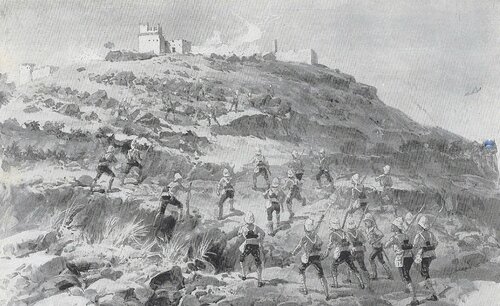
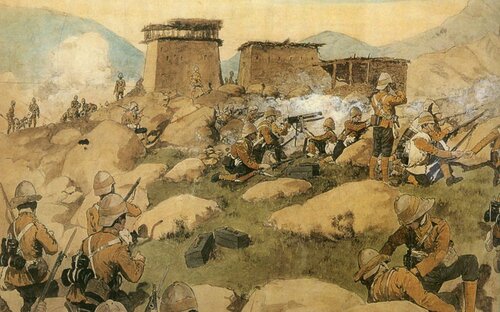
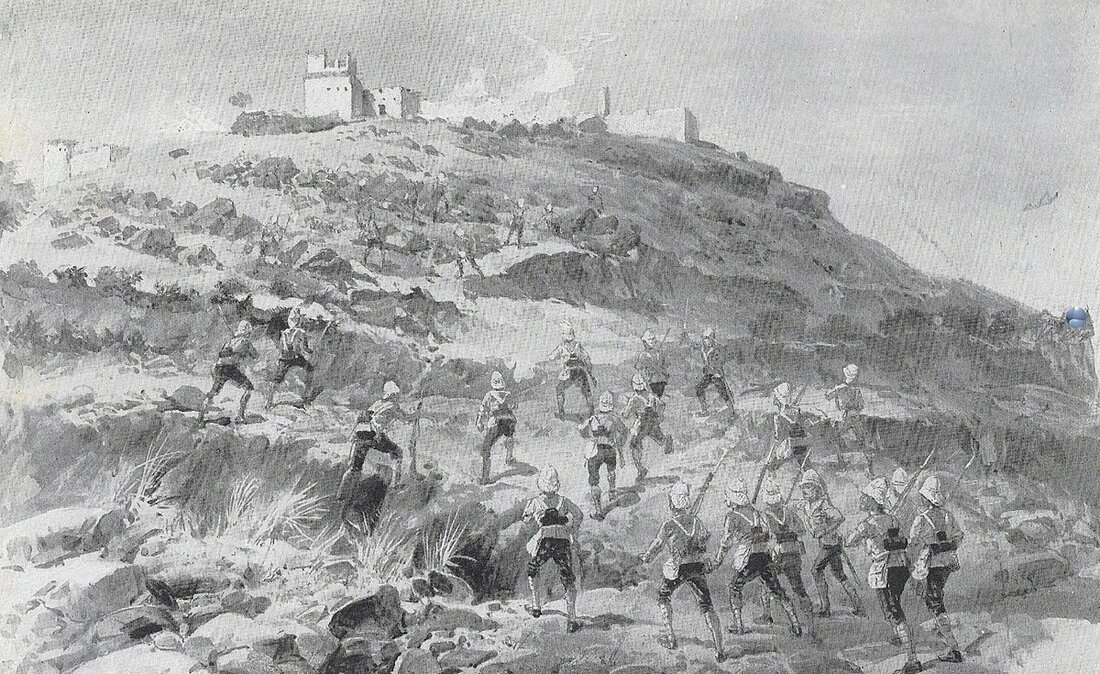
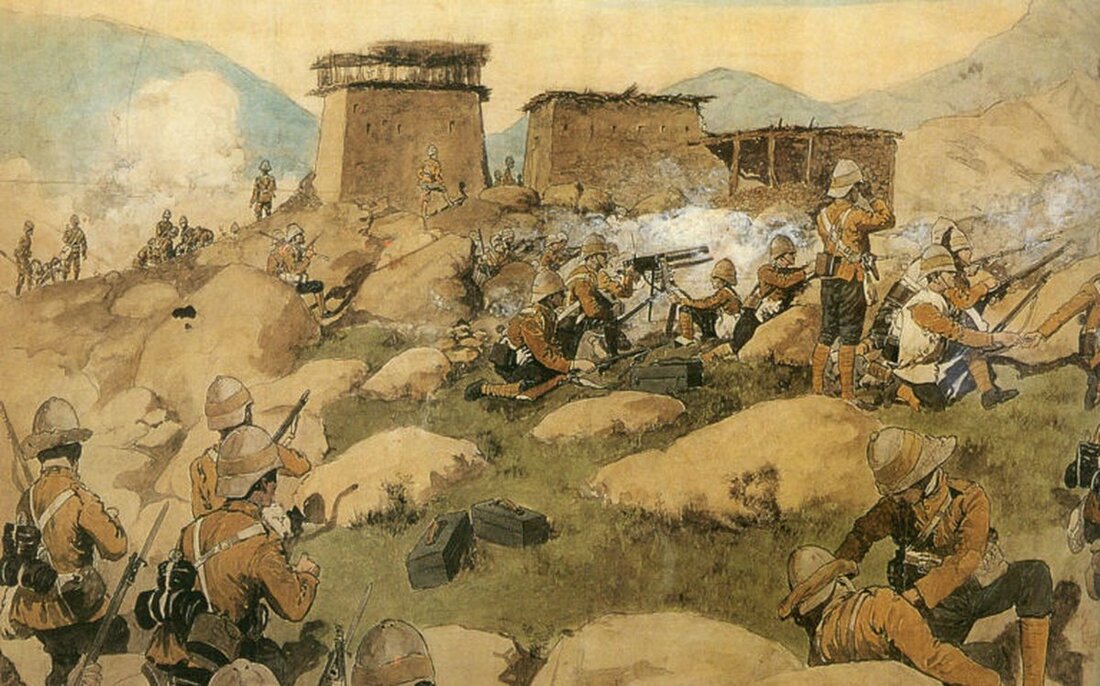
At that time the unit were part of 4th Brigade, commanded by Brigadier-General Westmacott, and still wore their famous tartan trews on campaign. They had famously stormed the Arhanga Pass in October 1897 and then taken Maidan.
On 10 December 1897 the 2nd Division marched out of Dwatoi, the 4th Brigade in the lead heading for Sandana, the 3rd Brigade making for Karana, 3 miles short of Sandana. The fortified villages passed through on the journey were destroyed.
Both Brigades reached their destinations, from where they marched out on 11 December 1897, heading east along the Bara River for Sher Khel, ten miles from Sardana.
Rain fell steadily and the steep paths out of Karana became difficult for the baggage animals, leading to significant delays. Having eventually reached camp, they set out again on 13 December. The 3rd Brigade lead the advance with the 4th Brigade as the rear-guard and having to cope with the difficulties of the baggage column between the two Brigades.
A Battalion from the leading brigade piqueted both flanks, keeping the picquets in place until the whole force had passed. Once that Battalion was fully deployed another Battalion provided the additional piquets required, so that Battalions were kept together.
Additional guards were attached to the baggage train to keep the civilian drivers in place. The distance to Shinkamar was expected to be about 7 miles, but turned out to be much further, around 12 miles, with the result that the 2nd Division did not reach camp by the end of the day’s march. The first three miles of the march to Galli Khel were along the river bed. The track then turned to the north, over the Lakarai Kotal and down to Sawaikot. A junction was planned with the Peshawar Column, which had marched up the river from the opposite direction, at Barkai a couple of miles short of Sawaikot.
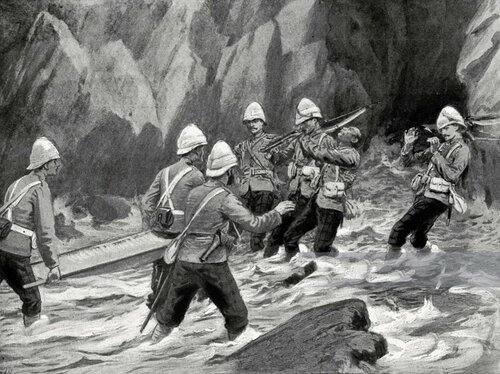
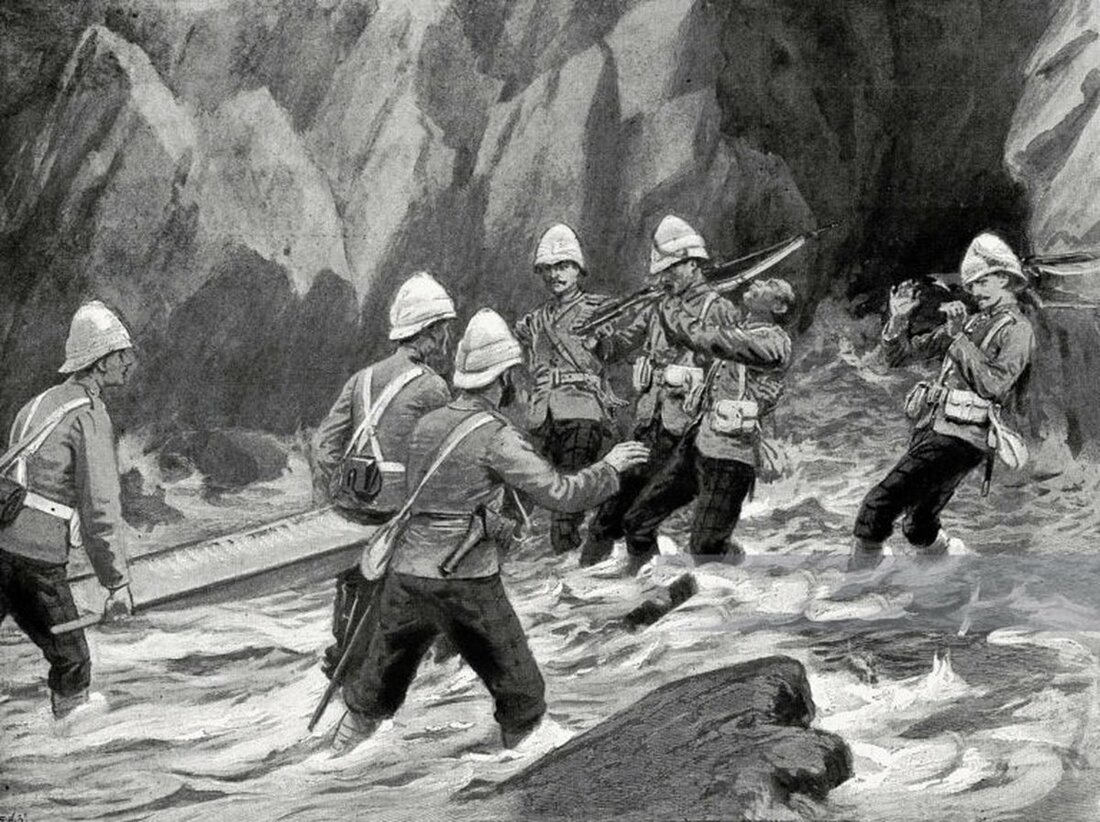
The tribesmen launched their first attacks with great determination as the rear-guard of the 4th Brigade left camp at the beginning of the march. A halt was forced on the column as the baggage struggled to emerge from the track in the river bed at Galli Khel. The tribesmen charged across the river bed to attack the baggage train, but were repulsed with heavy casualties by a cross fire from the artillery and infantry of the two Brigades. It must surely have been in these close-combat actions that Wilson was wounded, the scene of them captured under fire in the river being painted by Nash.
His Service Record notes 'gunshot wound near Mamani during a rear-guard action' which broke the shoulder and that in February 1898 '...the bullet was extracted from beneath the skin at a point about 2 1/2 inches above the apex of the right scapula behind'. He was discharged on account of the wound in April 1898; sold together with copied research.
Subject to 20% VAT on Buyer’s Premium. For more information please view Terms and Conditions for Buyers.
Estimate
£300 to £500
Starting price
£240

Watch, listen and bid as if you were in the room. Now available for auctions worldwide.
Click here to bid live
An exclusive and confidential service for the discerning collector or vendor.
View the Gallery
Download every Spink catalogue on your iPad, iPod or iPhone using free Spink app.
Download From iTunes© 2026 Spink & Son. All rights reserved.