
Auction: 26002 - Orders, Decorations and Medals
Lot: 10
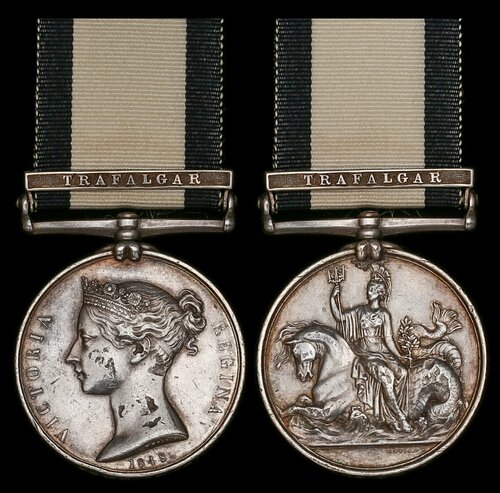
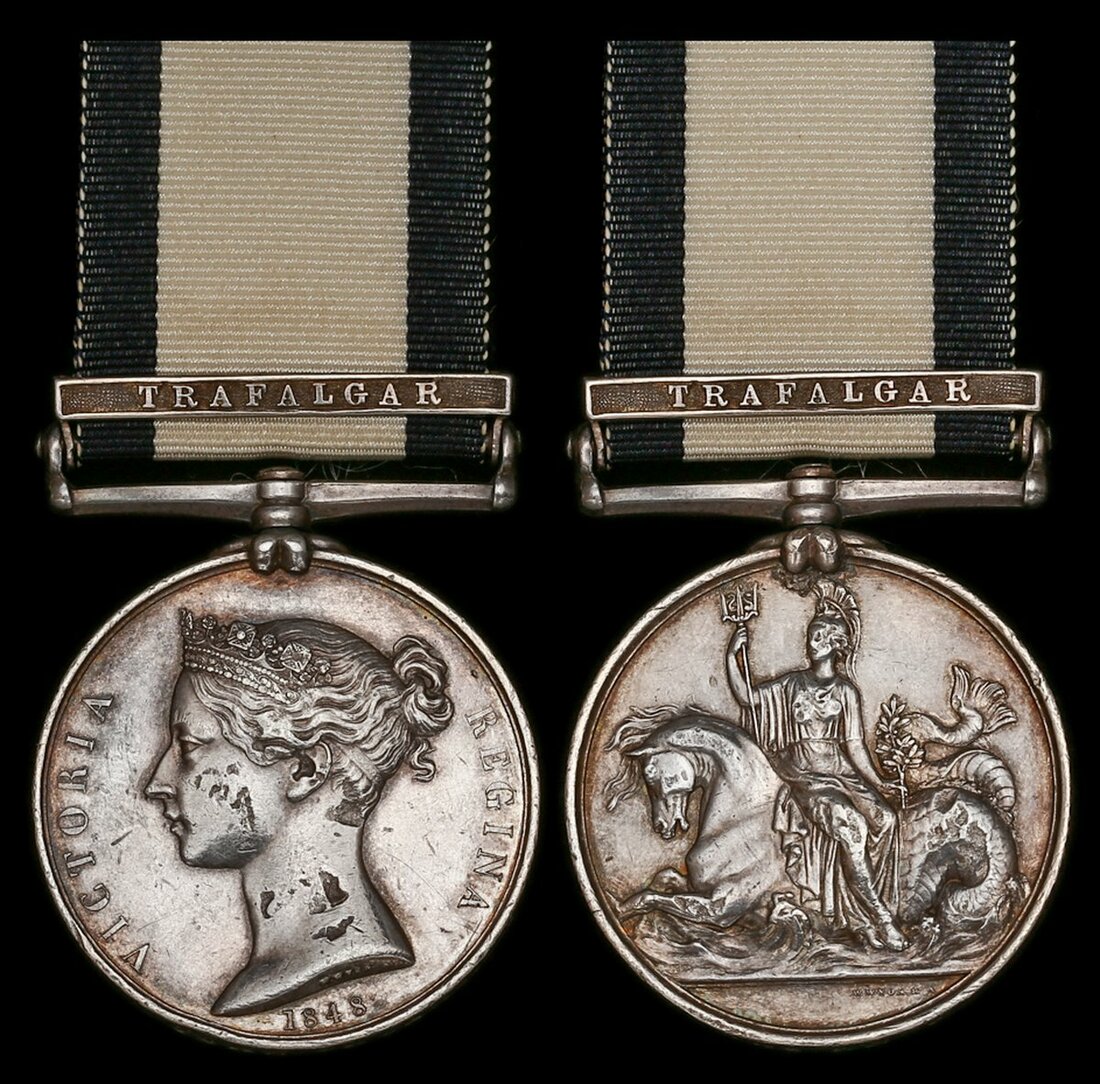
The Naval General Service Medal to Ordinary Seaman J. Shears, who served aboard H.M.S. Britannia at the Battle of Trafalgar
Naval General Service 1793-1840, 1 clasp, Trafalgar (John Shears.), heavy contact wear and edge bruising, some gouges, good fine
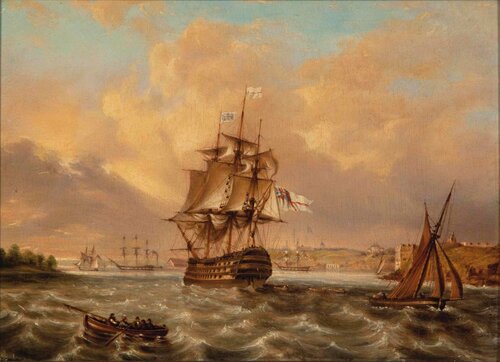
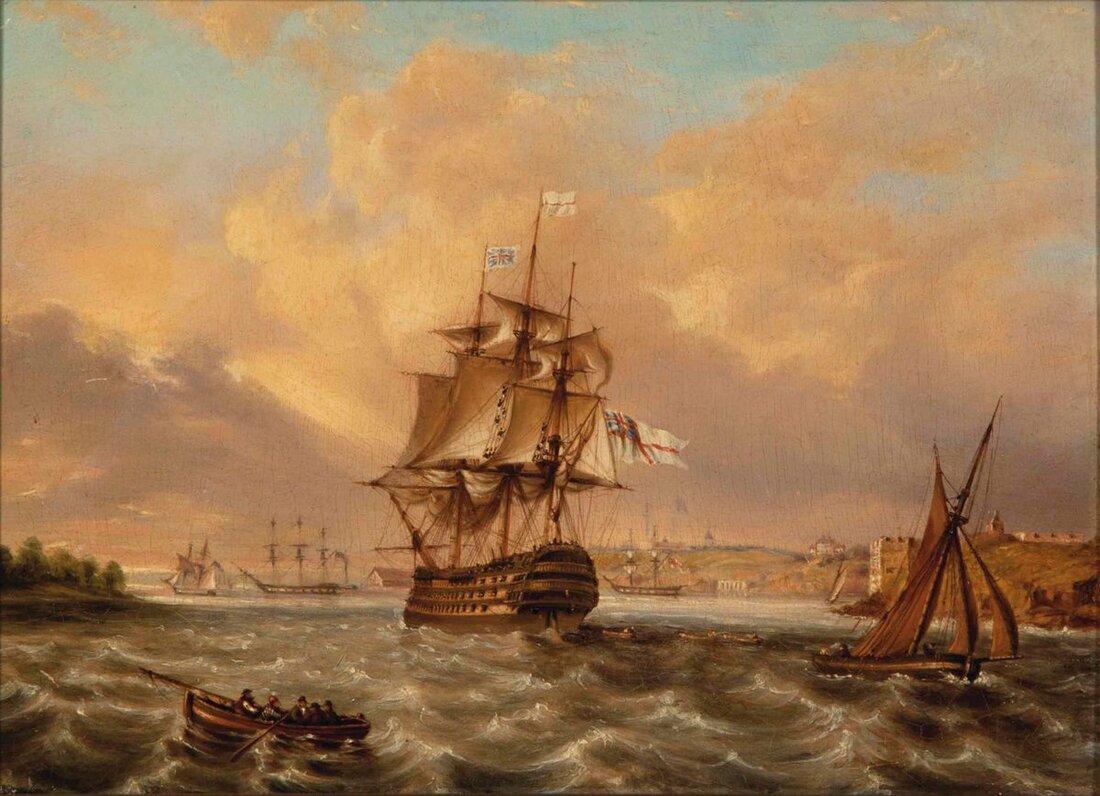
John Shears served as an Ordinary Seaman with 100-gun first rate ship of the line H.M.S. Britannia, also known as 'Old Ironsides', when she was the oldest ship in combat on either side at the famed Battle of Trafalgar, which took place off the coast of Cadiz, Spain on 30 October 1805.
During the battle, Britannia was commanded by Rear-Admiral of the White Lord William Carnegie of Northesk, who was third in command of the Mediterranean fleet after Vice-Admiral Cuthbert Collingwood and, of course, Vice-Admiral Lord Horatio Nelson. She was positioned in the windward column, part of the squadron led by Nelson aboard H.M.S. Victory, which sailed into the centre and vanguard of the line of the Franco-Spanish allied fleet. Britannia received orders directly from Nelson to break through the enemy line astern of the fourteenth ship, thus becoming the fourth ship to enter the battle. After breaking the line, Britannia dismasted a French 80-gun ship, and later engaged three enemy ships attempting to double upon Victory.
A letter by John Wells, a Lieutenant serving on Britannia, provides an eyewitness account of the experience of fighting at the Battle of Trafalgar from her decks. Wells wrote:
'we had the satisfaction of seeing our Enemy about 8 or 10 miles to leeward of us Lord Nelson immediately made the signal to close the Enemy and prepare for Battle... Britannia was certainly a very fortunate ship during the whole time as we had not above 10 killed and 41 wounded although we were the 4th ship in Action and the last out of it...and at one time had 5 ships blazing away upon us but we soon tied them out'.
Nelson's arrangement of his fleet at Trafalgar was in contrast with regular naval tactics of the day, by which most naval battles were fought by ships arranged in a parallel line. Instead, Nelson intended his fleet to cut through and separate the parallel columns of the enemy, which caught the French Vice-Admiral Pierre-Charles Villeneuve unawares and worked to great effect. Britain achieved a remarkable victory that day, in which despite being outgunned and outmanned, with six fewer ships of the line, lost not a single ship in the conflict.
Shears is confirmed with entitlement to this medal and clasp; sold together with copied medal roll.
Reference:
John Marshall, Royal Naval Biography Vol. I (Longman, Hurst, Rees, Orme & Brown, 1823).
Subject to 20% VAT on Buyer’s Premium. For more information please view Terms and Conditions for Buyers.
Estimate
£7,000 to £9,000
Starting price
£7000

Watch, listen and bid as if you were in the room. Now available for auctions worldwide.
Click here to bid live
An exclusive and confidential service for the discerning collector or vendor.
View the Gallery
Download every Spink catalogue on your iPad, iPod or iPhone using free Spink app.
Download From iTunes© 2026 Spink & Son. All rights reserved.