
Auction: 26002 - Orders, Decorations and Medals
Lot: 11
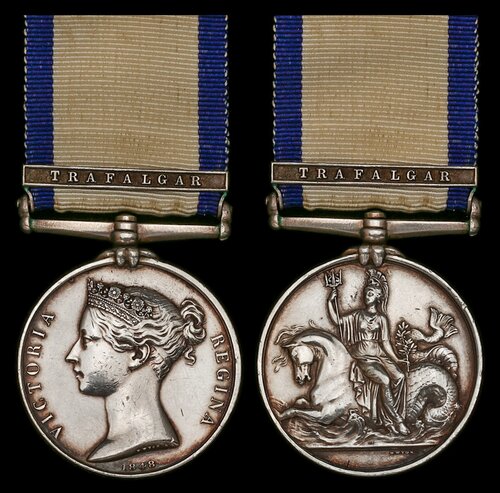
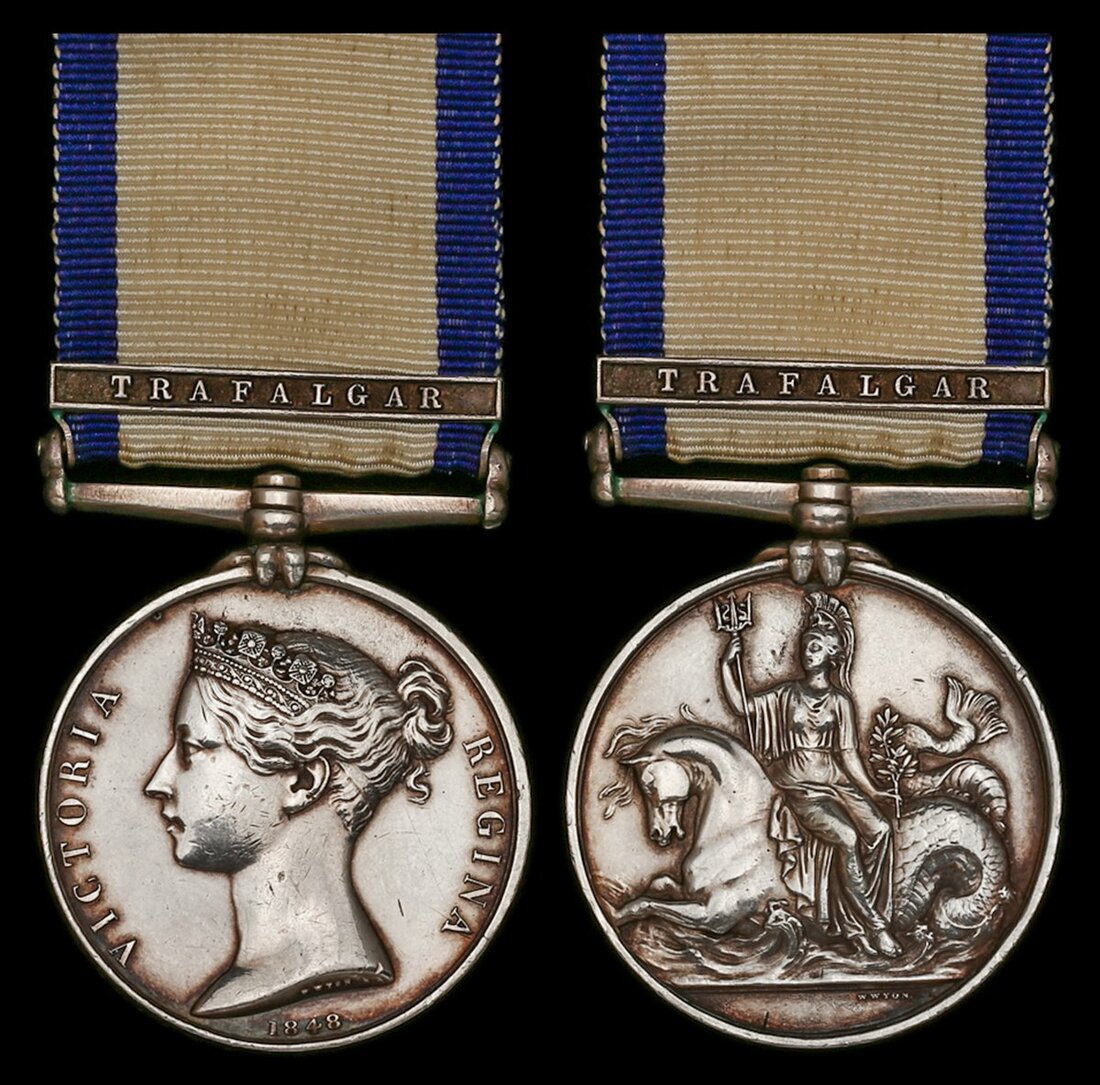
Naval General Service 1793-1840, 1 clasp, Trafalgar (William Thompson), suspension and clasp sometime re-fitted, very fine
Nine men of this name upon the published rolls, this Medal & clasp noted as having appeared on several occasions, sometimes with additional clasps.
William Thompson was born in Kent circa 1782 and was 21 years of age when he served as an Able Seaman aboard the third rate 74-gun H.M.S. Leviathan at the Battle of Trafalgar. He had joined her as an Ordinary Seaman on 23 November 1803 and according to allotment records remained with her after the battle, appearing on her books at least until 1808 (at which time he was listed again as an Ordinary Seaman) with his allotment paid to his wife Mary.
Thompson likely joined Leviathan when she came into Portsmouth Harbour in October 1803, after which she went down to St. Helen’s in February alongside Montague and Wolverine. Captain Henry Bayntun took command of her in 1804 and proceeded to join Nelson in the Mediterranean that April. She remained there until joining in the chase of the Toulon fleet to the West Indies. However, she was back in European waters to take part in the Battle off Cape Trafalgar on 21 October 1805.
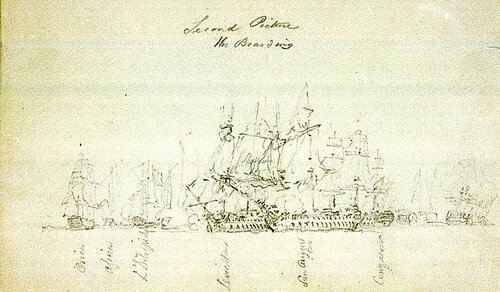
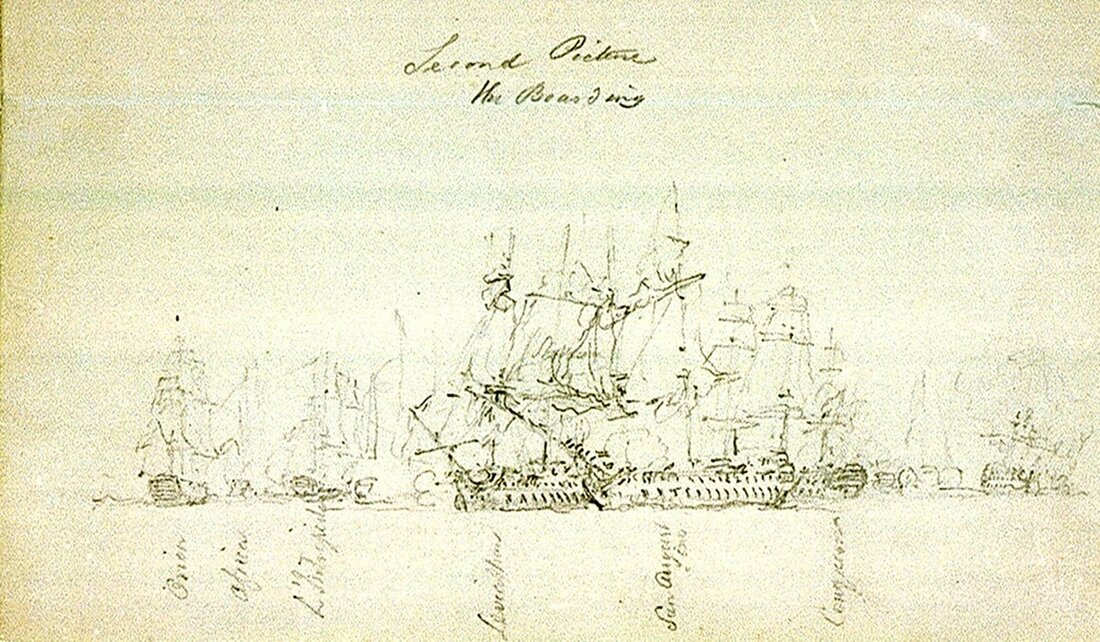
Leviathan was near the front of Lord Nelson’s windward column, fifth in the line behind Victory, Temeraire, Neptune and Conqueror. The column smashed into the enemy line and isolated Bucentaure, which was met with raking broadsides by Leviathan and Neptune. She next engaged the French Neptune before focussing on the Spanish Santissima Trinidad, the largest ship present at the action, who was forced to surrender after three short hours after being subject to much concentrated British fire.
At about 2:30pm, Captain Thomas Hardy signalled nearby ships to come and engage the approaching enemy squadron under Admiral Dumanoir. Leviathan answered the call and laid alongside the damaged San Augustin and fired upon her as well as on her companion Intrepide. After exchanging broadsides at close quarters, her crew boarded the enemy and carried her easily, suffering just four killed and 20 wounded while San Augustin surrendered with 160 casualties.
Following the action Leviathan unfortunately lost her prize which, following severe weather, foundered and had to be burned. Leviathan suffered little damage and was able to return to Gibraltar unaided. Captain Bayntun was given the honour of bearing the guidon at Nelson’s state funeral during the water procession from Greenwich to Whitehall and later received a Naval Gold Medal and a Lloyd's Patriotic Fund sword.
Commanded by Captain John Harvey and with Thompson still aboard her, Leviathan later saw action at the Battle of Maguelone on 25 October 1809. There the British gave chase to a French Navy squadron covering the rear of a convoy which attempted to escape from the British by sailing in shallow waters along the shore of Villeneuve-lès-Maguelone. Leviathan, together with Tigre, exchanged shots with Pauline and Boree, however these ships managed to evade capture and escaped to Toulon. The crew of Leviathan did not earn the Boat Service clasp for this action as she did not participate in the cutting out action to the anchored convoy nor the capture of any enemy ships.
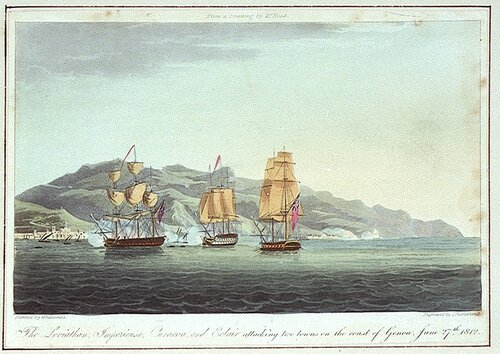
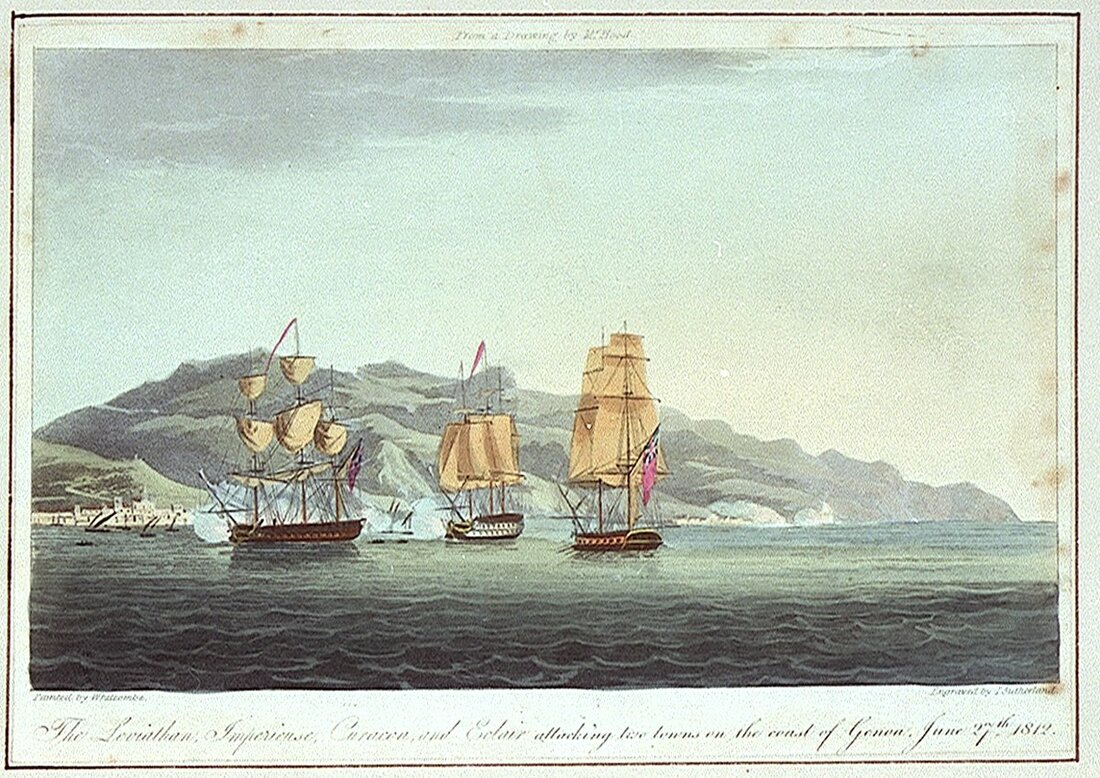
A few years later on 27 June 1812 and then commanded by Captain Patrick Campbell, Leviathan alongside Imperieuse, Curacoa, and Eclair attacked a French convoy of 18 merchant ships in northern Italy, during which they destroyed a number of shore batteries at Laigrelia. At the end of the Napoleonic Wars, Leviathan was converted into a prison ship in 1816.
Subject to 20% VAT on Buyer’s Premium. For more information please view Terms and Conditions for Buyers.
Estimate
£2,000 to £3,000
Starting price
£2000

Watch, listen and bid as if you were in the room. Now available for auctions worldwide.
Click here to bid live
An exclusive and confidential service for the discerning collector or vendor.
View the Gallery
Download every Spink catalogue on your iPad, iPod or iPhone using free Spink app.
Download From iTunes© 2026 Spink & Son. All rights reserved.