Auction: 25111 - Orders, Decorations and Medals - e-Auction
Lot: 516
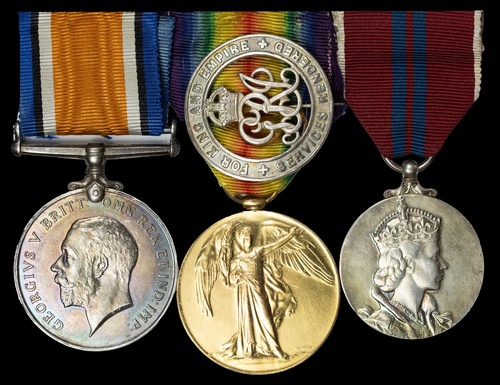
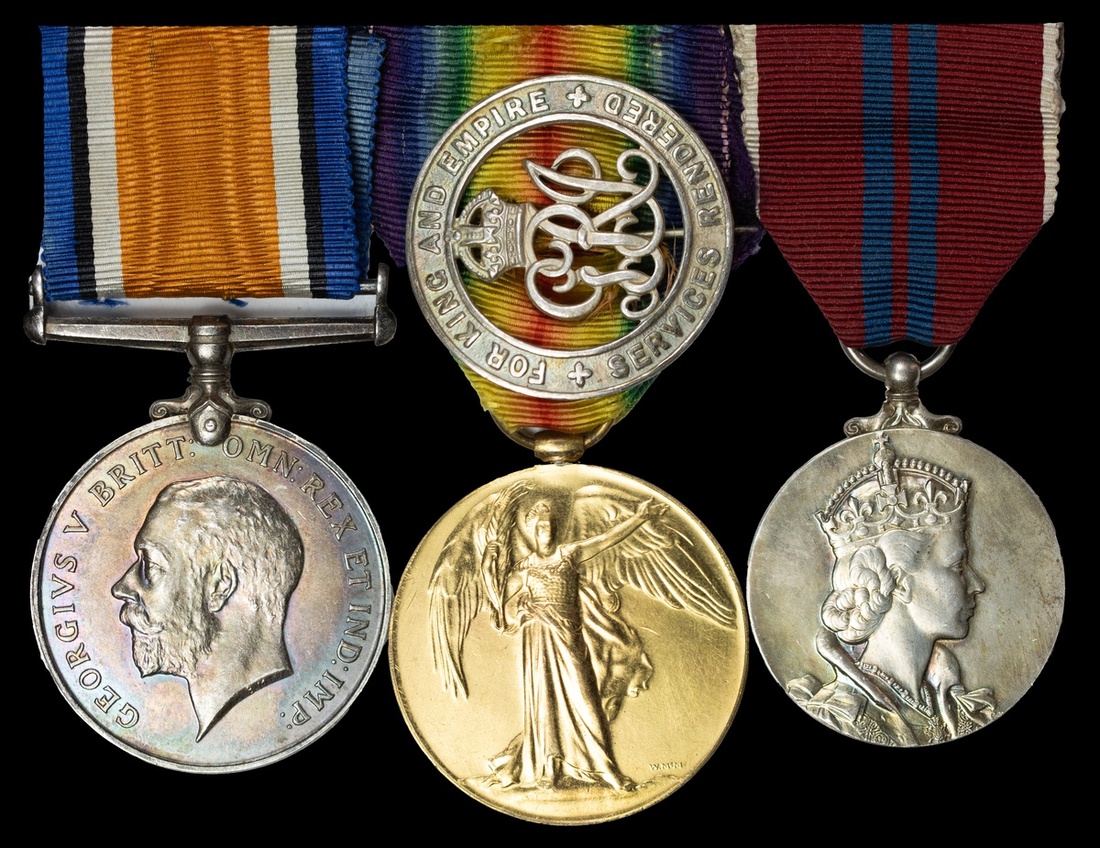
The Great War group awarded to Captain. R.M. Middleton O.B.E., 19th Battalion Durham Light Infantry, late Notts & Derby Regiment who was the prosecuting officer in the trial of seven soldiers of the D.L.I.; three were later executed in what became known as the 'King Crater incident'
He devoted his working life to public service holding the post of Town Clerk of Lancaster for 30 years and was richly rewarded with the O.B.E. in 1939
British War and Victory Medals (Capt. R.M. Middleton); Coronation 1953, unnamed as issued, very fine (3)
Robert Mitchelhill Middleton was born at Carlisle in 1890, the son of George Hunton Middleton. Educated at Carlisle Grammar school he served his articles with the Town Council at Carlisle. He was commissioned in the Notts and Derby Regiment as a Second Lieutenant before transferring to the 19th Battalion, Durham Light Infantry, a Bantams Battalion, where he was appointed adjutant. He was appointed as prosecuting officer in the trial of seven soldiers of the D.L.I. in what became known as the 'King Crater incident.'
The King Crater Incident
In the early hours of the morning of 26 November 1916, the Battalion was holding part of the British line near Arras. Sergeant Stones was with Lieutenant James Mundy when they were attacked by German raiders; Lieutenant Mundy was grievously wounded and ordered Sergeant Stones to go for help. His rifle was in such condition that he could not fire it so he jammed it across the trench to slow down an advancing German soldier. Still under attack, he took cover in a reserve trench.
Meanwhile, Lance Corporal Goggins and Lance Corporal McDonald had been leading their men from the front-line trench. All three had retreated approximately twenty yards to a reserve trench while under attack from the enemy. They were approached by military police amidst the dark and much confusion, arrested - the sergeant was charged with "shamefully casting away his arms in the presence of the enemy", and the two lance corporals for leaving their posts without orders, although their sergeant testified that they had in fact been following orders.
Following the incident, a series of courts-martial were held leading to an extraordinary 26 death sentences, though 23 were later commuted. Three NCOs however were shot for desertion; Sergeant Joseph Stones and Corporals Peter Goggins and John MacDonald.
The Book Durham Pals notes that Middleton was at the time the Prosecuting Officer for the Battalion, it states:
'Other officer's involved at the trail included. Second Lieutenant, Robert Mitchell Hill Middleton, and Adjutant and Prosecuting Officer of 19/Durham L.I. He had originally been commissioned into the Nottinghamshire and Derbyshire Regiment, before being posted to the Durham Light Infantry.'
In 2006 the three men were pardoned and are remembered at the Shot at Dawn memorial at the National Memorial Arboretum in Staffordshire.
Middleton was evacuated in late 1917 suffering from the severe effects of gassing at Ypres.
Post war he qualified as a solicitor in 1921 and devoted his working life to public service serving as Town Clerk of Aylesbury from 1922 to 1923 before taking up the appointment as Town Clerk of Lancaster, a post he held for 30 years. Recognised for his public service he was richly rewarded with the O.B.E. in the New Years honours list of 1939.
He died at Lancaster in January 1965; sold together with his silver wound badge B 80533, copied research and the book 'Durham Pals' by John Sheen in which Middleton is mentioned.
Subject to 20% VAT on Buyer’s Premium. For more information please view Terms and Conditions for Buyers.
Sold for
£230
Starting price
£110
Watch, listen and bid as if you were in the room. Now available for auctions worldwide.
Click here to bid live
An exclusive and confidential service for the discerning collector or vendor.
View the Gallery
Download every Spink catalogue on your iPad, iPod or iPhone using free Spink app.
Download From iTunes© 2026 Spink & Son. All rights reserved.