
Auction: 24111 - Orders, Decorations and Medals - e-Auction
Lot: 506
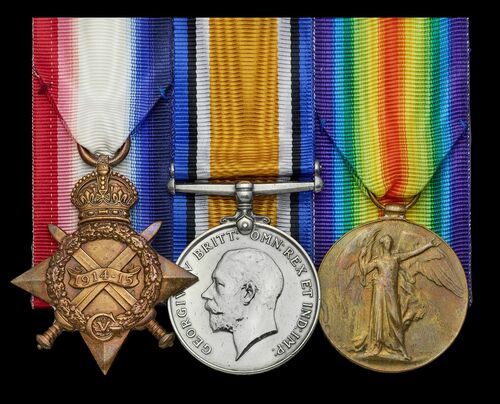
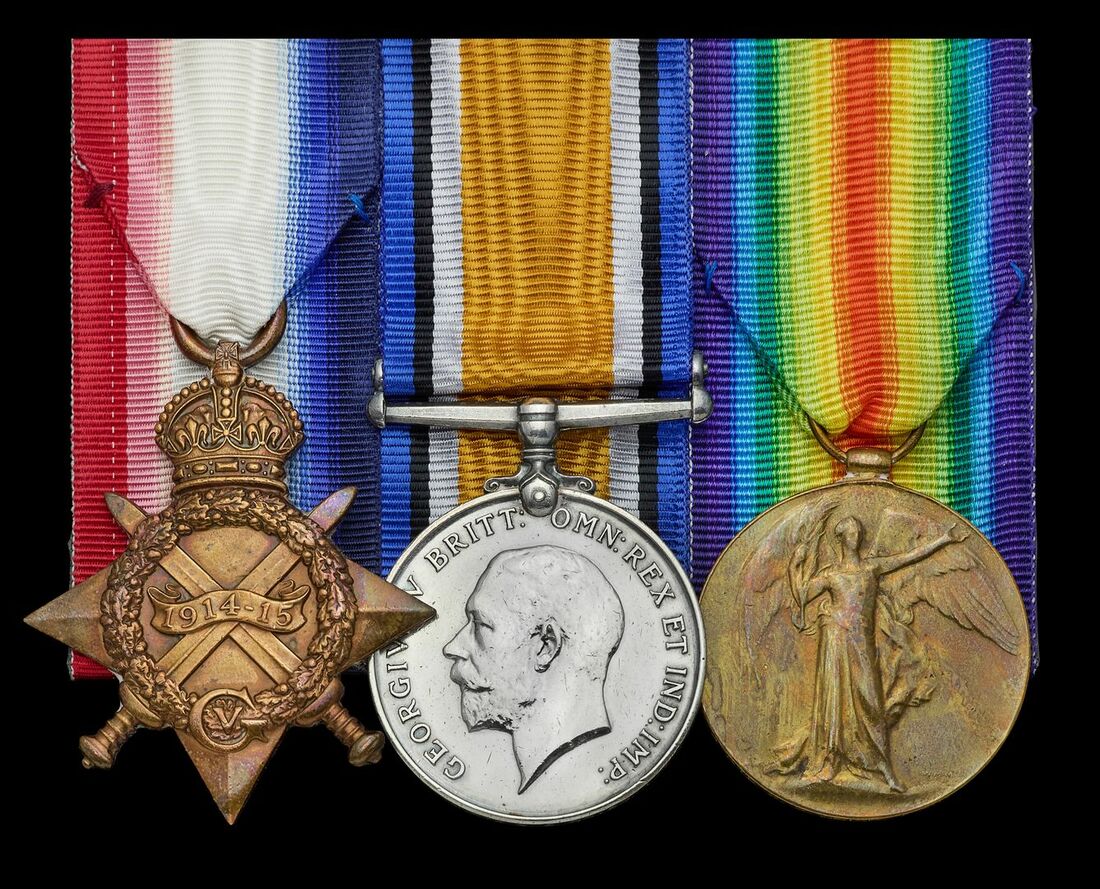
(x) Three: Private S. S. Crisp, Australian Naval and Military Expeditionary Force who served in military occupation in German New Guinea
1914-15 Star (1074 Pte S. S. Crisp. 1/A. N. & M.E.F.); British War and Victory Medals (1074 Pte S. S. Crisp. 1/A.N. & M.E.F.), light contact marks, very fine (3)
Septimus Stanley Crisp was born on 21 April 1892 at Bellingen, New South Wales, Australia. At the outbreak of the Great War he was working as a pastry cook and serving with the 2nd Regiment (N.S.W.) Militia. He volunteered on 12 August 1914 for the Naval and Military Expeditionary Force (Tropical Unit), being posted to 'F' Company with the service number 1074.
The A.N.M.E.F. left Sydney on the 19 August 1914 aboard H.M.A.T. Berrima escorted by H.M.A.S. Sydney.
On the morning of the 19 November 1914, a party of 25 naval reservists landed at Kabakaul. Their orders were to destroy the radio tower at Bita Paka, seven kilometres inland. After meeting some resistance from German soldiers and New Guinea troops, reinforcements were landed and the radio station was captured that evening. As a result of the action, six Australians from the A.N.M.E.F. were killed or died of wounds, another four were wounded. One German was killed and one wounded. New Guinea troops suffered 41 casualties, with 30 killed and 11 wounded.
The A.N.M.E.F. raised the British flag in Rabaul on 13 September 1914 and commenced the military occupation of German New Guinea. Colonel Holmes was appointed the Administrator of German New Guinea and the A.N.M.E.F. took on garrison duties until handing over to the Tropical Force and the men began to leave New Guinea on 9 January 1915. Crisp left on 21 January 1915 returning to Australia and at the termination of his enlistment was discharged on 28 January 1915.
He then worked as a dairy farmer but re-enlisted with the 9th reinforcements 19th Battalion on 6 November 1915. He departed Sydney on 20 November 1916 and landed in Egypt on 26 February 1916. He was posted to the 55th Battalion on 3 April 1916 and landed in France on 29 June 1916. He was admitted to hospital on 5 July 1916 and was subsequently evacuated to Australia for a medical discharge with cellulitis of the foot. He was discharged on 3 January 1917.
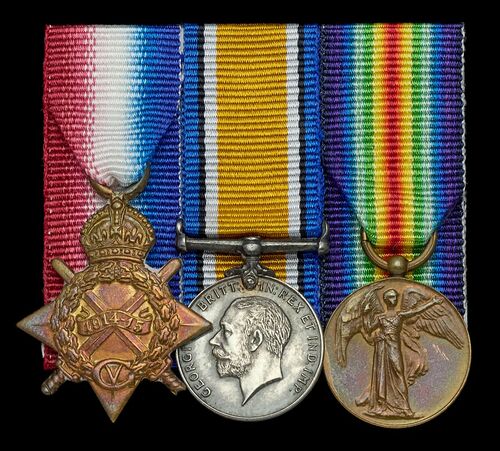
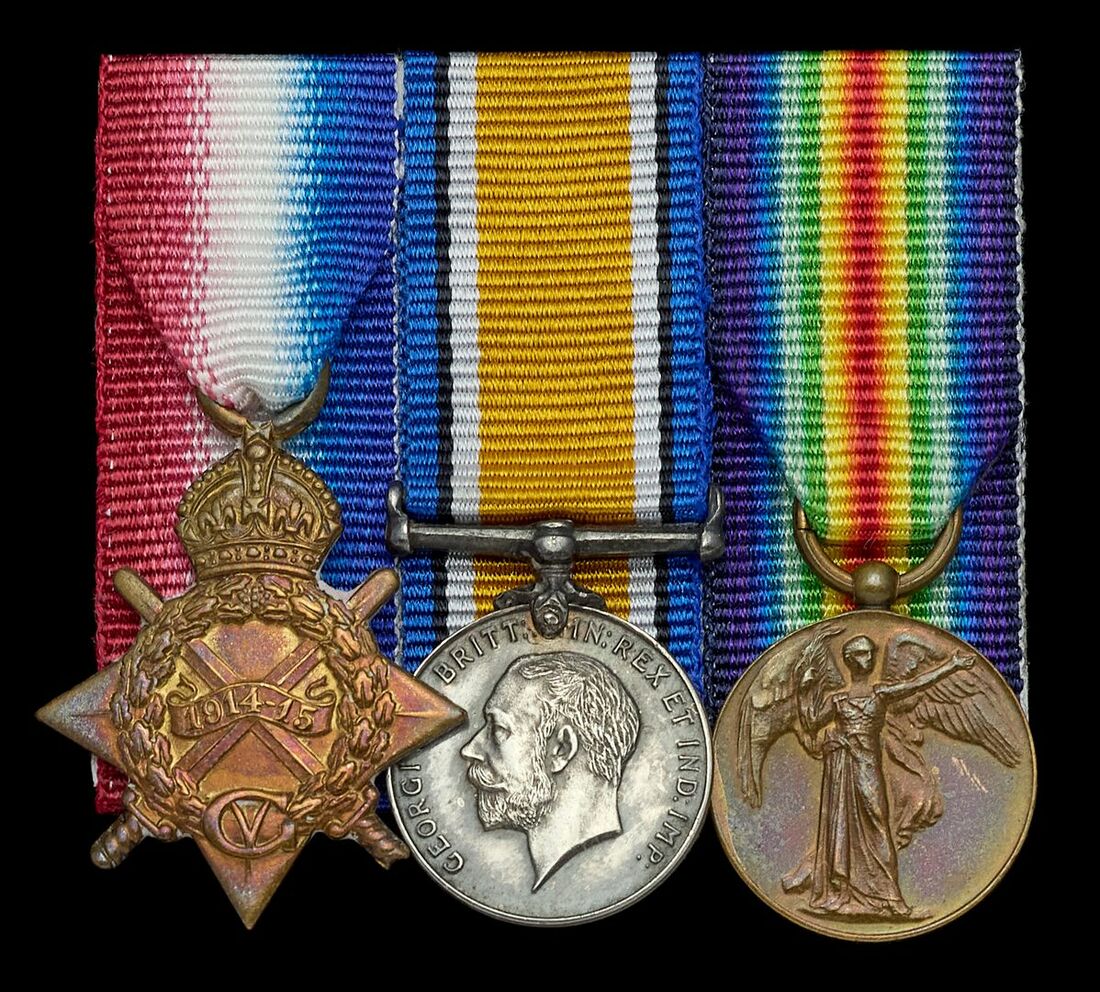
He died at Marrickville, New South Wales on 24 December 1964; sold together with his miniature medals, riband bar, wallet and six assorted postcards one of him in uniform.
Subject to 5% tax on Hammer Price in addition to 20% VAT on Buyer’s Premium.
Sold for
£320
Starting price
£210

Watch, listen and bid as if you were in the room. Now available for auctions worldwide.
Click here to bid live
An exclusive and confidential service for the discerning collector or vendor.
View the Gallery
Download every Spink catalogue on your iPad, iPod or iPhone using free Spink app.
Download From iTunes© 2026 Spink & Son. All rights reserved.