
Auction: 26002 - Orders, Decorations and Medals
Lot: 270
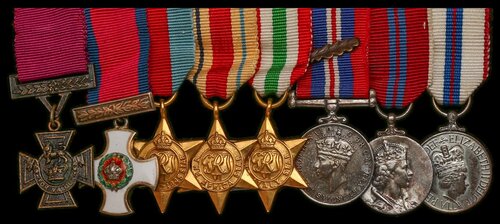
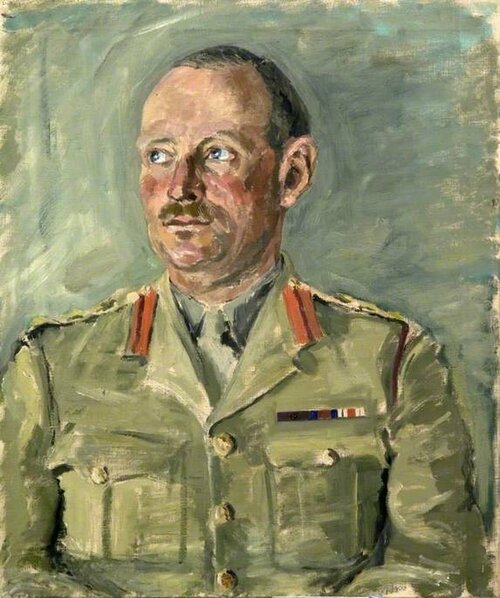
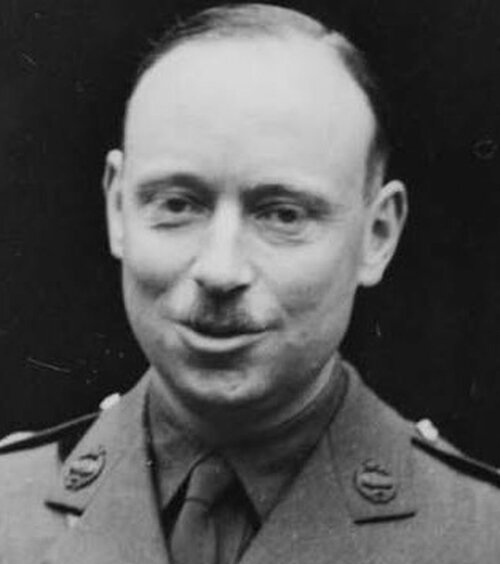
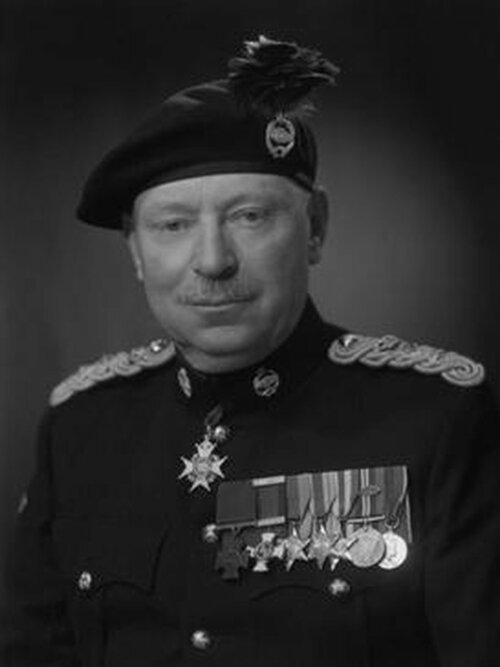
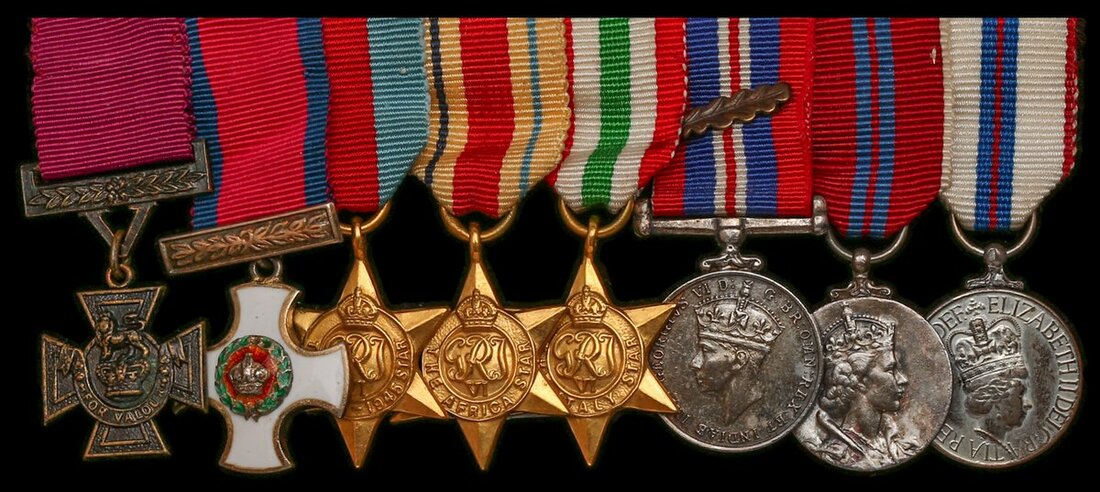
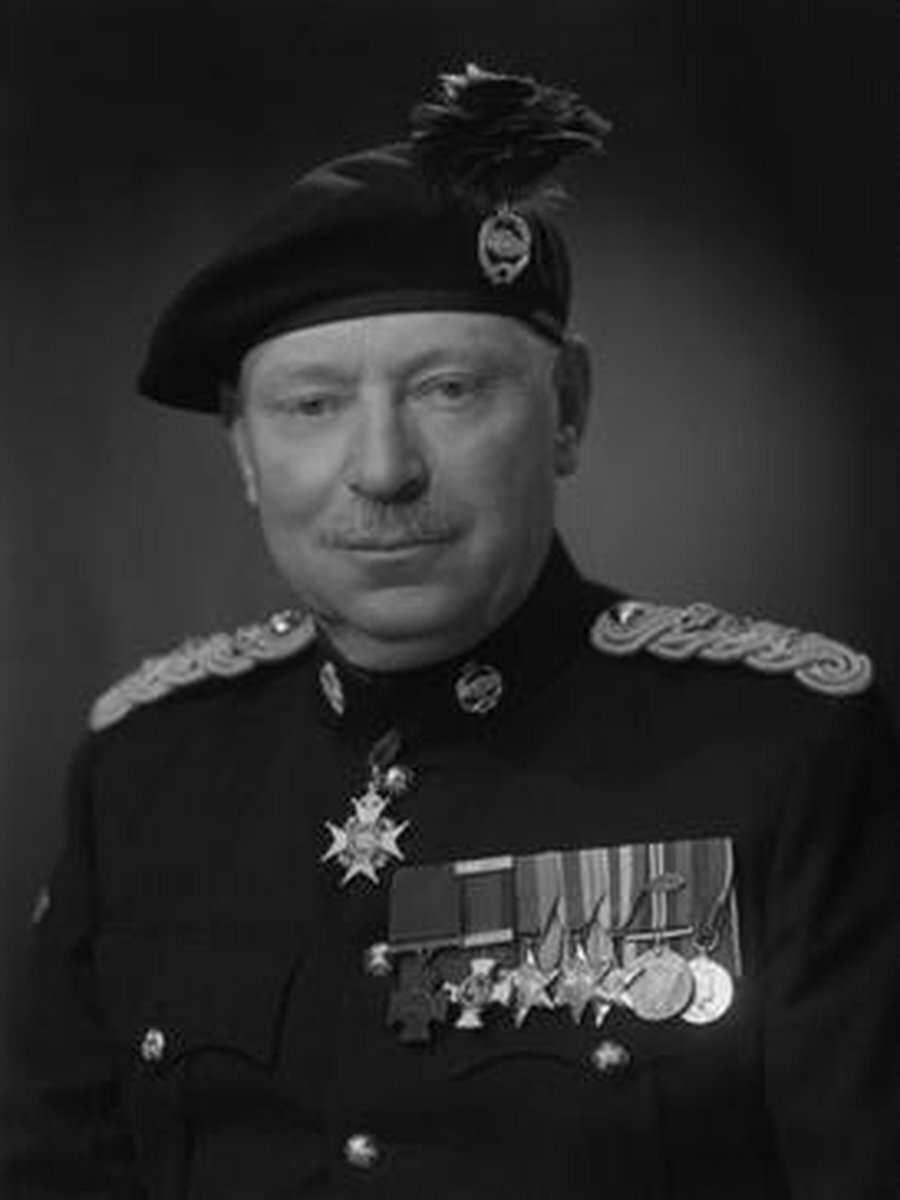
The mounted V.C., D.S.O. group of eight miniature dress medals worn by Major-General H. R. B. Foote, Royal Tank Regiment
Victoria Cross; Distinguished Service Order, G.VI.R., with top riband bar; 1939-45 Star; Africa Star; Italy Star; War Medal 1939-45, with M.I.D. oak leaf; Coronation 1953; Jubilee 1977, mounted as worn by Spink & Son and housed in fitted leather case, good very fine (8)
Just 2 awards of the Victoria Cross to the Royal Tank Regiment during the Second World War: Foote and Captain 'Pip' Gardner. The full size awards of Foote are held by the Tank Museum whilst the Gardner group is held in the Lord Ashcroft Collection.
V.C. London Gazette 18 May 1944, the original citation states:
'For outstanding gallantry during the periods 27th May to 15th June, 1942.
On 6th June, Lt.Col. Foote led his Battalion, which had been subjected to very heavy artillery fire, in pursuit of a superior force of the enemy. While changing to another tank after his own had been knocked out, Lt.Col. Foote was wounded in the neck. In spite of this he continued to lead his Battalion from an exposed position on the outside of a tank.
On June 13th, when ordered to delay the enemy's tanks so that the Guards Brigade could be withdrawn from the Knightsbridge escarpment and when the first wave of our tanks had been destroyed, Lieutenant Colonel Foote re-organized the remaining tanks, going on foot from one tank to another to encourage the crews under intense artillery and anti-tank fire.
As it was of vital importance that his battalion should not give ground, Lieutenant Colonel Foote placed his tank, which he had then entered, in front of the others so that he could be plainly visible in the turret as an encouragement to the other crews, in spite of the tank being badly damaged by shell-fire and all its guns rendered useless. By his magnificent example the corridor was kept open and the brigade was able to march through.
Lieutenant Colonel Foote was always at the crucial point at the right moment, and over a period of several days gave an example of outstanding courage and leadership that it would have been difficult to surpass. His name was a byword for bravery and leadership throughout the brigade.'
D.S.O. London Gazette 13 August 1942.
M.I.D. London Gazette 22 March, 29 November 1945.
Allan Long's obituary in The Independent offers a good summary of his remarkable life:
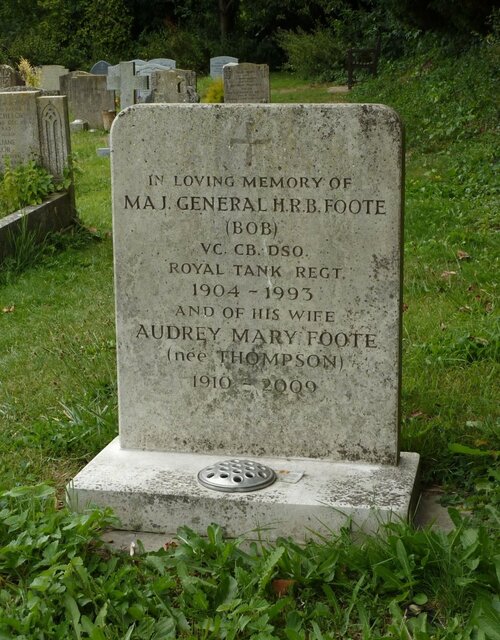
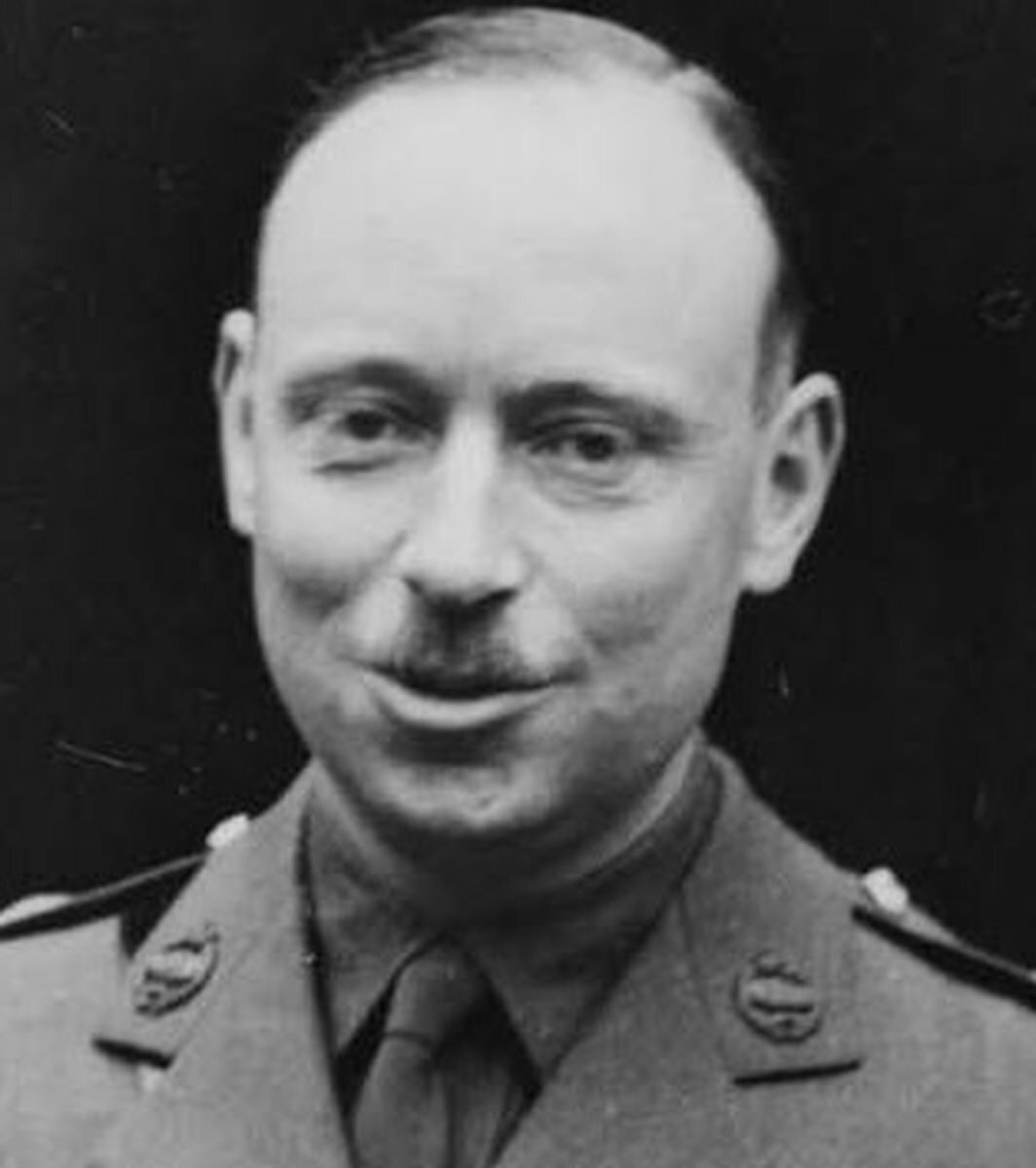
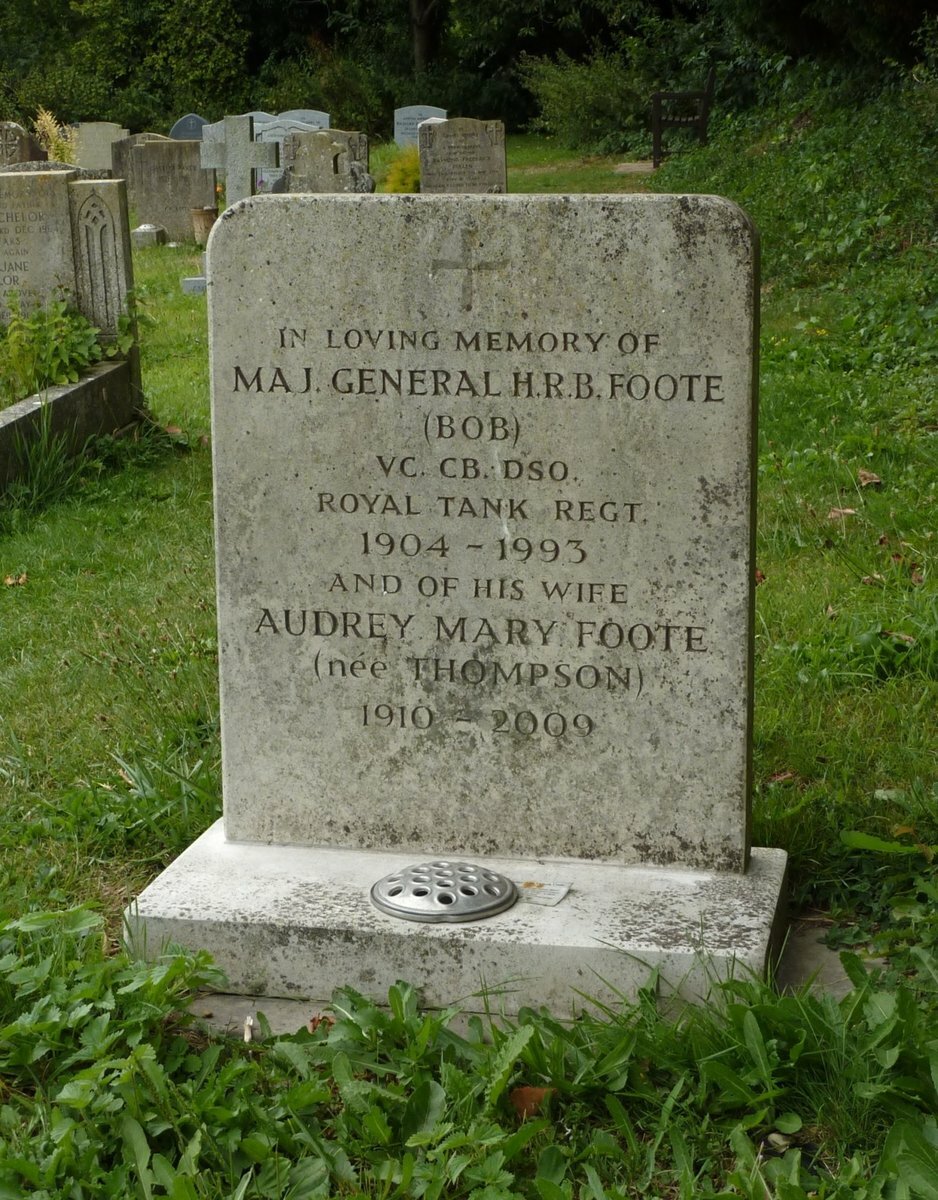
Henry Robert Bowreman Foote, soldier: born 5 December 1904; Officer Commanding, 7th Royal Tank Regiment 1942; D.S.O. 1942; V.C. 1944; Officer Commanding, 2nd Royal Tank Regiment 1947-48; Officer Commanding, Automotive Wing, Fighting Vehicles Proving Establishment, Ministry of Supply 1948-49; commanded 7th Armoured Brigade 1949-50, 11th Armoured Division 1950-53; CB 1952; Director-General of Fighting Vehicles, Ministry of Supply 1953-55; Director, Royal Armoured Corps at the War Office 1955-58; married 1944 Anita Flint Howard (died 1970), 1981 Audrey Mary Ashwell; died 22 November 1993.
H. R. B. FOOTE died just 24 hours after the 76th anniversary of the Battle of Cambrai, the great founding Battle Honour of his Regiment, the Royal Tank Regiment, into which he was commissioned in 1925 and served until 1958.
Although he held a variety of prestigious appointments during his career, including three years as Director of the Royal Armoured Corps, it is not for these that Bob Foote will be remembered. Old soldiers, no matter how distinguished, do not normally find themselves the subject of This Is Your Life as Foote did. What marked him out was his legendary bravery in the Second World War battles in the Western Desert, especially the Battle of Gazala.
It was here that Foote commanded the 7th Royal Tank Regiment in the midst of some of the most vicious fighting of the whole campaign. The battles lasted for a week in 1942, at the beginning of which he won a DSO at Sidra Ridge, and culminated with his attack at Knightsbridge when, with most of his tanks destroyed, but required vitally to stay there, he reorganised his remaining armoured units by moving among them on foot to encourage them. Finally he put himself in his tank, in front of the remains of his regiment, standing high out of the turret so that he could be seen by his men. His tank was hit 29 times and when his communications and guns had all been destroyed he led what was left of his regiment forward on foot using hand signals to guide them. The withdrawal of the Guards Brigade which it had been his task to permit, was successfully accomplished. Lt-Col Foote was awarded the Victoria Cross after a showing of physical courage and leadership, in desperate circumstances, which beggars description.
Far the most important part of leadership is example. If you want a role-model perfectly to fit such a leader it was Foote. He led from the front when he needed to, which in the Western Desert was often, usually in his tank, memorably on one occasion on foot, but if the regiment was static, being continuously shot at and shelled, he would run round in his jeep encouraging his men. Some military thinkers who were not there might rate this as foolhardy, but so heavy had been the casualties with two-pounder guns in the Matildas versus the German 88s that the crews were now heavily interlarded with men from other parts of the regiment who were not specially trained as tank crews. Radio communications were, to say the least, difficult. He needed to do things that way.
After his final capture when Rommel overran Tobruk, Foote escaped over the wire from an Italian prisoner-of-war camp and with a handful of others moved up into the mountains where for weeks Il Colonello, as they called him, succeeded in gaining the support of the villagers, and eventually joined the Italian partisans who helped him to cross into Switzerland and ultimately back to England.
Soldiering was what in his life Foote did best. He was not only respected by his men, he was loved by them. When he was no longer serving he took a deep interest in the British Legion and the Old Comrades Association where he found some of his wartime warriors. There are words to describe the finer qualities of people, words which perhaps have gone a bit out of fashion these days. But General Bob was straight: a straight man, straight down the middle, no nonsense; a man of integrity and loyalty. I don't think he knew the meaning of the word devious.
Bob Foote was my Divisional Commander in Germany, but during the last 30 years or so, it was as a golfer that I got to know him well. A game which is meaningless to the uninitiated, but to which we were both devoted. He would be the first to say that he was not a player of the first rank, as if that mattered. Even so, I don't say that he would have swapped his V.C. for the ability to carry the hill in front of the sixth tee at West Sussex, but such a thought may have occasionally crossed his mind.
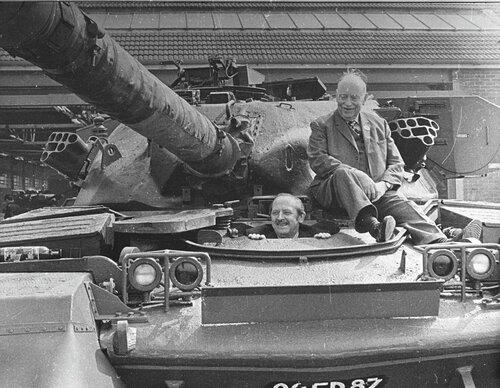
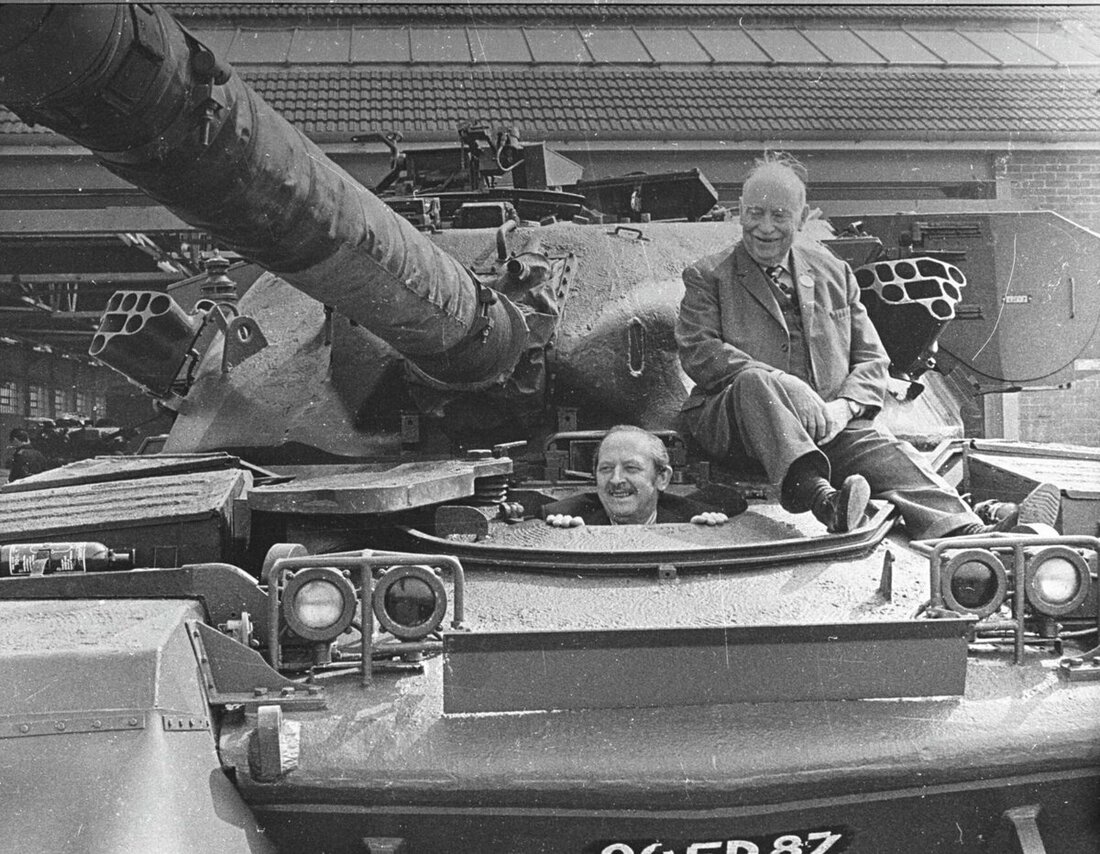
I remember watching Bob on television when they caught him for This Is Your Life. He dealt with this as one would expect: no fuss, just an occasional gentle look of surprise at the media hype surrounding him. He was over 80 at the time but they asked him to get into a tank with Eamonn Andrews. He was in plain clothes but he seemed to grow out of the turret; he was part of that tank. As I watched him on the screen I could feel the years rolling back to his time in the Western Desert.'
Sold together with a first day cover signed by the recipient.
Subject to 20% VAT on Buyer’s Premium. For more information please view Terms and Conditions for Buyers.
Estimate
£3,000 to £5,000
Starting price
£2400
Watch, listen and bid as if you were in the room. Now available for auctions worldwide.
Click here to bid live
An exclusive and confidential service for the discerning collector or vendor.
View the Gallery
Download every Spink catalogue on your iPad, iPod or iPhone using free Spink app.
Download From iTunes© 2026 Spink & Son. All rights reserved.