Auction: 26002 - Orders, Decorations and Medals
Lot: 188
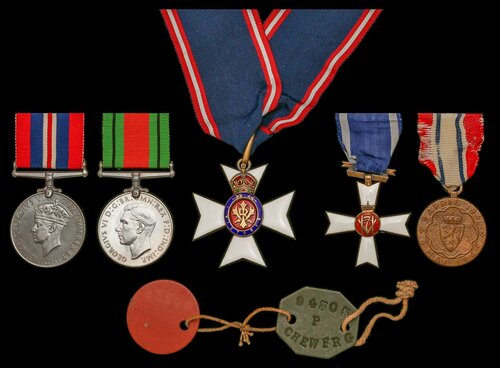
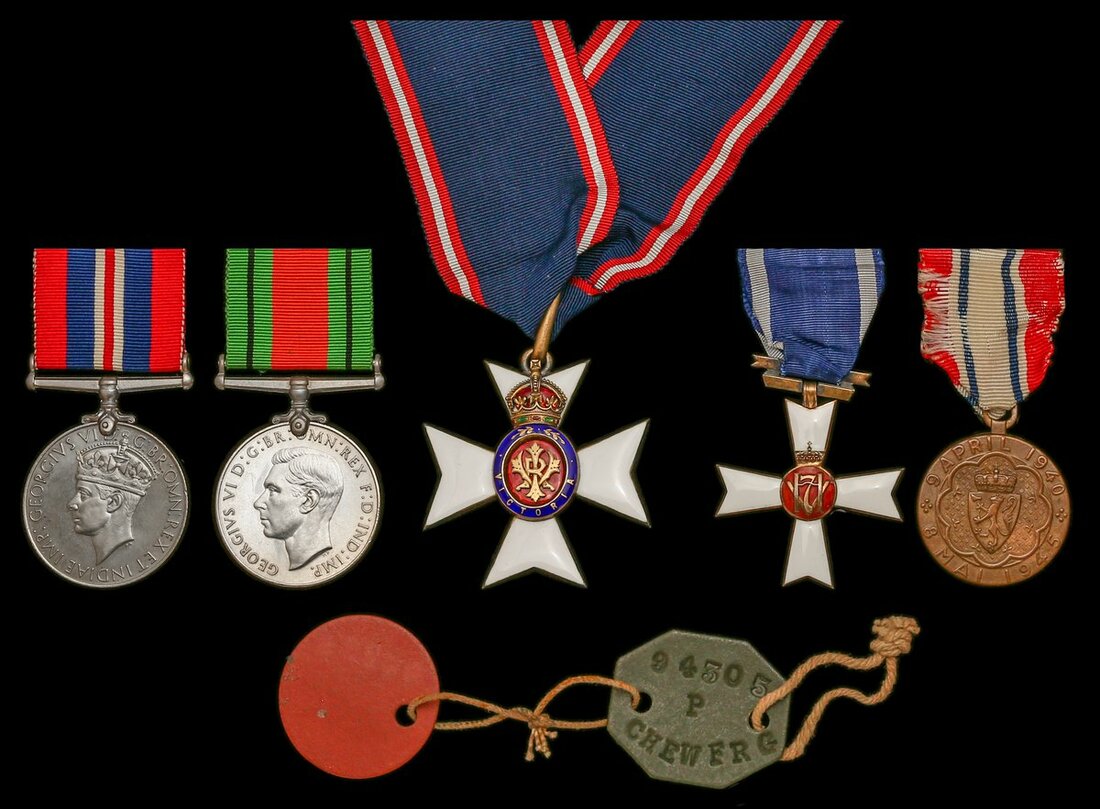
(x) The C.V.O. group of five awarded to Lieutenant-Colonel F. R. G. Chew, Seaforth Highlanders, former Headmaster to King Charles at Gordonstoun, who was awarded the King Haakon VII Freedom Cross for his leading role in the liberation of Norway
The Royal Victorian Order, Companion's (C.V.O.) neck Badge, silver-gilt and enamel, numbered '1662' to the reverse, in its Collingwood case of issue; Defence and War Medals 1939-45; Norway, Kingdom, King Haakon VII Freedom Cross, Defence Medal 1940-1945, sold together with the recipient's dog tags, good very fine (5)
C.V.O. London Gazette 8 October 1857.
King Haakon VII Freedom Cross London Gazette 19 March 1948.
Frederic Robert Gansel Chew, who went mainly by Robert or 'Bobby', was born at Brentford on 4 May 1907, the son of Robert and Ethel Chew of Dove Nest, Windermere, Westmorland. Educated first at Sedbergh and later St. John's College at Cambridge, Chew learned many skills, the most important of which going forward was German. In this capacity Chew moved to Germany and between 1929-33 worked as an assistant master at Schule Schloss Salem, Baden, under the renowned educator Kurt Hahn, improving both his language skills and knowledge of the country.
Educator and Soldier
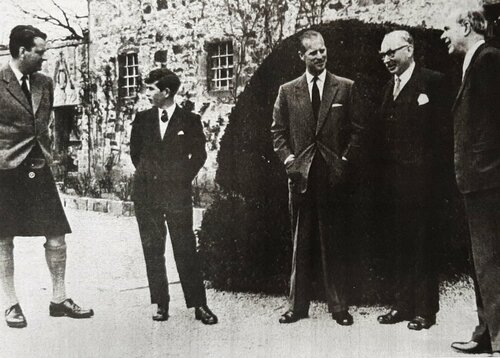
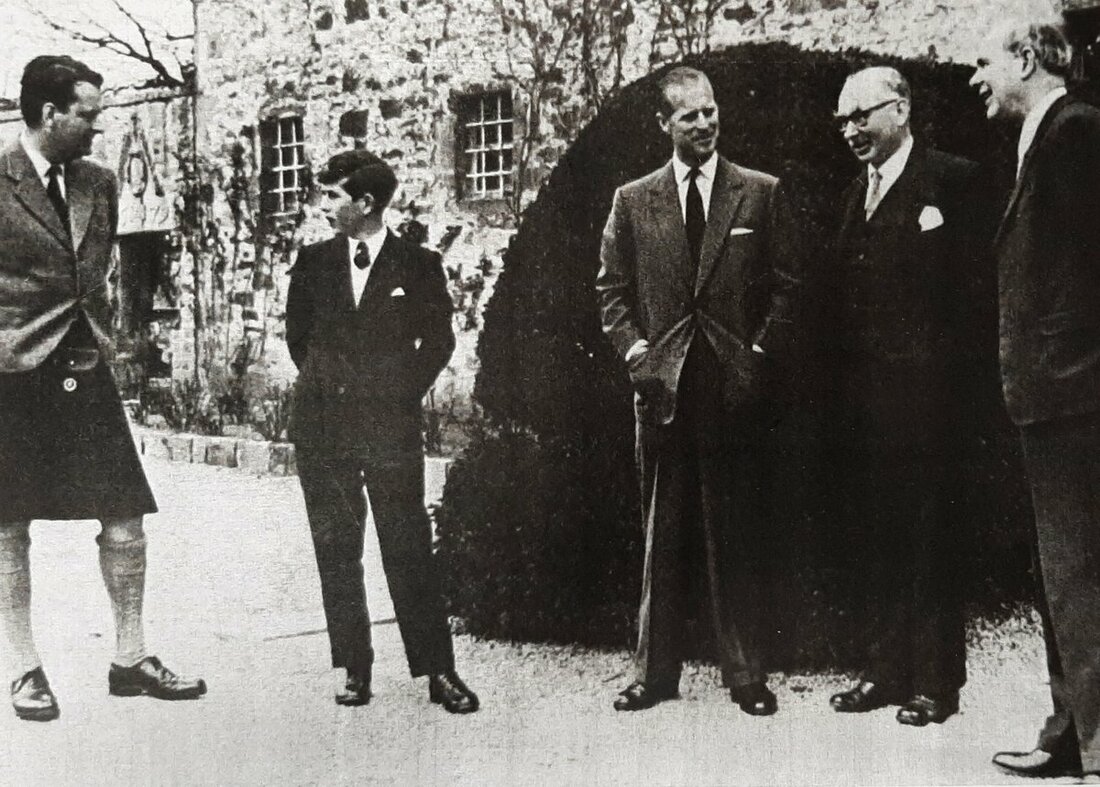
However, Hahn was of Jewish ancestry and the rise of the Nazi party saw him arrested in 1933, only being released after the intervention of British Prime Minister Ramsay MacDonald. Escaping to Britain Hahn, with Chew in tow, founded Gordonstoun School in 1934. Chew's initial role at the school was as an assistant master and housemaster, although he was a well known teacher of mathematics as well. During this time he also taught Prince Philip, the future Duke of Edinburgh, who was educated at Salem but also moved to Gordonstoun following Hahn's flight.
Given this background it is unsurprising that Chew, who had served as Cadet Under-Officer in the Sedbergh School Contingent, was Commissioned Lieutenant on 9 June 1939 with the 4/5th Battalion, Seaforth Highlanders. He was not immediately given employment as his language skills and knowledge of Germany made him a useful intelligence asset.
Eventually he was transferred to a secret group of Officer's in Scotland working on plans to distract and trick the Germans using audio equipment with sound recordings of battle and vehicles. Chew was to train them in the effective use of this equipment although he did not deploy with it himself, in the process he was advanced Captain on 17 March 1943 and Major on 19 February 1944. The formation did deploy, first in attempts to obfuscate the D-Day landings and later to disguise Allied movements up the French Coastline.
Norway
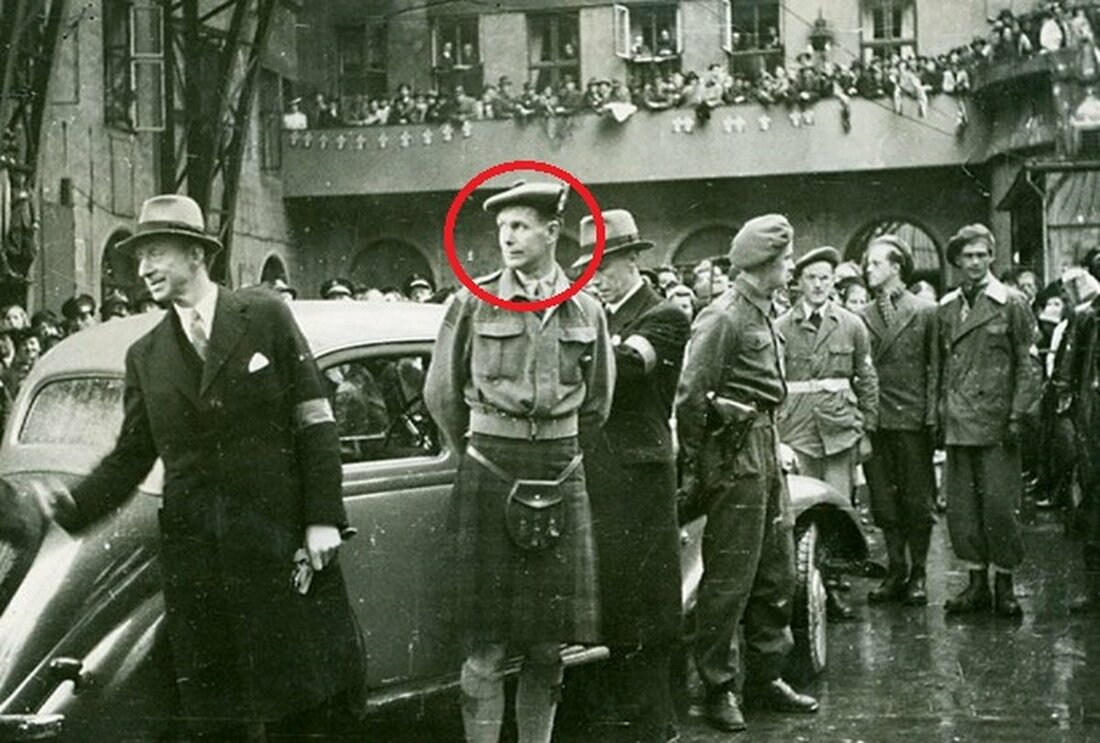
Advanced Lieutenant-Colonel on 3 April 1945 as the war in Europe drew to a close, Chew was selected for an extremely important task. He was to be one of a small number of Officers ordered to Norway to bring the 300,000 well-armed and un-engaged German troops to surrender. This would be no easy task as if these troops chose to fight, they would be a tough nut to crack, making the Allied negotiating position somewhat tenuous.
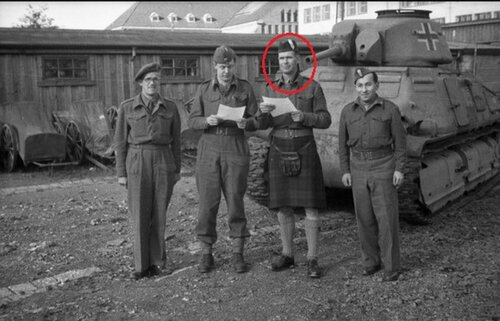
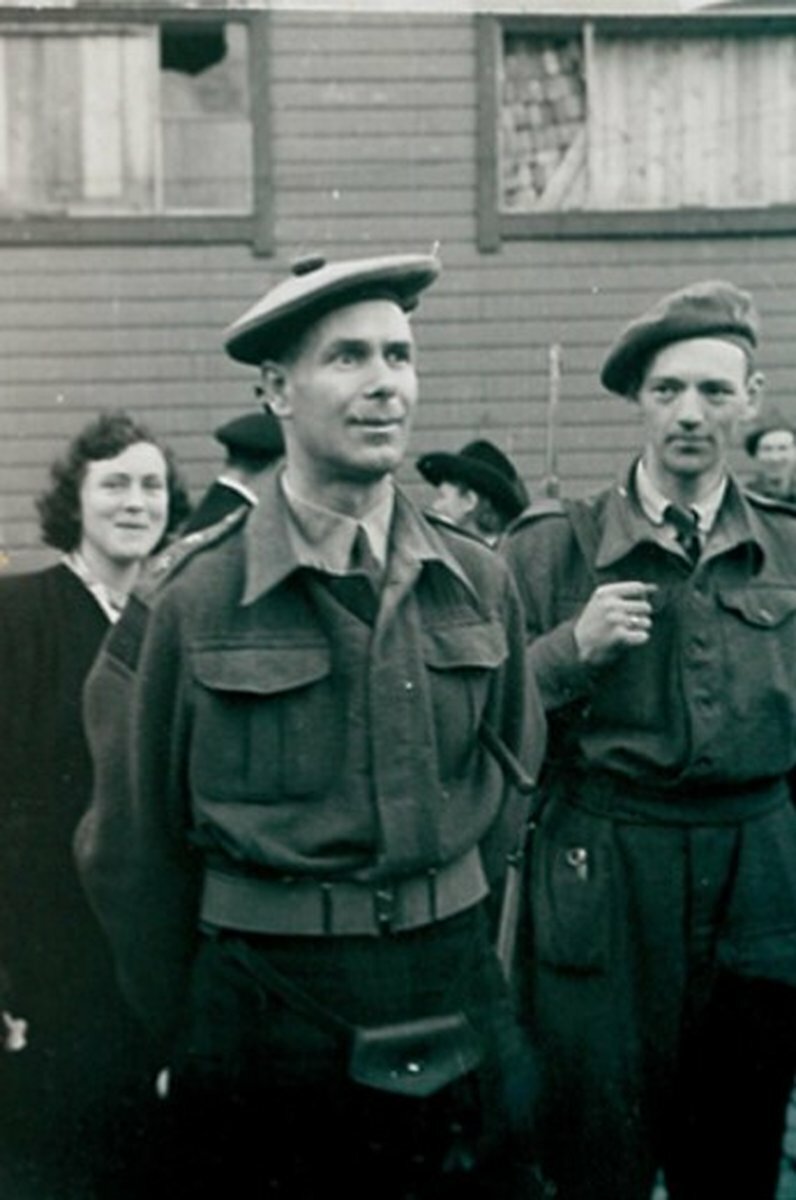
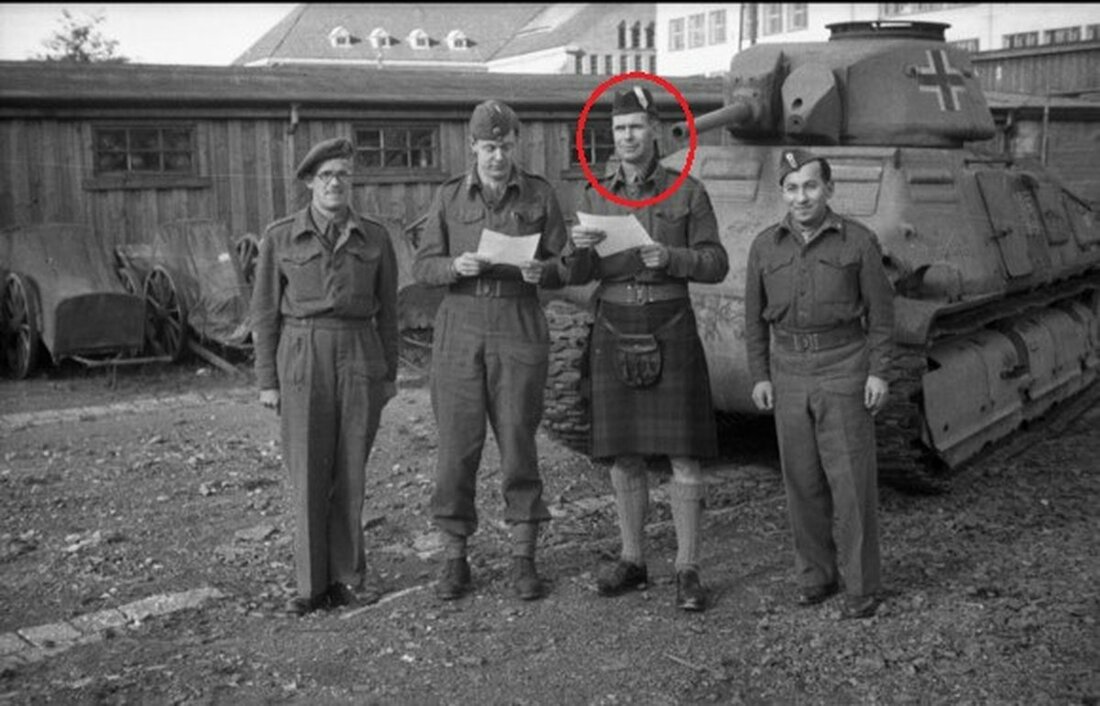
Chew flew into Oslo with the main negotiating party however this was not to be his 'Patch', rather he was posted up the coast to the city of Bergen. There he met with General de Boer at the city archive; for the next few months the city was under Chew's command with affairs both civil and military falling under his jurisdiction.
This entailed a mountain of problems, perhaps the most notable being the difficult negotiations between the German garrison, the Norwegian citizens, and the Allied Prisoners of war. The latter proving extremely difficult, particularly the Russian and Polish contingents, it took all of Chew's powers of diplomacy to keep a lid on the tension.
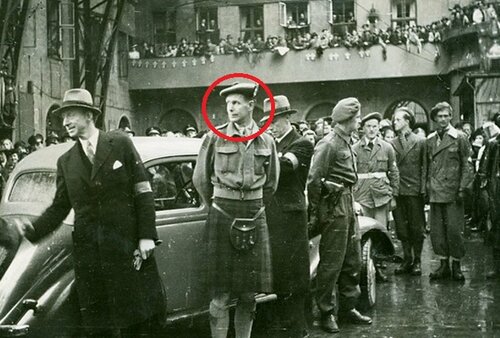
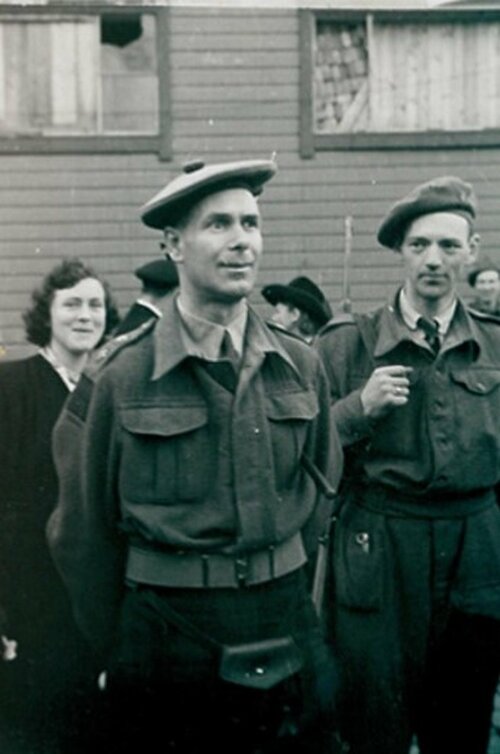
Fortunately he was successful and indeed he managed to make himself extremely popular in the area with the Norwegian population in particular charmed by his helpful and active manner, as well as his uniform which proved fascinating to the townsfolk. An article written about the period in N.R.K. Vestland entitled 'Robert Chew: The school teacher who flew to Norway to seize power from the Germans' states:
'Lieutenant Colonel Chew attracts attention and well-deserved admiration in town when appears in his Scottish military uniform consisting of a kilt and bare knees. Everywhere he goes, he's saluted and hailed by the people of Bergen'
Despite this there were still tensions, especially when the British insisted on confiscating all captured German weapons rather than handing them over to the Norwegian Armed Forces. Some Norwegians took matters into their own hands and on one occasion Chew was required to travel through the night to intercept a party of officers intent on seizing a depot of vehicles.
However after five months Chew left the city on good terms with the locals, particularly one Eva Mohr, nee Gundersen, the daughter of a Norwegian Consul and widow of a fighter pilot who died in war service. Chew was to marry her in Oslo on 7 August 1947, having returned to the city as a civilian. They did not remain there however as he had returned to his previous role as a teacher at Gordonstoun.
Gordonstoun and another Royal pupil
Returning to Gordonstoun Chew was appointed to head up the Forres section of the school, based at Altyre House some distance for Gordonstoun manor proper which had been rented in response to increased demand. There he was made Housemaster of Dunbar House before being promoted to Headmaster in 1953, holding the role jointly with his colleague at Gordonstoun manor. The two parts of the school were amalgamated in 1959 and Chew was given the sole position of Headmaster for the entire school.
It was in this capacity that he welcomed then Prince Charles to the School, Time Magazine refers, stating:
'...back home at the palace, awaits his official report card from his first term at his father's old school in Scotland, spartan Gordonstoun, where cold showers and sprints before breakfast are the rule. His Royal Highness the Prince of Wales, 13, "was near the top in a class of 28," said Headmaster F.R.G. Chew. "Good average is the phrase-and he has settled in jolly well." The headmaster cleared up another point: the other kids call him Charles...'
During the Prince's time at the School Chew had cause to reprimand him in what was known as the 'Cherry Brandy Affair' where he was seen to be drinking in a hotel on Lewis Isle. Despite this Chew could claim to have educated two generations of the Royal family upon his retirement in 1968, having earned the C.V.O. for the privilege. Tragically he was diagnosed with a heart condition soon after retiring and informed that he would need to live a less active lifestyle to prolong his twilight years. To the active Chew the concept was anathema and he continued to live as he had before, skiing and climbing, for which he had a life long passion. He died just two years after retiring on 11 September 1970 at Windermere; sold together with copied research.
Subject to 5% tax on Hammer Price in addition to 20% VAT on Buyer’s Premium.
Estimate
£260 to £300
Starting price
£210
Watch, listen and bid as if you were in the room. Now available for auctions worldwide.
Click here to bid live
An exclusive and confidential service for the discerning collector or vendor.
View the Gallery
Download every Spink catalogue on your iPad, iPod or iPhone using free Spink app.
Download From iTunes© 2026 Spink & Son. All rights reserved.