Auction: 26002 - Orders, Decorations and Medals
Lot: 140
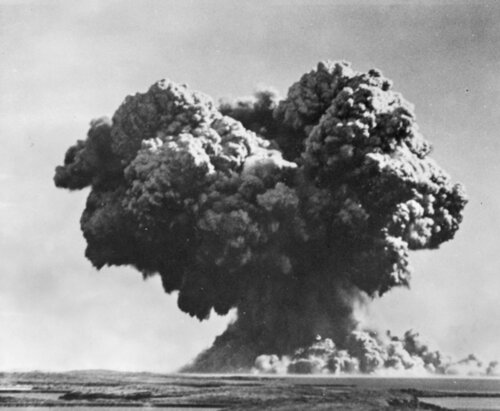
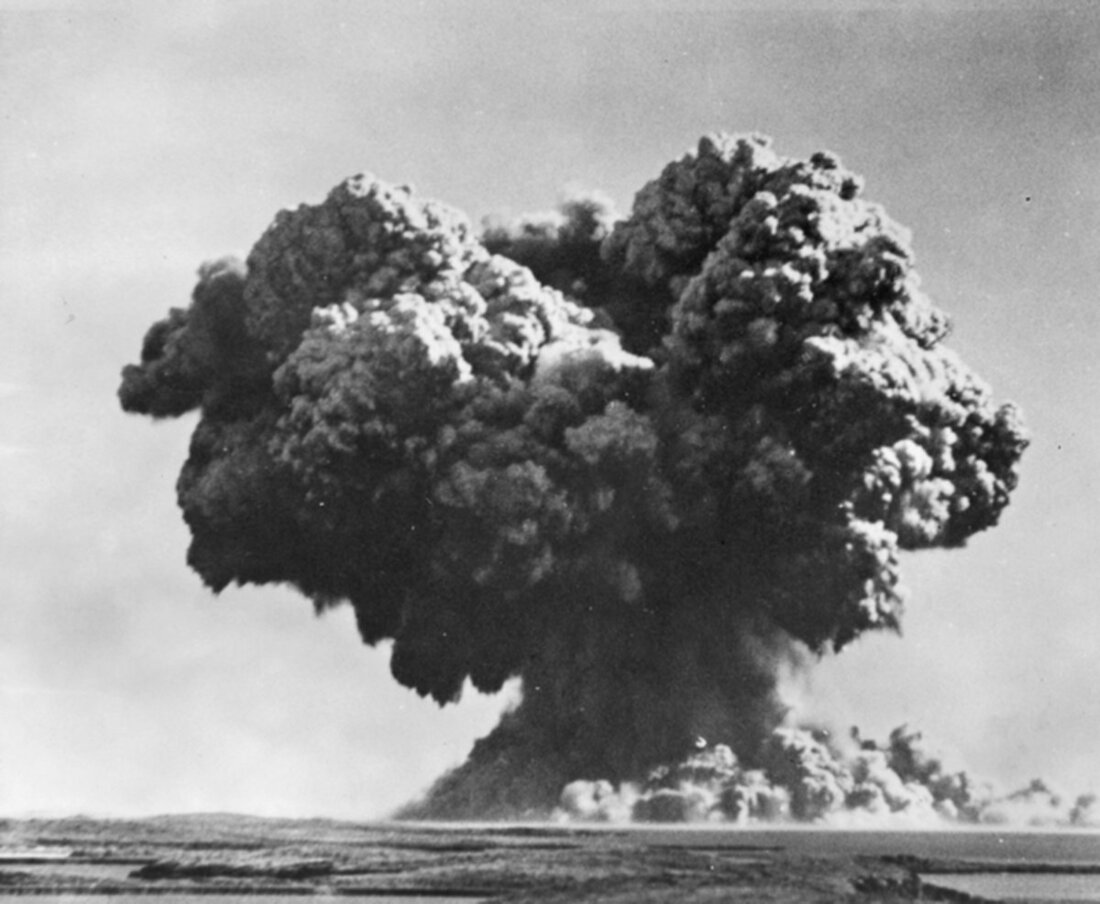
'I remember seeing a flash, I turned around and heard a roar like a train approaching in a tunnel. Then a tremendous crack like a whiplash passed directly overhead. I saw a mushroom cloud...
There was black and white smoke, orange and red flames ascending through the centre of the mushroom.'
Able Seaman Douglas, a participant in Operation Hurricane, describing the scene for which WO1 Hardman also shared a front-row seat
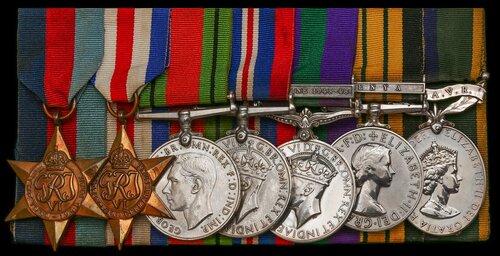
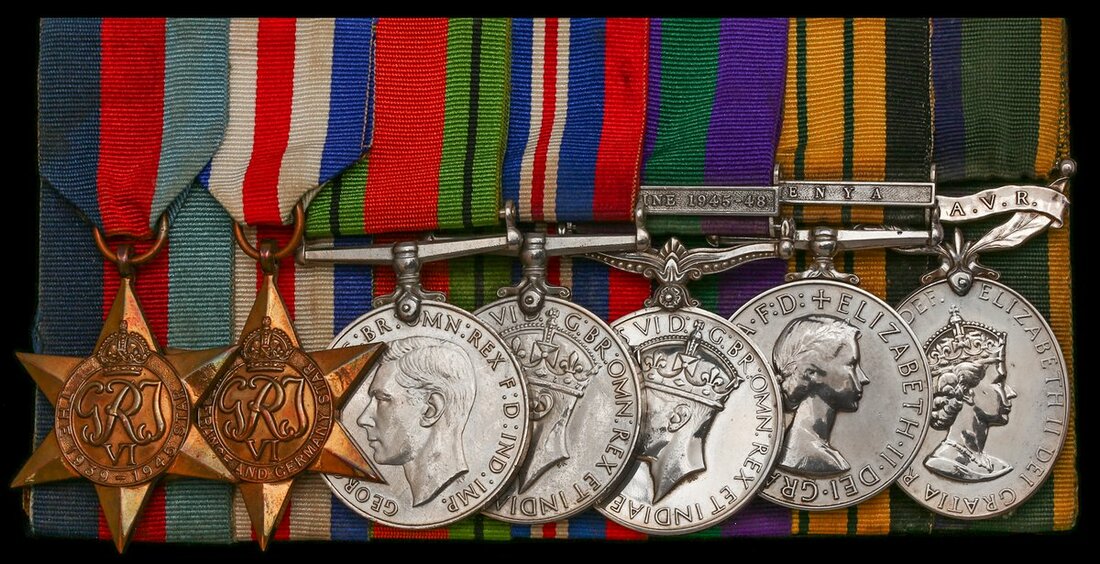
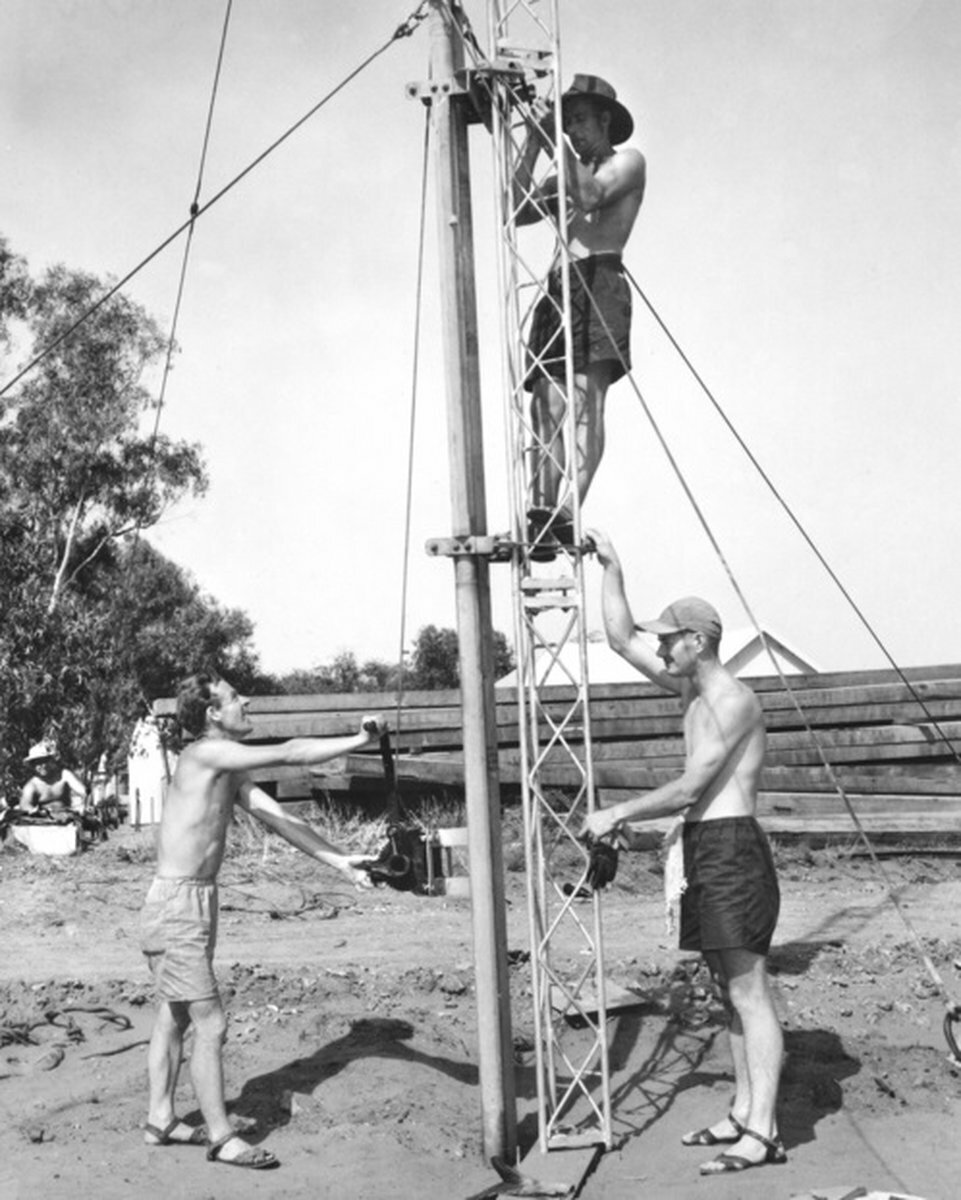
The campaign group of seven awarded to Warrant Officer Class I (Regimental Sergeant-Major) G. W. Hardman, Royal Engineers, who was present during Operation Hurricane in October 1952, the first test of a British Nuclear bomb, at the Montebello Islands in Western Australia
1939-45 Star; France & Germany Star; Defence and War Medals 1939-45; General Service 1918-62, 1 clasp, Palestine 1945-48 (14444717 Spr. G. W. Hardman. R.E.); Africa General Service 1902-56, 1 clasp, Kenya (14444417 Sgt. G. W. Hardman. R.E.); Efficiency Medal, E.II.R., T. & A.V.R. (23973672 WO1 G W Hardman RE), mounted court style as worn, good very fine and a good combination of awards (7)
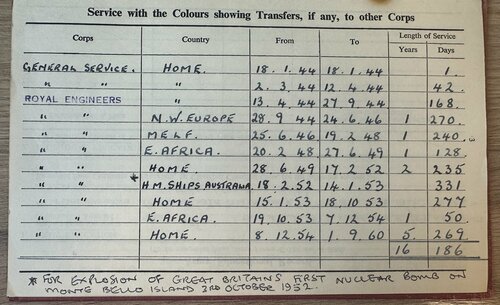
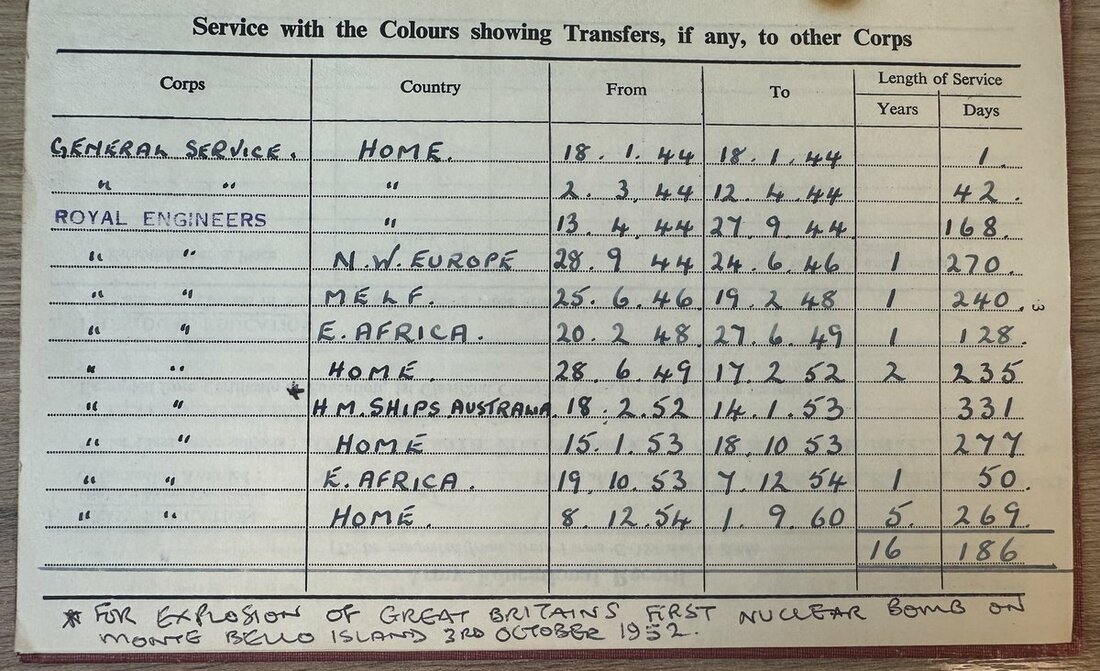
George William Hardman was born in 1926 and enlisted into the Royal Engineers at Liverpool on 18 January 1944. He served in North-West Europe from 28 September 1944 until 24 June 1946, thence in the Middle East (Palestine) from 25 June 1946 to 19 February 1948, and in East Africa until 27 June 1949. Returned home in February 1952, his next posting was to be a fateful one.
Op Hurricane - Nuclear Tests
That same month, Attlee's successor Winston Churchill, back in the fold once again, announced in the House of Commons that the first British atomic bomb test would occur in Australia before the end of the year. His Certificate of Service officially confirms he was posted to 'H.M. Ships AUSTRALIA' from 18 February 1952 until 14 January 1953. The recent publication Operation Hurricane: The story of Britain's first atomic test in Australia and the legacy that remains by Paul Grace gives a good outline:
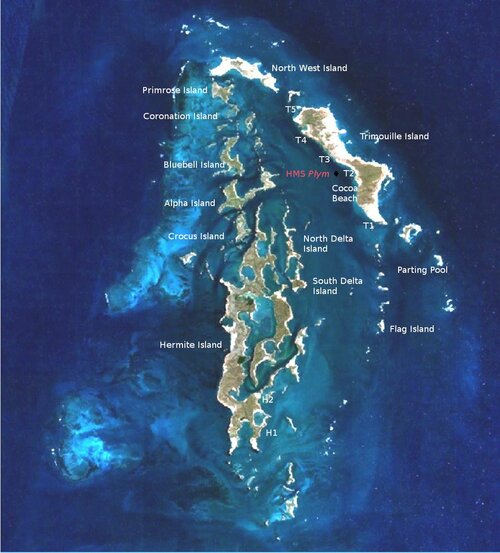
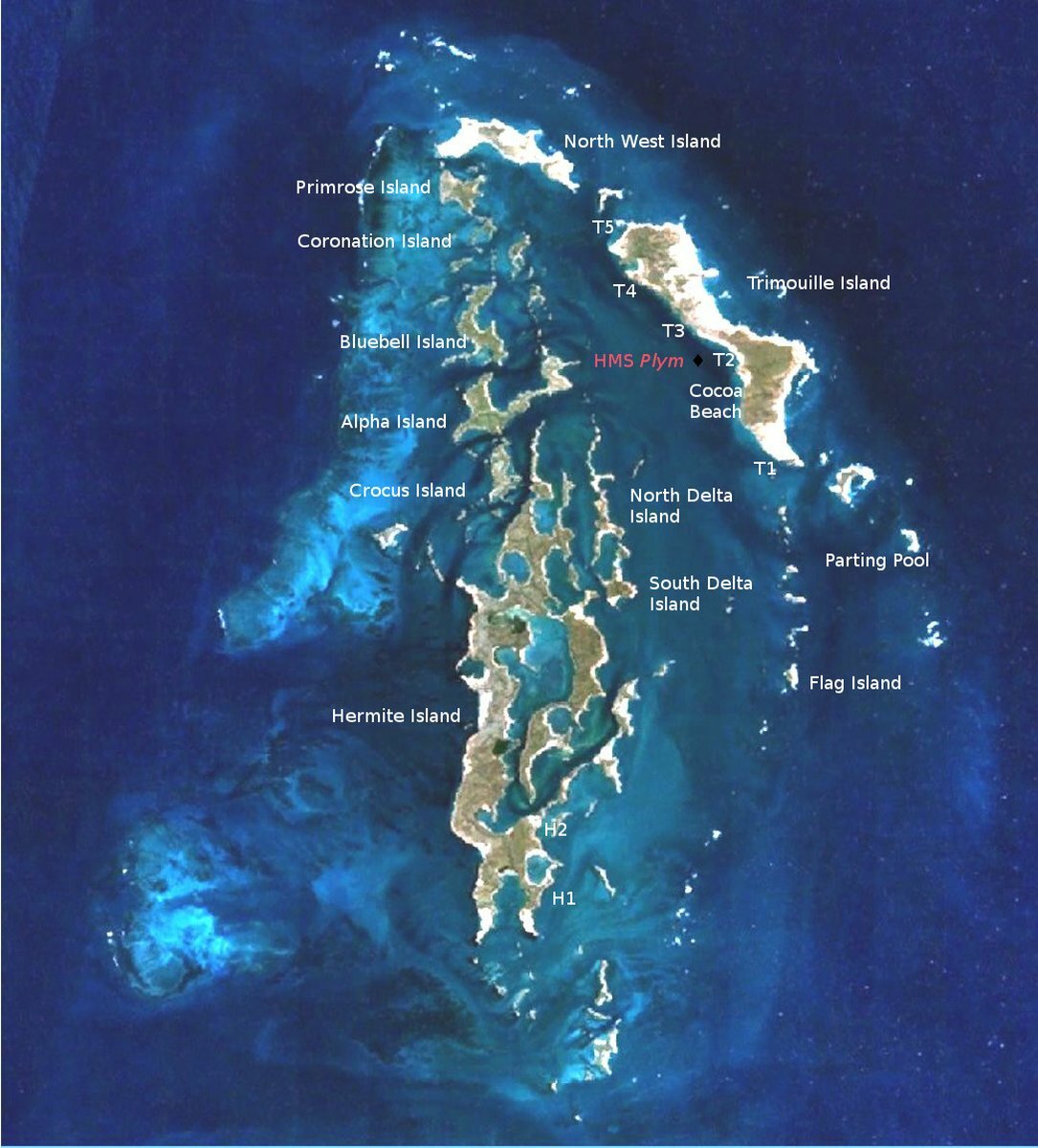
'At 8.00 a.m. on Friday 3 October 1952, Britain's first atomic bomb was detonated in the hold of a surplus frigate, HMS Plym, moored in the Montebello Islands, 50 miles off the North West Coast of Western Australia. The blast vaporised the Plym, produced a mushroom cloud 2 miles high, and covered the islands and parts of the Australian mainland with fallout.
The test, codenamed Operation Hurricane, was the culmination of years of top-secret planning in London and Canberra and months of clandestine preparations at the site. One of the largest peacetime military operations in Australian history, its success shifted the balance of power in the Cold War and briefly rejuvenated the fading British Empire.'
Such was the prestige of the event, that a 33-minute video of the events survive to this day and shine a bright light onto the nuclear history of the United Kingdom - one in which Hardman has his rightful share. A snippet can be found via:
https://www.youtube.com/watch?v=3n9XnoexPXI&t=3s
Hadman had a few months at home from January-October 1953, thence serving in Kenya during the Mau-Mau from October 1953 through December 1954 (Medal & clasp). He was released with 'Exemplary' service in September 1960 and joined the Territorial and Army Volunteer Reserve, taking his Efficiency Medal as a Warrant Officer Class I. He appears to have died in the City of London in 2011; sold together with Certificate of Service confirming all Medals & clasps.
Subject to 20% VAT on Buyer’s Premium. For more information please view Terms and Conditions for Buyers.
Estimate
£240 to £280
Starting price
£190
Watch, listen and bid as if you were in the room. Now available for auctions worldwide.
Click here to bid live
An exclusive and confidential service for the discerning collector or vendor.
View the Gallery
Download every Spink catalogue on your iPad, iPod or iPhone using free Spink app.
Download From iTunes© 2026 Spink & Son. All rights reserved.