
Auction: 26002 - Orders, Decorations and Medals
Lot: 106
Sold by Order of a Direct Descendant
'His leading the charge was magnificent, & the talk of the Peninsula.
As a rule the Brigadier does not attack personally but owing to a mistake the O.C. of one of his Battalions did not go forward at the right time and the General seeing this, made up his mind to head the men himself & I saw him fall within 20 yards of our own parapet. He was magnificent as he must have realised that with his Generals uniform etc. his chance of not being hit was nil.
I am so sorry I can give no more information except the verbal testimony of one of the Generals’ Company Officers who came home with me, he said “when the General fell we lost a priceless Officer & Gentleman”.’
A Gunner Subaltern recalls the gallant final moments of the good Brigadier-General Scott-Moncrieff
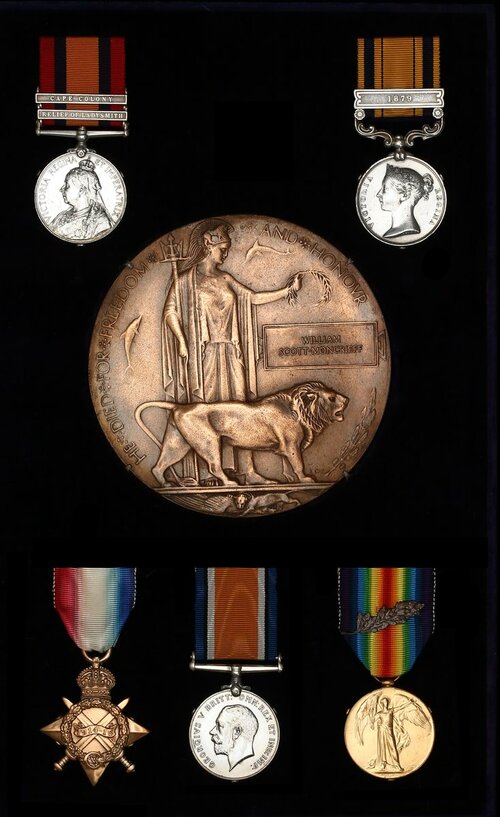
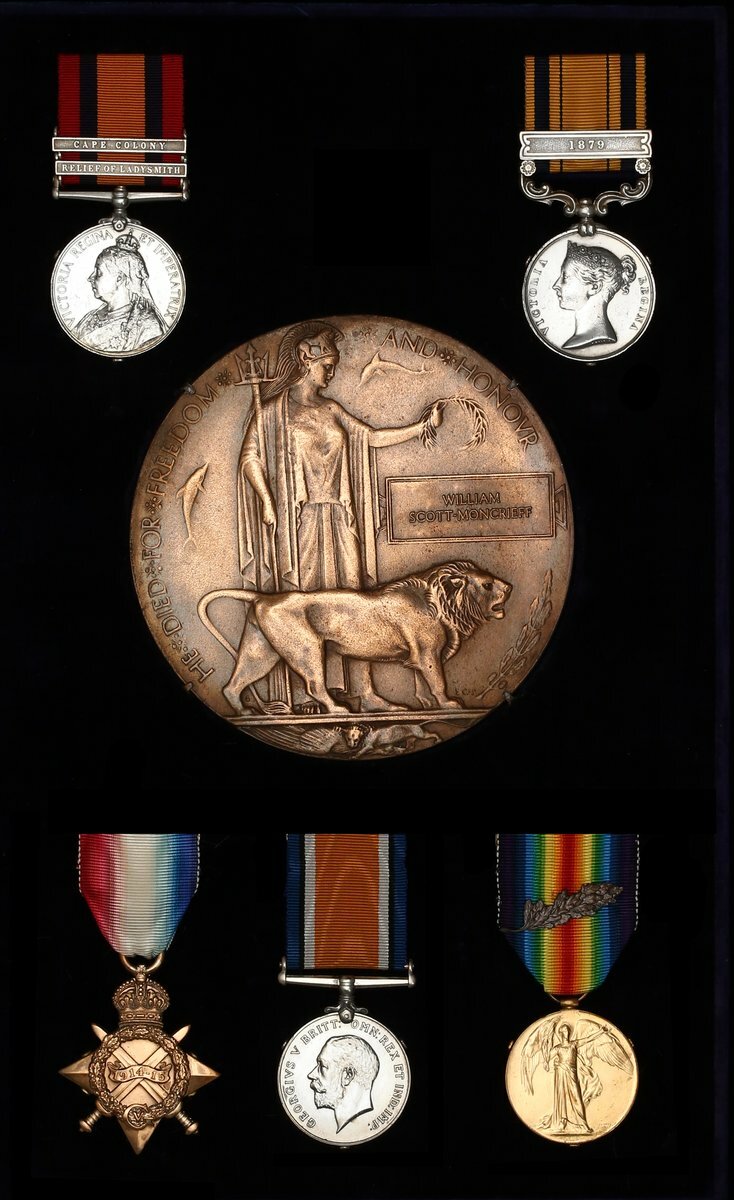
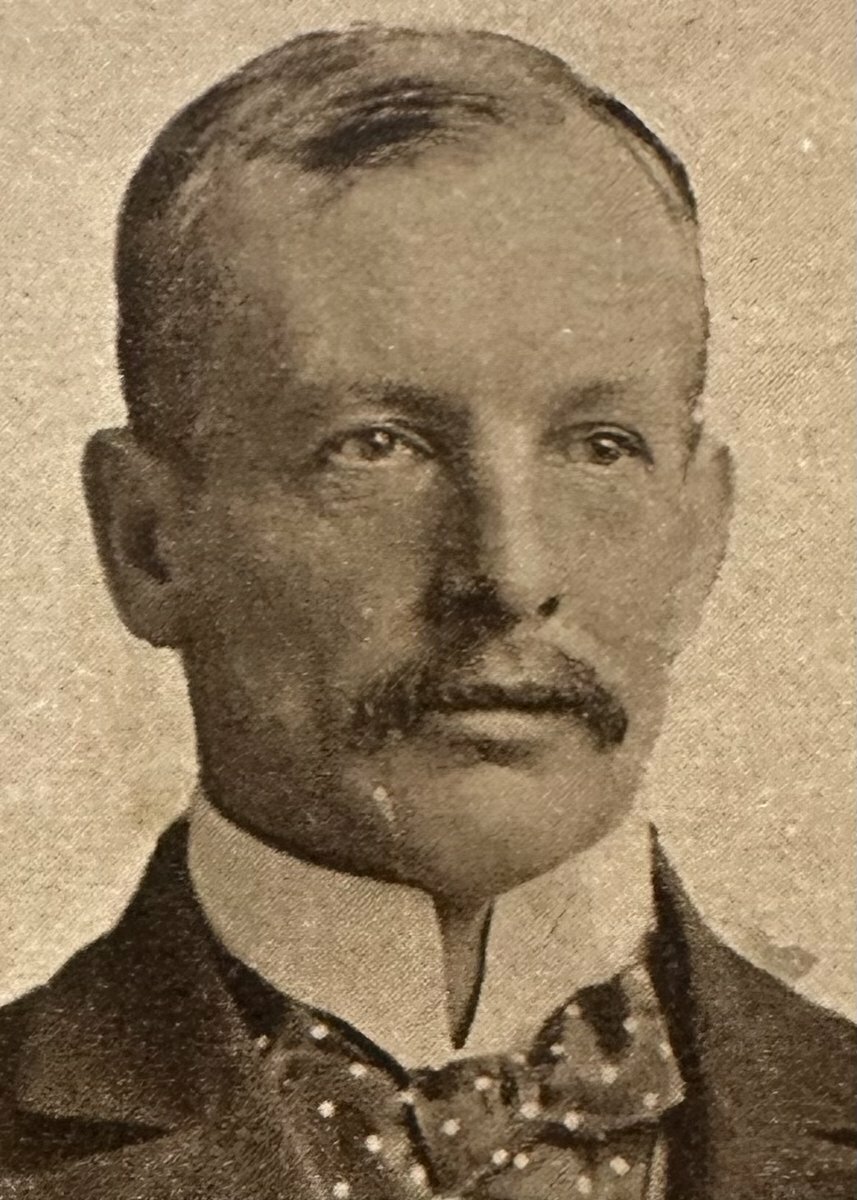
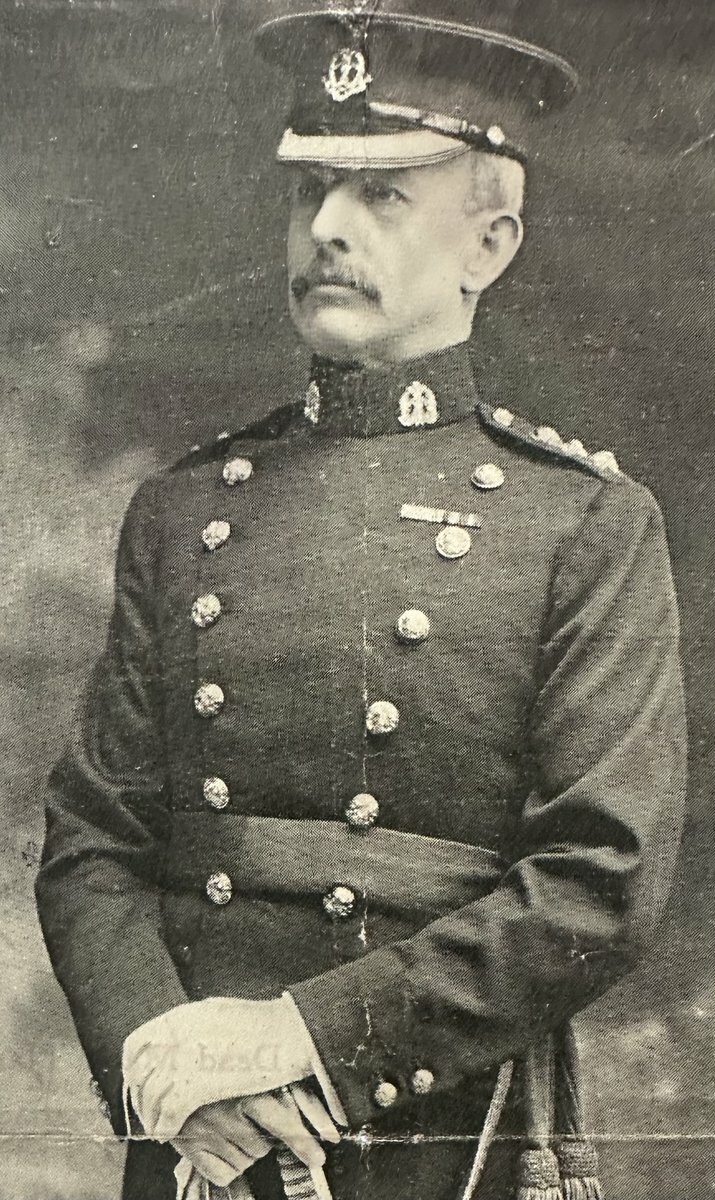
The outstanding campaign group awarded to Brigadier-General W. Scott-Moncrieff, Commanding 156th (Scottish Rifle) Brigade, who was killed in action in the Battle of Gully Ravine on 28 June 1915, for which he earned a posthumous 'mention'
A long-served Officer of the 57th (West Middlesex) Regiment of Foot & Middlesex Regiment, he had notably seen active service during the Zulu War and in the Boer War, being severely wounded at Spion Kop and was twice 'mentioned' in the latter
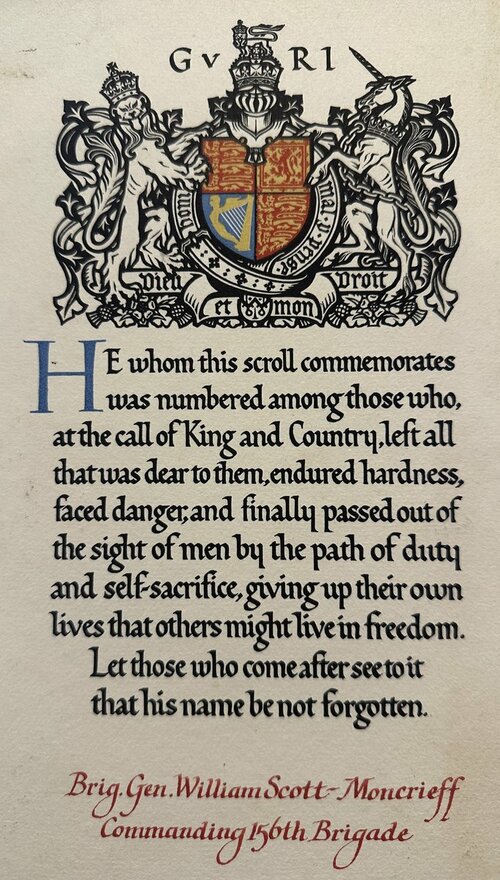
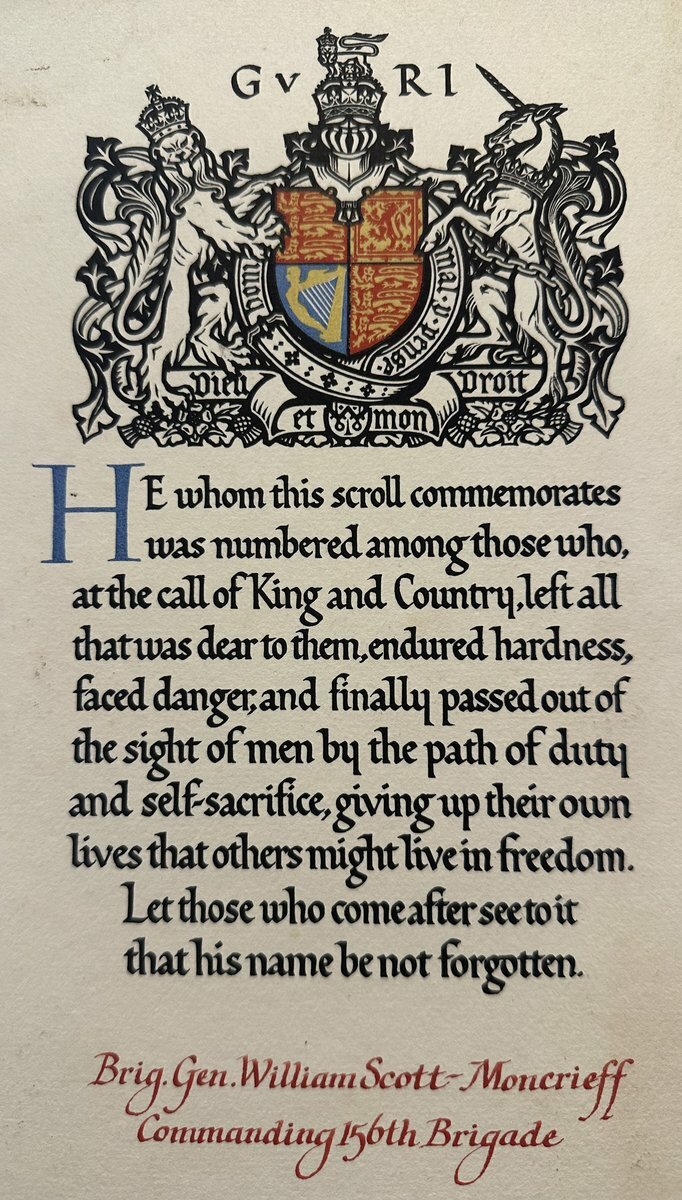
South Africa 1877-79, 1 clasp, 1879 (Lieut. W. S. Moncrieff. 57th. Foot.); Queen's South Africa 1899-1902, 2 clasps, Relief of Ladysmith, Cape Colony (Major W. Scott-Moncrieff. Middx. R.); 1914-15 Star (Brig. Gen. W. Scott-Moncrieff.); British War and Victory Medals, with M.I.D. oak leaves (Brig. Gen. W. Scott-Moncrieff.); Great War Bronze Memorial Plaque (William Scott-Moncrieff), these housed in a glazed memorial frame, together with his Buckingham Palace Memorial Scroll in the name 'Brig. Gen. William Scott-Moncrieff. Commanding 156th Brigade', first two with contact marks, otherwise good very fine and a remarkable combination of awards (6)
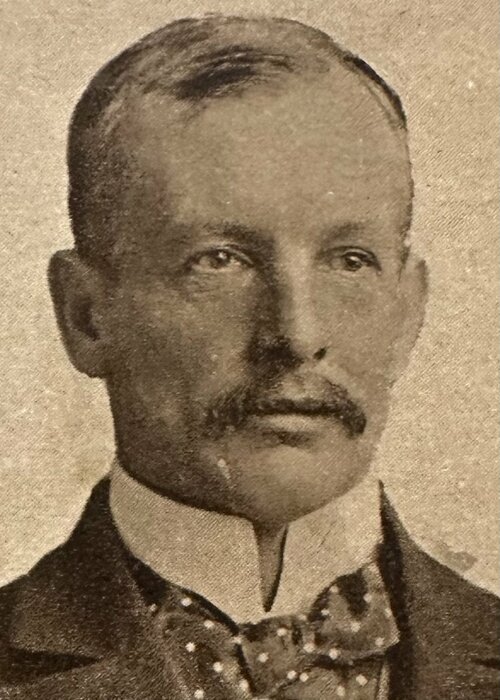
William Scott-Moncrieff was born in June 1858 and was first commissioned 2nd Lieutenant into the 57th Regiment of Foot in May 1878. He served with them during the campaign in South Africa of 1879 (Medal & clasp).
Zulu - into the fire
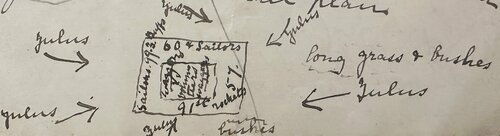
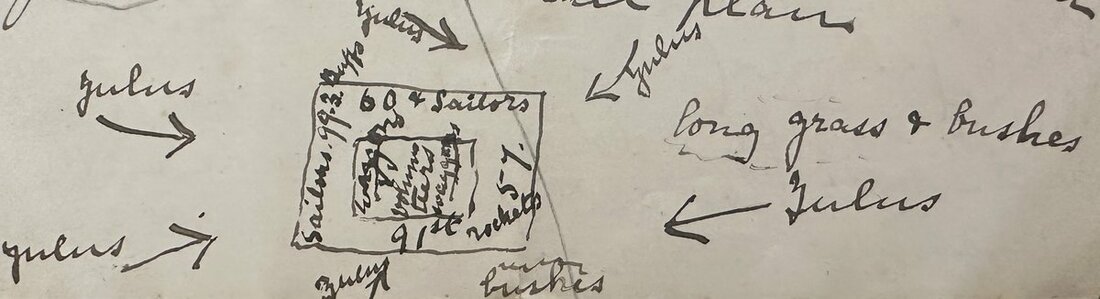
During that campaign he was most notably present during the Battle of Gingindlovu on 2 April 1879 and wrote to his father a week from Camp to report on the action, also providing a sketch of the positions of the units on that day:
'My Dear Father,
I have now time to write but the lack the proper materials. I have any amount to tell you...'
He recalls the days preceding the action from 29 March, but we fast-forward to the morning of the Battle:
'At 0400 we all us around got up and stood to our arms till day break. Then the rain has stopped, the sun began to rise, the cooks fell out of the ranks & began to make our tea. We all marched outside the shelter trench & fell out & began spreading out things out to dry; when one of the men who had gone a little way out to get sticks came back saying "The valley's full of naked blacks, Sir, coming over here".
Directly after the Native Scouts fired a volley & came rushing in & our Mounted men came in at the gallop saying "The Zulus are down on us in force at length."
We fell in at once & took our places behind our trench, the picket was recalled, the rockets & guns got ready & we felt confident of giving them a warm reception. Our entrenchment was a square little this small plan.
Soon there was a volley from our Sailors & the 99th & then the Zulus opened fires from that side, firing very high & as I heard the bullets high over my head I felt pretty safe...
The Zulus began to come a little nearer, and then we suddenly saw a crowd of Zulus 200yds off rushing at us. We at once opened a low steady fire which must have powered into them with a terrible effect, as after a very short time they vanished from in front of us & got into some bushes about 500yds from the 91st where they clung on gallantly dropping bullets into us with fair enough aim, though the 91st were peppering them smartly, a rocket now & then went with a roar, crashing through the bushes & bouncing up the hill, but owing to its eccentricities frightening them more than it hurt them. This dropping fire along the line made me feel rather uncomfortable. One bullet whizzed close past my ear, another hit one of our Captains in the leg & three of our men were wounded. Poor Johnson of the 99th an awfully jolly fellow (who when we marched into Tugela cold & wet, came out with beer for us who were near hill) was shot through the heart, & Colonel Northey of the Rifles was mortally wounded & several men killed or badly hit.
We would all have liked to get into the trench & sit down with the men, but we had to walk about behind it to give them confidence…Lord Chelmsford congratulated us (the 57th) on our steady behaviour & our fire had been pretty effective as we only fired our average of 5 rounds per man but there were 74 dead Zulus directly in front of us & many more had crawled further award & died. Of course we can form no idea of the wounded. They counted 907 dead men altogether. It appears about 12,000 came to attack us, but many of them were in Reserve & fled when they saw that it was too hot for them.
The plucky fellows that came up in such form were The King’s crack Battalions, the “Zuluwana” & the same men that massacred the 24th as was proved by the rifles, waistbelts etc. belonging to the 24th & found on the dead bodies. One or two prisoners that we took were very fine men. I got an assegai & shield, but had to leave them behind.’
Boer War - wounds & 'mentions'
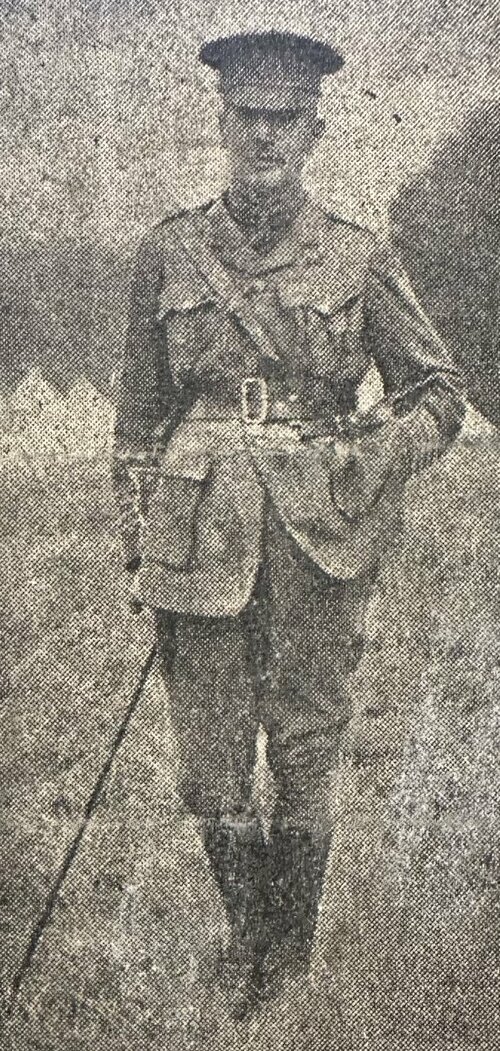
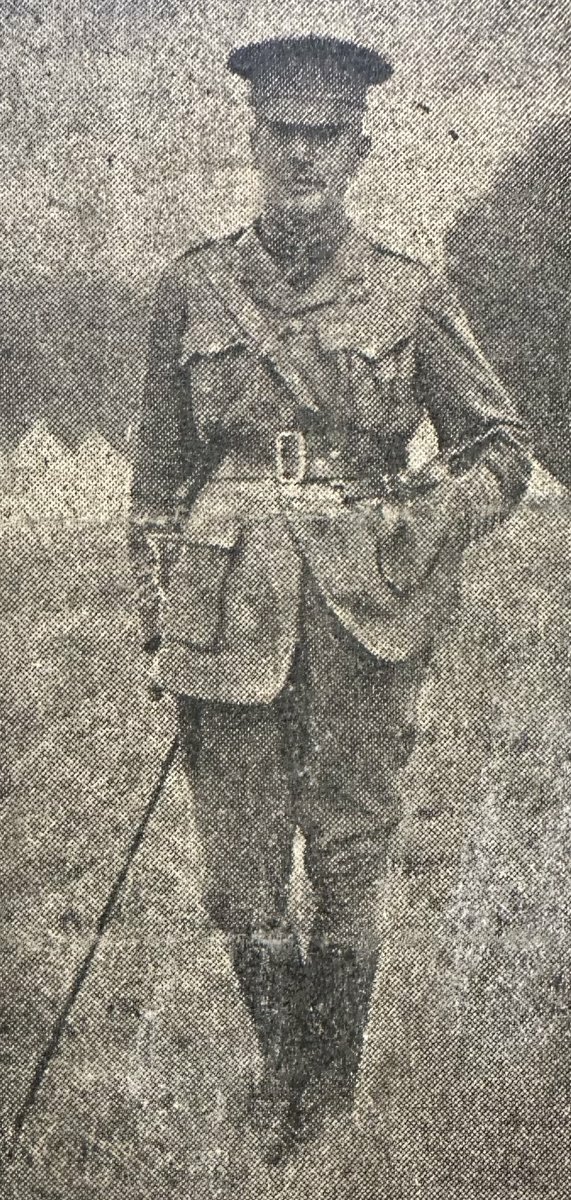
Returned home, his unit was renamed the Middlesex Regiment, and Scott-Moncrieff was advanced Lieutenant in March 1880 and Captain in December 1885. A period on the Staff in Bombay followed and he returned to the Diehards as Adjutant of his Battalion. Made Major in December 1895, he served in the Relief of Ladysmith and was to the fore in the action at Spion Kop, being severely wounded in the leg (twice ‘mentioned’, Medal & 2 clasps). As a result of those wounds, a stick was required to help him walk thereafter. Advanced Lieutenant-Colonel in February 1904 and Colonel in November 1908, he was given command of the Lothian Infantry Brigade in June 1909 and retired in October 1913.
Gully Ravine - gallant end
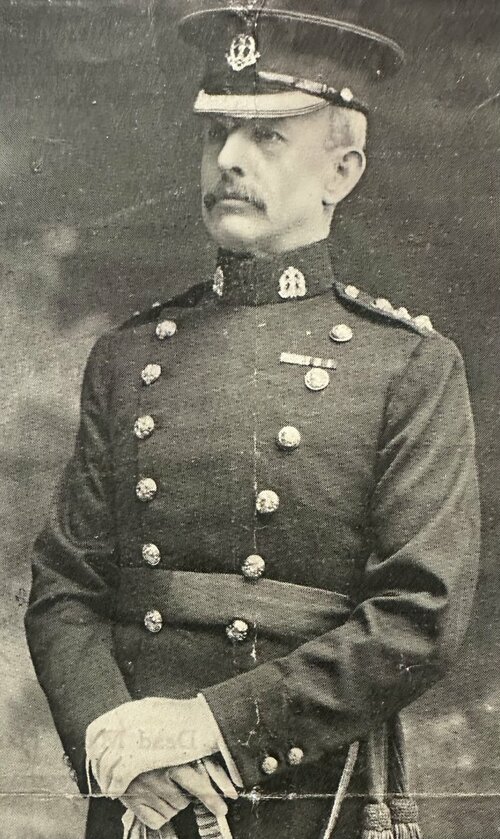
With the outbreak of the Great War, Scott-Moncrieff found himself returned to the fold as Brigadier-General in February 1915, having commanded the 27th Infantry Brigade before it went to France. He thence was given command of the 156th (Scottish Rifle) Brigade, comprising 4th & 7th Battalions, Royal Scots and the 7th & 8th Battalion, Cameronians. They were to get the order to mobilise and ready for making for Gallipoli in April 1915.
The Brigade was to be involved in the tragic Gretna (Quintinshill) Railway disaster, which cost the lives of 3 Officers and 219 other ranks and wounded 5 Officers and 219 other ranks of Brigade Headquarters and the 7th Battalion, Royal Scots.
Eventually landing on Cape Helles, Gallipoli in early June 1915, they were ordered to throw themselves headlong into the Battle of Gully Ravine. In an early-morning attack which went in to capture position H.12 at 0500hrs on 28 June they lost heavily, including 334 men of the 8th Battalion, Cameronians. At 1147hrs, Major-General de Lisle, C.O. 29th Division sent the following order:
‘H.12 is to be taken at all costs, if necessary you will send forward your Reserve Battn.’
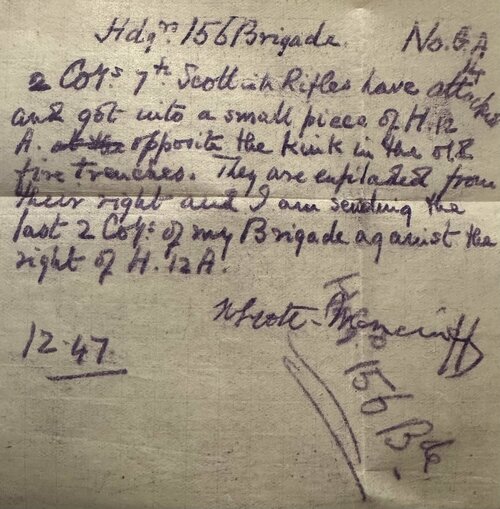
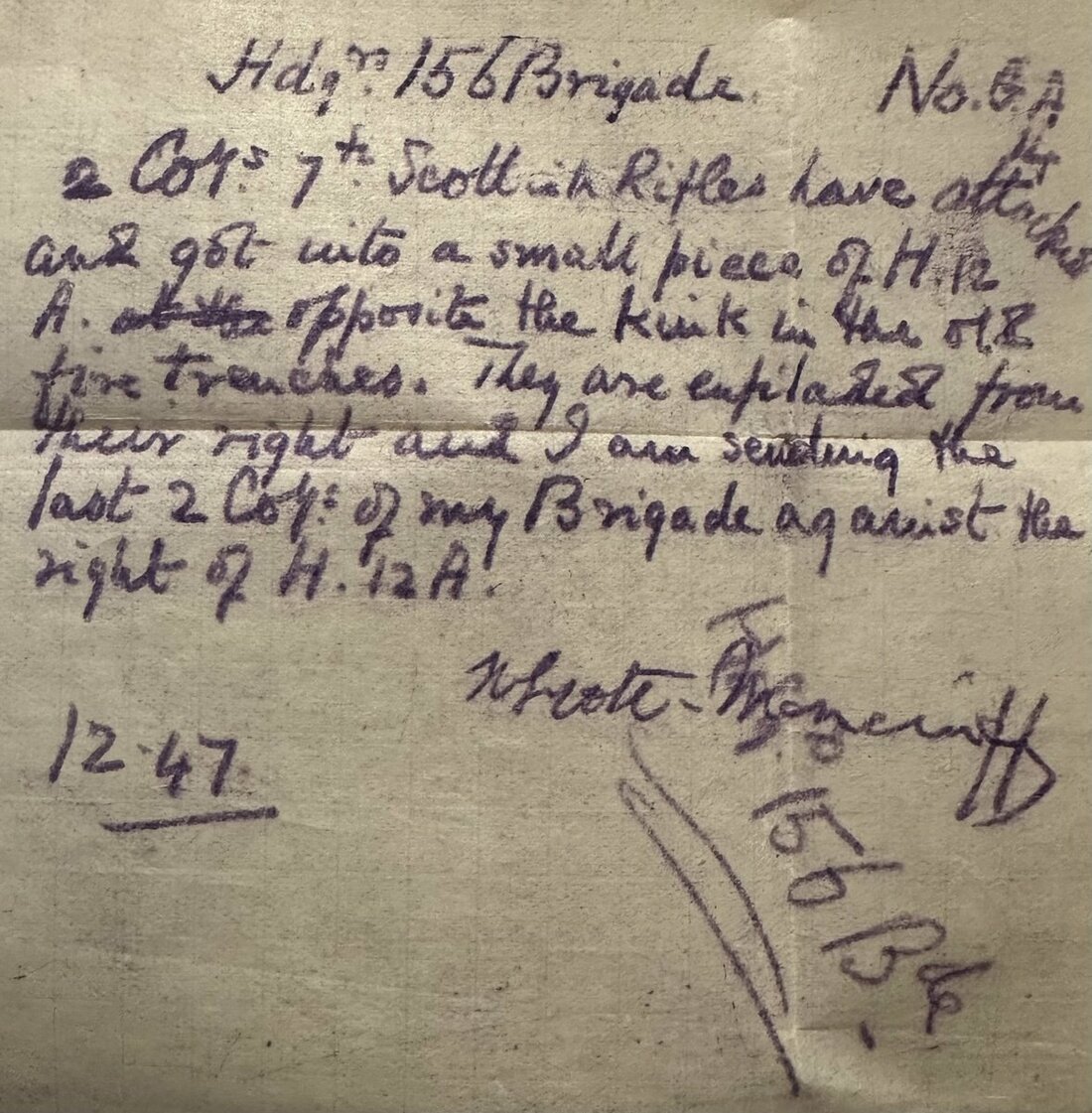
Thus the 7th Battalion, Cameronians was to be sent into the fray. The report of their actions arrived back at 1215hrs and it was clear the fire was hot and deadly, but a foothold had been secured. Scott-Moncrieff, never to be held back, went forward to observe and assist. His last fateful message would be written at 1247hrs:
‘2 Coys 7th Scottish Rifles have attacked and got into a small piece of H.12 A. opposite the Kink in the old fire trenches. They are enfiladed from their right and I am sending the last 2 Coys. of my Brigade against the right of H.12 A.’
At 1315hrs the Officer Commanding heard the tragic news:
‘General Scott-Moncrieff shot dead. Trenches in utter confusion with 156th Bde all mixed up.’
A letter from a ‘young R.A. Officer’ gives a personal account:
‘Poor Mrs Scott-Moncrieff. I wish I could really help her; as far as I saw & recollect the General was killed instantly in personally leading his Brigade in an attack; the attack failed & we re-occupied the trenches from which we advanced, hence the fact of failing to recover the General’s body.
His leading the charge was magnificent, & the talk of the Peninsula.
As a rule the Brigadier does not attack personally but owing to a mistake the O.C. of one of his Battalions did not go forward at the right time and the General seeing this, made up his mind to head the men himself & I saw him fall within 20 yards of our own parapet. He was magnificent as he must have realised that with his Generals uniform etc. his chance of not being hit was nil.
I am so sorry I can give no more information except the verbal testimony of one of the Generals’ Company Officers who came home with me, he said “when the General fell we lost a priceless Officer & Gentleman”.’
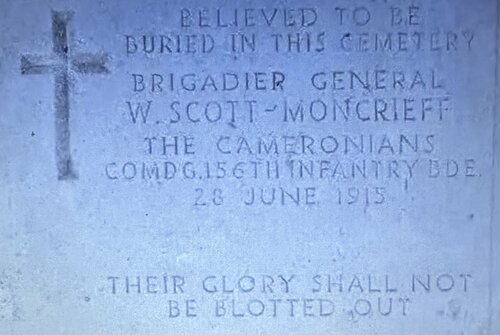
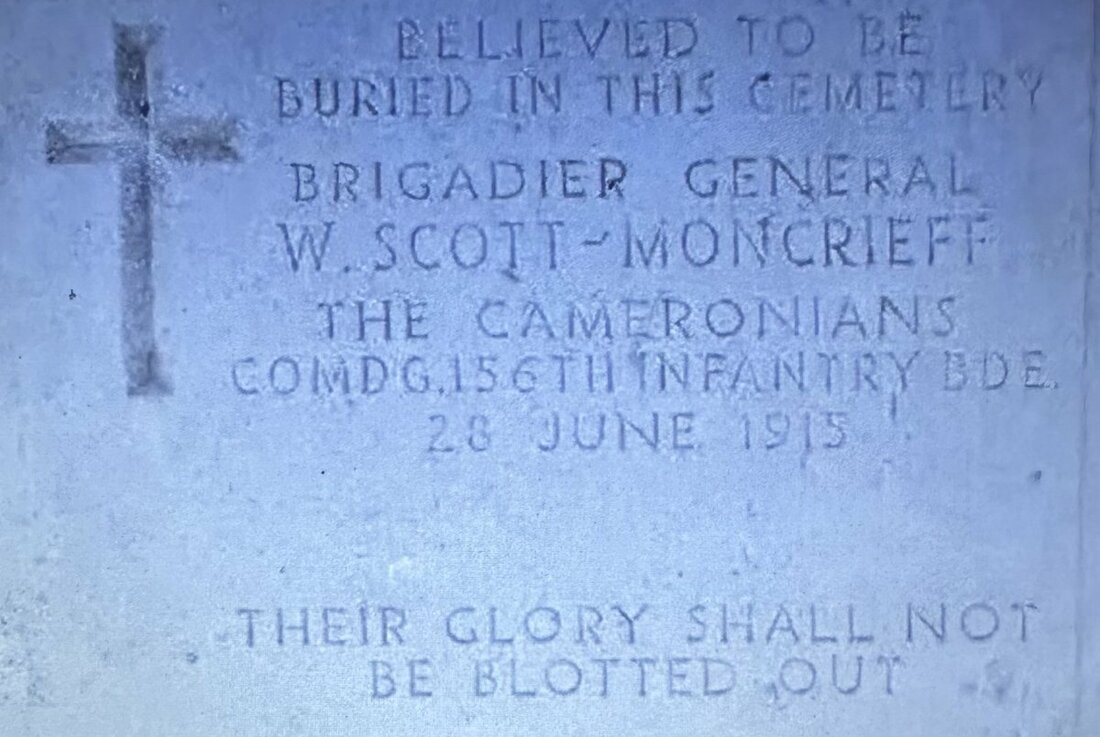
The good General is buried in the Twelve Tree Copse Cemetery. He was one of just 6 of his rank to be killed in action during the Gallipoli campaign and took a posthumous 'mention' for his fine work (London Gazette 5 November 1915, refers).
Sold together with a good selection of original material, comprising Commissioning Document, letters related to his various campaigns and death, the final message he sent, newspaper cuttings and clippings and photographs, besides a section of a family album related to his death.
Subject to 20% VAT on Buyer’s Premium. For more information please view Terms and Conditions for Buyers.
Estimate
£5,000 to £7,000
Starting price
£4000

Watch, listen and bid as if you were in the room. Now available for auctions worldwide.
Click here to bid live
An exclusive and confidential service for the discerning collector or vendor.
View the Gallery
Download every Spink catalogue on your iPad, iPod or iPhone using free Spink app.
Download From iTunes© 2026 Spink & Son. All rights reserved.