Auction: 26002 - Orders, Decorations and Medals
Lot: 91
'Throw no shot away. Aim every one. Keep cool. Work steadily. Fire into her quarters – maindeck to maindeck, quarterdeck to quarterdeck. Don't try to dismast her. Kill the men and the ship is yours.'
Captain Philip Bowes Vere Broke to the men on the guns - including Seaman French - of H.M.S. Shannon just before going into action against the U.S.S. Chesapeake: fifteen minutes later, Chesapeake had surrendered, her Captain was mortally wounded, and Broke had won a stunning victory against the American vessel.
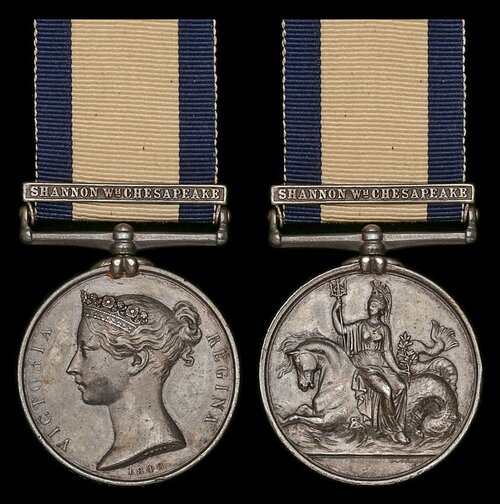
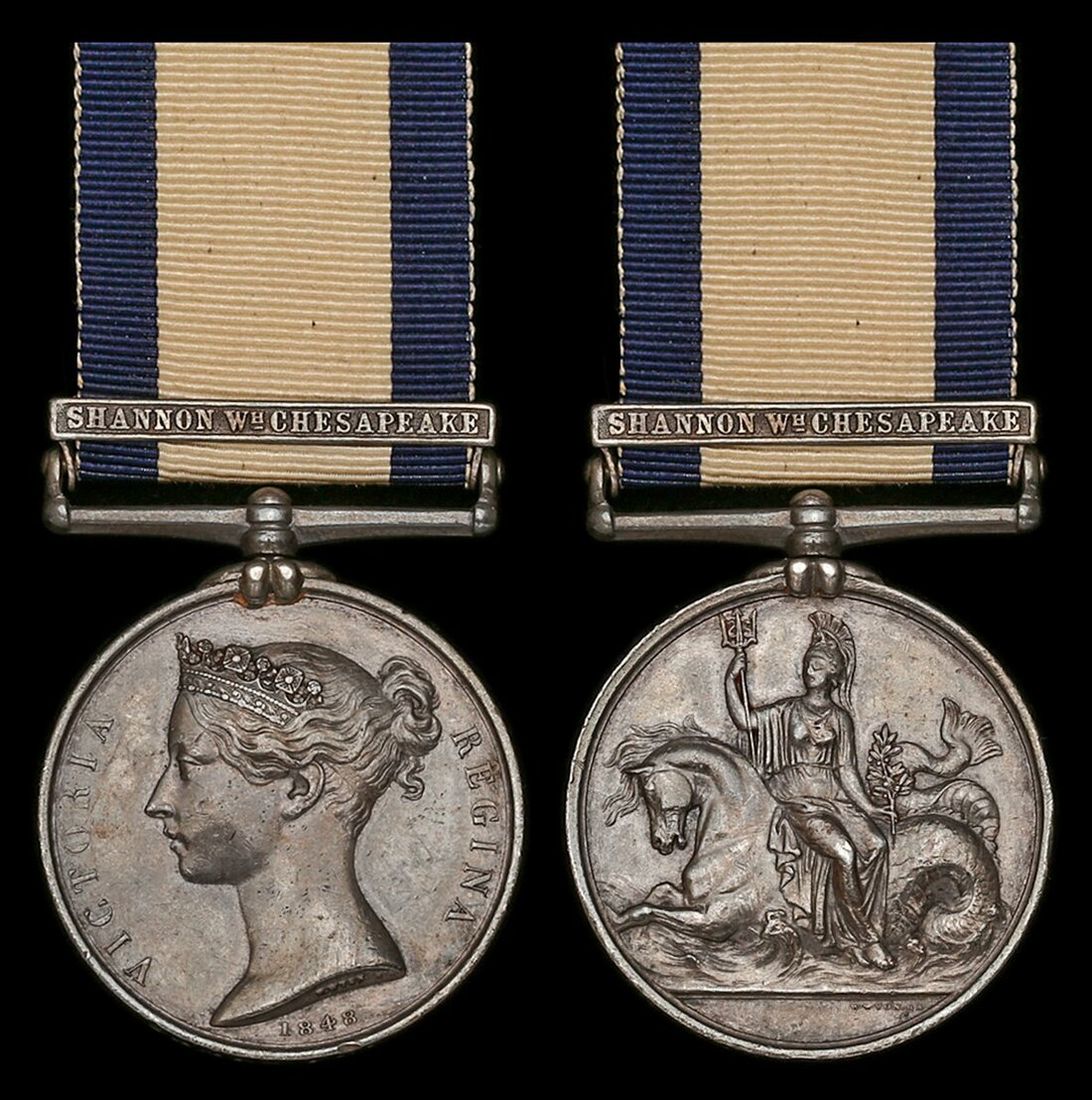
The superb Naval General Service Medal awarded to Ordinary Seaman James French for his part in H.M.S. Shannon's capture of U.S.S. Chesapeake, in which action he "fought at the fourth gun on the main deck till called on to board the American"
Naval General Service 1793-1840, 1 clasp, Shannon Wh. Chesapeake (James French), toned, very fine
Provenance:
Ex-Edward Kennedy Collection.
Two other men of this name appear on the Admiralty rolls: a Boy on H.M.S. Africa (clasp for 'Trafalgar'), and a landsman on H.M.S. Mercury (clasp for 'Off Rota 4 April 1808'). This latter medal was sold in the Jubilee Collection at Glendining’s in May 1992. A further award to an Officer, a Carpenter on H.M.S. Scipion (clasp for 'Java'), was also issued. That Medal has his rank impressed upon the rim.
Just 42 clasps 'Shannon with Chesapeake' clasps were issued.
James French was born at Weymouth, Dorset in 1775 and entered the service of the Royal Navy when he joined H.M.S. Shannon on 29 March 1810. He was immediately rated Ordinary Seaman, suggesting some previous experience of the sea.
French had been sailing under Captain Philip Broke for more than three years when the famous challenge to U.S.S. Chesapeake was offered, and would have had ample opportunity to benefit from the varied regime of training imposed by his commander, as described by historian Peter Padfield:
'The weekly routine at sea was for the watch on deck to be exercised at the great guns on Monday and Tuesday forenoons, and in the afternoons the first division of the watch was exercised at small arms. Wednesday and Thursday forenoons saw the watch on deck at the carronades, and in the afternoons the second division of the watch at small arms. Friday was reserved for the midshipmen - great guns in the morning, small arms in the afternoon. Thus each man had one morning at the 18-pounders, one morning at the carronades and two afternoons with musquets in every week.'
It is often stated that it was this discipline and preparation, which extended beyond gunnery training into exercises in close-quarter fighting and other hypothetical scenarios, that represented the deciding factor in the coming contest between two otherwise quite evenly-matched opponents.
Patrolling off Boston, Broke was eager to bring the 38-gun U.S.S. Chesapeake (moored in Boston harbour and under the command of Captain James Lawrence) to battle: indeed, Broke was so keen to fight that he famously issued a written 'challenge' to Lawrence which [in an abridged form] reads:
'As the Chesapeake appears now ready for sea, I request you will do me the favour to meet the Shannon with her, ship to ship, to try the fortune of our respective flags. The Shannon mounts twenty-four guns upon her broadside and one light boat-gun; 18 pounders upon her maindeck, and 32-pounder carronades upon her quarterdeck and forecastle; and is manned with a complement of 300 men and boys, beside thirty seamen, boys, and passengers, who were taken out of recaptured vessels lately. I entreat you, sir, not to imagine that I am urged by mere personal vanity to the wish of meeting the Chesapeake, or that I depend only upon your personal ambition for your acceding to this invitation. We have both noble motives. You will feel it as a compliment if I say that the result of our meeting may be the most grateful service I can render to my country; and I doubt not that you, equally confident of success, will feel convinced that it is only by repeated triumphs in even combats that your little navy can now hope to console your country for the loss of that trade it can no longer protect. Favour me with a speedy reply. We are short of provisions and water, and cannot stay long here.
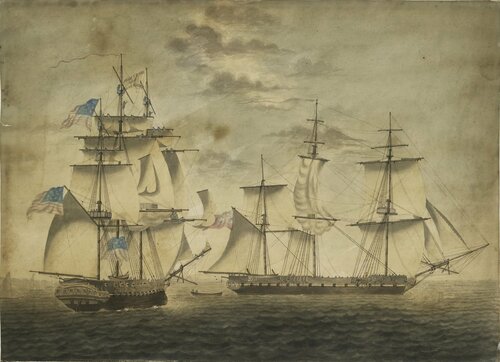
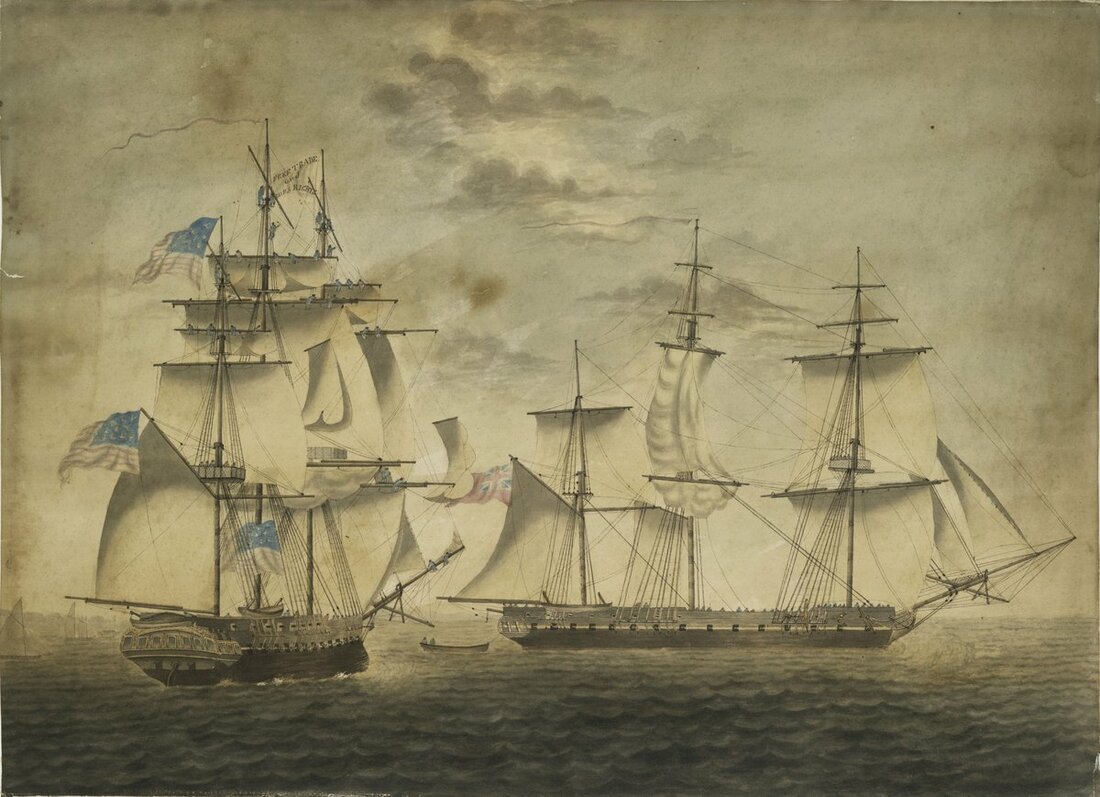
Though Lawrence did not actually receive the challenge, by coincidence he took Chesapeake to sea on the very morning that the note was being delivered to him by a boat manned by a discharged American prisoner: at 5.30 p.m. on 1 June 1813 the stage was set. Both sides were equally confident of victory, with ships of almost identical armament and tonnage. Chesapeake's crew was greater by almost 50 men, but Shannon's crew were better-trained and led - it was this fact which would soon prove decisive. As Chesapeake bore down on Shannon, the British sailors observed that their opponent was flying no fewer than three American ensigns and a further flag at the foremast displaying the words 'Free Trade and Sailor's Rights'; on this, one of Shannon's crew approached Broke and said: "Mayn't we have three ensigns, sir, like she has?" Broke responded, with exceptional sang-froid: "No - we've always been an unassuming ship."
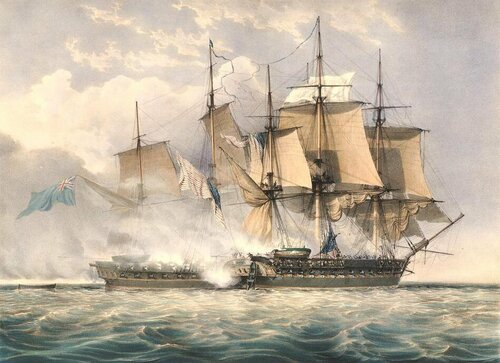
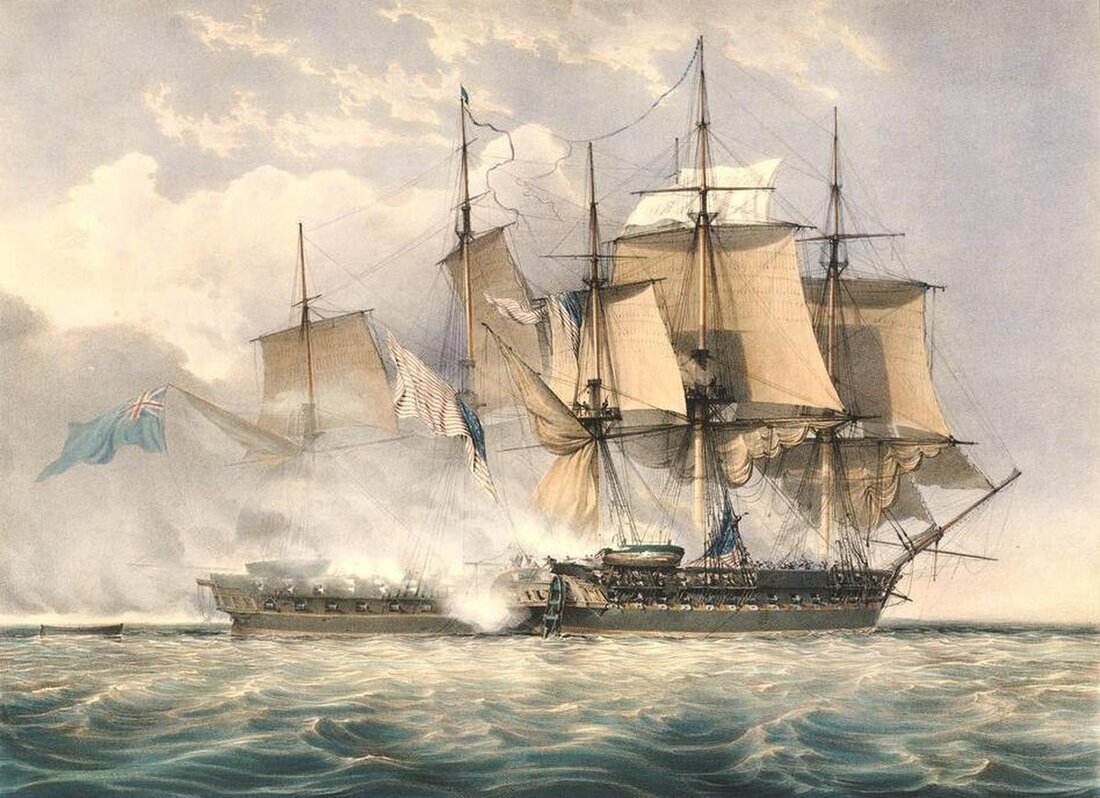
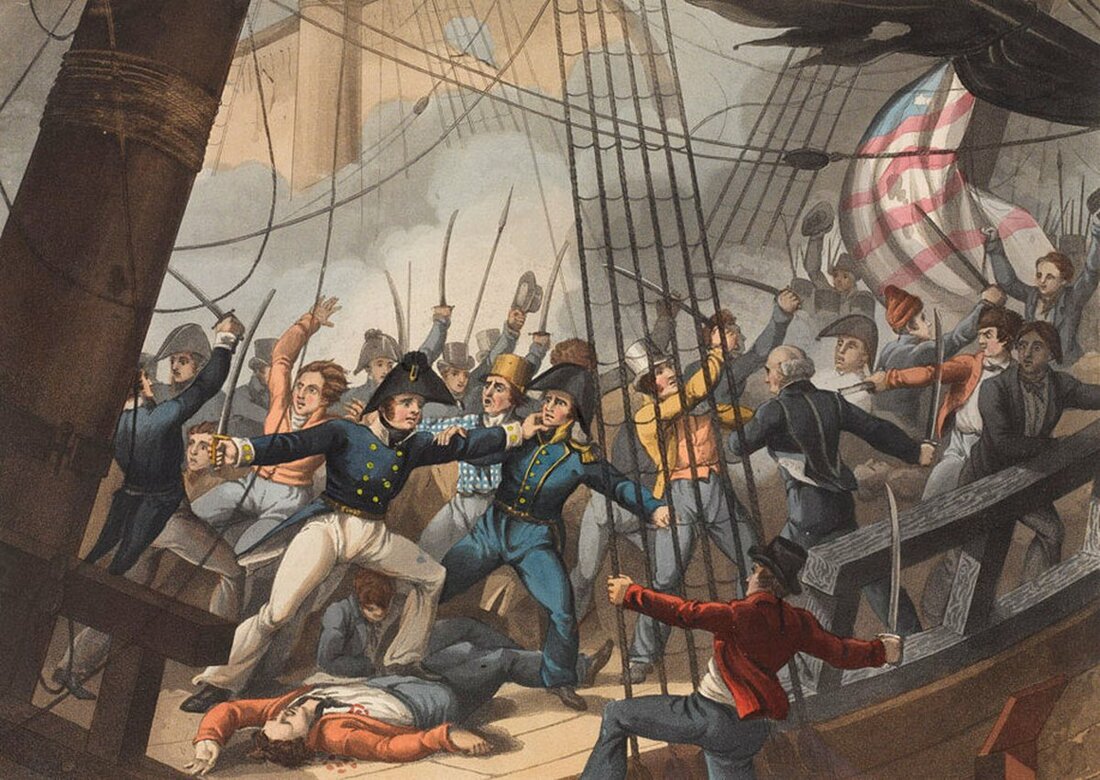
Shannon and Chesapeake opened fire just before 6 p.m. at a range of only 115 ft., with Shannon's aftmost starboard 18-pounder hitting Chesapeake's forward gunport; the American vessel was moving faster than Broke's ship, and as she ranged along Shannon's side the British gunners inflicted enormous destruction due to their precise and methodical gunnery. The Americans returned a brisk fire but failed to do as much damage with the maindeck guns as Chesapeake was heeling over; much of her heavy shot struck the water rather than hitting Shannon. Captain Lawrence now saw that, as he was moving faster than Broke, he needed to slow down and ordered a brief turn into the wind to reduce speed - a dangerous manoeuvre as this would present Chesapeake's vulnerable stern to Shannon's broadside. Then things started to very quickly go wrong for Lawrence. As this move was being carried out, another deadly accurate broadside from Shannon caused havoc: Chesapeake's quarterdeck was swept clear of officers and men, both helmsmen being killed at the wheel and indeed the wheel itself being shattered by fire from a 9-pounder which Broke specifically had installed on his quarterdeck for that very purpose. At almost the same moment as the American ship lost the ability to steer, her fore-topsail halyard was shot away and the yard dropped: she now turned even further into the wind and stopped, before making sternway towards Shannon, all the while still presenting her vulnerable, unarmed stern and being pummelled by British cannon fire. Chesapeake's port stern quarter hit Shannon's starboard side and became hooked on one of her anchor flukes: she was now trapped, at an angle where few of the American guns could bear but Broke's men could sweep the length of Chesapeake with an horrific raking fire. An open cask of musket cartridges just behind Chesapeake's mizzen mast exploded and when the smoke cleared Broke, who had been keeping an intense and ever-watchful eye on the ebb and flow of the battle, decided it was time to make the decisive strike and board his battered opponent. Lawrence, too, ordered his men to board at the same time, but the bugler he had detailed to sound the appropriate signal was nowhere to be found and his cry went almost unheeded. By now, the American captain was the only officer on the upper deck - two of his Lieutenants had been wounded and carried below - and as the senior unwounded Lieutenant, William Cox, appeared from the lower deck he found Lawrence struggling to stand upright: he had been hit by a British musket ball and the wound was mortal. It is believed that, as Cox helped Lawrence below to the surgeon, he cried out: "Tell the men to fire faster! Don't give up the ship!"
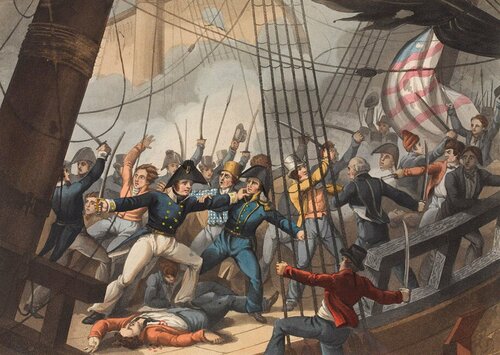
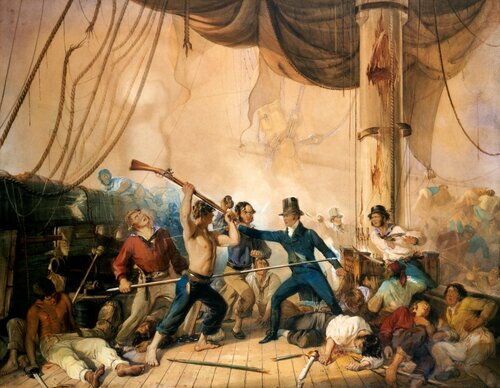
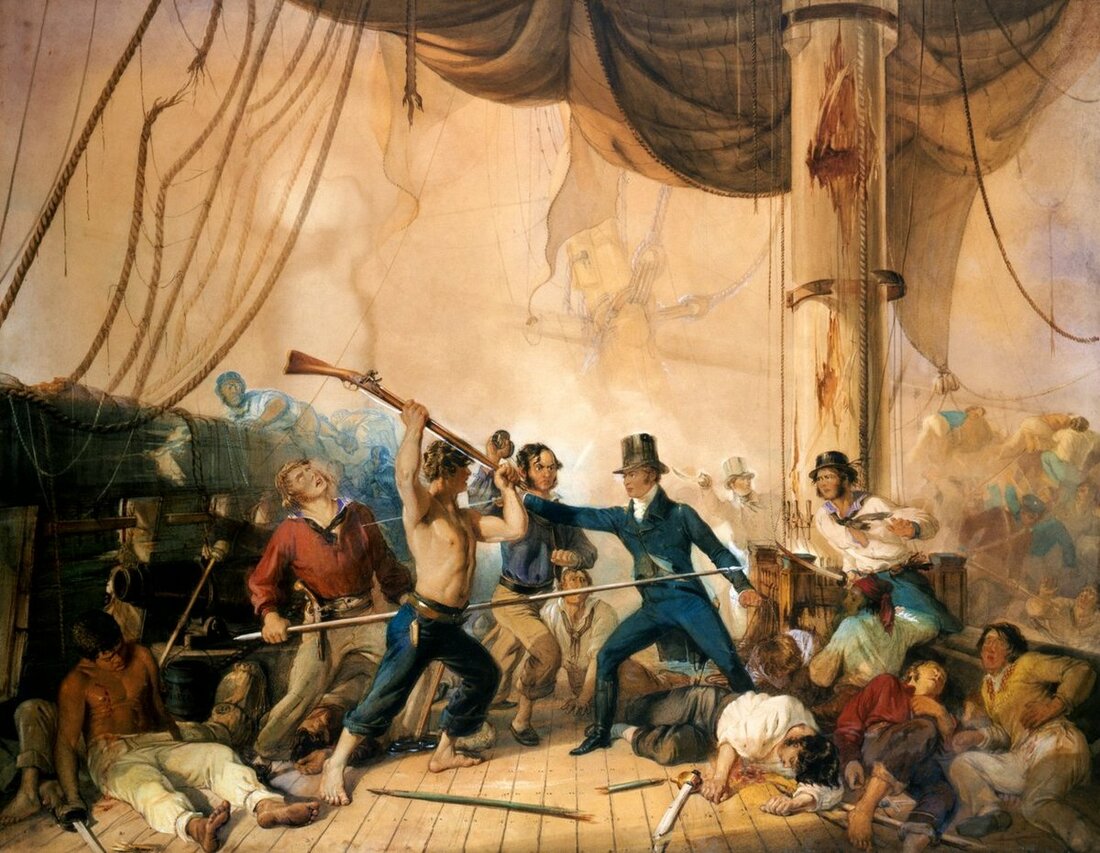
In contrast to the loss of leadership and confusion on Chesapeake, Broke and the men of Shannon were superbly organised and ready to go: the British captain led 20 men across onto the American frigate's quarterdeck in the face of some resistance (both Broke's purser and clerk being hit and killed by musket fire), but swiftly despatched their opponents and then realised there were no American officers left in that part of the ship. Neither were any Americans to be seen on Chesapeake's maindeck, either being killed by Shannon's gunfire or having deserted their posts to take refuge below the waterline. However, two of Lawrence's lieutenants now returned from below and rallied a number of sailors who launched a counter-attack: this drove Broke and his men back towards the quarterdeck but British reinforcements arrived and, as both American officers fell with cutlass wounds (one of them mortal), their valiant attempt to reclaim their ship ended in failure and resistance around Chesapeake's stern and maindeck finally collapsed with many sailors again fleeing below, leading Lieutenant Cox to exclaim: "You damned cowardly sons of bitches! What are you jumping below for?"
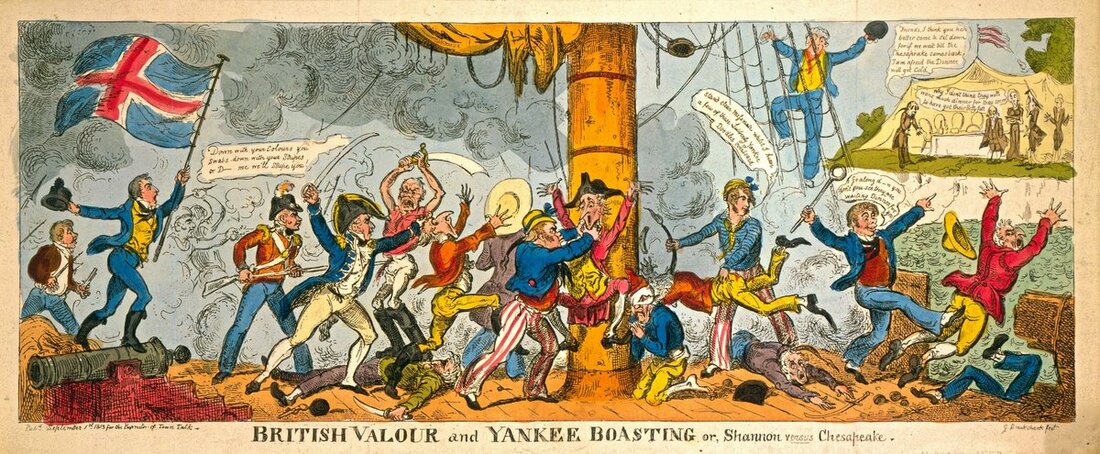
Whilst all this was going on, battle continued between the fighting-tops of the two ships with the men stationed in them sniping at one-another and upon those on the deck below: astonishingly, Midshipman William Smith (in command at Shannon's fore-top) stormed Chesapeake's fore-top via the yard-arm and killed all their opposite number. However, at this moment the wind picked up and the two vessels broke apart, with Chesapeake being blown around Shannon's bows: this left the British, with Broke at their head and some 50 in number, stranded aboard the enemy vessel. Fortunately, resistance had mostly collapsed and Broke was confident victory was his: he personally led a charge against the last element of the visible American crew on the forecastle. Whilst in hand-to-hand combat, he was identified and set upon by three sailors: Broke killed one, but the second hit him with the butt of a musket and the third cut him across the head with a sword, flinging him to the deck. Just as the American sailor went in for the kill, he was in turn bayoneted by a Royal Marine and, at the sight of their gallant captain going down, Shannon's crew launched themselves in a final, frenzied melee which captured this last bastion of American defence, killing all those in their way. The time had now come to hoist British colours over Chesapeake's 'Stars and Stripes', an act symbolically undertaken by Broke's First Lieutenant, George Watt - tragically however, as he did so one of the gun crews aboard Shannon mistook this in the smoke for the re-raising of the American flag as an act of defiance: the gun was fired and Watt fell dead, hit by British grapeshot in the moment of victory.
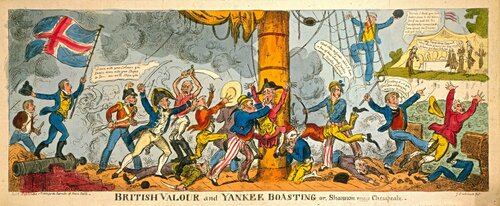
According to Shannon's log, the short but bloody battle had lasted a mere 10 minutes; Lieutenant Provo Wallis's watch said 11 minutes, and Broke claimed 15 minutes in his official despatch. Whatever the case, it had been a remarkable and triumphant victory for the Royal Navy at a time when the 'senior service' was losing far too many single-ship actions against the fledgling U.S. Navy. However, the 'Butcher's Bill' was correspondingly high - especially considering the time elapsed from opening shots to final surrender: Shannon had lost 23 men killed and 56 wounded; Chesapeake's casualty list included at least 48 killed (including four lieutenants; the Master; and most of her officers) and 99 wounded - including Captain Lawrence, mortally. With Broke also dangerously wounded, command of Shannon became the responsibility of Lieutenant Wallis (who, incidentally and impressively, was the last survivor of the battle when he died in 1892 as an Admiral of the Fleet just a few months short of his 101st birthday) and Lieutenant Falkiner and his prize crew took command of Chesapeake; both ships arrived at Halifax on 6 June to a rapturous welcome which included victory dinners, balls, patriotic songs, and general celebrations. French must have felt a great deal of pride to be so feted as one of Shannon's gallant crew.
After repairs and a brief cruise, Shannon departed for England on 4 October, arriving at Portsmouth on 2 November: Lieutenants Wallis and Falkiner were promoted Commander and Broke was showered with gifts and honours including a Baronetcy ('of Broke Hall'), the Freedom of the City of London, a Naval Gold Medal, and a 100-guinea sword - though due to his dangerous head wound he never again saw active service.
French left Shannon on 29 November 1813, signing on to H.M.S. Bulwark, 74, the next day. In her he saw further action against the Americans, including (in May 1814) the recapture of a merchantman taken by a privateer, and captures of the privateers Harlequin (in October 1814) and Tomahawk (January 1815). He was discharged to shore on 25 August 1815 and his service with the Royal Navy came to an end. The next thirty years or so passed in obscurity, although records show that as late as 1841 he was still following the (peaceful) trade of the sea. However, by 1844 he had hit hard times, and in April that year a Dorset newspaper reported that 'one of the few survivors of the gallant crew of the Frigate Shannon (James French), aged 68, is now in a state of destitution, at Weymouth, and suffering under the additional affliction of a broken leg.' Charitable contributions were solicited, but matters were little better by November 1847, when James French found himself making the newspapers again:
TO THE EDITOR OF THE EVENING MAIL
Sir, One day last week I read a letter in your paper signed "A Clergyman", kindly suggesting how an old seaman may be served, as he had recently succeeded in getting one into Greenwich. I can fully appreciate his feeling, and began to indulge in the hope that success would favour my exertions in behalf of James French.
This poor fellow recently appeared before the board of guardians of the Weymouth Union for an increase to his outdoor relief. I elicited from him that he had served on board Her Majesty's frigate the Shannon, Captain Broke, for five years, and aided in the capture of the American frigate Chesapeake; he was afterwards removed to Her Majety's ship Bulwark, and was discharged from the service at the conclusion of the war. I addressed a few lines in French's behalf to Lord Auckland, and by return of the post received a very polite letter from his secretary, to the effect that James French might appear before a board at Somerset-house to state his services, and take his chance for Greenwich; at the same time hinting that there were others with apparently greater claims. Still I indulged the hope that success would favour my old friend of the Shannon, and I induced the guardians of his parish to advance the requisite sum to pay his expenses to town.
The old man appeared before the board yesterday, but I regret to say was not successful. In his 73d year, then, this poor fellow must return to his parish, and eke out his remaining days on 2s. a-week and a loaf, unless this should meet the eye of some kind person possessing the power and inclination to find an asylum for a quiet, well-conducted old man.
I have the honour to be, Sir, your obedient servant,
THE CHAIRMAN OF THE WEYMOUTH UNION.
6 Norfolk-street, Strand, Nov. 5.
NB French did duty as able-seaman on board the Shannon, and fought at the fourth gun on the main deck till called on to board the American.
This public appeal for reconsideration by the Admiralty must have borne fruit, as Greenwich Hospital records show that French was admitted on 18 November 1847. He spent the rest of his life in that institution, dying there on 14 November 1862, and was laid to rest in Greenwich.
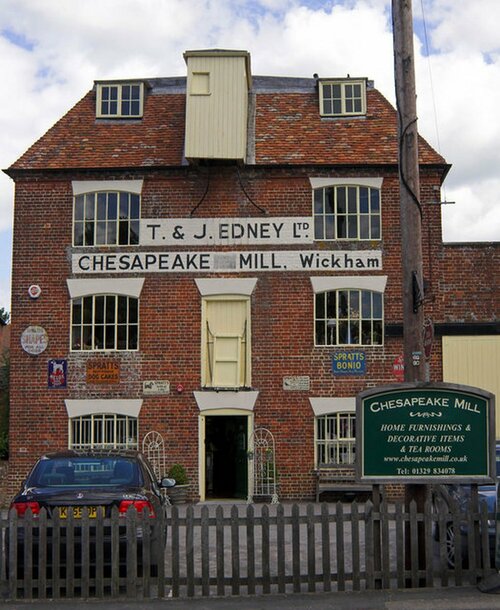
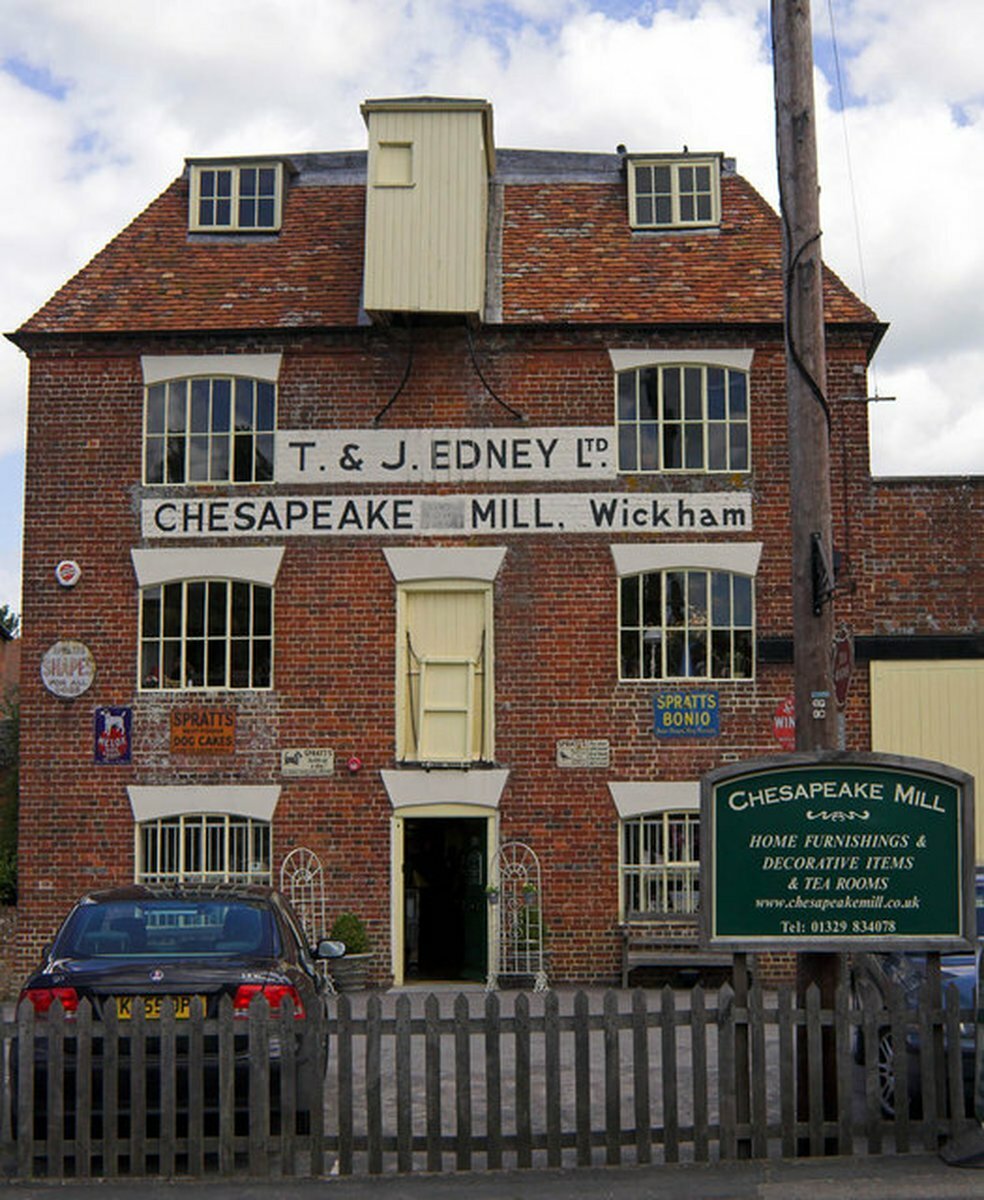
As a point of interest, Shannon remained afloat until 1859, when she was finally broken up. Two of her sister ships, H.M.S. Unicorn and H.M.S. Trincomalee, still exist to this day as museum ships in Dundee and Hartlepool respectively. Chesapeake entered the Royal Navy as H.M.S. Chesapeake but was sold out of service in 1819. Large parts of her timbers where then used to build a watermill at Wickham, Hampshire, which also still exists and is called the 'Chesapeake Mill'. Somewhat bizarrely, as a watermill Chesapeake is the most originally preserved of the original six frigates of the United States Navy!
Please note:
A lengthy research project, led by Peter Lomdahl and Arthur Satterley has all but reached completion. It has investigated the relationship between the Admiralty claim reference of an individual and the Royal Mint die variety of the obverse and/or reverse of the issued Medal. This has now established that it is possible in many cases of ‘multiple name’ Medals to state unequivocally that a particular Medal with a specific clasp is correct. This will enable the collector to prove a particular Medal in their collection has not been ‘fitted up’ with a rarer clasp affixed to a Medal which was originally issued with a more common clasp - like 'Syria' or 'Navarino'.
In this case the work has verified that the particular die combination used to strike this Medal matches James French's claim reference preserved on the original Admiralty Claimant's List (ADM 171/1). It is confirmed that although there are two others (who were not Officers) of this name on the rolls, the die combination used for this Medal means it cannot be the 'Off Rota' or 'Trafalgar', switched to 'Shannon wh. Chesapeake' - both of these Medals are also known to be extant elsewhere. Lomdahl and Satterley confirm that this is the Medal and clasp, as issued to James French of HMS Shannon for the famous action with the USS Chesapeake.
The pair will offer a verification service for collectors, from which a Certificate of Authenticity will be issued to those Medals which qualify. This service will follow the publication of an in-depth article and presentation at the upcoming OMRS Medal Show, September 2026. The purchaser of this Medal will receive Certificate of Authenticity No. 1 as soon as it is available.
Subject to 20% VAT on Buyer’s Premium. For more information please view Terms and Conditions for Buyers.
Estimate
£12,000 to £15,000
Starting price
£10000
Watch, listen and bid as if you were in the room. Now available for auctions worldwide.
Click here to bid live
An exclusive and confidential service for the discerning collector or vendor.
View the Gallery
Download every Spink catalogue on your iPad, iPod or iPhone using free Spink app.
Download From iTunes© 2026 Spink & Son. All rights reserved.