
Auction: 26002 - Orders, Decorations and Medals
Lot: 19
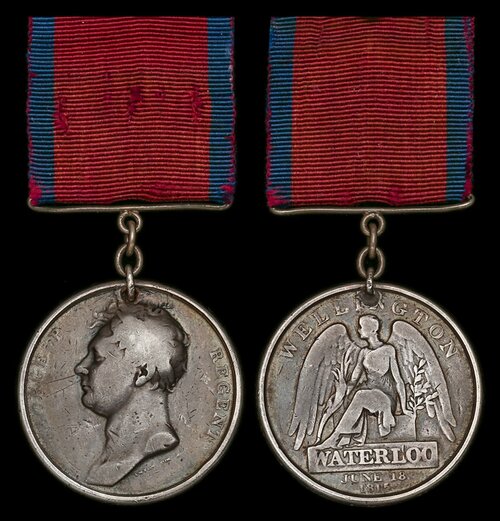
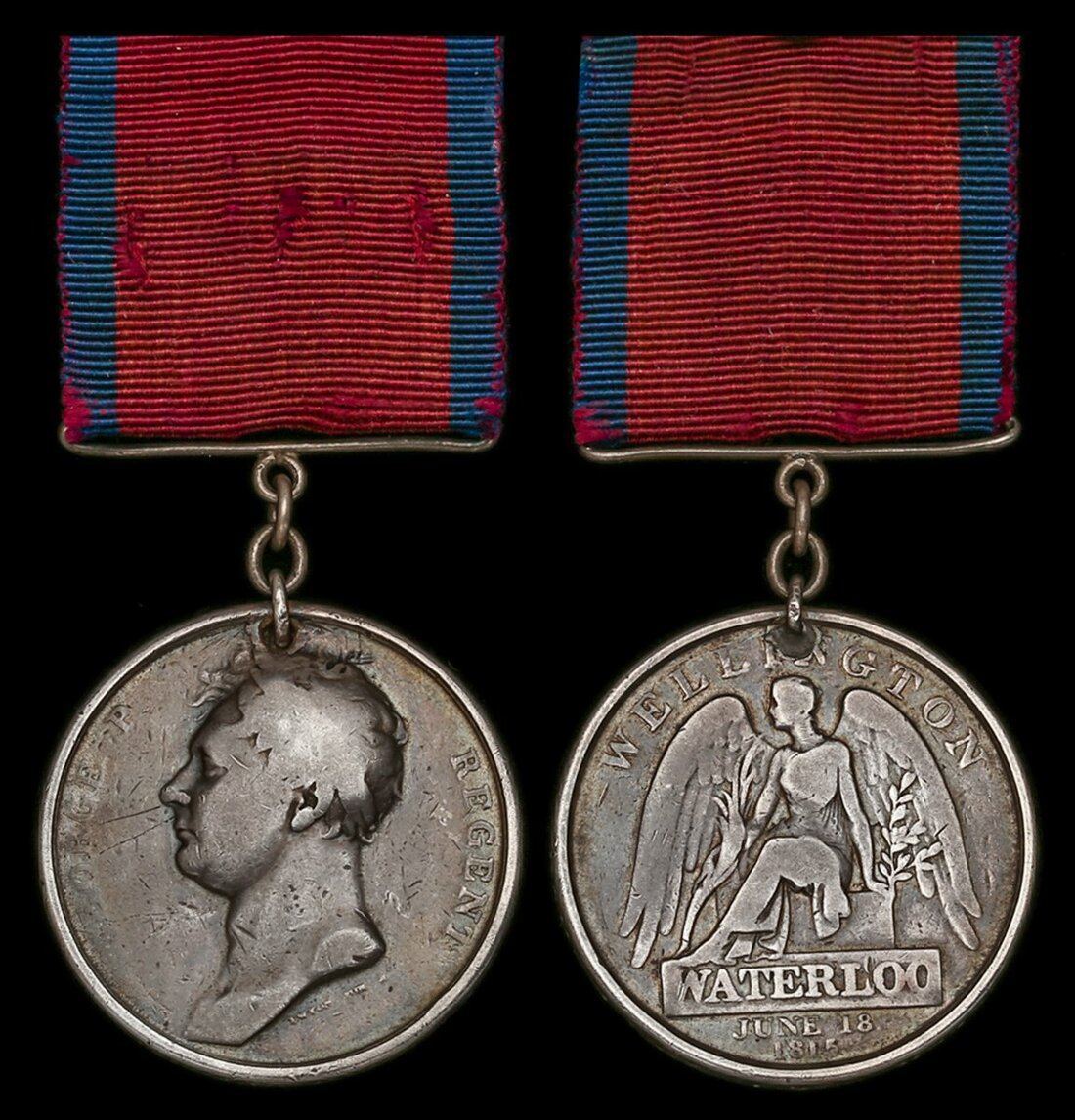
The poignant Waterloo Medal awarded to Lieutenant & Adjutant A. Dent, 2nd Battalion, 59th Regiment of Foot, who lost his life in 'Ireland's Worst Maritime Disaster' with the wrecking of the Sea-Horse, Lord Melville and Boadicea, that claimed the lives of 510 of his comrades in Tramore Bay, near Waterford, Ireland, on 30 January 1816
Dent had previously been severely wounded at Corunna in 1809 and seen futher service at Cadiz and Nivelle, being on the Staff of Major-General Cooke
Waterloo 1815 (Lieut. Abraham Dent, 2nd Batt. 59th Reg. Foot.), dual ring and silver wire suspension, polished and worn with pride
Abraham Dent was born circa, the son of Thomas Dent, a brandy merchant from Kirkby Steven. A Lieutenant in the Cumberland Militia, he was commissioned Ensign into the 59th Foot on 17 March 1808 and was severely wounded at the Battle of Corunna on 16 January 1809.
Made Lieutenant on 4 June 1809, he served in the Peninsular from September 1808-January 1809 and September 1812-April 1814. He was the town Adjutant at Cadiz from January-April 1813 and was present at the Battle of Nivelle, where he was the Secretary to Major-General Cooke from May 1813-April 1814. Dent was made Adjutant on 15 June 1815 and was present at the Battle of Waterloo.
After Napoleon’s escape from Elba, J. J. McGregor's A Short Sketch of the Distinguished Services of these Gallant Corps while under the command of His Grace, the Duke of Wellington, Waterford picks up our tale:
'The 59th returned to Ireland with many other corps of Lord Wellington’s army, and in this country they remained till the unexpected return of Bonaparte from Elba again disturbed the repose of Europe, and excited gloomy apprehensions, that the scourge of war might yet for a long time desolate the nations. This event called for their services once more under the hero who had so often led them to victory, and they accordingly embarked at Warren’s Point, near Newry, for England, and after a short stay at Dover, sailed for the Low Countries in May 1815.
They remained in garrison at Oudenarde till the eve of the glorious battle of Waterloo, so justly termed the Thermopylae of Europe. The protection of the great road leading to Brussels through Halle was entrusted to the division of General Colville, composed of the 14th, 23d, 35th, 51st, 54th, 59th and 91st regiments, with a corps of Hanoverians, but it did not fall to their lot to be seriously engaged, though menaced through the whole of the 18th of June by 5,000 French Cavalry, till the remainder of the enemy’s army was put to flight. Had it fallen to their lot to be attacked, they would without doubt, have displayed equal valour with their brave comrades in other quarters of the field on that ever memorable day.
General Colville’s Division now became the advanced-guard, crossing the French frontier near Cateau on the 22d, and storming Cambray with the greatest gallantry on the 24th, whence the whole army pursued its route for Paris, which speedily surrendered to the Allied Forces. From that period the 59th lay encamped for four months in the Bois-de-Boulogne, and were afterwards quartered at Montlhéry, near the French capital, till the 6th of December, when the Definitive Treaty having been signed, they marched for Calais, and a few days after landed in England.'
In January 1816, the Battalion embarked on charter ships the Sea Horse and Lord Melville for return to barracks in Ireland. Five companies, 16 officers and 287 men, embarked on Sea Horse along with 33 women and 8 children. Dent was present.
The vessels sailed to the Downs on 25 January 1816, where they were joined by the brig Boadicea carrying 290 troops, and 34 women and children of the 82nd Regiment of Foot (Prince of Wales's Volunteers). The ships headed west along the English Channel and entered the Irish Sea at 5pm on 28 January. Weather had been deteriorating throughout the day, but worse was to follow.
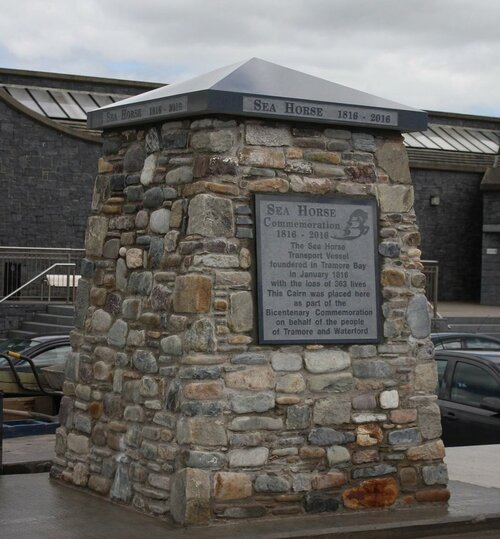
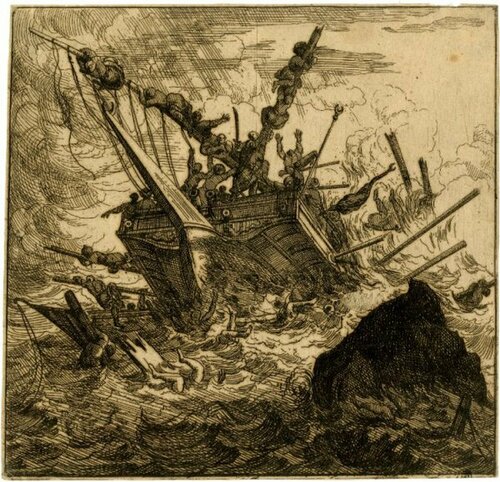
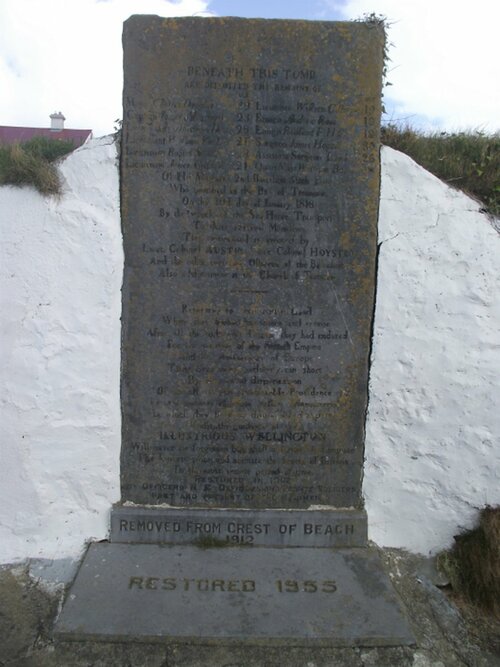
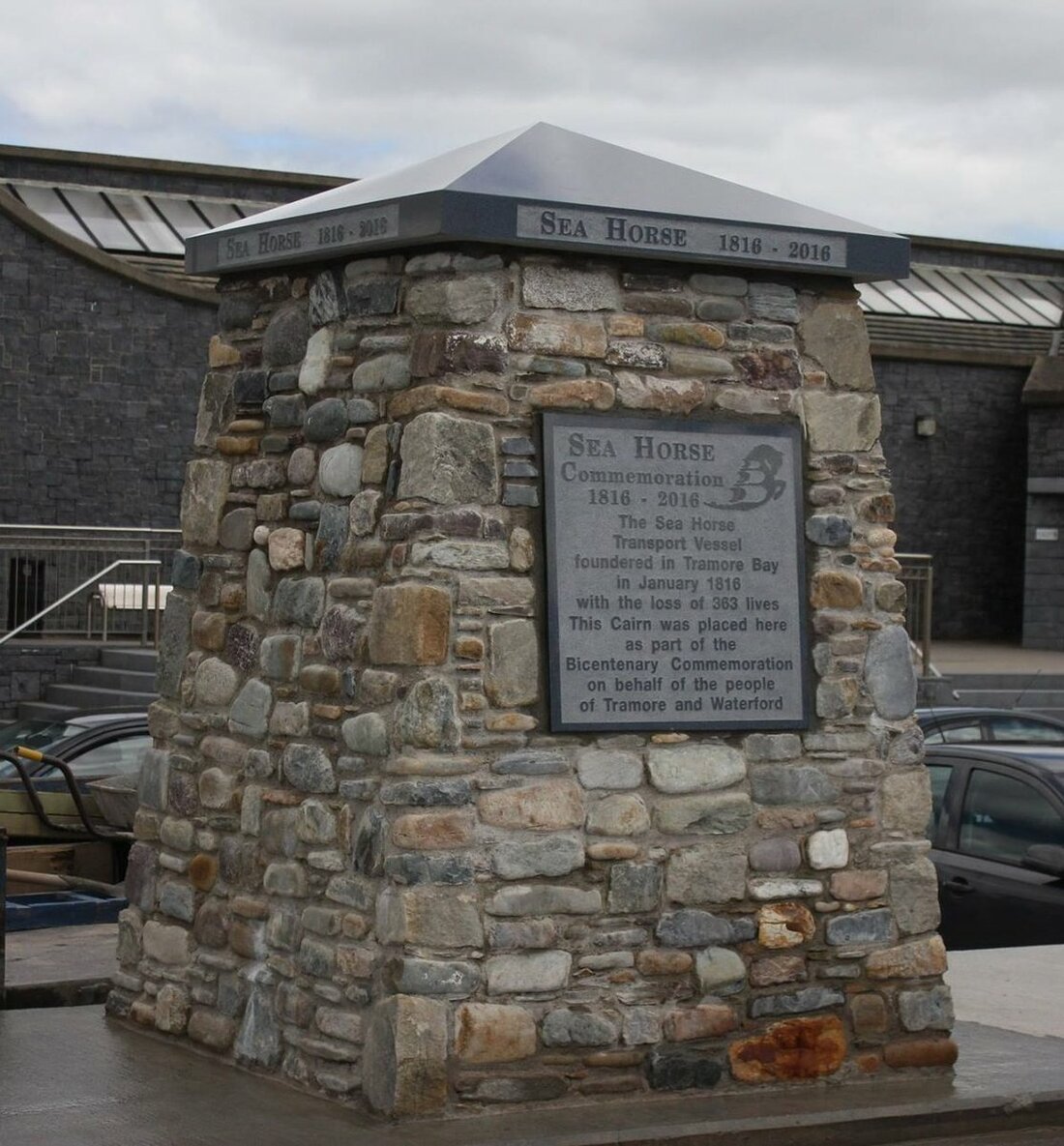
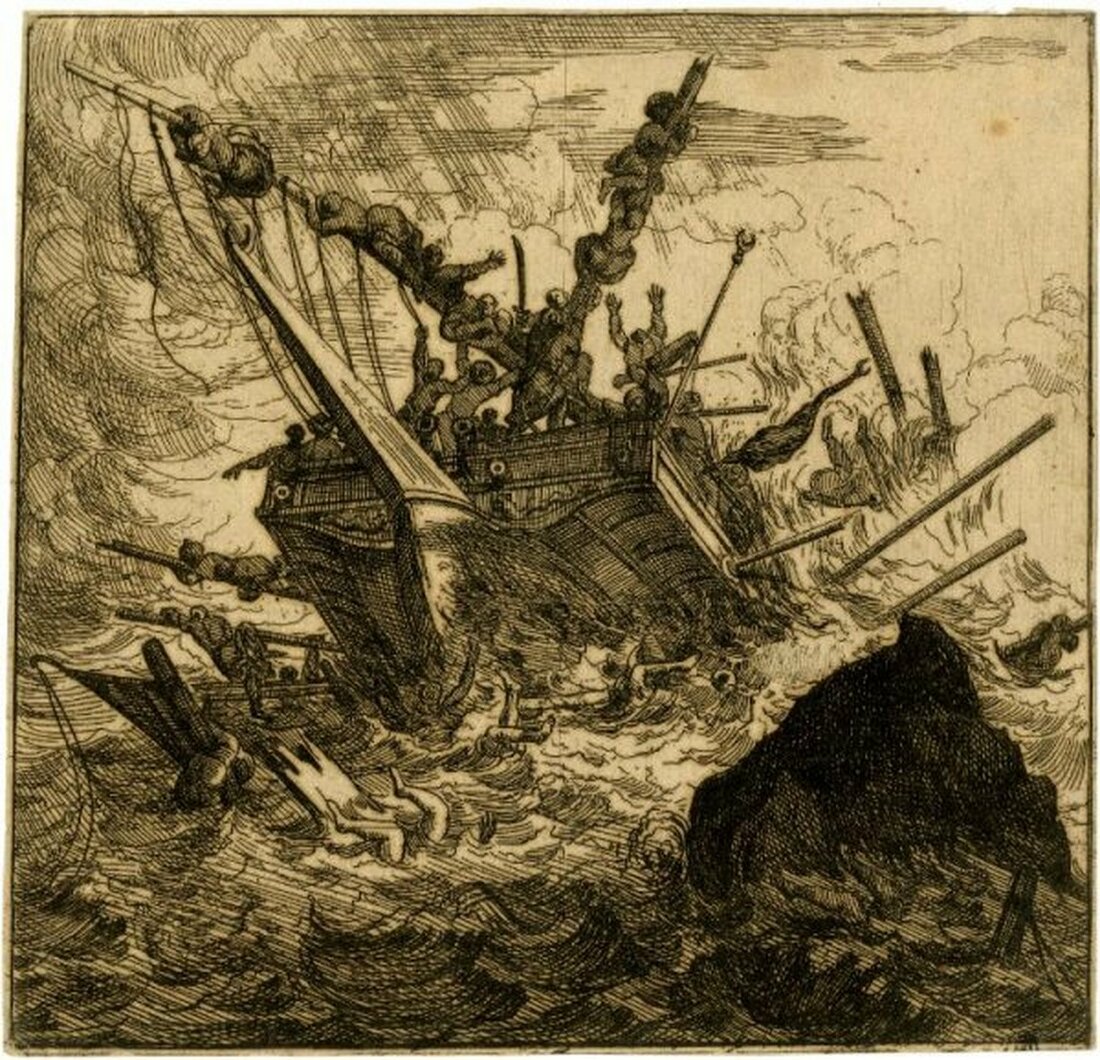
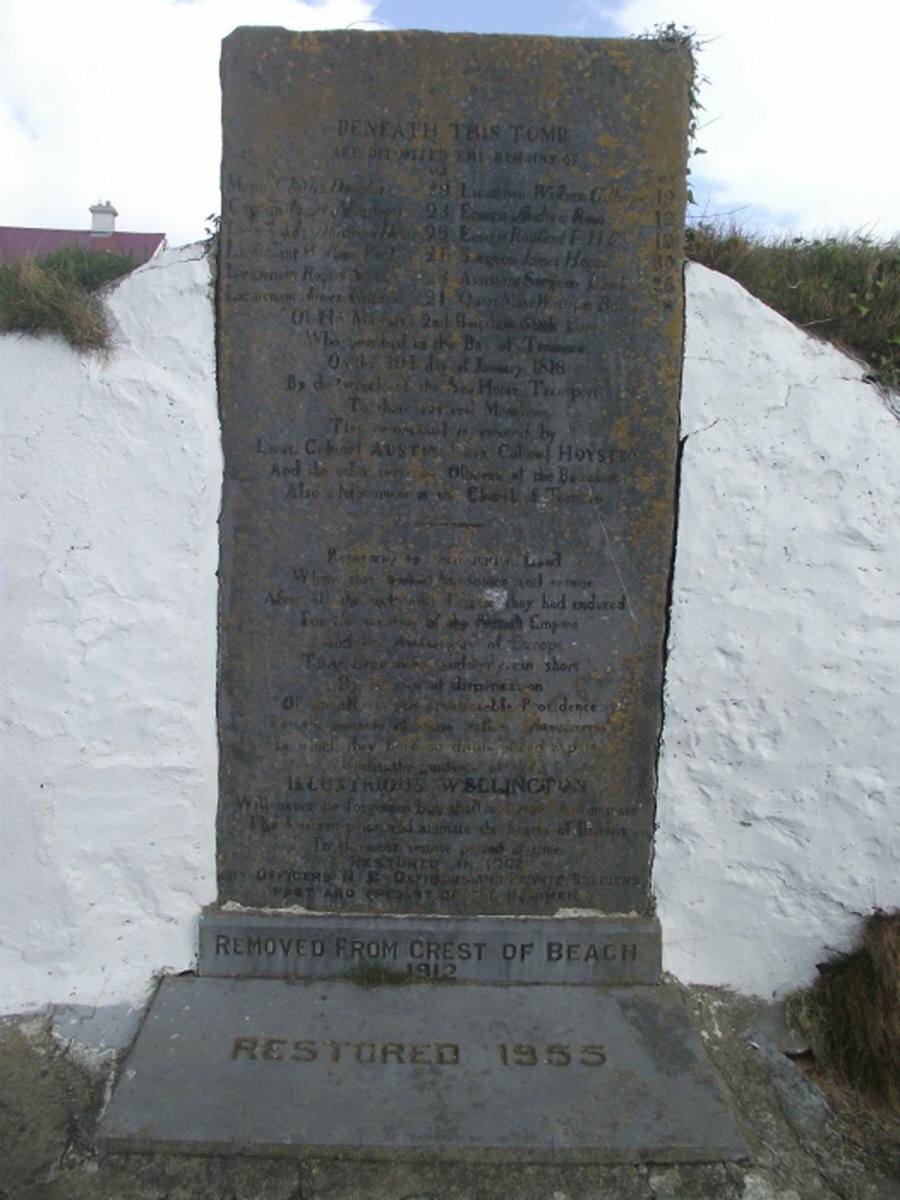
At 4pm on 29th, Sea Horse's mate, John Sullivan, the only member of that crew familiar with the Irish coast around Cork, fell from the foremast and was fatally injured. Captain Gibbs was then unable to locate the Kinsale lights through the howling gale. The following morning, Sea Horse attempted to reach the sanctuary of Waterford harbour, but at 1030hrs her foretop was brought down. The crew sought to prevent the ship from being driven further onto the north arm of Tramore Bay by releasing her three anchors, but the sea soon broke over her rigging, and by noon her anchors were dragging. Helpless, the mizzen and main mast were jettisoned, but the rudder had been destroyed. The ship subsequently ran aground on a shoal a mile from the shore near the Rinnashark Channel and started breaking up at 1300hrs. With rescue all but futile, only thirty survivors, including the Captain and two seamen, made up the roster of 394 passengers aboard. Dent himself was spotted gamely attempting to organise and assist some 60 or 70 others. He was seen for a time on a portion of the vessel, but a heavy wave struck it and all were overwhelmed. Dent was the third most Senior Officer to be lost in this tragic disaster and was but 26 years of age. His name features on the Memorial raised to commemorate their loss.
Subject to 20% VAT on Buyer’s Premium. For more information please view Terms and Conditions for Buyers.
Estimate
£1,000 to £1,500
Starting price
£800
Watch, listen and bid as if you were in the room. Now available for auctions worldwide.
Click here to bid live
An exclusive and confidential service for the discerning collector or vendor.
View the Gallery
Download every Spink catalogue on your iPad, iPod or iPhone using free Spink app.
Download From iTunes© 2026 Spink & Son. All rights reserved.