
Auction: 25113 - Orders, Decorations and Medals - e-Auction
Lot: 719
(x) A rare and exciting Log Book and archive to Flight Sergeant F. Tomkins, Royal Air Force, who served as a Wireless Operator and was awarded the Conspicuous Gallantry Medal after heroically taking control when his aircraft was hit by flak, bringing the aircraft and crew to safety
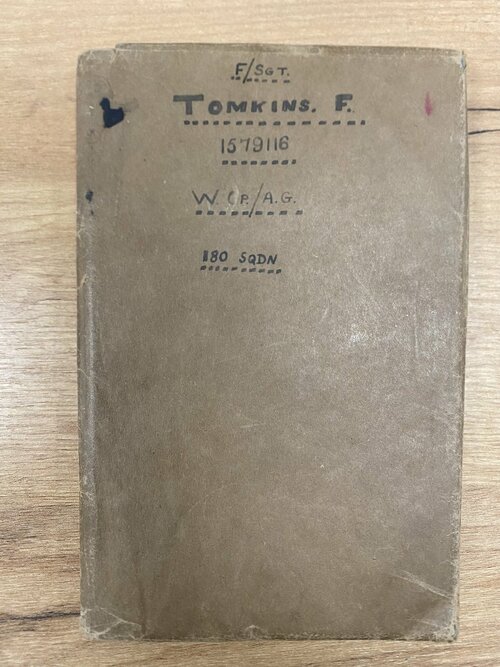
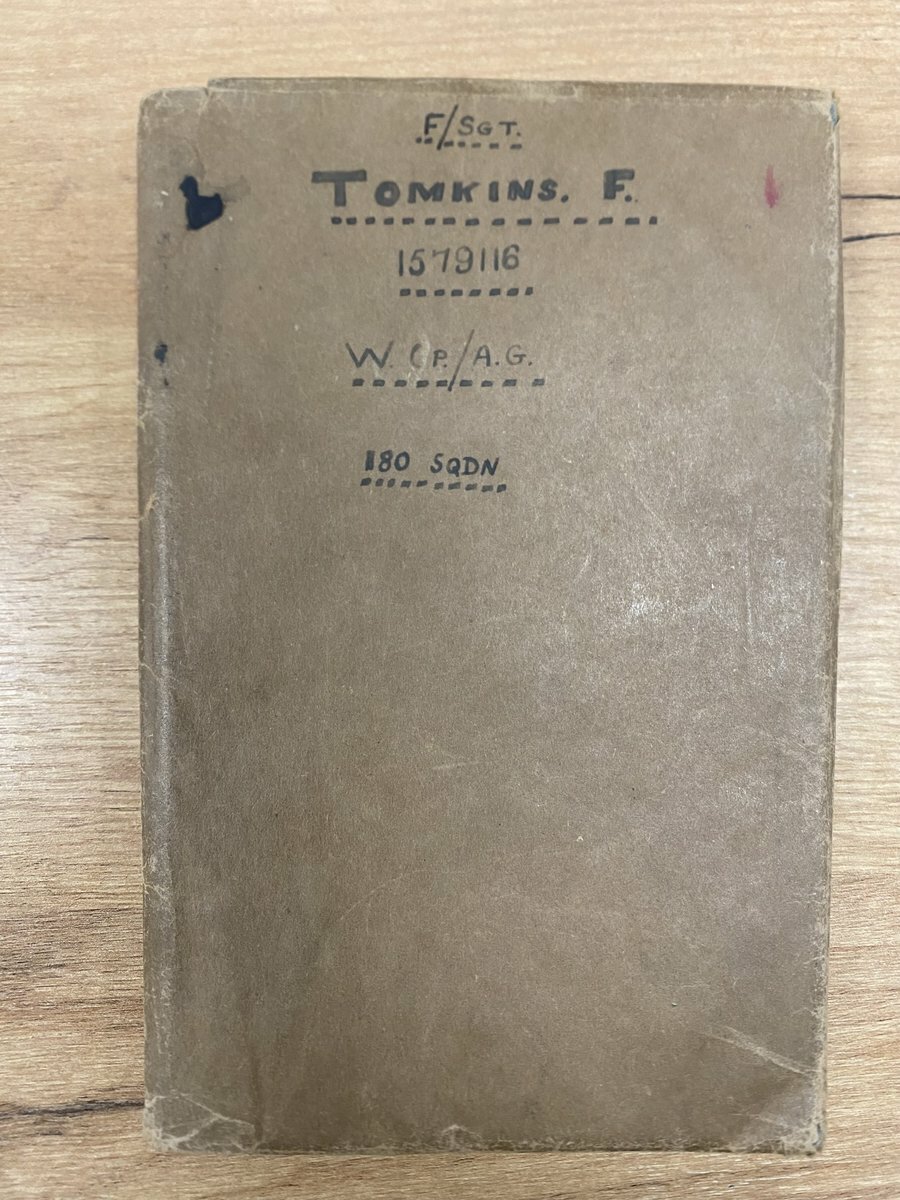
Log Book named to 'F/Sgt Tomkins. F. 1579116 W.C.P./A.G. 180 Sqdn'; additionally sold together with a large archive (Lot)
C.G.M. London Gazette 23 January 1945
'In December, 1944, this airman was the wireless operator in an aircraft detailed to attack a target in the Stralen area. During the sortie the aircraft was hit by anti-aircraft fire and sustained damage. The navigator and the pilot were wounded, the latter severely. Some Verey cartridges near the pilot were set alight. The cockpit became filled with smoke and obscured most of the flying instruments. A small fire started amidships. Flight Sergeant Tomkins saw that the navigator was dealing successfully with the fire so he promptly crawled over the bomb bay to assist the injured pilot who, by now, was in a state bordering on collapse. He rallied when succoured by Sergeant Tomkins who afterwards took over the controls and flew the aircraft to an airfield in friendly territory. Here, under the instructions of his wounded pilot, he brought the aircraft down safely. In the face of most trying circumstances, Sergeant Tomkins displayed courage, coolness and resource of a high order.'
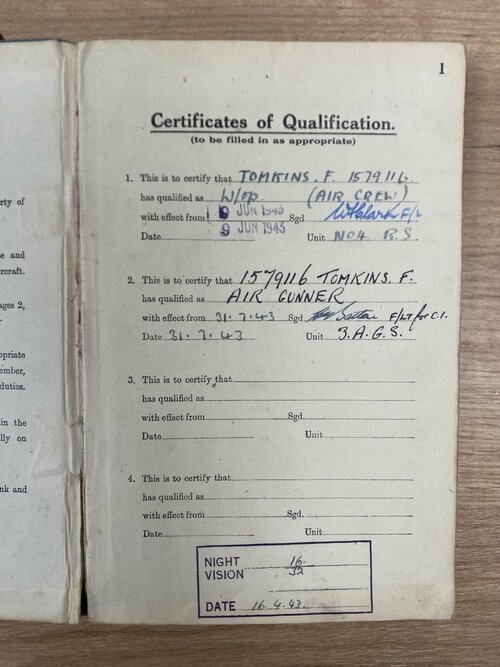
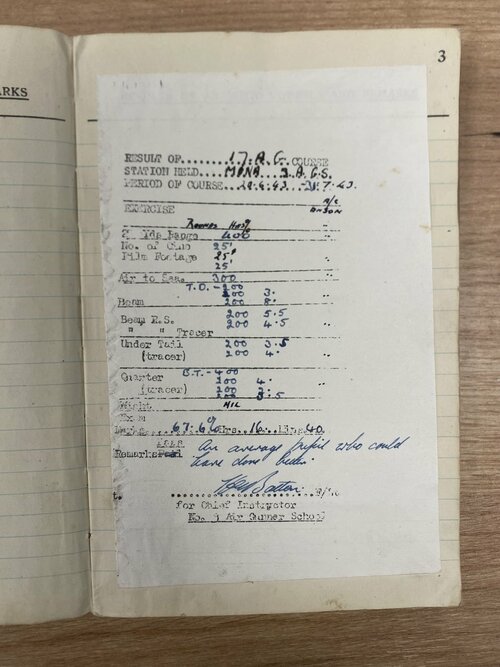
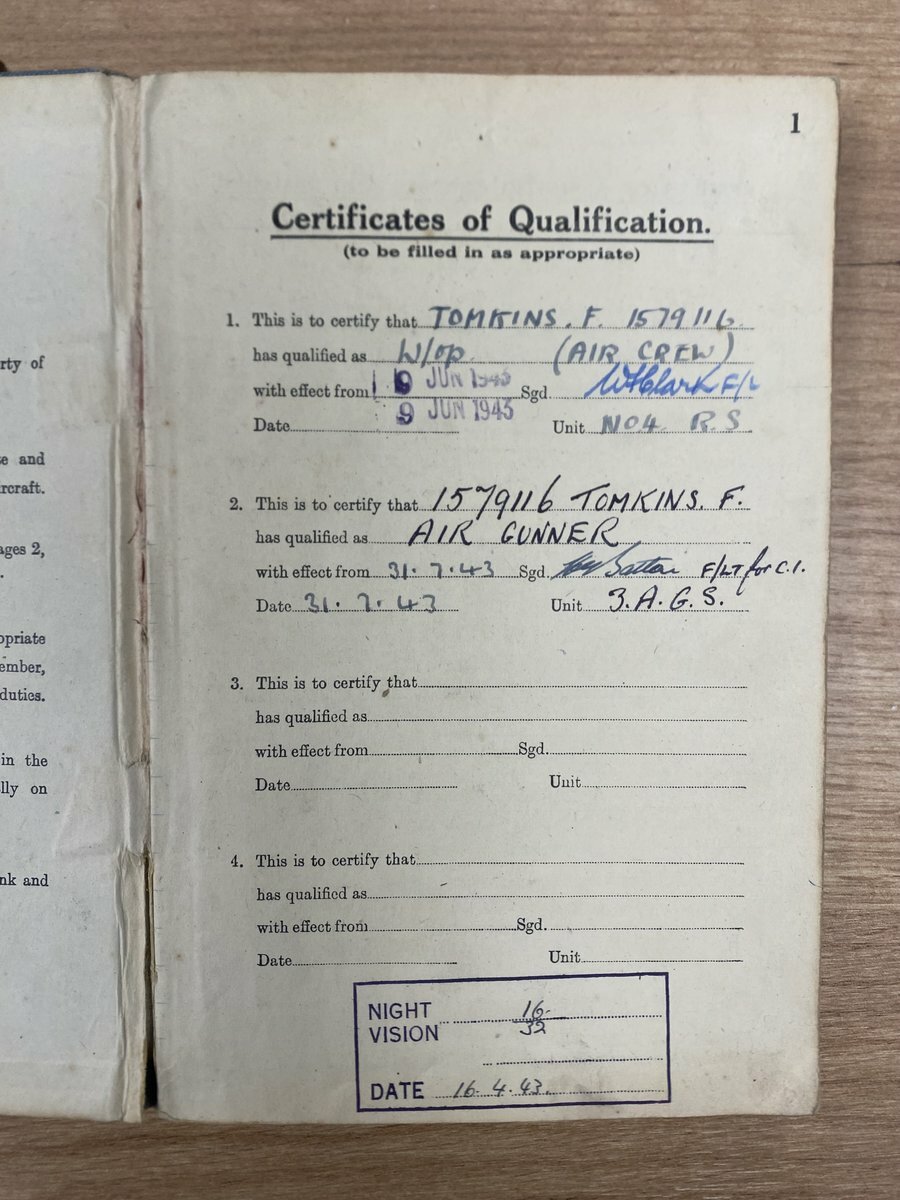
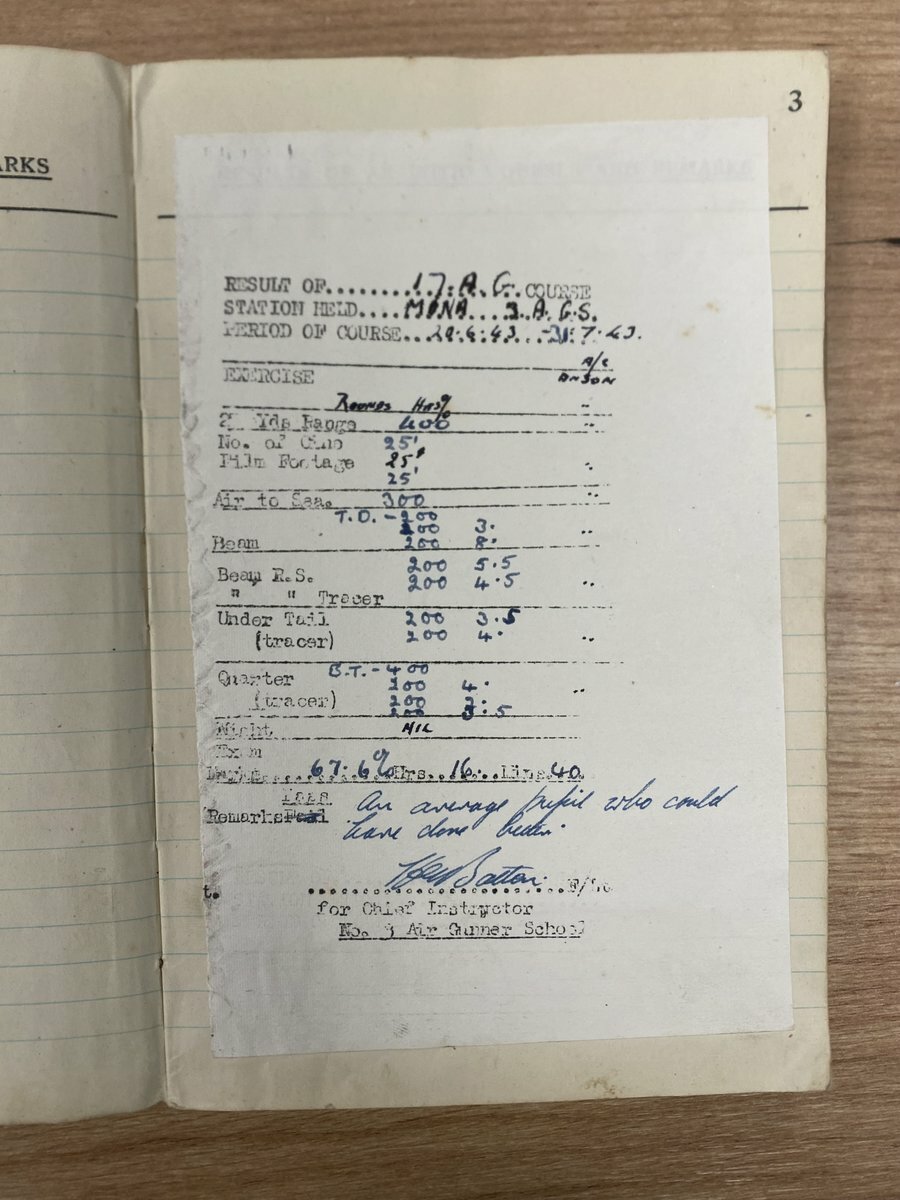
Frederick Tomkins qualified as a wireless operator (air crew) on 9 June 1943. He completed 13 hours of training before qualifying. A month later, on 31 July 1943, he qualified as an air gunner. Having done just over a month's training for this latter qualification, the Chief Instructor of No.3 Air Gunner School commented that having passed the exam with a grade of 67%, and having completed 16 hours of training, Tomkins was "an average pupil who could have done better". Needless to say, Tomkins went on to greatly prove him wrong.
Tomkins initially flew with a number of different pilots before he settled down with Flight Officer Iddon from October 1943 and it was with Iddon that the emergency occurred on 3 December 1944 on Mitchell V at 08:45. Below is a copy of pilot Fred Guest's article in Dispersals newsletter, May 2012 edition:
'There were very few medals awarded [to] the aircrew of the 2nd Tactical Air Force; unlike Bomber Command crews, who were almost routinely awarded medals when they completed their tour operations.
In the five months I was on 180 Squadron, I remember only one medal awarded; A CGM (Conspicuous Gallantry Medal) to one of the Air gunners, Frederick Tomkins RAFVR. He was a member of Flying Officer Iddon's crew:
F/O L.J.H. Iddon (Pilot)
W/O J.H. Allen
Sgt E.L. Wolff (WAG)
F/S F. Tomkins (AG)
03 Dec 44: F/O Iddon's aircraft (Mitchell FW209) was hit by FLAK as they came off the target, a crossroads at Kaldenkirchen close to the Dutch border at Venlo, and were headed back to Brussels. F/O Iddon, in the cockpit, and W/O Allen, in the nose compartment, were both seriously wounded. The same FLAK burst set off one of the Verey signal cartridges and the aircraft quickly filled with smoke. One of the gunners called F/O Iddon on the intercom and told him they were on fire; Iddon immediately gave the order to abandon the aircraft.
F/S Tomkins was supposed to be the first one out of the rear hatch, but as he attempted to snap the chest pack parachute onto his harness, it caught on the turret. Sgt Wolff had snapped on his parachute, made his way to the escape hatch, jettisoned it and bailed out before Tomkins could clear himself.
When Wolff bailed out their aircraft was close to the front lines and he had captured upon reaching the ground [RAF Commands POW list does not include in which camp he was interned]. An early rumour was that he was killed while still in his parachute.
As Sgt Wolff removed the escape hatch, the smoke was sucked out of the aircraft, and by the time F/S Tomkins got his harness clear he could see F/O Iddon was still in the pilot's seat, not making any effort to leave the a/c. Tomkins called Iddon on the intercom and learned he had been wounded. Tomkins then unhooked his chest pack, crawled over the bomb bay (a space about 24" high) and climbed into the right hand pilot's seat. He realised how severely wounded Iddon was and also that their Nav, W/O Allen was too severely wounded to crawl out of the nose compartment. It now became obvious to Tomkins that if his pilot and navigator were to have any chance of survival, he was going to have to land the aircraft.
F/S Tomkins had never had his hands on the controls of an aircraft; he had just 1/2 hour in a Link trainer just after he had started his Air Gunner course many months previously. In a situation like this, the safest thing would be to crash land the a/c wheels, but he felt a crash landing would probably kill the navigator in the nose compartment; he was going to have to attempt a wheels down landing. Iddon was very weak and lapsing in and out of consciousness; in his lucid moments he was able to tell Tomkins how to let the wheels and flaps down and some idea of what speed he should use on approach.
Fortunately the course they were on took over the airfield at Eindhoven and Tomkins headed for it. Eindhoven at that time was a forward Allied hospital where wounded soldiers were brought in, stabilised, and air evaluated to major hospitals in England and Brussels (my brother Nipper was air evacuated from Eindhoven).
When Tomkins arrived at the airfield he headed to the middle of the field, as he felt that an attempt to line up on the runway was more than he wanted to try; on top of that, there were many DC3 evacuation a/c landing and taking off. Once he crossed the boundary of the field he pulled off the power and put the a/c down in the infield. When on the ground and travelling very fast, he saw they were headed for a row of hospital buildings and could not stop in time; he put on full rudder and brake on the left side and skidded around to about 90 degrees of his landing run and eventually stopped in the infield. It was an exceptional effort by F/S Tomkins; he was lucky that he was in a Mitchell... they had no bad flying habits and a rugged tricycle landing gear.
F/O Iddon and W/O Allen were removed from the a/c, given advanced medical treatment and air evacuated to Brussels. Our crew left Brussels a short time later and both Iddon and Allen were alive. I'm not aware if they fully recovered.
[Editor's note: F/O Iddon (later F/L) and W/O Allen are not listed among Commonwealth War Graves listings: they likely survived.]'.
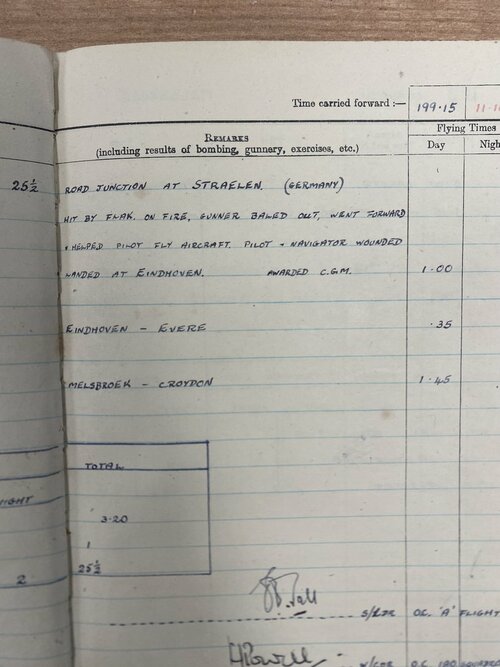
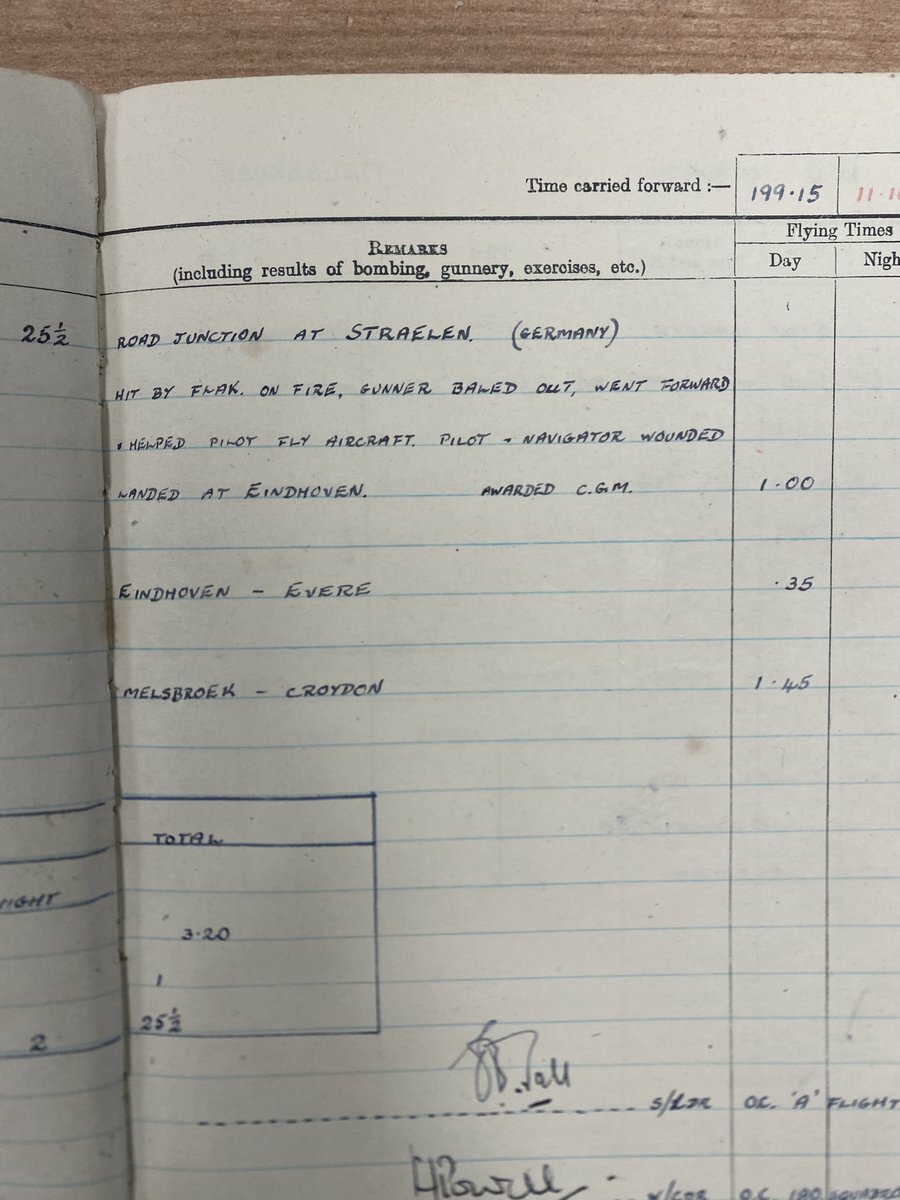
Tomkins himself noted the incident in his Log Book which reads: 'Road junction at Straelen (Germany) Hit by flak. On fire, gunner baled out, went forward + helped pilot fly aircraft. Pilot + navigator wounded Landed at Eindhoven. Awarded C.G.M.'. He continued to serve with Flight Lieutenant Bruce from 14 January 1945 to the end of his Second World War service on 4 March 1945. He amounted 214 day hours and 11 night hours of flying time.
Sold together with a sizable archive including but not limited to:
i) RAF silk map
ii) Photographs of the recipient
iii) Letters and correspondence to the recipient and his family
iii) Copy of the will of E. H. Williams, likely a relative of Tomkins' wife, Gertrude
iv) Newspaper clippings concerning Tomkins
v) Tomkins' Services Diary; Royal Air Force Flying clothing card; Royal Airman's Pay Book; Royal Air Force Service and Release Book
vi) Patches likely from the recipient's uniform
vii) A smaller archive to Tomkins' father, James Charles Tomkins, including wedding certificate, newspaper clippings, photographs, beerhouse and tobacco licence and documents relating to his Great War service with the R.A.S.C..
Subject to 5% tax on Hammer Price in addition to 20% VAT on Buyer’s Premium.
Estimate
Starting price
£210

Watch, listen and bid as if you were in the room. Now available for auctions worldwide.
Click here to bid live
An exclusive and confidential service for the discerning collector or vendor.
View the Gallery
Download every Spink catalogue on your iPad, iPod or iPhone using free Spink app.
Download From iTunes© 2026 Spink & Son. All rights reserved.