
Auction: 25113 - Orders, Decorations and Medals - e-Auction
Lot: 381
Sold by Order of the Family
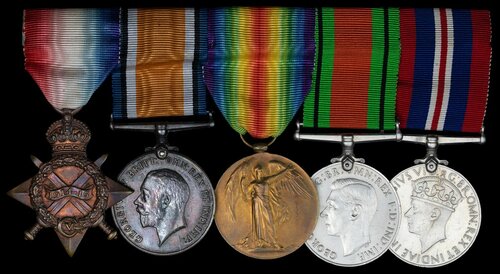
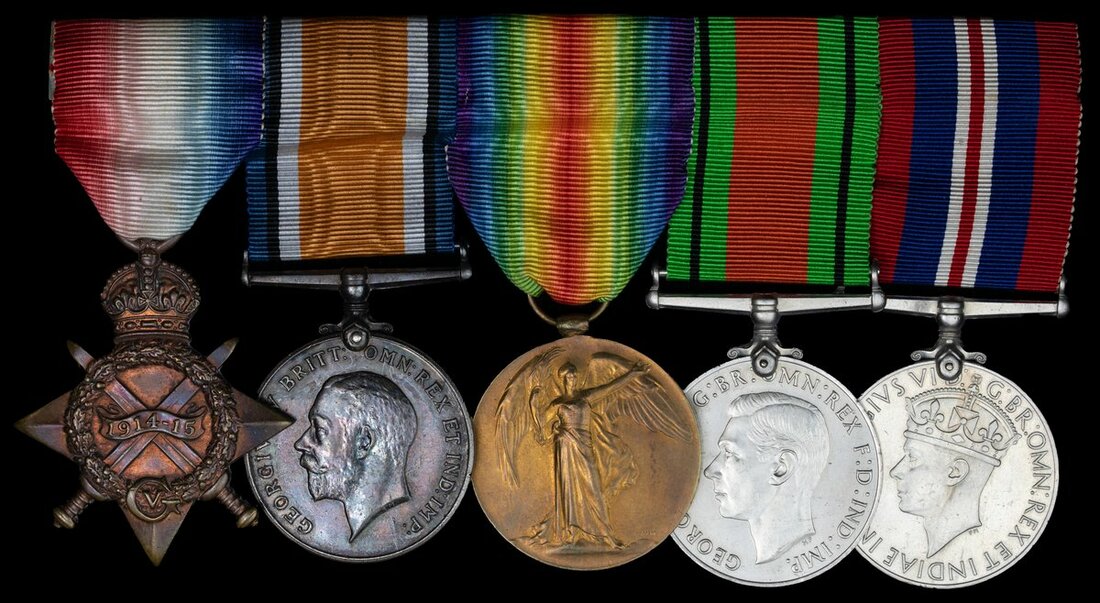
Five: Commander C. J. W. Branson, Royal Navy, who saw heavy action at Jutland with the Battlecruiser Revenge
1914-15 Star (Mid. C. J. W. Branson, R.N.); British War and Victory Medals (Lieut C. J. W. Branson. R.N.); Defence and War Medals 1939-45, mounted as worn, good very fine (5)
Note, the proceeds of this lot to go to the The Seafarers' Charity.
Cecil John Westland Branson was born in Bengal, India on 2 September 1896, the son of James and Sophie Branson. Entering Service on 15 May 1909 he was appointed Midshipman on 15 January 1914 with the Battleship Iron Duke, issuing out to sea with her in early 1915 but not seeing action at Dogger Bank on 24 January. Advanced Sub-Lieutenant on 15 January 1916 he was transferring to the Battleship Revenge the next month on 10 February. It was in this rank that he was intense action with Admiral Jellicoe's Fleet at the Battle of Jutland, where Revenge savaged the German Battlecruiser Derfflinger, Chris Bilham's Jutland Honours 1916 refers stating:
'The charge of the German battlecruisers towards the British line was later referred to as a death-ride. Derfflinger, which led the charge, came under fire from the Revenge's 15-inch guns with devastating effect Derfflinger's gunnery officer recalled (15); ''The range fell from 12,000 to 8,000... Salvo after salvo fell around us, hit after hit struck our ship... A 15-inch shell pierced the armour of 'Caesar' turret and exploded inside. The turret commander had both legs torn off and most of the gun crew was killed. The flames passed to the working chamber and then to the handling room and seventy-three of the seventy-eight men in the turret died.... Another 15-inch shell pierced the roof of 'Dora' turret. The same horrors followed. With the exception of one man who was thrown by the concussion through the turret entrance, the whole turret crew of eighty men was killed instantly. From both after turrets, great flames were spurting, mingled with clouds of yellow smoke Then, a terrific roar, a tremendous explosion, then darkness... The whole conning tower seemed to be hurled in the air... Poisonous greenish-yellow gases poured through the aperture into our control. I called out "Don gas masks!" and every man put his gas mask over his face... We could scarcely see anything of the enemy who were dispersed in a great semi-circle around us. All we could see was the great reddish-gold flames spurting from their guns.
Revenge hit the Derfflinger five times between 19:14 and 19:17, then shifted her fire to Von Der Tann, obtaining a hit on the after conning tower at 19:19. Shell splinters entered the conning tower through the sighting apertures, killing the Third Gunnery Officer and three others, and wounding everyone else in the tower. The effects of the explosion were equally serious outside the upper deck and battery deck suffered from the blast and splinters and wreckage were blown down the ventilating shafts to the starboard engineroom. All the lights went out and the fumes threatened to asphyxiate the engineroom personnel. When the battleships had disengaged, Scheer authorised the battle-cruisers to retreat.
When the action was over, the fleet went to night cruising stations, expecting to renew the battle the next morning. At 03:00 on 1st June, Burney transferred his flag to Revenge from the torpedo-damaged Marlborough. In the course of the battle Revenge fired 102 rounds of 15-inch and 87 rounds of 6-inch ammunition, she was not hit herself, and suffered no casualties.'
Having taken part in the greatest Fleet action of the war Branson was to see little further action, being advanced Lieutenant on 15 September 1917 he joined Highflyer in July 1919. Between the wars he served on the Staff and later with the Signals School, receiving the promotion to Lieutenant Commander there on 30 August 1925.
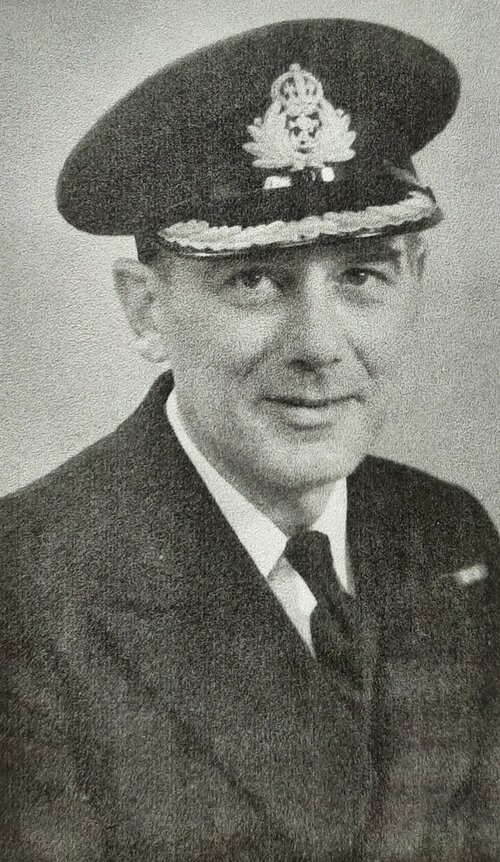
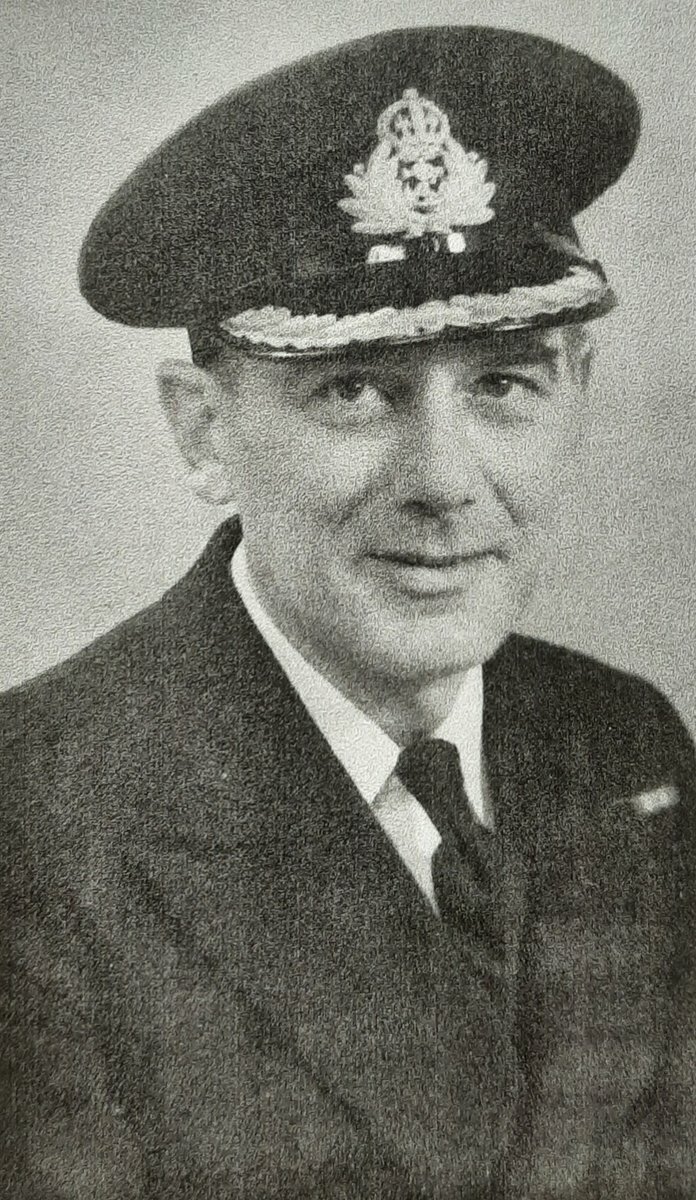
Branson was still in this role of the outbreak of the Second World War before being placed on the Retired List with the rank of Commander on 2 September 1941. Transferring out of this role he was posted to the Staff late in 1943 and joining the Defence Research establishment. He was to serve there for the rest of the war, finally retiring on 4 June 1948. Settling at Worthing, Sussex he died there on 4 April 1972; sold together with an original photograph and copied research.
For the recipient's corresponding dress miniatures see Lot 752.
Subject to 20% VAT on Buyer’s Premium. For more information please view Terms and Conditions for Buyers.
Estimate
Starting price
£140
Watch, listen and bid as if you were in the room. Now available for auctions worldwide.
Click here to bid live
An exclusive and confidential service for the discerning collector or vendor.
View the Gallery
Download every Spink catalogue on your iPad, iPod or iPhone using free Spink app.
Download From iTunes© 2026 Spink & Son. All rights reserved.