
Auction: 25111 - Orders, Decorations and Medals - e-Auction
Lot: 821
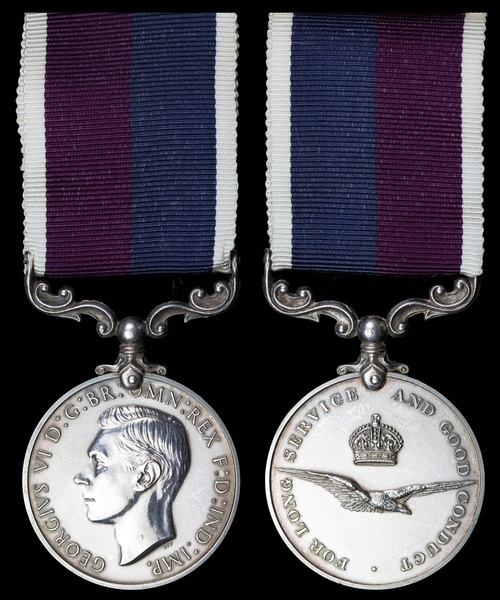
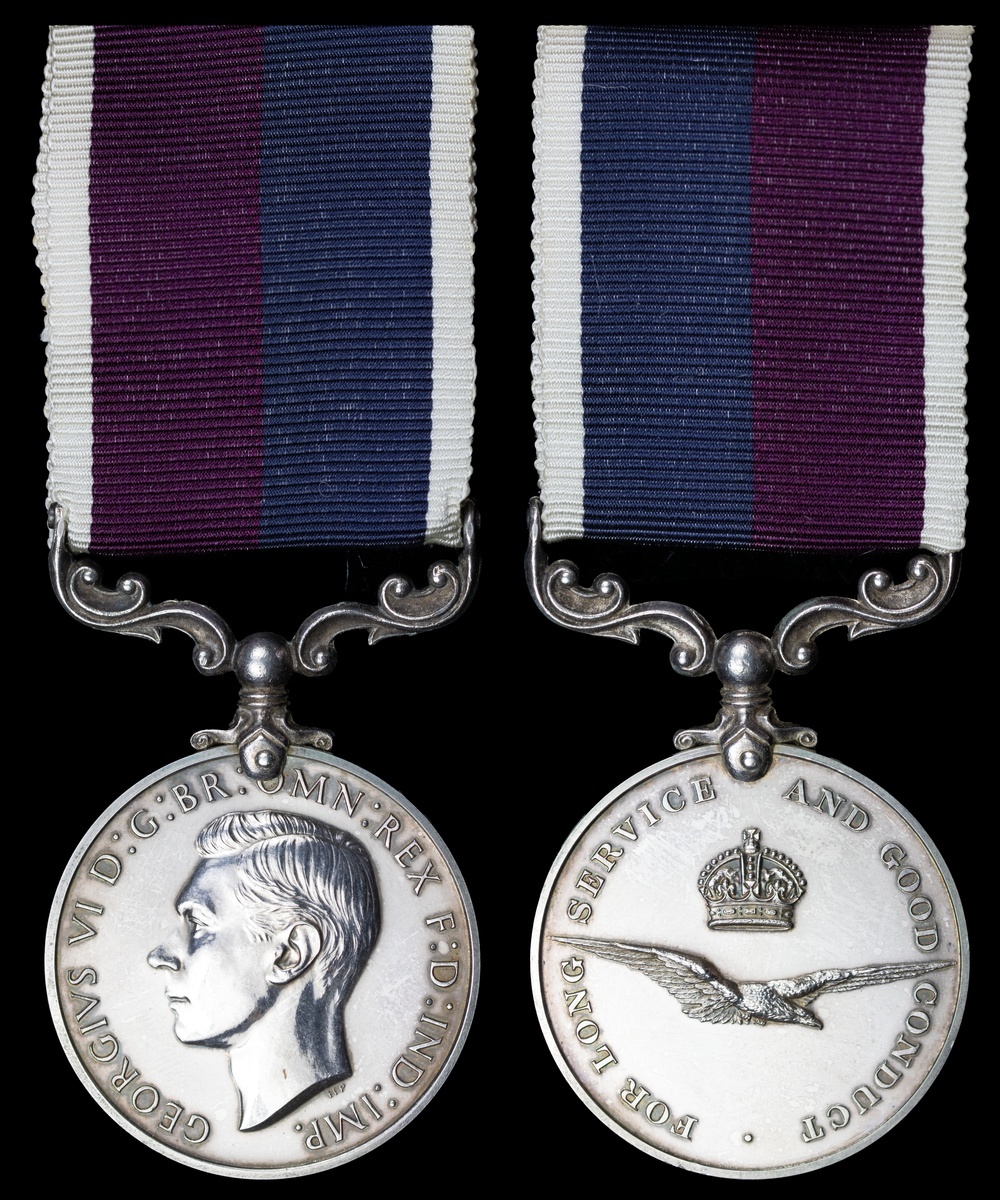
The L.S. & G.C. awarded to Flight Sergeant A. Cubitt, Royal Air Force, a survivor of the sinking to the R.M.S. Lancastria in 1940, later being 'mentioned' in 1943
Royal Air Force L.S. & G.C., G.VI.R. (359177 F/Sgt. A. Cubitt. R.A.F.), good very fine
M.I.D. London Gazette 2 June 1943.
A. Cubitt was serving with 98 Squadron, R.A.F. during the Battle of France in 1940 where they were based at Nates. Notably whilst there Cubitt was listed as of the men thanked in the Daily Routine Orders by the Squadron Commander on 17 April 1940, this with the rank of Orderly Sergeant. As the country fell the Squadron including Cubitt were pulled back to Saint-Nazaire where they were ordered aboard the passenger ship Lancastria.
Loss of the Lancastria
Much has been written about the disaster that occurred off St. Nazaire on 17 June 1940, but by way of summary, the following extract is taken from Charles Hocking's Dictionary of Disasters at Sea:
'On 17 June 1940, the Cunard White Star Line's S.S. Lancastria, Captain J. Sharp, was lying off St. Nazaire takin on board British troops who were being evacuated from France. The embarkation began at 8 a.m. and continued until 4 p.m., by which time the liner was ready to weigh anchor. In addition to the soldiers there was a small party of about civilians, and their wives and children. As far as can be ascertained there were 5,310 persons on board, of whom 300 were crew.
The first attack by aircraft came about 2 p.m., followed after a short interval by a second raid. In these attacks the Orient liner Oronsay was hit and damaged but still remained seaworthy.
At about 4.30 p.m., in a third attack, the ship was struck by a salvo of bombs, one of which passed right through the dining saloon and burst in the engine room. The damage to the Lancastria was vital and she took a heavy list, and although the boats were got out with all possible speed it was evident from the outset that there was no hope of rescue for thousands of those on board. Only two lifeboats managed to get away, the others capsizing owing to difficulties with the falls or through being overloaded. Tugs and other small craft were quickly on the scene and picked up hundreds of men in the water.
The Lancastria remained afloat for barely 30 minutes, turning gradually over to port so that those still on board were able to walk upon her side as she lay. After floating in this position for some time she capsized completely and went down by the head.
Meanwhile the German airmen occupied themselves by firing from their machine-guns at the men in the water, and by firing incendiary bullets which set fire to the oil floating on the surface.
Of those on board 2,477 were saved, including Captain Sharp, who was picked up some hours later, and most of the civilian passengers. There was also a small number of people who came ashore singly or in very small parties, some of whom were captured and interned by the Germans.'
Cubitt was one of the former group managing not only to make it back to Britain but was appointed Flight Sergeant and later earned a 'mention' for his actions; sold together with copied research.
Subject to 20% VAT on Buyer’s Premium. For more information please view Terms and Conditions for Buyers.
Sold for
£160
Starting price
£110

Watch, listen and bid as if you were in the room. Now available for auctions worldwide.
Click here to bid live
An exclusive and confidential service for the discerning collector or vendor.
View the Gallery
Download every Spink catalogue on your iPad, iPod or iPhone using free Spink app.
Download From iTunes© 2026 Spink & Son. All rights reserved.