
Auction: 25111 - Orders, Decorations and Medals - e-Auction
Lot: 452
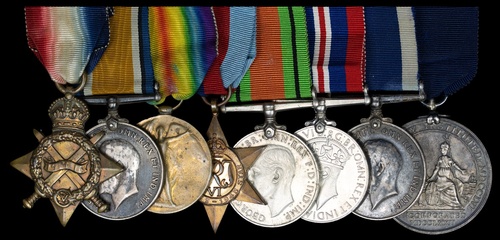
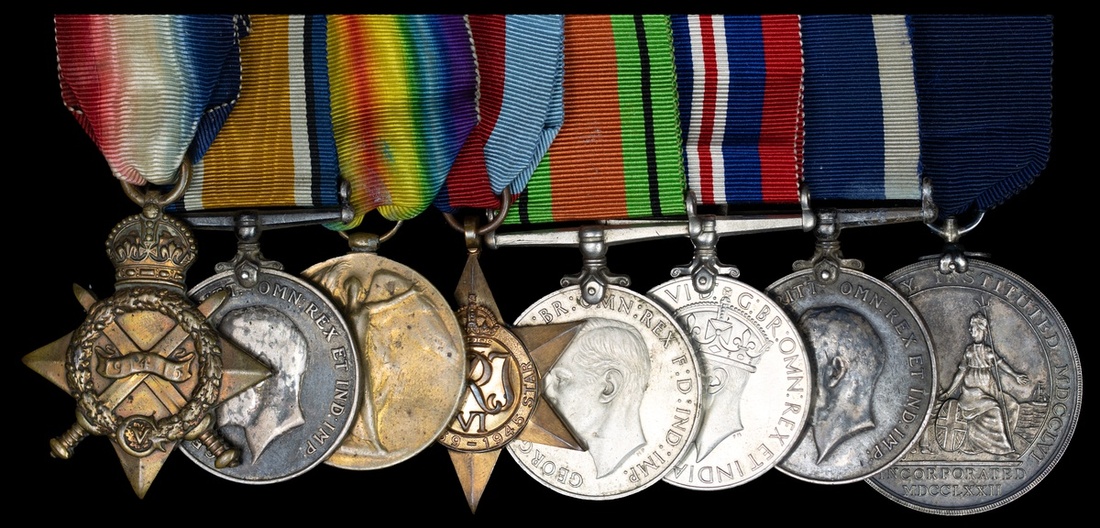
The campaign group of eight awarded to Chief Petty Officer I. S. Millard, Royal Navy, who saw action at Jutland, aged just 16, with Warrior and later joined Murray for service in the Dover Patrol
Earning the Marine Society Medal of Merit between the wars, he was one of few veterans serving with the inexperienced crew of the Paddle Steamer Sandown during Operation Dynamo - the Dunkirk evacuation - where she rescued over 1,800 men
1914-15 Star (J.41361, I. S. Millard. Boy. 1., R.N.); British War and Victory Medals (J.41361 I. S. Millard. A.B. R.N.); 1939-45 Star; Defence and War Medals 1939-45; Royal Navy L.S. & G.C., G.V.R. (J.41361 I. S. Millard. L.S. H.M.S. Warspite); Marine Society silver Merit Medal, the reverse engraved 'I. S. Millard 3.6.25.', the Great War awards worn with pride and heavily polished, minor pitting, overall nearly very fine (8)
Ivan Stanley Millard was born at Camberley, Surrey on 9 March 1900 and attested as Boy Class II on 8 June 1915. He was posted to the armoured cruiser Warrior on 9 September 1915 and was present at the Battle of Jutland with Admiral Beatty's Battlecruiser fleet.
Warrior managed to avoid the fate of his squadron mate Defence but still came under the guns of several German vessels, including the Battlecruiser Derfflinger, during the Run to the North. They suffered an astonishing beating with hits from at least fifteen 28-inch shells and six 18-inch shells. Warrior was only saved when the steering aboard Warspite suffered damage, forcing her to run in circles, and the appearance of the much larger Battlecruiser was too tempting a target for the enemy who switched their fire to her.
The punishment had proven too severe for Warrior however and she foundered during the night with her crew, including Millard, taken aboard Engadine. A local newspaper reported that he was awarded a silver watch by the people of Camberly in recognition of his bravery in the battle. He was posted away to the armed cruiser Moldovia but was transferred ashore on 8 January 1918, just two weeks before she was sunk by a U-Boat.
Joining Murray serving on the Dover Patrol on 29 January he was with her when she sailed the next month to oppose a lightning fast German raid over the channel. Sadly they failed to make contact and the raiders escaped having destroyed a trawler and several drifters. A newspaper article references Millard serving with Miranda during the Zeebrugge Operation on St. George's Day 1918 however there is no reference to this posting in his service papers
Millard was sent ashore in September and was still there when the war ended in November 1918, he went on to serve with a number of postings between the wars. Notably he joined the crew of H.M.S. PC TH, a river patrol boat, on 21 March 1925 and he was still with her on 3 June 1925 when he earned the Marine Society Medal.
Continuing to serve he was advanced Petty Officer with Warspite on 24 June 1933, not long after the award of his L.S. & G.C. Further promoted Chief Petty Officer on 1 February 1939 Millard was pensioned in March 1940 but remained in service, joining the crew of Sandown on 14 May 1940.
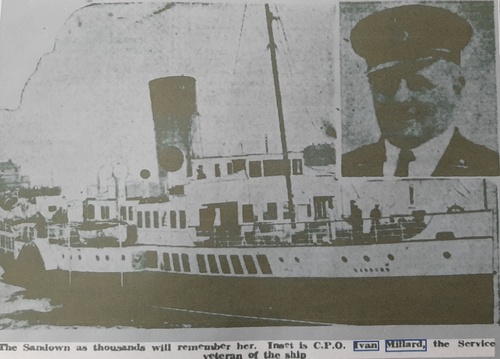
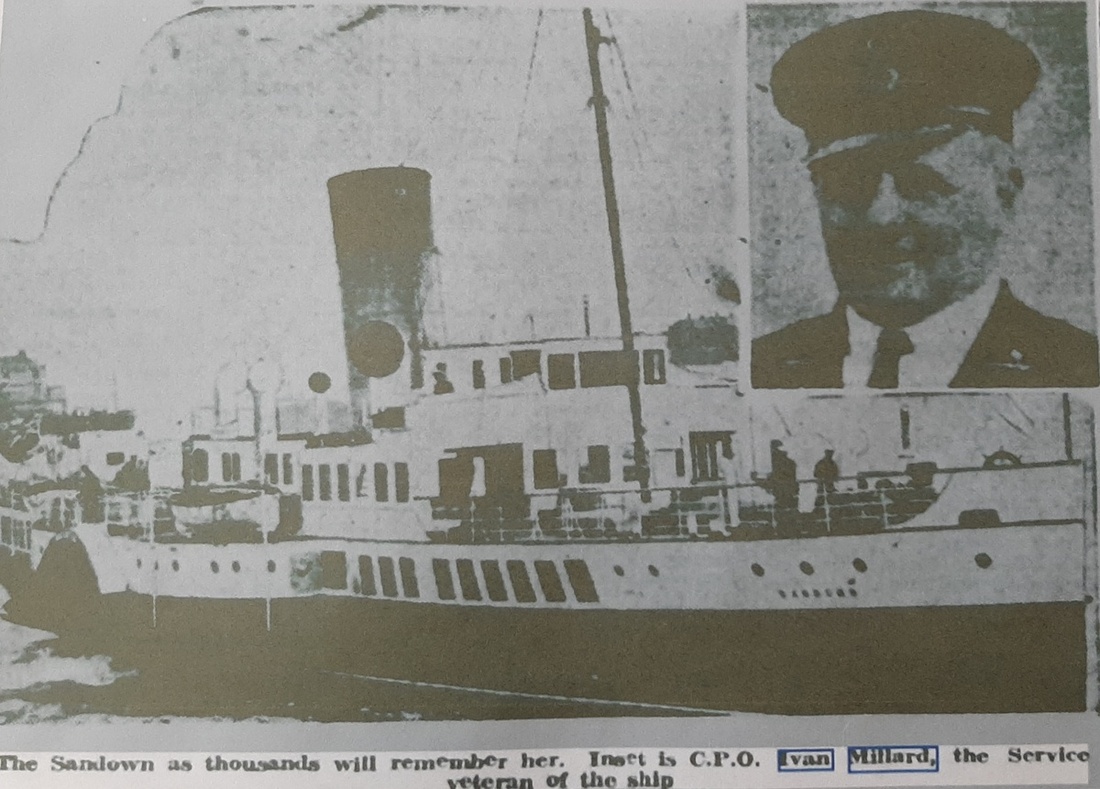
This paddle steamer had a remarkable career, being pressed into service as a minesweeper early in the war she was the lead ship of the 10th Flotilla as the Dunkirk evacuations got underway. An article in the Portsmouth Evening News reports on her exploits there stating:
'Her first war job was as leader of the 10th Minesweeping Flotilla operating from Dover. Day and night she swept the convoy routes clear of enemy mines.
She took part in the evacuation of British troops from Holland, and towed back to England a Dutch tug and lifeboat packed with Dutchmen determined to fight on with the Allies.
Dunkirk, Calais, Boulogne
She made six trips to the beaches at Dunkirk and brought off 3,000 men [SIC]. She had an almost miraculous survival from incessant bombing and shelling.
"After Dunkirk," said her Chief Engineer, Lieut. C. Callope, R.N.V.R., of Milford-on-Sea, Hampshire, "came Calais, when she arrived on the scene just in time to rescue 150 British troops cut off in their retreat to Boulogne.
"And then Boulogne itself. When she became the last hope for hundreds of the B.E.F. as the Panzers were entering the port"
Attacked by Dive Bombers
By then H.M.S. Sandown had become an expert in looking for trouble and escorting hmnn [SIC] for trouble and escaping unscathed, but her most remarkable feat of survival was when 22 dive-bombers swooped down upon her during mine-sweeping operations, dropped over 100 bombs and failed to register a single hit. Shrapnel marks from near misses were the only damage inflicted.
"Our most exciting moment." Continued Lieut. Collope "was when a 'near miss' from an exploding mine threw up her stern sent her bows below the water until her forward gun platform was completely submerged, see-sawed back until her stern went under and water flooded the engine-room to a depth of two feet."
The Sandown, now a heavily armed ack-ack ship and part of Britain's first line of defence against enemy air attack, has continued her search for trouble with the same immunity under the command of Liet-Comdr. A. H. Dunkerley, R.N.R. Twice mentioned in dispatches, Lieut-Comdr. Dunkerley, who is an old Manchester Grammer School bot, and whose home is at Hyde, Cheshire, has served throughout the war in "paddlers" including the famous Royal Eagle.
She has been credited with two enemy aircraft. She took the pilot of one [of] them prisoner.'
A further newspaper article refers the 'Veteran of the Ship', stating:
'Veteran of the Sandown is Chief Petty Officer Ivan Millard (43), who was one of the youngest sailors to take part in the Battle of Jutland in the last war. Fifteen years of age at the time, he was a survivor from H.M.S. Warrior, and received a mention in dispatches [SIC].
Chief Petty Officer Millard was again in the thick of the battle when the destroyer in which he served H.M.S. Miranda, took part in the famous Zeebrugge operation on St. George's Day, 1918 [SIC]. He passed into the serving ranks in 1915, and has been in continuous naval service ever since.
Chief Petty Officer Millard who has been in the Royal Navy for 30 years, is a native of Camberley, Surrey.'
It further makes reference to him volunteering to join the Medway Queen in picking up the last batch of men from the beach. Millard continued with Sandown, throughout the war, during which she supported the Normandy Landings and the Allied advance During the Battle of the Scheldt. Going ashore to Jackdaw after the war he was released in September 1945 and retired to Gosport where he died on 4 May 1961; sold together with copied research.
Subject to 20% VAT on Buyer’s Premium. For more information please view Terms and Conditions for Buyers.
Sold for
£320
Starting price
£110

Watch, listen and bid as if you were in the room. Now available for auctions worldwide.
Click here to bid live
An exclusive and confidential service for the discerning collector or vendor.
View the Gallery
Download every Spink catalogue on your iPad, iPod or iPhone using free Spink app.
Download From iTunes© 2026 Spink & Son. All rights reserved.