Auction: 24113 - Orders, Decorations and Medals - e-Auction
Lot: 620
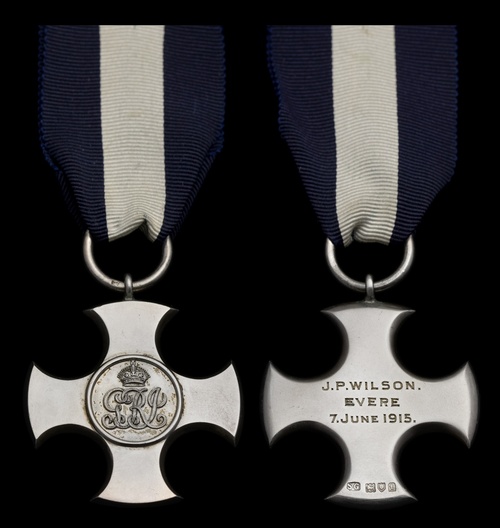
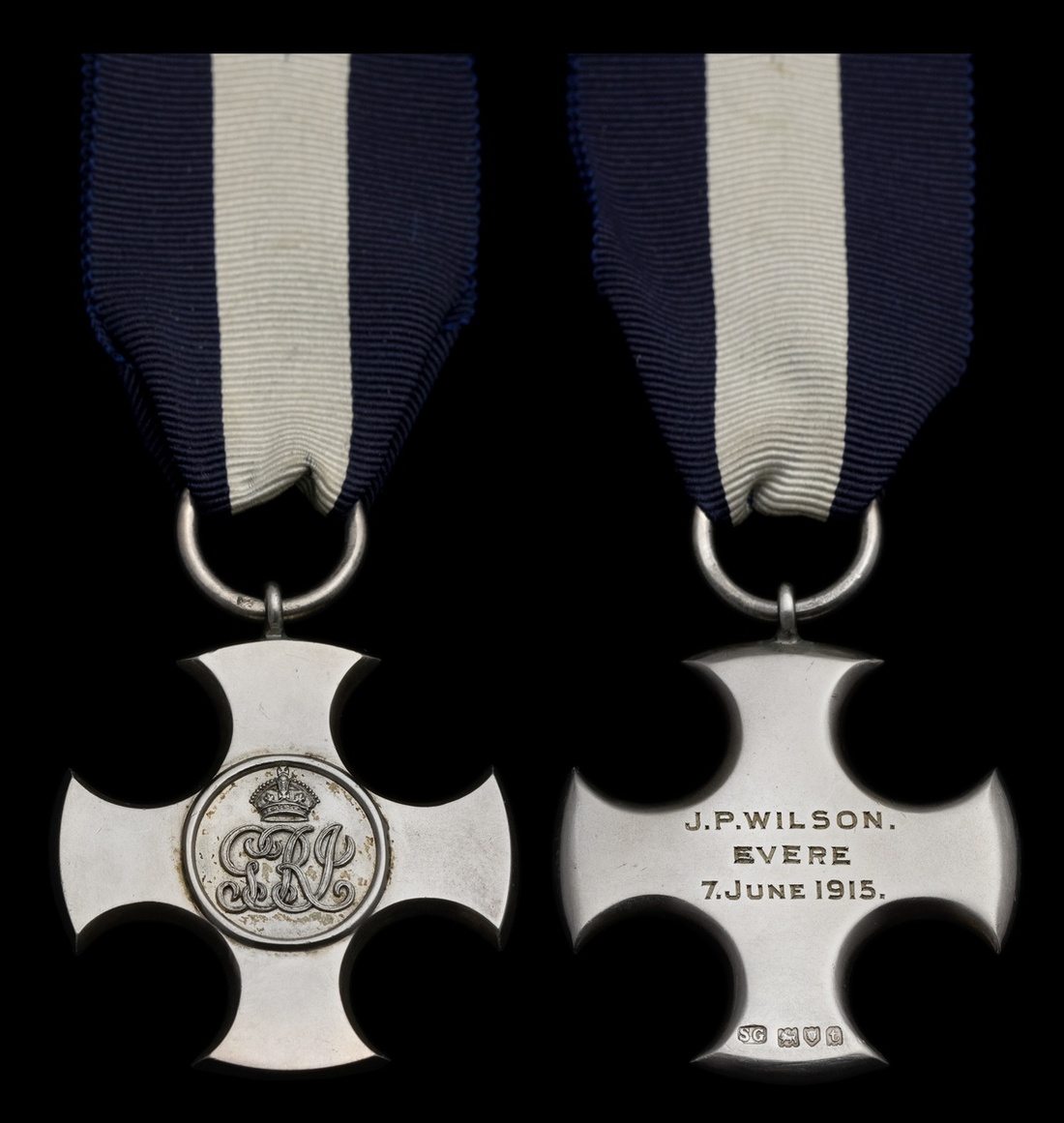
The scarce 1915 D.S.C. attributed to Flight Lieutenant J. P. Wilson, Royal Naval Air Service who destroyed LZ38, the first of the London raiders, in a bombing raid on the Zeppelin sheds at Evere in 1915
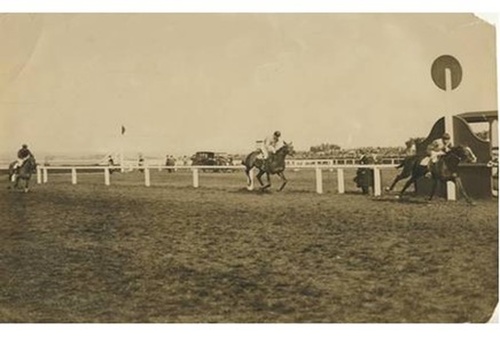
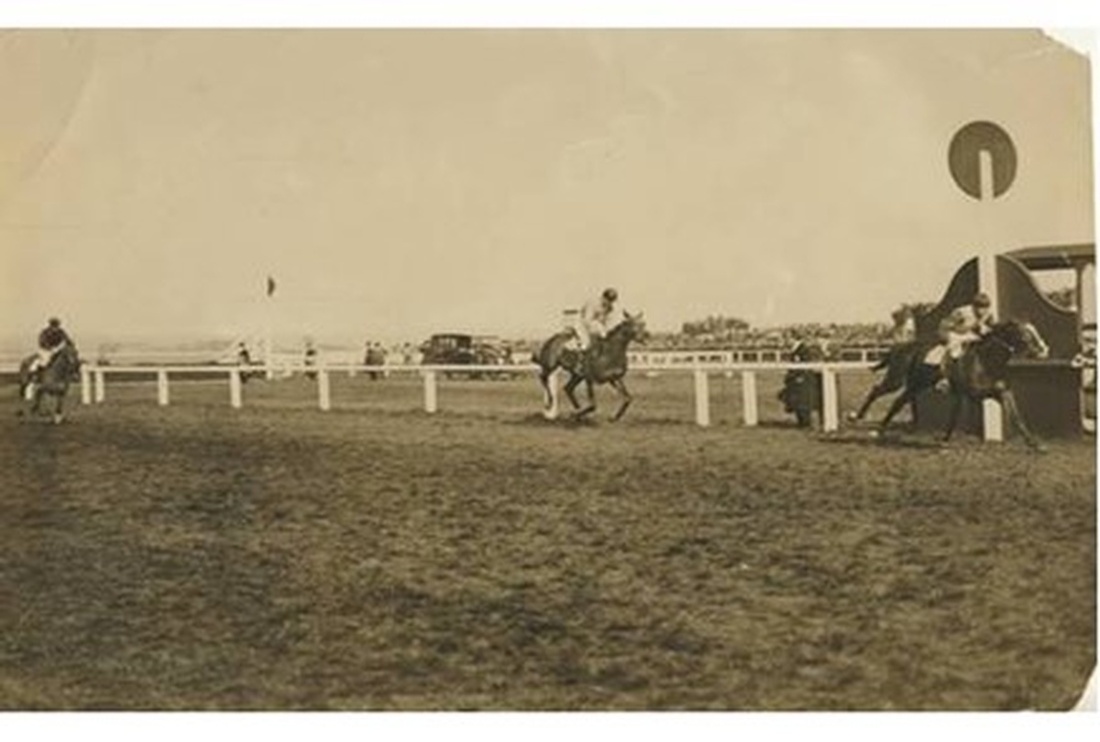
An amateur first-class cricketer he played for Yorkshire between 1911-1913. The war over he embraced more convivial pursuits becoming an amateur steeplechase jockey riding over 200 winners. He rode three times in the Grand National winning in 1925 on 'Double Chance'
Distinguished Service Cross, G.V.R., hallmarked London 1914, engraved on the reverse 'J.P. Wilson. Evere. 7 June 1915'., very fine
D.S.C. London Gazette 21 June 1915, the original recommendation states:
'For services on the 7th June, 1915, when after a long flight in darkness over hostile territory, he threw bombs on the Zeppelin sheds at St Evere in Belgium and destroyed a Zeppelin which was inside. This officer was exposed to heavy fire from A.A. guns during the attack.'
[A.F.C.] London Gazette 1 January 1919.
[Order of the Crown of Belgium] London Gazette 29 August 1917.
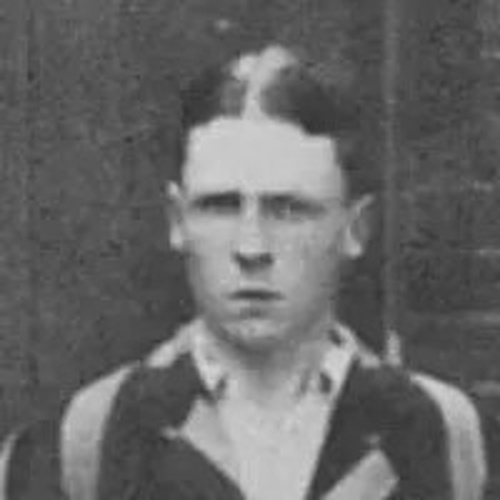
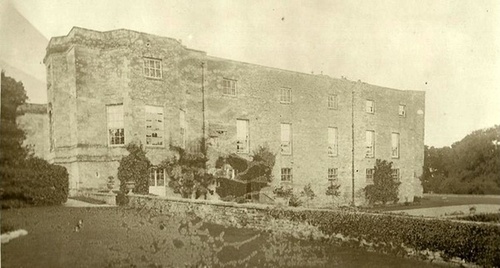
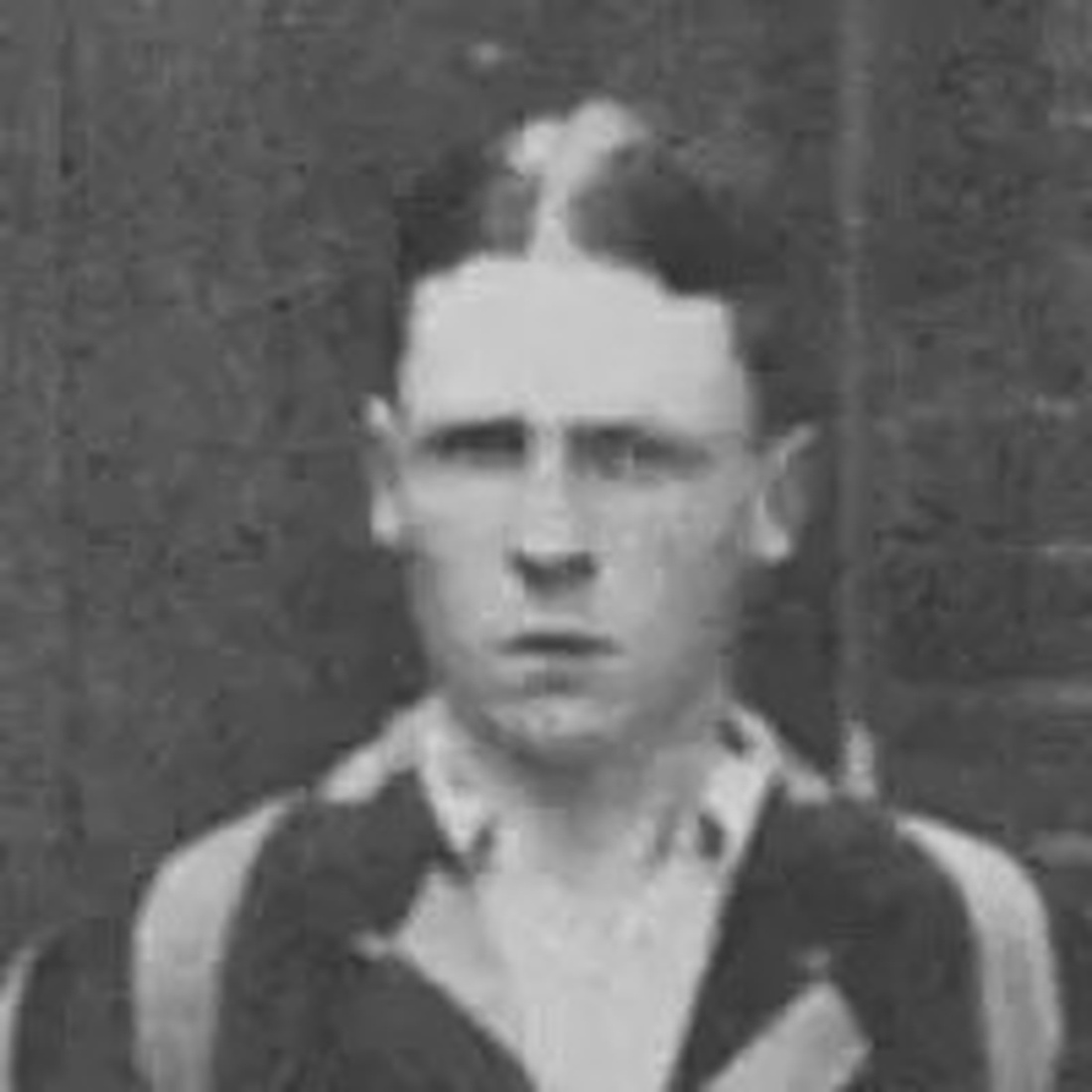
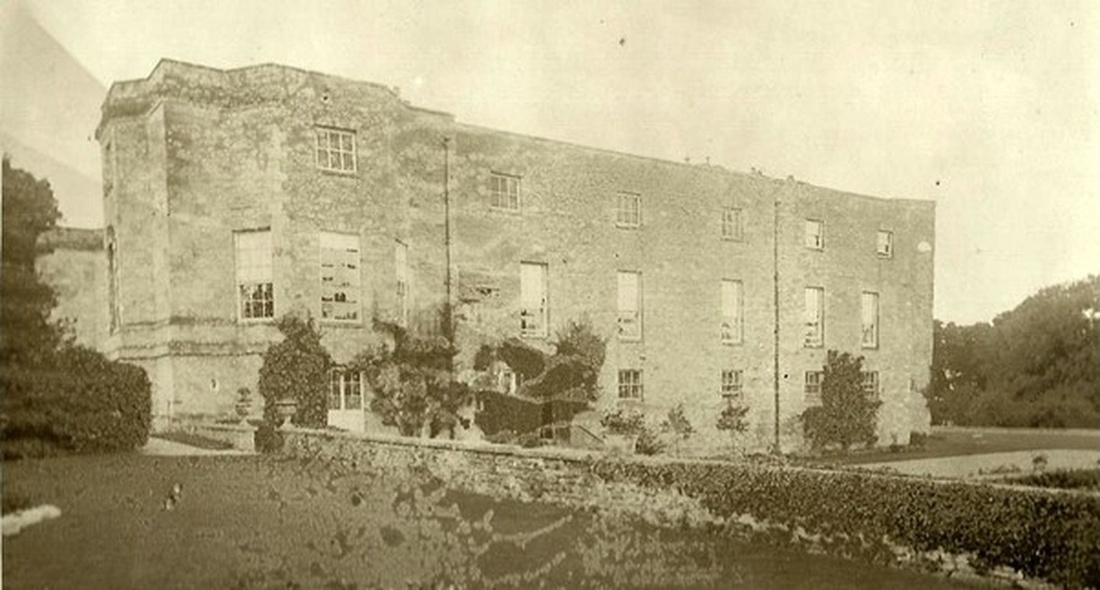
John ('Jack') Philip Wilson was born on 3 April 1889, the younger son of George Wilson of Gilling Castle, Gilling East, Yorkshire, one time Mayor of York. Educated at Harrow and later Pembroke College, Cambridge he was called up to the Yorkshire nets at Headingly in 1911 and later played a number of matches for the county side, with a top score of 36 against Middlesex at Bradford. He also took one wicket - that of Bill Hitch, the Surrey and England allrounder. He played several more times for the 2nd XI, although most of his cricket was confined to the country-house scene, in particular for the Yorkshire Gentlemen.
Wilson obtained his pilot's licence on a Vickers biplane at Brooklands in June 1914 and on the outbreak of the Great War he was commissioned into the Royal Naval Air Service. In April 1915 it was reported that he and another officer 'had observed two submarines lying alongside the Mole at Zeebrugge, had attacked them, dropping four bombs, it was believed with successful results'.
Bombing the airship shed at Evere, north of Brussels
On 7 June 1915, without even crossing the English coast, LZ37 and LZ39 reluctantly turned about and were making their way back to Belgium, unaware that their radio signals had been picked up and relayed to the Admiralty in London. Wing Commander Arthur Longmore, in charge of No. 1 Squadron R.N.A.S. at St Pol, related: '...they were reported to me over the direct telephone line from the Admiralty as being on their way back. I sent off Warneford and Rose on their Moranes to intercept in the vicinity of Ghent, and Wilson and Mills in their big weight-carrying Henri Farmans to bomb the Zeppelin sheds at St Evere, near Brussels. I hoped by this arrangement to catch one or more Zeppelins in the air, or, failing that, to set them alight after they had returned to their sheds.'
At 12.40 a.m. Flight Sub-Lieutenant J. P. Wilson took off into the mists in his Henri Farman biplane, followed after a short interval by Flight Sub-Lieutenant J. S. Mills. Flying on a compass course through the mist Wilson reached St Evere at 2.05 a.m.. A searchlight from near the landing base began to signal a series of long flashes into the air. Wilson promptly replied with short flashes on his pocket lamp, which seemed to satisfy the searchlight party, and earned him immunity from anti-aircraft fire for the fifteen minutes he spent circling over his target waiting until the first light of early dawn should outline the sheds. At 2.20 a.m. the shed was just visible and Wilson, from 2,000 feet, let fall his three 65 lb. bombs, one of which seemed to hit the centre of the target and sent up dense smoke but no flames. The plane piloted by Mills arrived some ten minutes later and when he dropped his four 20 lb. bombs the whole countryside was suddenly brilliantly illuminated and LZ38, the first of the London air raiders, went up in flames. Wilson flew by compass for two and a half hours in fog on the return journey and was eventually forced to land in a field at Montreiul.
Whilst Wilson and Mills were carrying out their mission, Flight Sub-Lieutenant Rex Warneford had located and destroyed LZ37, winning the Victoria Cross in the process. Wilson and Mills were both awarded the D.S.C., receiving their awards from the King at Buckingham Palace on 1 July 1915. They were both later honoured by the King of the Belgians, whilst Wilson was also awarded the A.F.C. 'in recognition of distinguished service' in the 1919 New Year's Honours.
At the Yorkshire A.G.M. in 1916, Lord Hawke said of Wilson, 'May he continue his splendid work, and be with us when we again resume hostilities on the cricket field.' In the county yearbook for that year there is a photograph of him dressed in naval uniform.
Winning the Grand National on 'Double Chance' and other pursuits Wilson was invalided from the service at the end of the war with only six months life expectancy, but he recovered and returned to more convivial pursuits. He continued to play country house cricket with the Yorkshire Gentlemen, whilst in winter he devoted his spare time to country pursuits, being an excellent natural shot and a well-known amateur steeplechase jockey. He rode over 200 winners and rode three times in the Grand National, winning in 1925 on a horse called 'Double Chance'. He re-enlisted in 1940 for non-flying duties and left the service in 1944 to work with the International Relief Organisation in Germany until 1947. He died at Tickton near Beverley on 3 October 1959.
His campaign Medals and unnamed decorations were sold by DNW in November 1996, this engraved D.S.C. was acquired as a single by the Vendor in the 1980s.
Subject to 20% VAT on Buyer’s Premium. For more information please view Terms and Conditions for Buyers.
Sold for
£1,600
Starting price
£420
Watch, listen and bid as if you were in the room. Now available for auctions worldwide.
Click here to bid live
An exclusive and confidential service for the discerning collector or vendor.
View the Gallery
Download every Spink catalogue on your iPad, iPod or iPhone using free Spink app.
Download From iTunes© 2026 Spink & Son. All rights reserved.