
Auction: 24113 - Orders, Decorations and Medals - e-Auction
Lot: 278
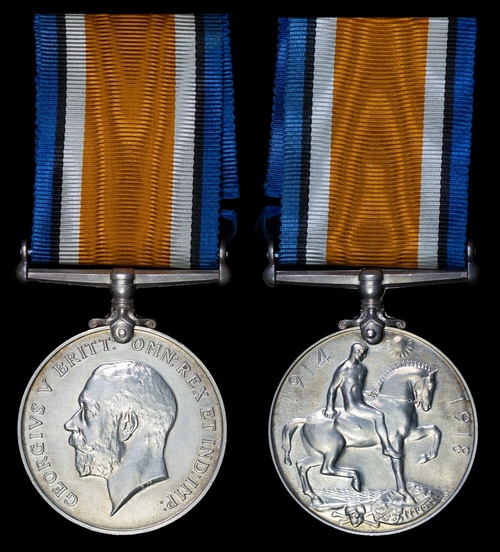
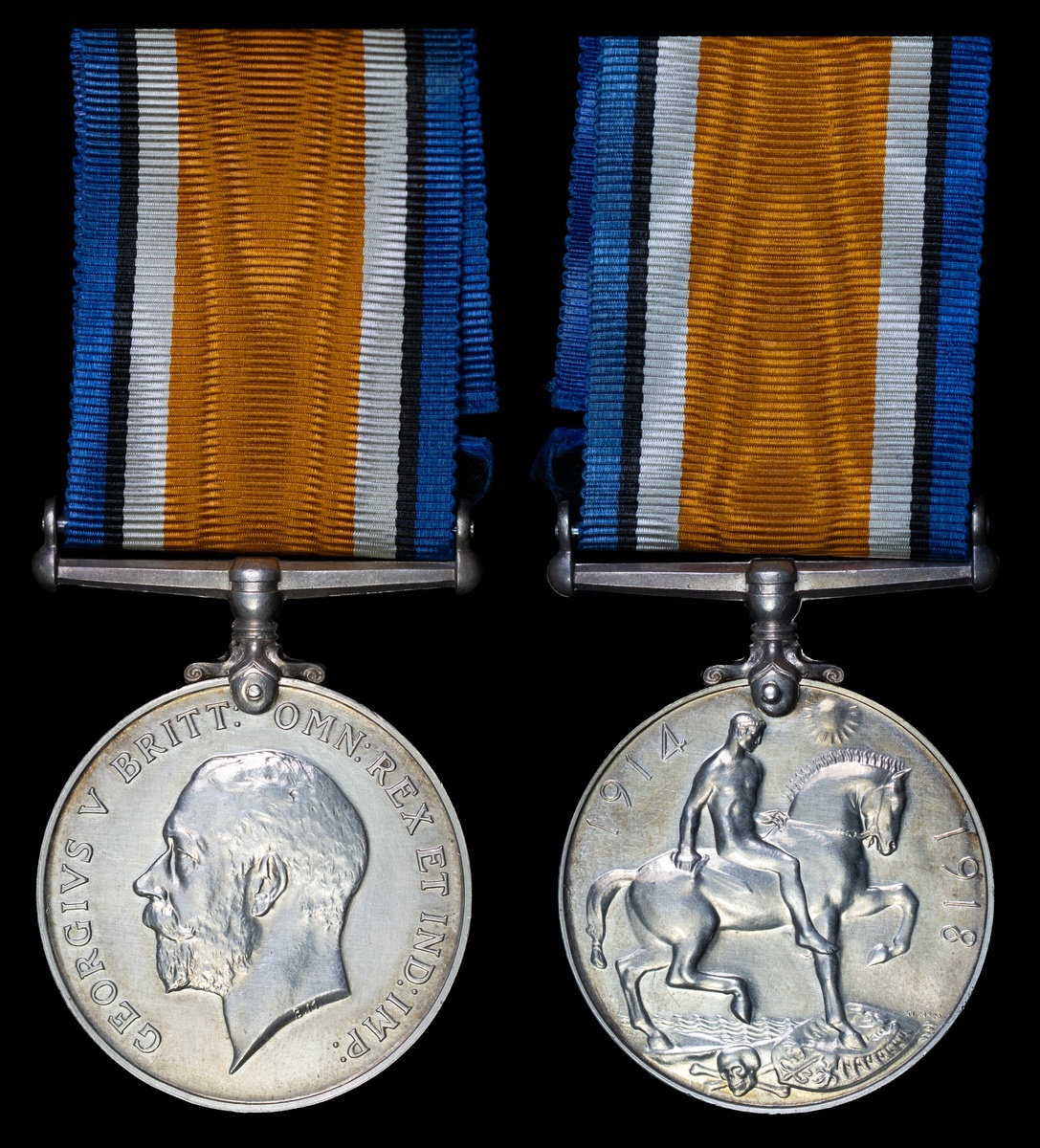
(x) An early 'War photographer's' British War Medal awarded to Major A. R. Dugmore, 10th Battalion, King's Own Yorkshire Light Infantry, a Welsh-American naturalist, photographer and painter who captured the earliest days of the war in Belgum where he was taken Prisoner of War
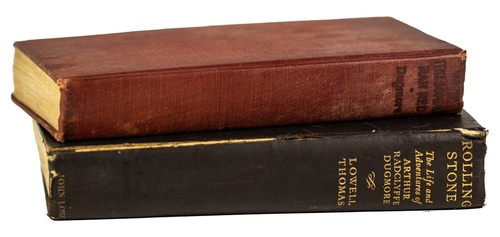
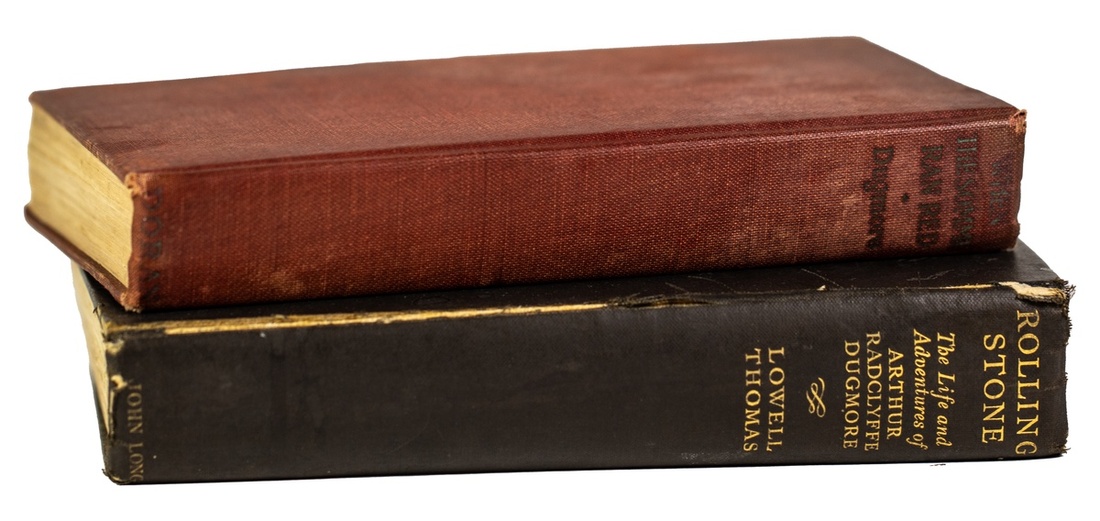
Released as a civilian he was later Commissioned, gassed on the Somme and wrote a book about his experiences When the Somme Ran Red
British War 1914-20 (Major A. R. Dugmore.), good very fine
Arthur Radclyffe Dugmore was born in Wales on 25 December 1870, the son of Captain F. S. and the Honourable Evelyn Dugmore, his mother being the daughter of Baron Brougham and Vaux. He was educated at Elizabeth College, Guernsey and later Turrels, Smyrna before travelling to Italy where he studied painting at Naples and Rome between 1887-1888. Having done so he visited America where he studied ornithology under W. E. D. Scott, taking up photography in the process as a way of recording wild life.
Dugmore appears to have been afflicted with a wanderlust and travelled extensively through Asia, Africa and America, marrying an American, Henriette Louise Watkins of South Orange, New Jersey in 1901. He further solidified his ties to the U.S. through his professional life, joining as a life member, the New York Zoological Society and American Museum of Natural History.
1914
Given his seeming need for constant travel and inquisitive nature it is perhaps unsurprising that upon the outbreak of the Great War Dugmore immediately made his way to Belgium, '…with a camera and a large and most imposing British Passport' (When the Somme Ran Red refers).
Leaving Ghent he and a close friend, an American reporter, visited the front where the fighting overtook them and they soon found themselves prisoners of the Germans. They were treated poorly, spending a night without food in the burning ruins of a burning village, Dugmore relates the aftermath of this night in the open next to a Belgian local:
'In the dim soft light of the early morning, when everything was painfully quiet, I noticed that my unhappy neighbour started with renewed intensity. The horror and pain depicted in those eyes I shall never forget, and what was the cause of the increased agony? A small procession leading out from the nearest ruined cottage. Some black-robed priests were carrying five stretchers on each of which lay the remains of human beings, charred, distorted and so terribly still. The poor man broke down at the sight and bursting into bitter tears said:
"There goes my whole family. My mother, my wife and my three little children. Oh! Holy, mother of God why don't they kill me too? I have nothing to live for."
This you may say is a small incident, but it is typical of what was happening all over Belgium and must surely call down a curse of the almighty on those who are responsible for the uncalled-for misery and cruelty which characterised the invasion of unoffending Belgium.' (Ibid.)
Released the next day Dugmore returned to Britian but was back in Belgium by the end of the week, this time by car. Armed with letters giving him safe passage he joined Belgian troops in the defence of Alost and set up his film camera behind a sandbagged embrasure. Unfortunately, he was caught in the blast of a shell on 27 September 1914 surviving with limited harm he continued to film for the rest of the day but by the evening it was clear that he was not well and retired to Britain again.
The British Army and Flanders
Dugmore joined the Inns of Court O.T.C. and was commissioned Lieutenant with the 10th Battalion, King's Own Yorkshire Light Infantry on 15 March 1915. He missed joining the Battalion in France as a result of an attack of appendicitis only passing as fit with the Medical Board in March 1916. Appointed Brigade Scout and Intelligence Officer as a result of his experience as a Big Game Hunter in May 1916, he did good work in the lead up to the Battle of the Somme. His book biography by Lowell Thomas, Rolling Stone, provides further details of his scouting adventures in No Man's Land stating:
'I lay there for some time on my stomach, sketching away. There was an excellent view of the German trenches. The nearest Germans were not more than a hundred yards away; to me they seemed no farther away than across a wide city street. It seemed impossible that they would no see me.'
He describes that appalling day in colourful terms in When the Somme Ran Red, stating:
'Heavens! what a picture that was. What a grand picture of courage and discipline!
As far as one could see, on either side, those lines moved with a deadly precision, facing a withering machine gun fire which thinned their ranks at an appalling rate, until of the first lines but few remained, but those, God bless them, went on and on. No hesitation, no faltering, just a grim determination to go forward until stopped by bullet or shell, for nothing else could halt them.'
Dugmore himself was in the Brigade HQ at the time and joined the Brigadier in advancing to inspect the lines at around 09:00. They were advancing because they could not get an accurate picture of the battle 'as we had lost so heavily in officers that it was hard to get reliable information'. In advancing they saw the wounded return to the lines, it makes from grim reading as Dugmore states:
'The men I passed were of many different regiments, a ghastly, bleeding, battle-marked lot. Some of my own fellows would recognise me and would laughingly ask what I thought of the regiment, how it had behaved, all so glad to have actually started the Germans on their backward path.'
He remained with the Battalion until 54 July 1916 when he was serving near Mametz Wood and was caught in shelling. A shell landed near Dugmore who thought that it was a dud, it was in fact a gas shell and he was soon affected by the phosgene within. He did not however realise that this was the case and was left feeling extremely ill, he was eventually invalided to Britian and remained there for some time.
Pronounced fit for service Dugmore's American connections were felt to me more useful at this stage than his active service. As such he was sent there to lecture as broadly as possible to promote the Allied cause, it was here that he wrote When the Somme Ran Red. After the war he had an extremely successful career with photographic expeditions in Africa, Labrador and Russia. One of his oil paintings Troops going Over the Top is on display in the York Museum Trust; sold together with copied research and original copies of Rolling Stone and When the Somme Ran Red.
Subject to 5% tax on Hammer Price in addition to 20% VAT on Buyer’s Premium.
Sold for
£210
Starting price
£100
Watch, listen and bid as if you were in the room. Now available for auctions worldwide.
Click here to bid live
An exclusive and confidential service for the discerning collector or vendor.
View the Gallery
Download every Spink catalogue on your iPad, iPod or iPhone using free Spink app.
Download From iTunes© 2026 Spink & Son. All rights reserved.