

Auction: 24112 - Orders, Decorations and Medals - e-Auction
Lot: 540
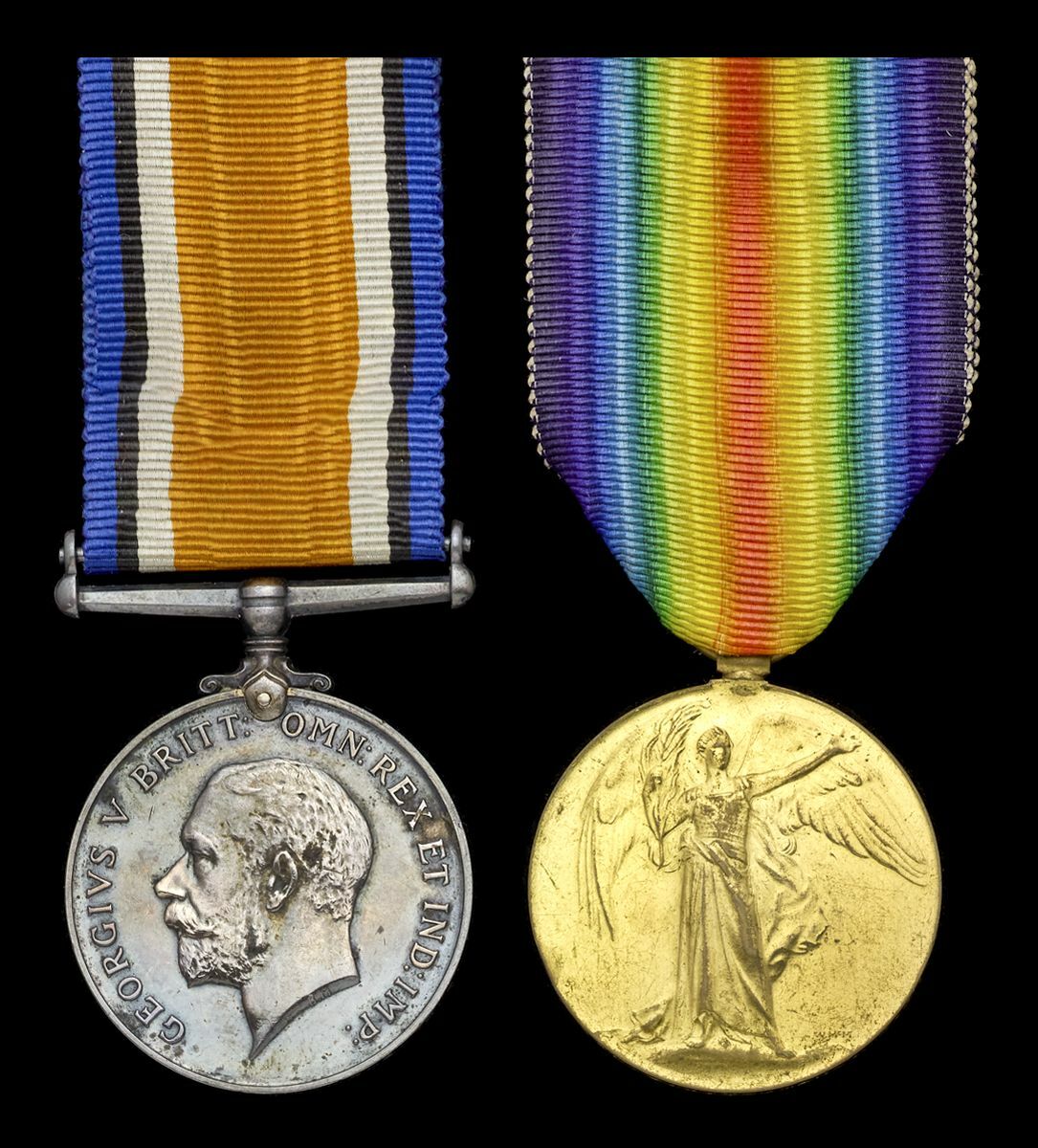
A Great War casualty pair awarded to Corporal J. W. Tromans, Royal Field Artillery, who died of wounds on 23 July 1917
British War and Victory Medals (3440 Cpl. J. W. Tromans. R.A.), good very fine (2)
Joseph Wilfred Tromans was born in the Parish of Cradley, near Stourbridge, where his birth was registered circa March 1888. He took up employment initially as a carter working for Mr. Charles Beasley, a shop keeper on Windmill Hill, Cradley.
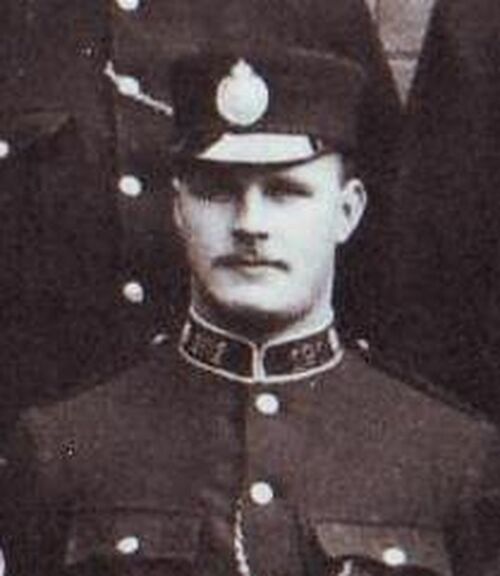
Tromans joined the Worcestershire Constabulary (supposedly at the age of 18 years) and was appointed Police Constable No. 191 on 15 July 1905. At the time he joined the police force, he stated he was 18 on 28 December 1886. It would appear that either he did not know his exact date of birth or hid his real age when joining the police force. At this point, Tromens was resident at Two Gates, Cradley.
He spent 9 years and 331 days with the constabulary, rising to Constable 1st Class, working at Police Headquarters in Worcester until 29 August 1905 and then at Kings Heath police station from 30 August 1905 until 16 December 1907. On 17 December 1907, Tromans transferred to Northfield police station until 8 November 1911, The 1911 census records Tromans as a police constable, age 24, at Moseley Police Station, Birmingham. He was lent temporarily to the Birmingham police station from 9 November 1911 until 24 June 1912. Tromans moved to Evesham police station on 25 June 1912, where he appears to have been based in Broadway. He remained here until he resigned from the police Force on 10 June 1915 to enlist in the army the very next day. Tromans joined his local Royal Field Artillery unit, the 1/2nd South Midland Brigade (later to become the 241st Brigade, R.F.A. in May 1916), "B" Battery, with a number of other Constables from Evesham. Later that year, he married Fanny Pinfold from Alveston, Warwickshire on 2 October.
During his relatively short Police service, Tromans received the following commendations and awards:
18th January, 1906 at Kings Heath, specially commended by the Chief Constable for acting with great promptitude and presence of mind at a fire.
15th February, 1908 at Northfield, meritorious conduct in stopping a runaway horse. Awarded Merit Badge by the Chief Constable, rewarded 2 Pounds by Standing Joint Committee.
It was not until 1916 that Tromans joined his Battery in France, having spent much time training the new men. The Battery's War History records the fresh arrival of new personnel on 31 March 1916, which increased the units size from 3 four gun 18 pounder Batteries and an Ammunition Column to 4 four gun Batteries. At this time, the 241st Brigade was based around the Gommecourt area.
During May, 1916, in preparation for the large impending attack on the Somme area, the Battery was pushed south to the area opposite Beaumont Hamel and worked hard in constructing advanced battery positions. From 21 June onwards, all Batteries of various calibres over the entire length of the line rained shells on the German front lines night and day.
At 7.28 am on 1 July, the largest ever mine was exploded at Beaumont Hamel, under Hawthorne Redoubt, and at the same time an intense artillery barrage also occurred, just prior to the great attack - zero hour was 7.30 am - thousands of men then went over the top. "B" Battery was firing on land just in front of Beaumont Hamel. Here, the enemy had brought up their machine guns from deep and untouched dugouts, plus the wire entanglements that were supposed to have been cut by the intense British barrage were mostly intact. The attacking troops failed in the main to even get to the wire and were mowed down like blades of grass. It was thought that around 7000 men died on the land just covered by the shells of 241st Brigade alone. Ceasefire was finally ordered at 8 pm that evening. The Brigade was given orders to withdraw on 2 July, but it was not until the early hours of 4 July, that "A" and "B" Batteries arrived at Couin.
The 241st Brigade remained active in the region. On 26 September, the Brigade commenced firing at 12.35 pm in support of the attack against Thiepval, in which tanks were also used for the first time in this sector, which proved totally successful and captured over 1000 prisoners.
June 1917 finally provided some rest and relaxation for the 241st Brigade, after a long hard, wet, muddy and bloody Autumn, Winter, and Spring where they had been in frequent action. A period of leave was given and the troops enjoyed Amiens and its niceties.
The Brigade slowly moved towards Ypres on 5 July 1917. All Batteries went into action in their position just north of Ypres on 14 July. Each evening, the Brigade came under artillery attack with many of the shells containing gas. All gunners were kept busy during the daylight hours in bombarding enemy positions and were then allotted tasks during the night too; it was tiring work.
On the night of 21-22 July, "B" Battery was shelled and gassed. Captain Woods, Lieutenant Crane and Sergeant Blick were all admitted to hospital suffering the effects of gas poisoning. By now a Corporal with "B" Battery, Tromans had been at work all day and evening of the Saturday, 21 July 'and on Sunday morning lay down to try and snatch a few hours sleep, when a shell burst close to him, smashing his jaw in two places and also his thigh. He suffered from gas attacks and died the next night'.
His wife, then living at Alveston, near Stratford on Avon, had received a letter from Lieutenant R.H. Brindley of "B" Battery initially informing her that her husband had been wounded, stating that 'He is the most loved man in the Battery and we all feel that we have temporarily lost a friend. His own men would follow him anywhere and do anything for him. As a matter of fact, two them carried him to the dressing station under heavy fire and took off their gas masks for fear of jolting him by stumbling'.
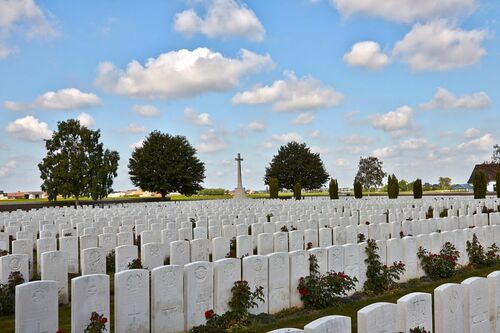
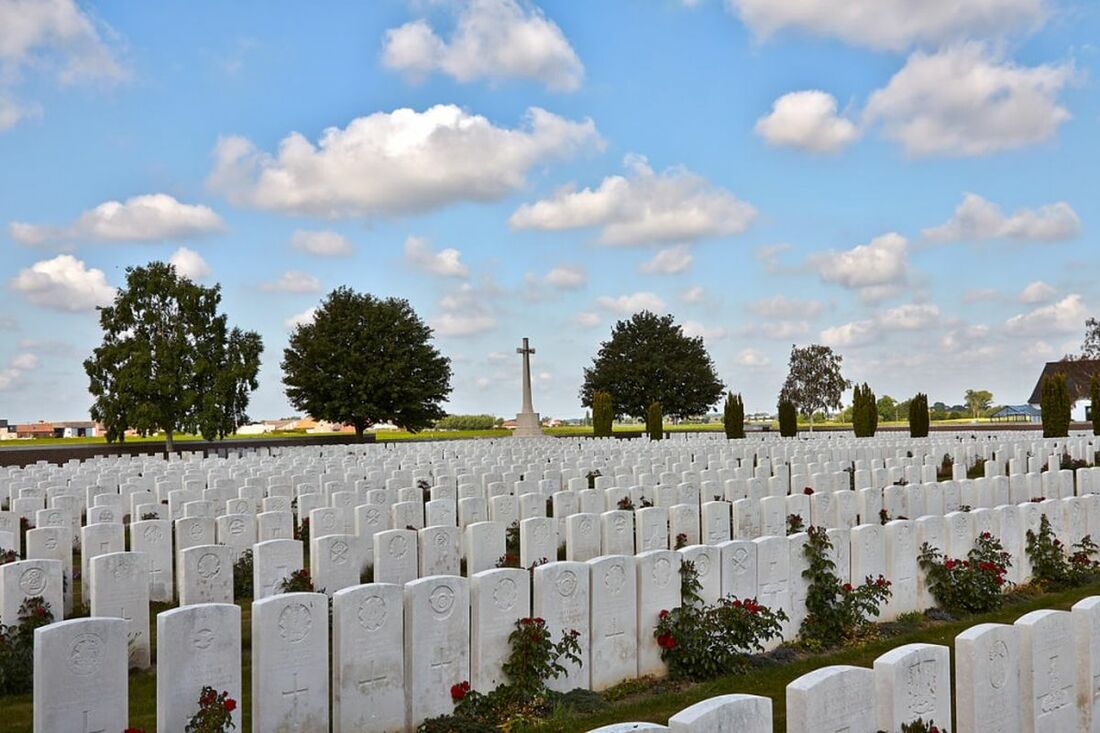
Joseph Wilfred Tromans was buried in Mendinghem Military Cemetery, 17 kilometers north-west of Leper, on the site of a former Casualty Clearing Station established in July 1916 at this location at Proven.
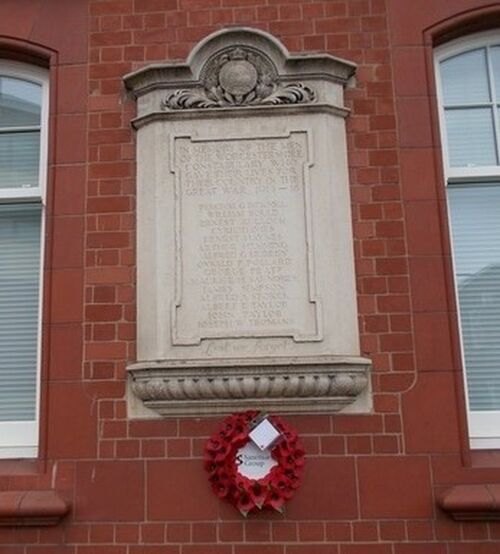
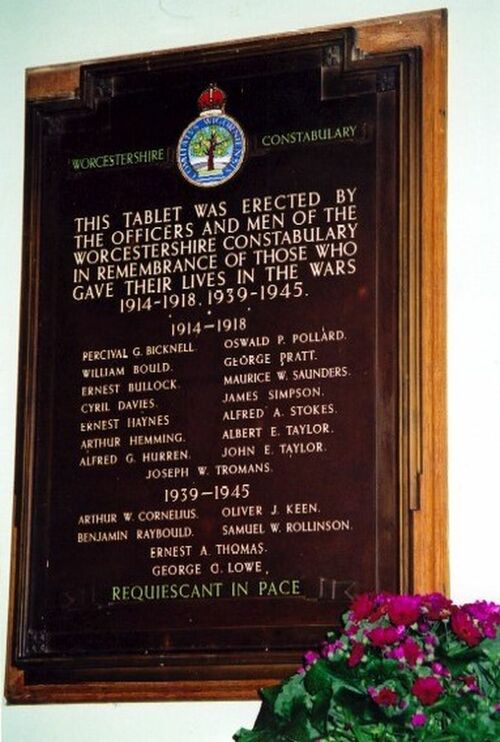
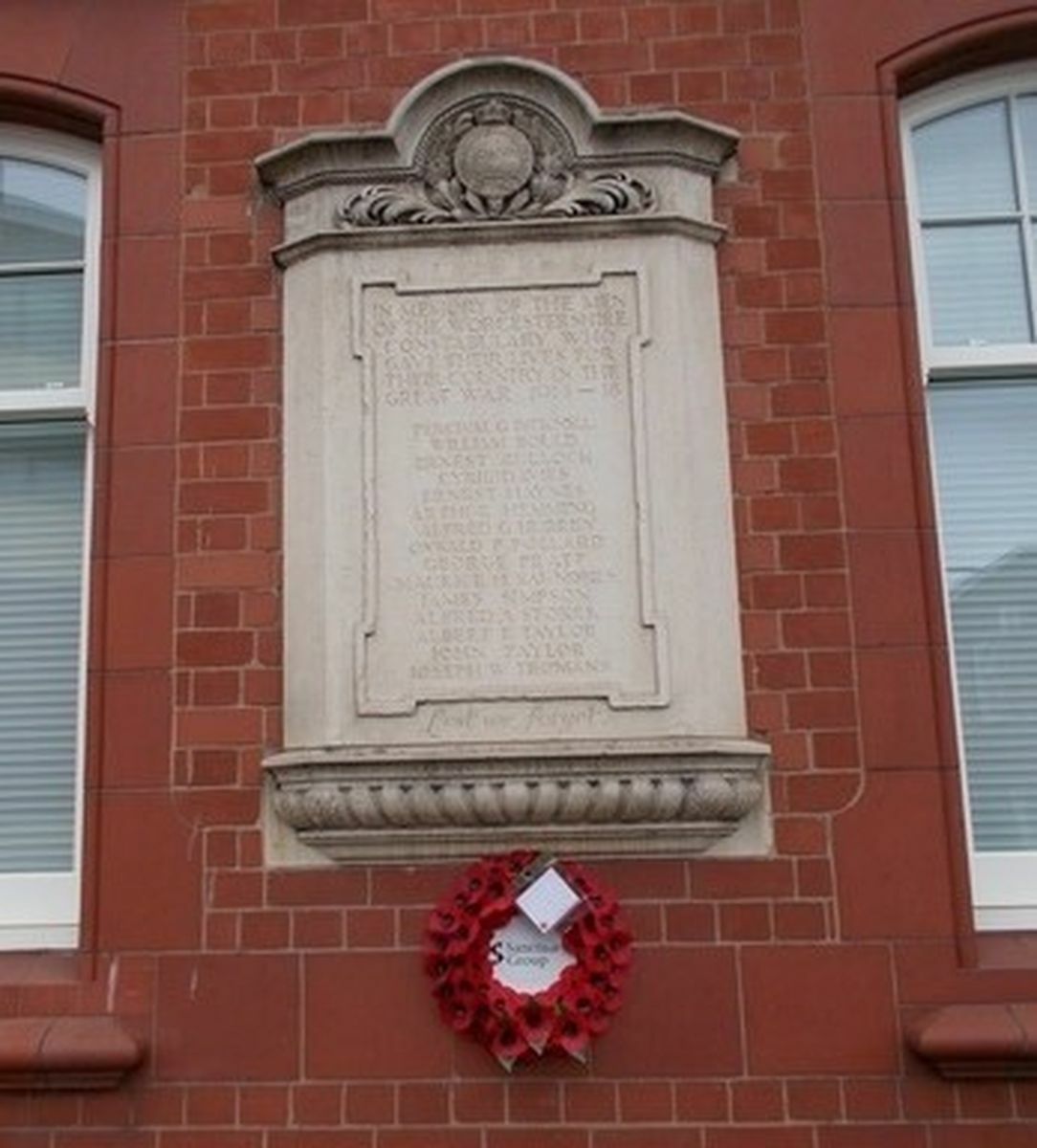
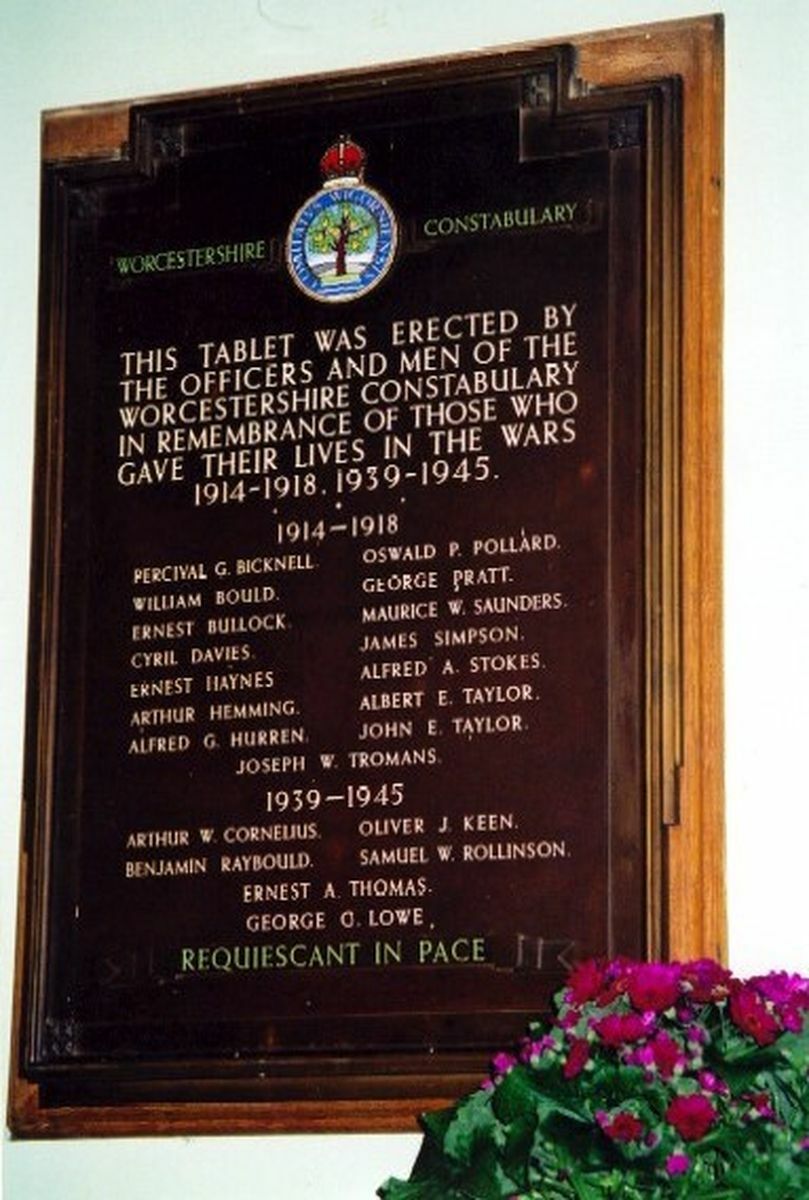
Tromans is remembered on a memorial stone fixed to the front wall of the old Worcester City Police Station and also on a Memorial tablet in the foyer of West Mercia Police's Headquarters, Hindlip Hall, near Worcester.
Subject to 20% VAT on Buyer’s Premium. For more information please view Terms and Conditions for Buyers.
Sold for
£80
Starting price
£80


Watch, listen and bid as if you were in the room. Now available for auctions worldwide.
Click here to bid live
An exclusive and confidential service for the discerning collector or vendor.
View the Gallery
Download every Spink catalogue on your iPad, iPod or iPhone using free Spink app.
Download From iTunes© 2026 Spink & Son. All rights reserved.