
Auction: 24112 - Orders, Decorations and Medals - e-Auction
Lot: 265
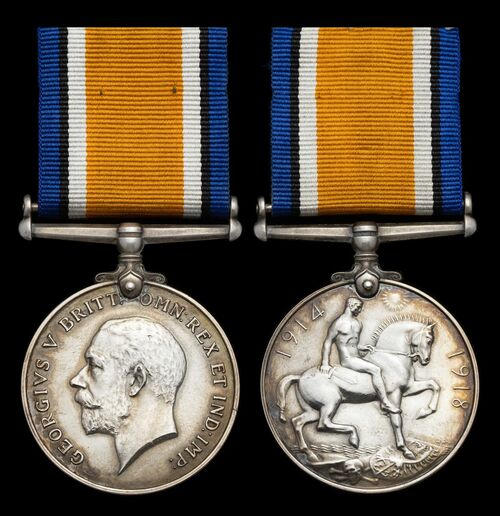
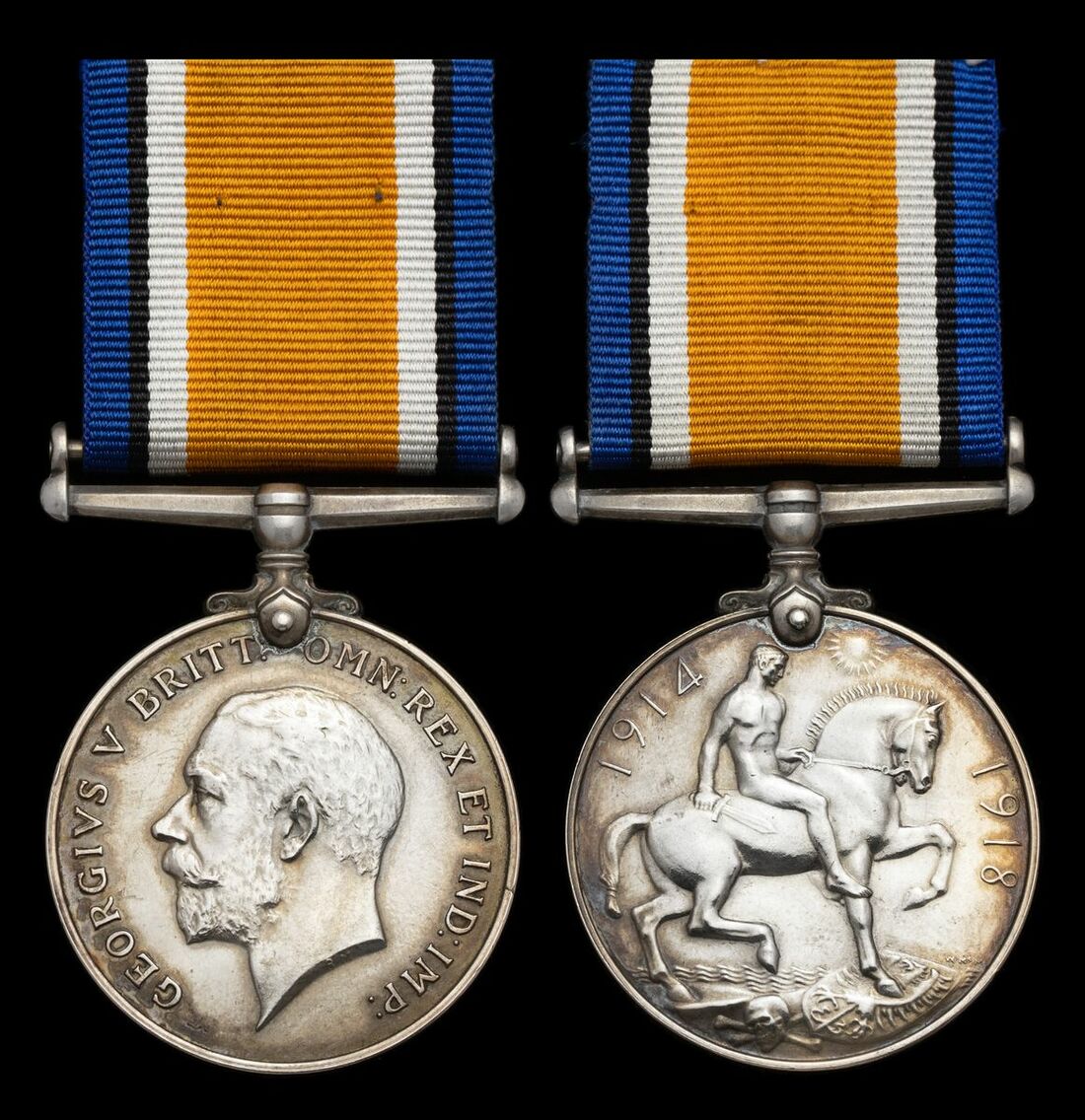
The British War Medal awarded to P. S. Boger, Church Army, who served on the Western Front aged 58
British War Medal 1914-20 (P. S. Boger.), good very fine
Percival Sylvester Boger was born at Knot Oak, Ilminster, Somerset in January 1859 and was a schoolmaster by trade. He worked variously at St Saviour's Grammar, Southwark and by 1891 was in Margate, by 1901 being the Hon. Secretary of All Saint's Church, Westbook and taking the lead in fundraising activities. During the Great War he served on the Western Front from July 1916-17, by that time aged 58, with the Church Army and is confirmed as only entitled to this British War Medal for his services. Church Times gives more detail:
'Whether on their way from the trenches, or heading towards them, soldiers could find a Church Army hut close at hand. One Private in the Royal Army Medical Corps on the Western Front wrote home:
"We have been in an area where there was very heavy shelling - so much so, that it was impossible to erect a recreation hut near us; but we were not long in finding a Church Army hut, which was about 20 minutes' walk further back. Each Sunday we enjoyed to the full the live, cheery, and inspiring services."
Often, Church Army huts were the only places where troops on the move could be given food and drink, and many men sought counsel, prayer, and comfort from the evangelists and chaplains based there. As the war progressed, more Church Army huts, sponsored by donations from supporters in Britain, were set up closer and closer to the battlelines.
The huts on the Western Front were constructed in sections so that they could be moved to follow the movements of the troops. Even so, during the retreat through Flanders in 1916, 60 of the huts ended up under enemy shellfire, as one diary entry from the time illustrates:
12.30 a.m. very heavy shelling; attended to walking wounded, went through thirty gallons of lemonade and twelve gallons of tea, a busy day until 11.15 p.m.; arrangements made to meet two companies; roused at 2 a.m. for Australians coming down; they were dog-tired and thoroughly appreciated refreshment provided; terrific bombardment continued all night; a shell burst twenty yards from the car.
The dedication of those who served in the huts was remarkable. One Church Army Huts Commissioner reported:
"Our Huts are often right in the midst of things. The superintendent of one came in for his share of a gas attack a little while ago. He had previously had his "ration" of a gas mask and a shrapnel helmet served out to him, with the other men. His roof is frequently peppered with shrapnel. The superintendent of another Hut, at a place right in the mines area, had a hole burnt in his coat by quite a large piece of a shell, which exploded close outside, when the Germans had trained their guns on the mines, in their determination to prevent us from getting at the coal. Another is expecting that he and his customers may have to make a bolt into a little wood nearby for sudden shelter, at any time."
Boger made it home and retired to Saltash, Cornwall. He died on 29 June 1938 at Southwark.
Subject to 20% VAT on Buyer’s Premium. For more information please view Terms and Conditions for Buyers.
Sold for
£120
Starting price
£40
Watch, listen and bid as if you were in the room. Now available for auctions worldwide.
Click here to bid live
An exclusive and confidential service for the discerning collector or vendor.
View the Gallery
Download every Spink catalogue on your iPad, iPod or iPhone using free Spink app.
Download From iTunes© 2026 Spink & Son. All rights reserved.