
Auction: 24111 - Orders, Decorations and Medals - e-Auction
Lot: 548
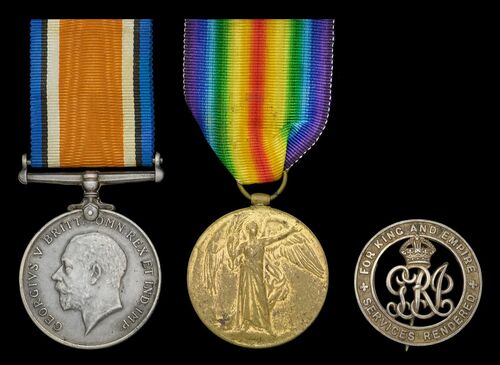
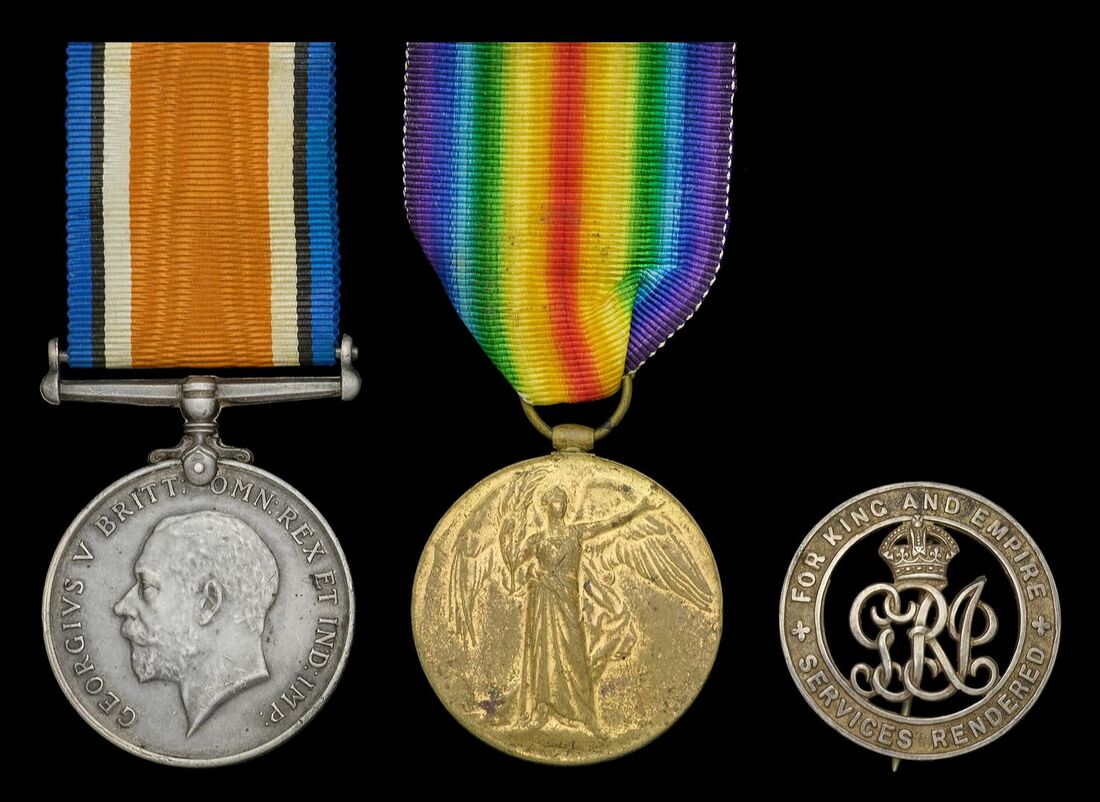
(x) A Great War Pair to Corporal C. F. Cross, Australian Light Horse who was wounded in France in 1918
British War and Victory Medals (246 Cpl C. F. Cross. 4/L.H.Rgt. A.I.F.); Silver War Badge (A59810), very fine (3)
Charles Frederick Cross was born in 1894 in Hamilton, Victoria, Australia. On the outbreak of the Great War he was working as a plumber when he enlisted on 24 August 1914 at Broadmeadows into 'B' Squadron 4th Light Horse. His enlistment papers give a false age of 19 and 11 months when in fact he was probably 18, he also falsely stated that his father was dead, in fact he died in 1920 (at the time to enlist 21 years or 18 years with the permission of a parent or guardian). A document in his file would appear to indicate that his family believed that he had enlisted under a false name of either Frank or Leslie McGuennisken.
Embarked with the regiment in October 1914 and landed in Egypt on 10 December 1914. It would not appear that he went with the regiment to Gallipoli as his service record starts on 2 January 1916 at Heliopolis with the entry "rejoined unit". When the 4th returned to Egypt, a fourth squadron "D Squadron" was formed for the regiment and it was promptly detailed, along with B Squadron, for duty as divisional cavalry for the 1st and 3rd Australian Divisions on the Western Front. He was posted to the 1st Division Cavalry on 20 March 1916 and landed in France on 27 March 1916. Later transferring to 2nd Anzac Corps Mounted Regiment (later called the 22 Corps Mounted Regiment, when it served 22 Corps from 23 December 1916.
It was used in a mobile, mounted role during operations to follow up the German withdrawal to the Hindenburg Line in early 1917 and was heavily involved at the start of the Battle of Messines later in the year; it also manned the trenches in the Ypres sector. During April and May 1918, during the German spring offensive, it was heavily involved around Mount Kemmel. Later the regiment supported the French offensive efforts during the Second Battle of the Marne in July. In August, the Allies launched their Hundred Days Offensive, during which the regiment undertook reconnaissance and acted as a screening force as the infantrymen advanced as part of efforts to breach the Hindenburg Line. He received a gunshot wound to his right buttock on 25 August 1918 and was subsequently evacuated to England for the remainder of the war.
At the conclusion of the war, he had transferred to the 13th Light Horse and then to the Army Pay Corps remaining in England until 1920 when he returned to discharge in Victoria on 19 July 1920. He died on 23 April 1957 in Hamilton.
The 22nd Corps Mounted Regiment lost 45 killed and 126 wounded in France, Cross being one of the wounded.
Whilst he is entitled to the 1914-15 Star and it is marked on his file he may have never been issued the medal. The medal records show the British War and Victory medals being returned in May 1923 to be re-issued in December 1923 and his original medal bar only displays the pair.
Subject to 5% tax on Hammer Price in addition to 20% VAT on Buyer’s Premium.
Sold for
£120
Starting price
£110

Watch, listen and bid as if you were in the room. Now available for auctions worldwide.
Click here to bid live
An exclusive and confidential service for the discerning collector or vendor.
View the Gallery
Download every Spink catalogue on your iPad, iPod or iPhone using free Spink app.
Download From iTunes© 2026 Spink & Son. All rights reserved.