
Auction: 24111 - Orders, Decorations and Medals - e-Auction
Lot: 536
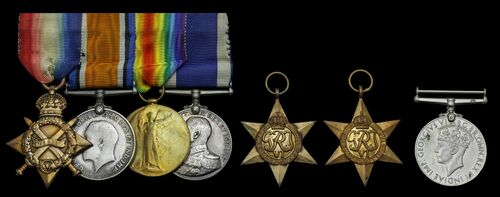
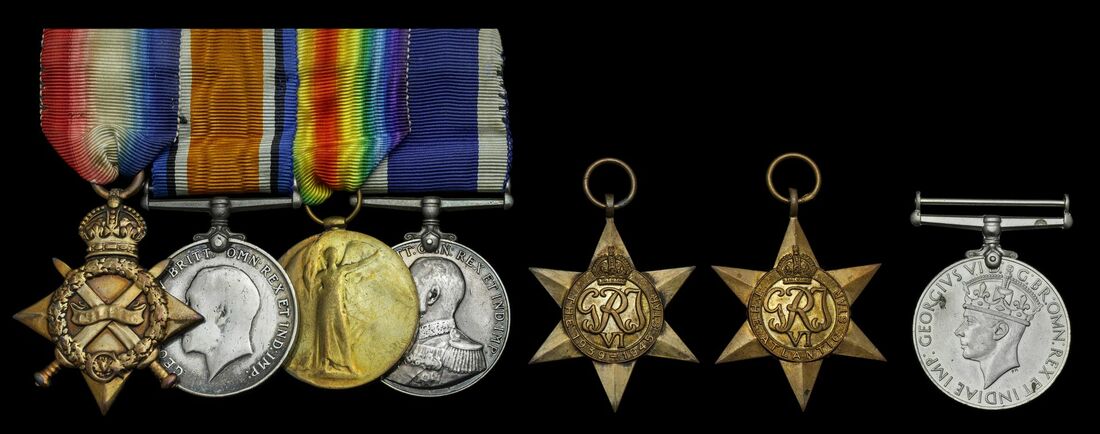
A casualty's campaign and long service group of seven awarded to Petty Officer D. L. Wilbourne, Royal Navy
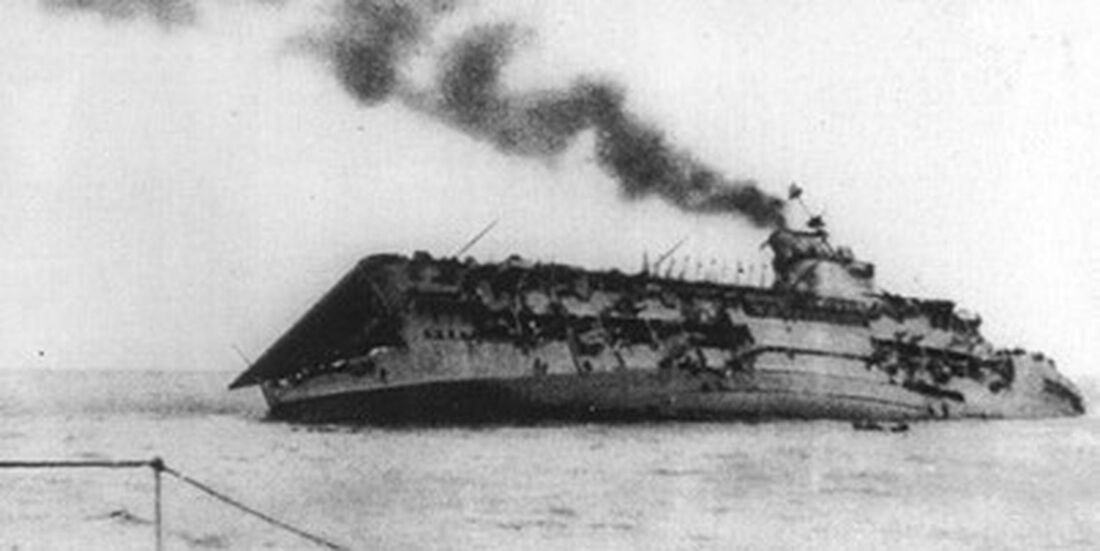
Having witnessed extensive action in the cruiser H.M.S. New Zealand in the Great War, he joined the aircraft carrier Courageous on the renewal of hostilities and was among those lost when she was torpedoed off the Irish coast in September 1939, the Royal Navy's first major ship loss of the war
1914-15 Star (23119 D. L. Wilbourne, A.B., R.N.); British War and Victory Medals (23119 D. L. Wilbourne, A.B., R.N.); 1939-45 Star; Atlantic Star; War Medal 1939-45; Royal Navy L.S. & G.C., G.V.R., 2nd issue (23119 W. L. Wilbourne, L.S., H.M.S. Carysfort), the earlier awards polished and thus fine, the Second World War medals extremely fine (7)
Diamond Leonard Wilbourne was born in Devonport on 12 July 1897 and entered the Royal Navy as a Boy 2nd Class in February 1913. He joined the cruiser H.M.S. New Zealand at the end of the same year and was to remain likewise employed for the entirety of the Great War, latterly as an Able Seaman.
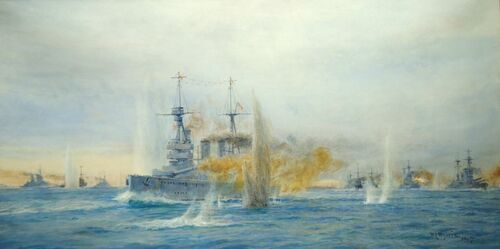
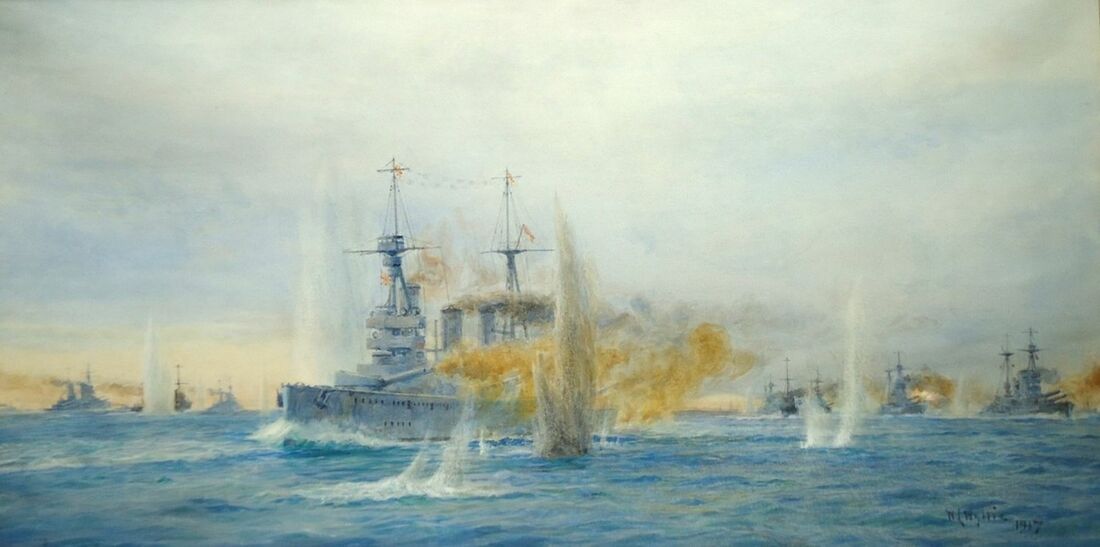
The New Zealand was recently returned from a tour of the Dominions, including a visit to her namesake during April-June 1913. Whilst there the ship was estimated to have been visited by almost half the population of New Zealand - most pertinent of whom was a Maori chieftain who presented the captain with a Maori piupiu (a warrior's skirt) and a greenstone tiki (pendant) which were intended to ward off evil, with the injunction that they were always to be worn by the captain when the ship was in action. Their efficacy was to be proved as the ship survived considerable action at the battles of Heligoland Bight 1914, Dogger Bank 1915 and Jutland 1916.
At Dogger Bank, command of the British squadrons fell to Rear-Admiral Moore of the New Zealand when Beatty's Lion was badly damaged by three 12-inch shells from the Derfflinger, and as a consequence she was directly engaged in the three hour duel that resulted in the loss of the Blucher.
At Jutland, the crew of the New Zealand had the misfortune to witness the loss of the Indefatigable and the Queen Mary, passing the latter battle cruiser on the port beam at just 100 yards distance when she blew up. An officer stationed in New Zealand's gun-control position later wrote:
'At about 4.35 the stern of a ship projecting about 70 feet out of the water, with the propellers revolving slowly, drifted into the field of my glasses; clouds of white paper were blowing out of the after-hatch, and on her stern I read "Queen Mary". She passed us about 100 yards on our port beam, and a moment later there was a blinding flash, a dull heavy roar, which ceased as suddenly as it began, followed by a few seconds silence, and then the patter of falling debris. All that was left of the Queen Mary was a great mushroom-shaped cloud of smoke about 600 to 800 feet high, which temporarily obscured our view of the enemy, but a few seconds later we drew clear.'
In spite of such harrowing scenes, the New Zealand's crew continued to engage the enemy with numerous well-aimed salvoes, the whole under the direction of Admiral Pakenham and Captain John Green. The crew were doubtless relieved to know that the latter was wearing the piupiu and tiki as instructed. As mascots went, they did the trick, with just one enemy shell hitting the New Zealand on her after turret but causing no casualties.
She had, meanwhile, fired 420 shells from her main guns, more than any other ship on either side in the battle.
Journey's end
Having been awarded his L.S. & G.C. Medal in July 1930 and pensioned ashore as a Petty Officer in July 1937, 42-year-old Wilbourne was mobilised on the eve of the Second World War, when he joined the aircraft carrier H.M.S. Courageous.
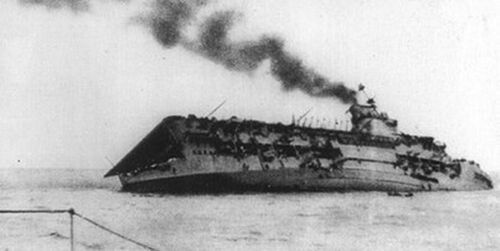
He was likewise employed at the time of her loss on 17 September 1939, when she was torpedoed by the U-29 off the coast of Ireland.
Kapitanleutnant Otto Schuhart of the U-29 had stalked the aircraft carrier for two hours, before firing a spread of three torpedoes: two of them hit Courageous in the port side, knocking out all electrical power, and she capsized and sank in 20 minutes, with a loss of 519 officers and ratings.
Wilbourne was among the latter. He left a widow, Elizabeth, and is commemorated on the Plymouth Naval Memorial.
For poignant eye-witness statements from some of Courageous's survivors, see:
https://www.tracesofwar.com/thewarillustrated/4/i-was-there-we-were-on-courageous-when-she-was-hit.asp
The sinking of the Courageous was widely celebrated in Germany, Grand Admiral Erich Raeder directing that Otto Schuhart be awarded the Iron Cross 1st Class and that his crew receive the Iron Cross 2nd Class.
Subject to 20% VAT on Buyer’s Premium. For more information please view Terms and Conditions for Buyers.
Sold for
£190
Starting price
£110

Watch, listen and bid as if you were in the room. Now available for auctions worldwide.
Click here to bid live
An exclusive and confidential service for the discerning collector or vendor.
View the Gallery
Download every Spink catalogue on your iPad, iPod or iPhone using free Spink app.
Download From iTunes© 2026 Spink & Son. All rights reserved.