
Auction: 4020 - Orders, Decorations, Campaign Medals & Militaria
Lot: 183
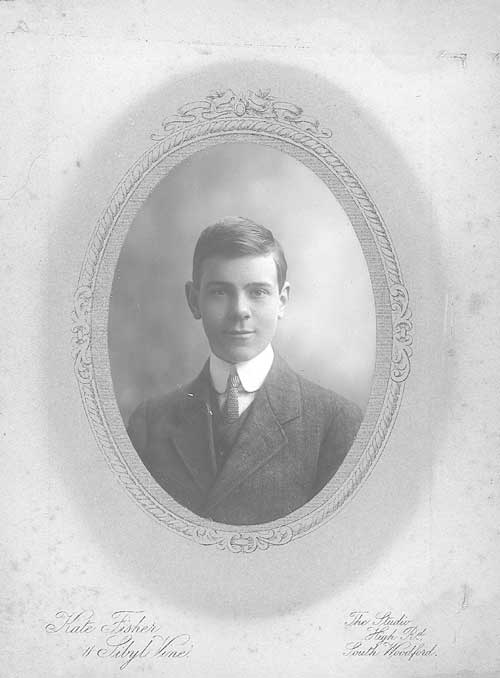
Three: Private G E Randall, 14th Battalion London Regiment (The London Scottish), 1914 Star, with bar; British War and Victory Medals (2093 Pte. G.E. Randall. 14/Lond:R.), extremely fine (3) together with -- Memorial Plaque, in turned wood frame -- 9 Carat Gold Cigarette Case (Hallmarks for Birmingham, 1886), the interior engraved 'In memory of Geo. E. Randall Killed in action 1:11:1914', and set with Private Randall's identity disc -- Silver Half-Hunter Pocket Watch (Hallmarks for London, 1902), the back engraved 'George Edward Randall Feb 29th 1904' -- Photograph of George Randall, in silver frame (Hallmarks for London, 1904) -- Territorial Force Embodiment Notice to Join, named to G.E. Randall, 14 Battn London Regiment (The London Scottish), with front of envelope addressed to G E Randall, Alderton, Essex, postmarked 4 August 1914. Estimate £ 280-320 Private George Edward Randall, born at Norwich 29.2.1892, was killed in action 1.11.1914.
The 14th London Regiment (The London Scottish) arrived in France 16.9.1914 as L. of C. Troops. They were at Ypres by midnight 29/30 October. The Battalion, 750 strong, under Lieutenant Colonel G A Malcolm, was the first Territorial Force battalion to go into action. On 31 October they were ordered to support the cavalry holding the ridge east of the road between Messines and Wytschaete. In the belief that an attack was in progress, the London Scottish, instead of gradually bringing up reinforcements, deployed for attack, and advanced in that formation. The movement was observed by the enemy, and they were at once heavily shelled; but their right reached the 4th Cavalry Brigade trenches, and their left, though badly enfiladed by machine guns, even got beyond it and into action with the enemy infantry. The Germans now appeared to be seriously menacing Wytschaete, and the reserve of the London Scottish was deployed on the left to deal with them. Without the impulse which it might have given to the main attack, no further progress was possible. Under very heavy fire the men found what little cover they could in the open, for the scattered cavalry trenches, which were little more than a chain of rifle pits, provided accomodation for only a few of them. Thus they remained until the line was rearranged at night. Their losses for the day reached the total of 321. From midnight onward, in bright moonlight, the British trenches and all buildings between Messines and Wytschaete were steadily shelled by the enemy 'for destructive effect', whilst a battery of 8-inch howitzers devoted its whole attention to Wytschaete. At 1 a.m. on 1 November a general attack, in several lines developed.The British fire was steady but weight of numbers soon told. At Wytscheate six German battalions advanced against about 415 men, odds of twelve to one, and the village was lost to the enemy at 2.45 a.m. In the open ground to the south ten German companies advanced against about 600 men, odds of three to one. As daylight approached some defenders fought their way back rather than wait to be captured. The last to go were two squadrons of Carabiniers with some detachments of London Scottish, who remained in their trenches until 6.45 a.m.
The London Scottish war diary contains the statement that fifty per cent. of their rifles were useless for rapid fire owing to the defective magazines of the old Mark I. Lee-Metford with which they and all other Territorial infantry were then armed. This statement was later confirmed by Ordnance examination.
Sold for
£1,200

Watch, listen and bid as if you were in the room. Now available for auctions worldwide.
Click here to bid live
An exclusive and confidential service for the discerning collector or vendor.
View the Gallery
Download every Spink catalogue on your iPad, iPod or iPhone using free Spink app.
Download From iTunes© 2026 Spink & Son. All rights reserved.