Auction: 26002 - Orders, Decorations and Medals
Lot: 241
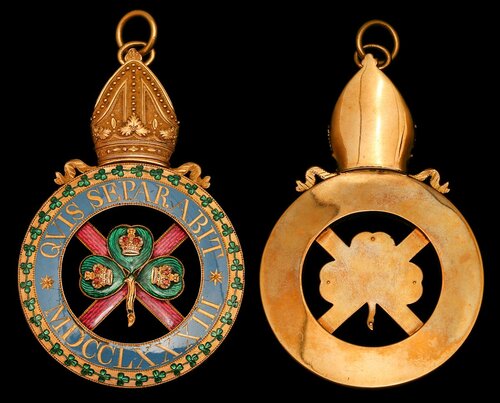
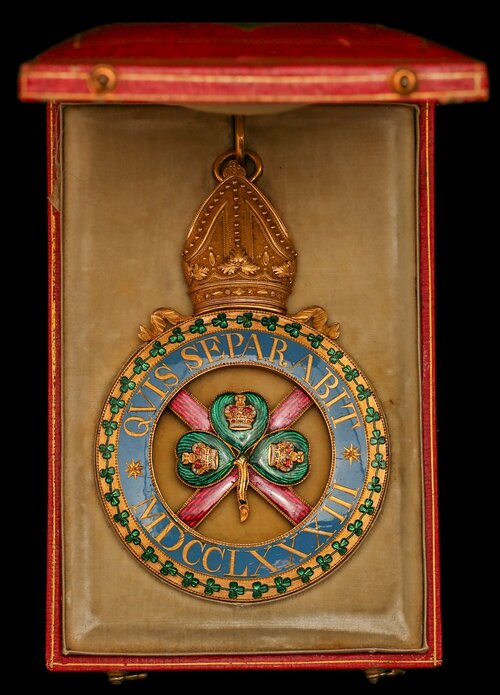
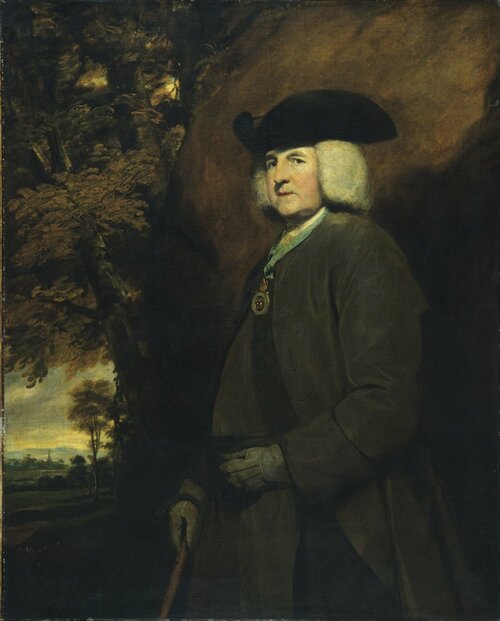
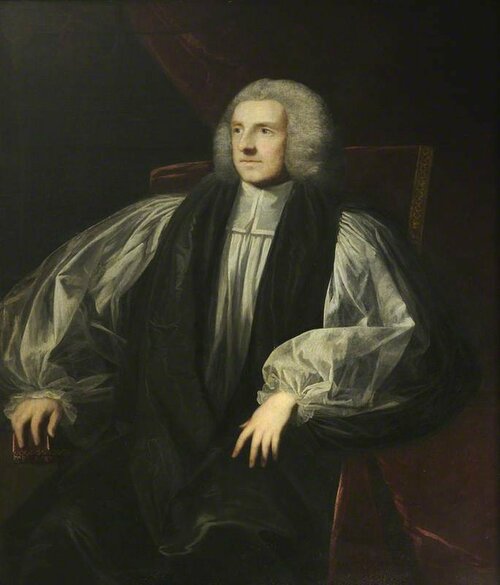
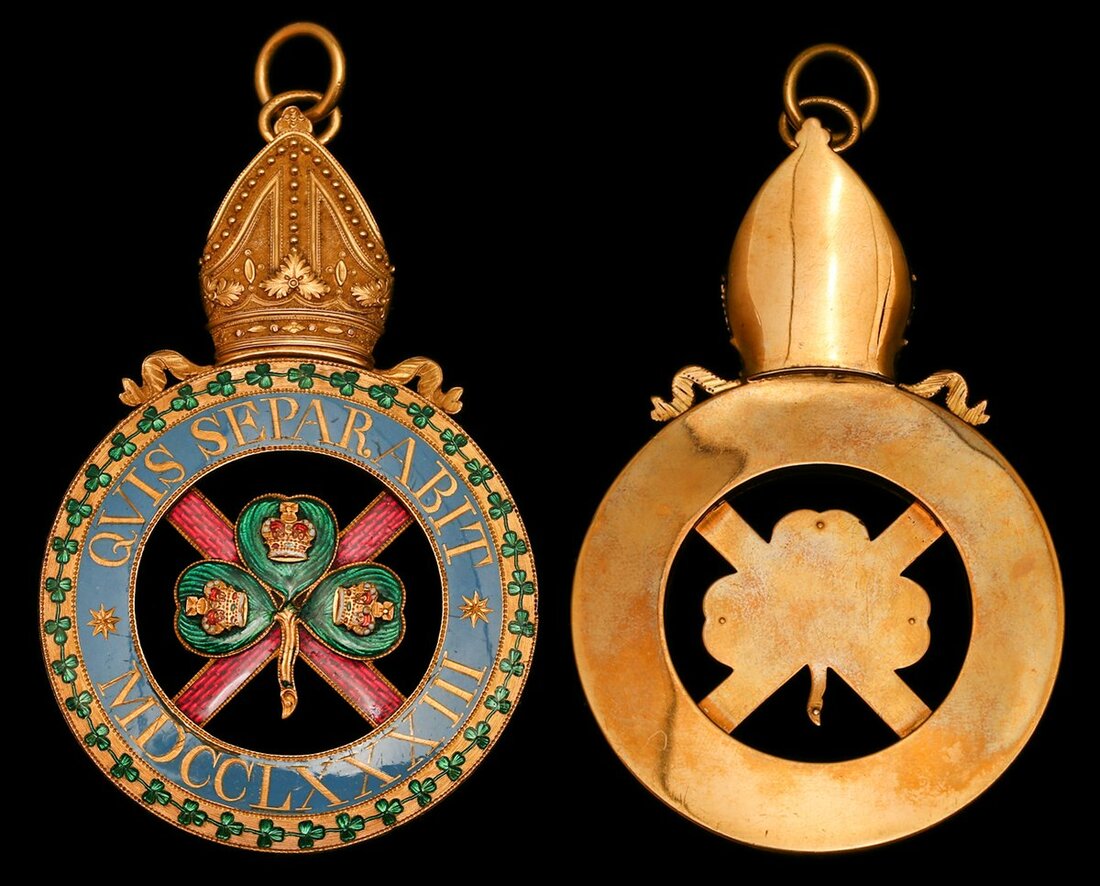
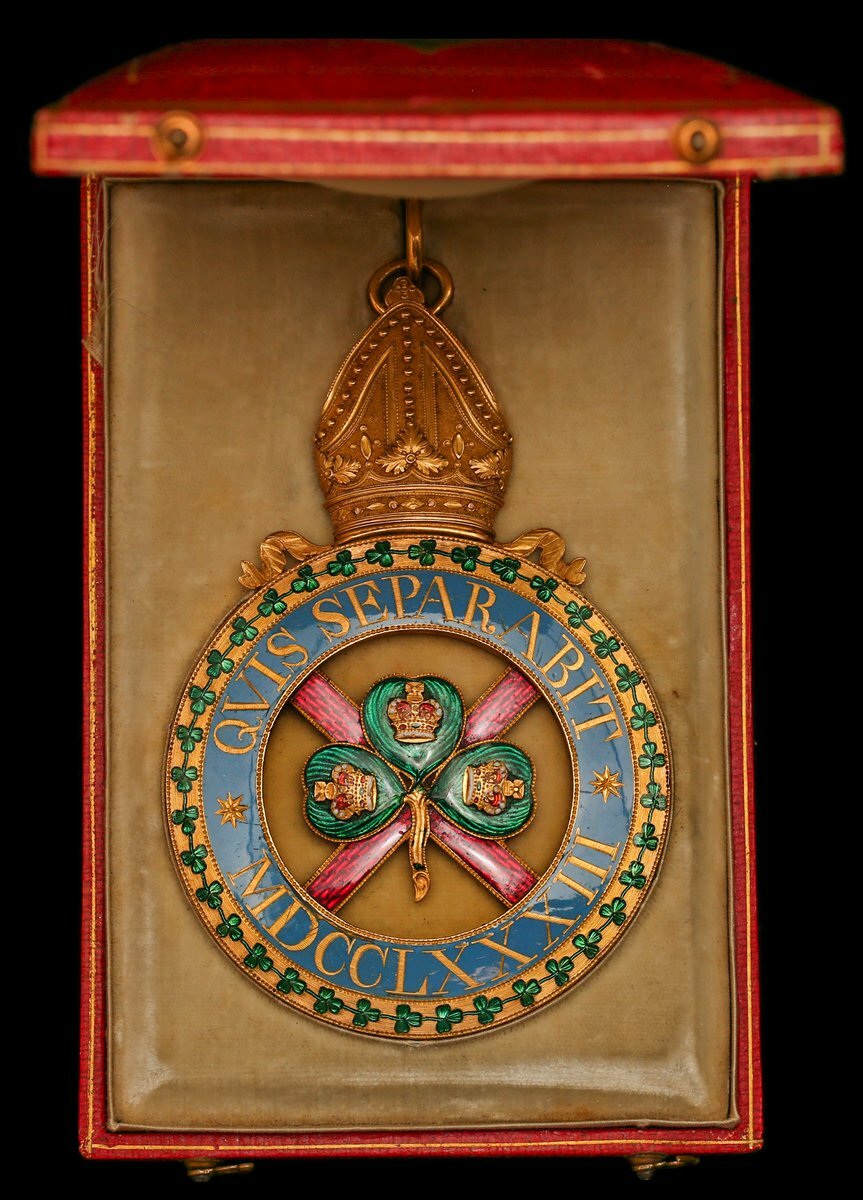
The Order of St Patrick's Prelate Badge attributed to The Most Reverend and Right Honourable, The Lord Rokeby, Archbishop of Armagh, Primate of All Ireland, who was appointed the Order's first Prelate in 1783 upon its creation by King George III
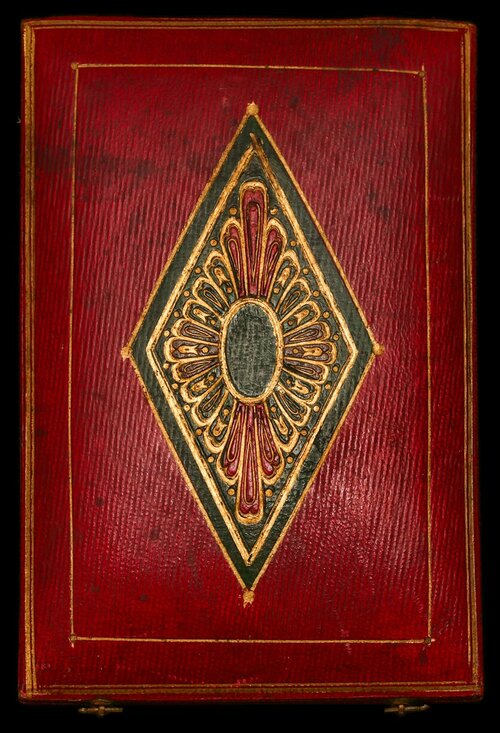
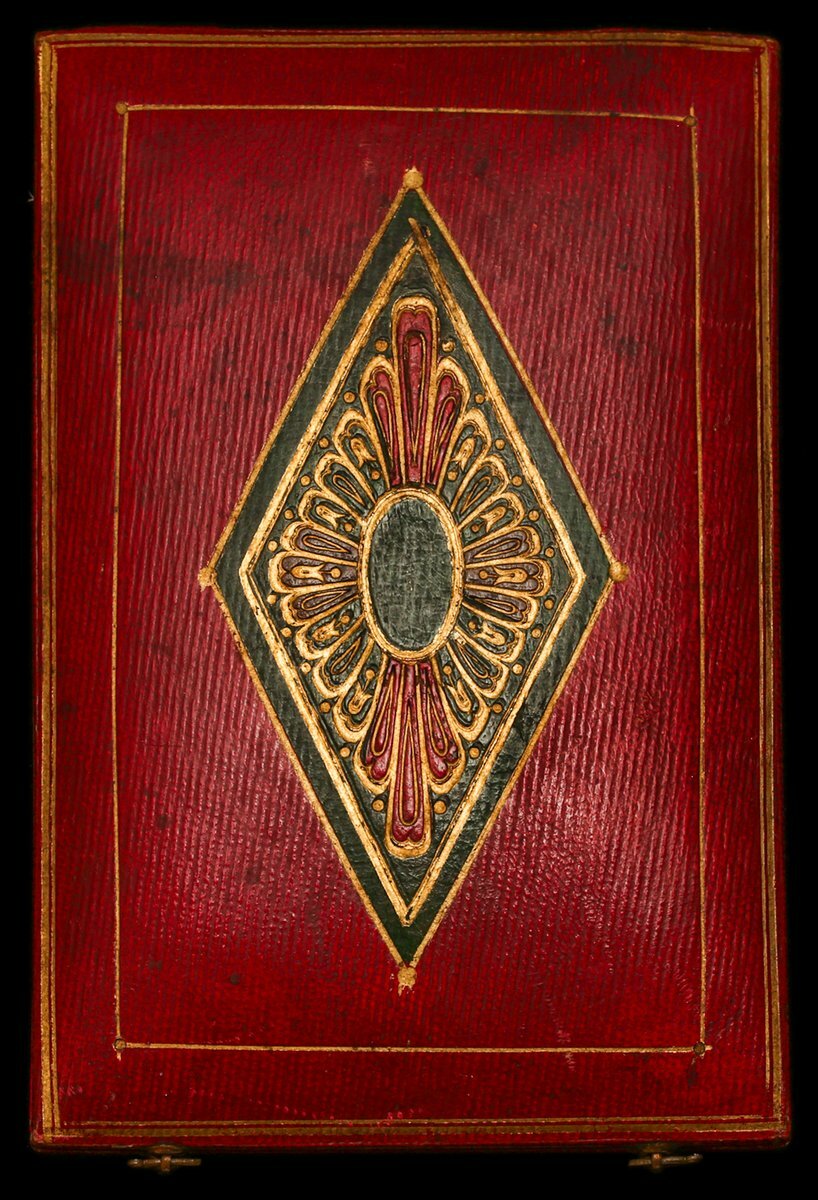
The Most Illustrious Order of St. Patrick, Prelate's Badge, 87mm including Bishop's Mitre suspension x 57mm, fine-worked gold and enamel, circa 1783-85, in a ornately gilt-blocked red Morocco leather fitted case, small area of green enamel loss to shamrock centre through wear, good very fine and a great rarity
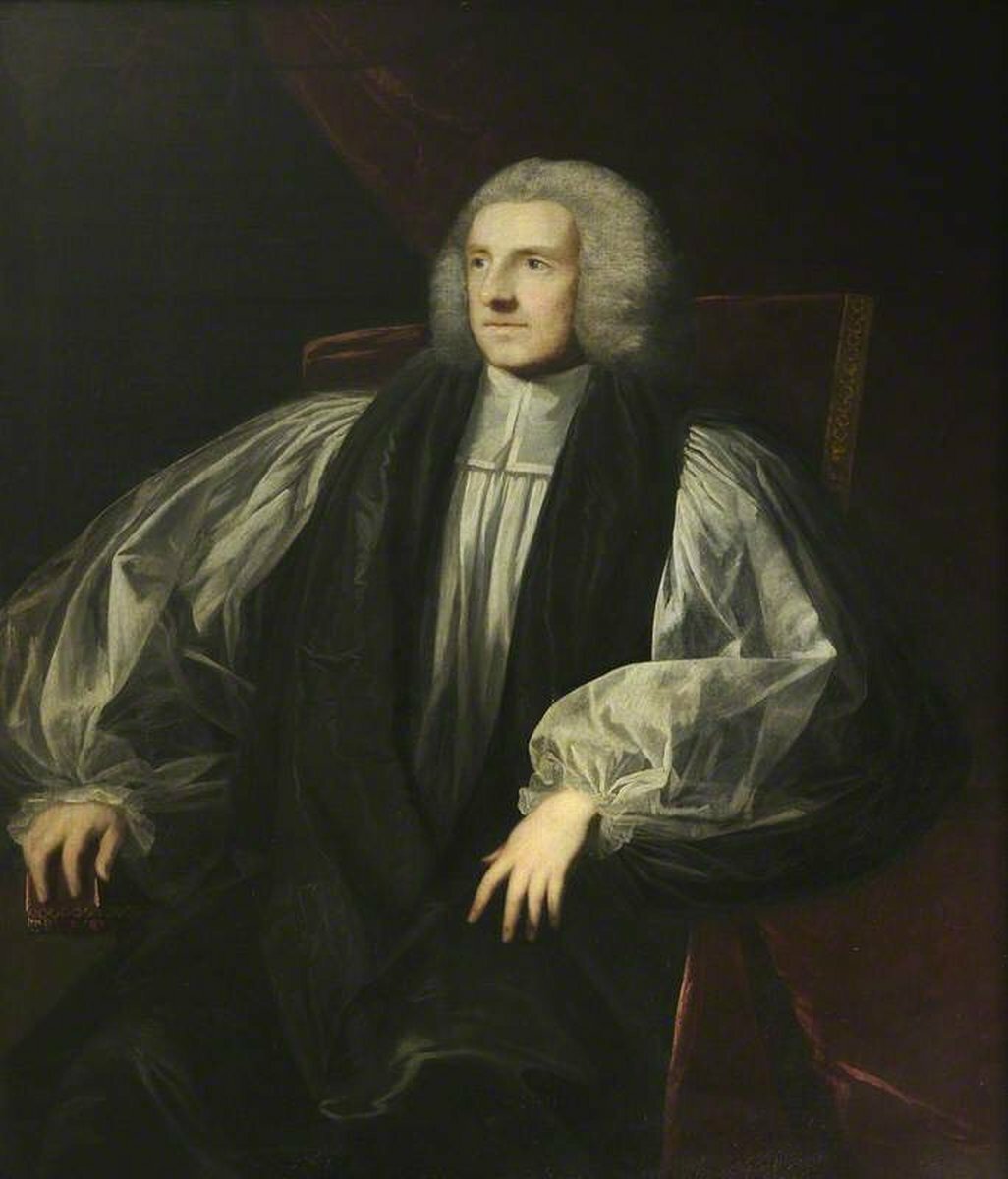
The Order of St Patrick could count five Prelates, each of whom would have taken a Badge.
Images of four Prelates wearing their Badges of Office are known and from these it is possible to rule out the other possibilities, mainly due to the depictions of the Badge and significant differences in the size of the lappets upon the mitre of each Badge.
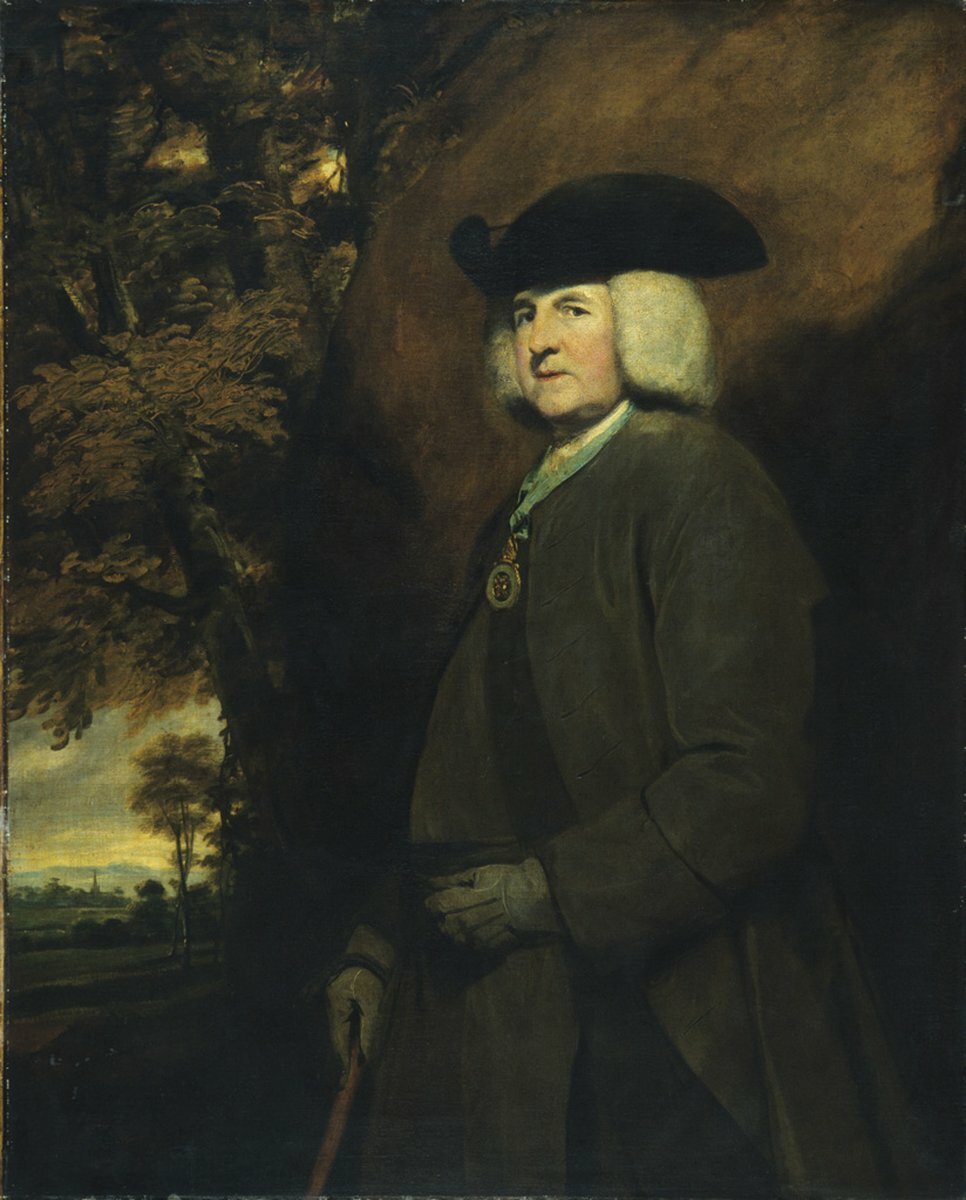
We have therefore provided the attribution to The Most Reverend and Right Honourable, The Lord Rokeby, Archbishop of Armagh & Primate of All Ireland who was born Richard Robinson. The Dictionary of Irish Biography gives a good outline to his life and times:
'...was the sixth son of Sir William Robinson (1675–1720), landowner, of Rokeby Park, Greta Bridge, Yorkshire, and Anne (d. 1730), daughter of Robert Walters of Cundall, Yorkshire. Robinson was educated at Westminster School before matriculating at Christ Church, Oxford, on 13 June 1726, where he formed an important friendship with his future patron George Stone (qv), archbishop of Armagh (1747–64). Robinson graduated BA in 1730 and MA in 1733 (and was awarded the degrees of BD and DD in 1748). He embarked upon a career in the church, where his rapid rise through the ecclesiastical ranks was facilitated by aristocratic and court connections; his younger brother, General Sir Septimus Robinson (1710–1765), was governor from 1751 to 1760 of two of George III's younger brothers (the dukes of Gloucester and Cumberland), and in 1760 was made gentleman usher of the black rod, an influential position which he held until his death. These circumstances were to play a crucial role in Robinson's appointment to the see of Armagh.
Robinson's first ecclesiastical position was as chaplain to Dr Francis Blackburn, archbishop of York, who subsequently promoted him to the rectory of Etton, Yorkshire. In 1738 he became prebendary of York, a position he held together with the vicarage of Aldborough; in 1742 Lord Rockingham presented him also to the rectory of Hutton, Yorkshire. He travelled to Ireland in 1751 as the chaplain to the lord lieutenant, the duke of Dorset (qv). Soon afterwards Robinson obtained through aristocratic influence the see of Killala (1752). While bishop of Killala, he was invited in 1757 to preach at Christ Church cathedral, Oxford, on the anniversary of the Irish rebellion; a copy of his address, which is his only surviving sermon, is in Armagh public library. In 1759 he was translated to the united sees of Leighlin and Ferns, and in 1761 to Kildare. In this year he was also appointed dean of Christ Church, Dublin. Through the patronage of Stone and the duke of Northumberland (qv) he became archbishop of Armagh and primate of Ireland in 1765.
As archbishop Robinson oversaw an ambitious programme for the improvement of the see of Armagh. Among the building works for which he was responsible were extensive repairs to the cathedral (to which he presented an organ), and the construction of the archiepiscopal palace in 1770 (to which he added a chapel in 1781), several houses for the vicars choral, and four new churches in the diocese. He subsequently endowed a new public library in Armagh, and founded a school, a county jail (1780), a public infirmary, and an observatory (1793). In 1783 he erected a marble obelisk, 114 feet high, on Knox's Hill to commemorate his friendship with the duke of Northumberland. He also built a mansion at Marlay, Co. Louth, called Rokeby Hall, where his family resided until it was abandoned in the 1798 rising. In addition he sponsored sixteen acts of ecclesiastical legislation, concerning the repair of churches, the remuneration of clergy by their successors for expenditure on property, the erection of chapels of ease in large parishes, and the encouragement of clergy to reside in their benefices.
Robinson's primacy was notable for the absence of the political involvement that had characterised the episcopacy of his predecessor. Though he served briefly as a lord justice in 1766–7 and 1787, Robinson resisted any overt political engagement in issues such as catholic relief or Church of Ireland reform. He opposed the so-called ‘popish mortgage bill’ of 1772, one of the earliest attempts to modify the penal laws, and became known – particularly in his later years – for an entrenched anti-catholic prejudice, which shaped his pessimistic outlook on Irish politics. ‘The Primate,’ wrote Lord Lieutenant Rutland (qv) in 1784, ‘with the utmost zeal for the two kingdoms, is too apt to despond; [and] his prejudices against the Roman Catholics increase his apprehensions’ (Malcomson, 26). However, he did not oppose the Catholic Relief Bill of 1778, possibly because he wished to maintain friendly relations with Dublin Castle (who favoured the measure), and to exert influence in the appointments to impending vacancies in the archbishoprics of Dublin and Cashel. Regarding the 1792 Catholic Relief Act, Robinson was reportedly anxious that the concessions would ‘endanger the Protestant interest in Ireland’, but, by now living permanently in England, he again made no active attempt to oppose the legislation (Malcomson, 35).
Robinson's career prospered beyond the ecclesiastical and political spheres. In 1765 he was appointed vice-chancellor to Dublin university by the duke of Cumberland, in which capacity he opposed the attempt of the provost, John Hely-Hutchinson (qv), to reform and modernise the curriculum. Robinson also received several civil honours: in February 1777 he was elevated to the Irish peerage as Baron Rokeby of Armagh; in 1783 he was made prelate of the Order of St Patrick; and upon the death of his elder brother, William, in 1785 he inherited the Robinson family baronetcy. Throughout the 1780s he spent an increasing amount of time in England, and from 1786 until his death he divided his time between Bath, Bristol, and London, his movements apparently dictated by deteriorating health. As he continued to resist active participation in Irish affairs, political leadership in the Church of Ireland fell largely to Charles Agar (qv), the archbishop of Cashel. Robinson died 10 October 1794 at Clifton, near Bristol, and was buried in an inscribed vault at Armagh cathedral on 18 October.
Stuart describes Robinson as ‘a man of tall stature, robust, yet of dignified form, penetrating eye, and commanding aspect’ (Stuart, 399). Though affable among friends and family, he was also described as reserved, aloof, and proud (Malcomson, 53). Robinson's most lasting legacy was the renovation of his archiepiscopal city, epitomised in the popular sobriquet ‘the builder of Armagh’, though he is also remembered for other generous bequests, one of which funded the construction of the Canterbury Gate at Christ Church, Oxford.
A collection of Robinson's letters to his cousin the writer Elizabeth Montagu are held at the Huntington Library, San Marino, California. Two portraits by Joshua Reynolds, c.1763 and c.1779, are held respectively at Christ Church, Oxford, and the Barber Institute of Fine Arts, Birmingham.'
Another portrait by Reynolds, formerly in the collection of Elizabeth Montagu and now held at the Musée des Beaux-Arts-mairie de Bordeaux, appears to depict this very Badge.
Subject to 20% VAT on Buyer’s Premium. For more information please view Terms and Conditions for Buyers.
Estimate
£30,000 to £50,000
Starting price
£30000
Watch, listen and bid as if you were in the room. Now available for auctions worldwide.
Click here to bid live
An exclusive and confidential service for the discerning collector or vendor.
View the Gallery
Download every Spink catalogue on your iPad, iPod or iPhone using free Spink app.
Download From iTunes© 2026 Spink & Son. All rights reserved.