
Auction: 26002 - Orders, Decorations and Medals
Lot: 227
Sold by Order of a Direct Descendant
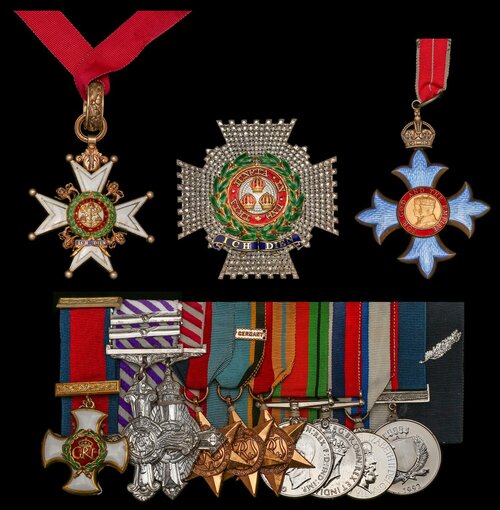
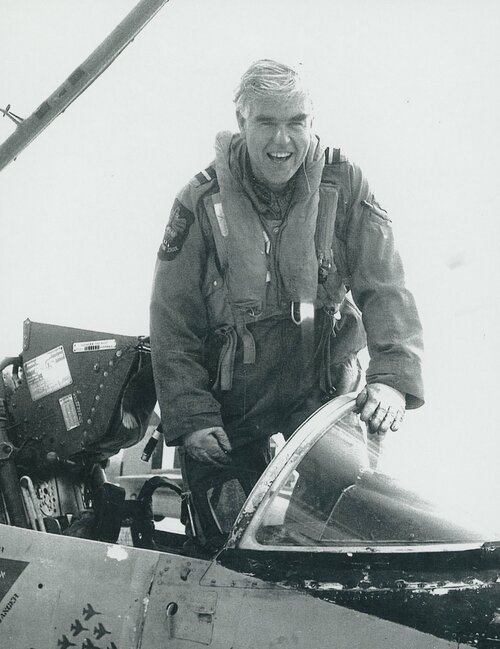
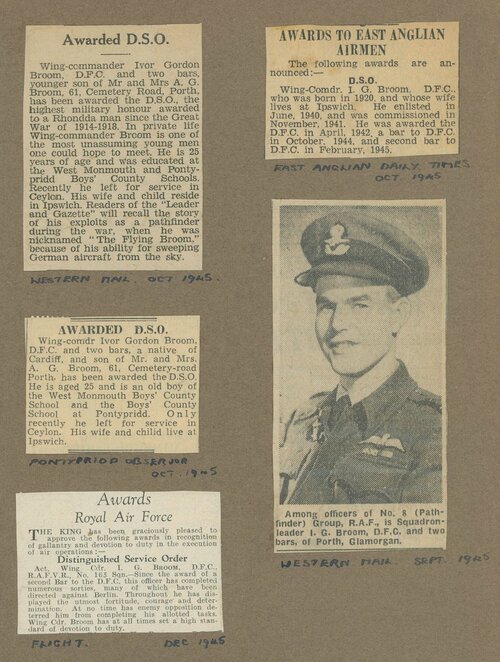
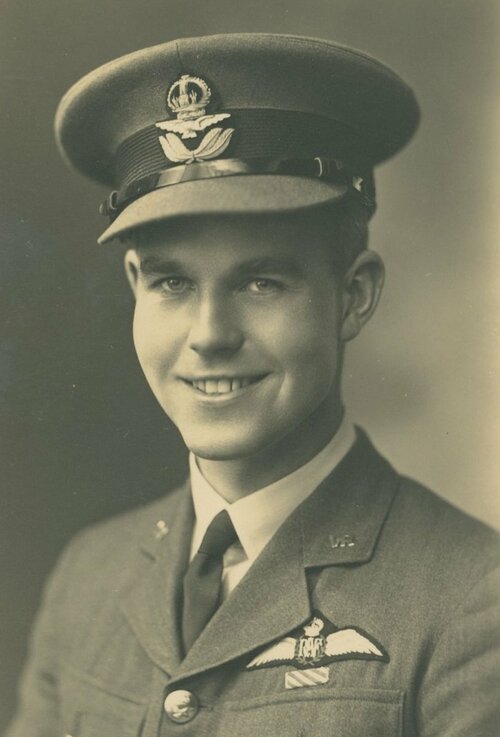
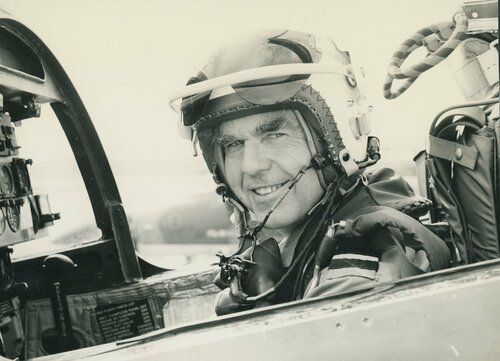
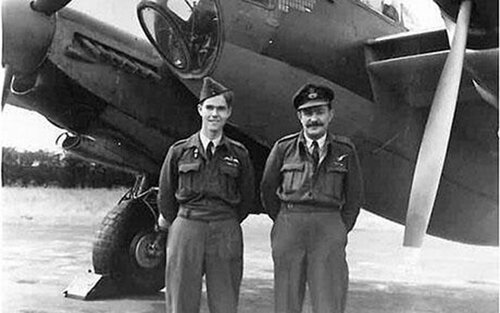
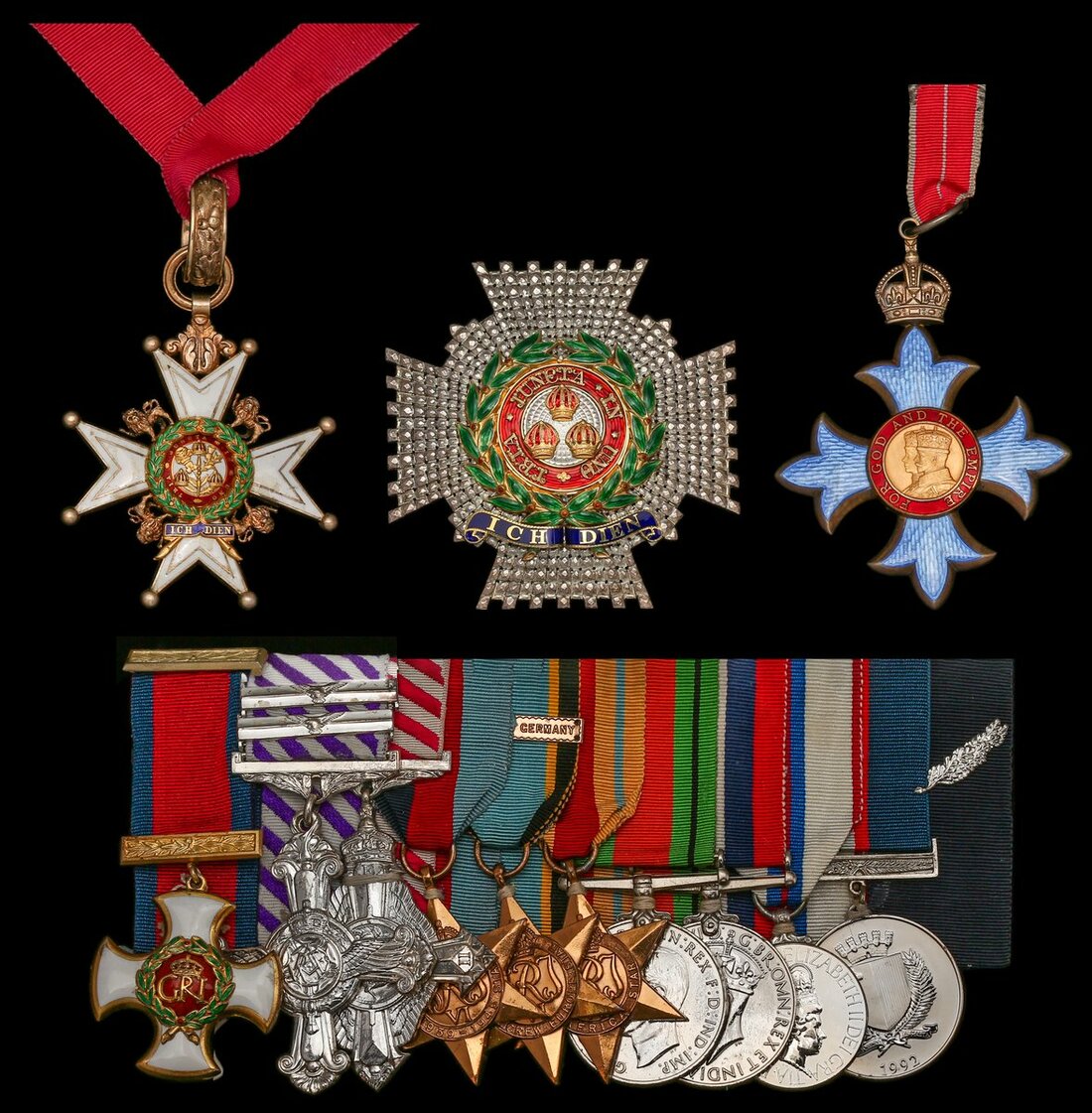
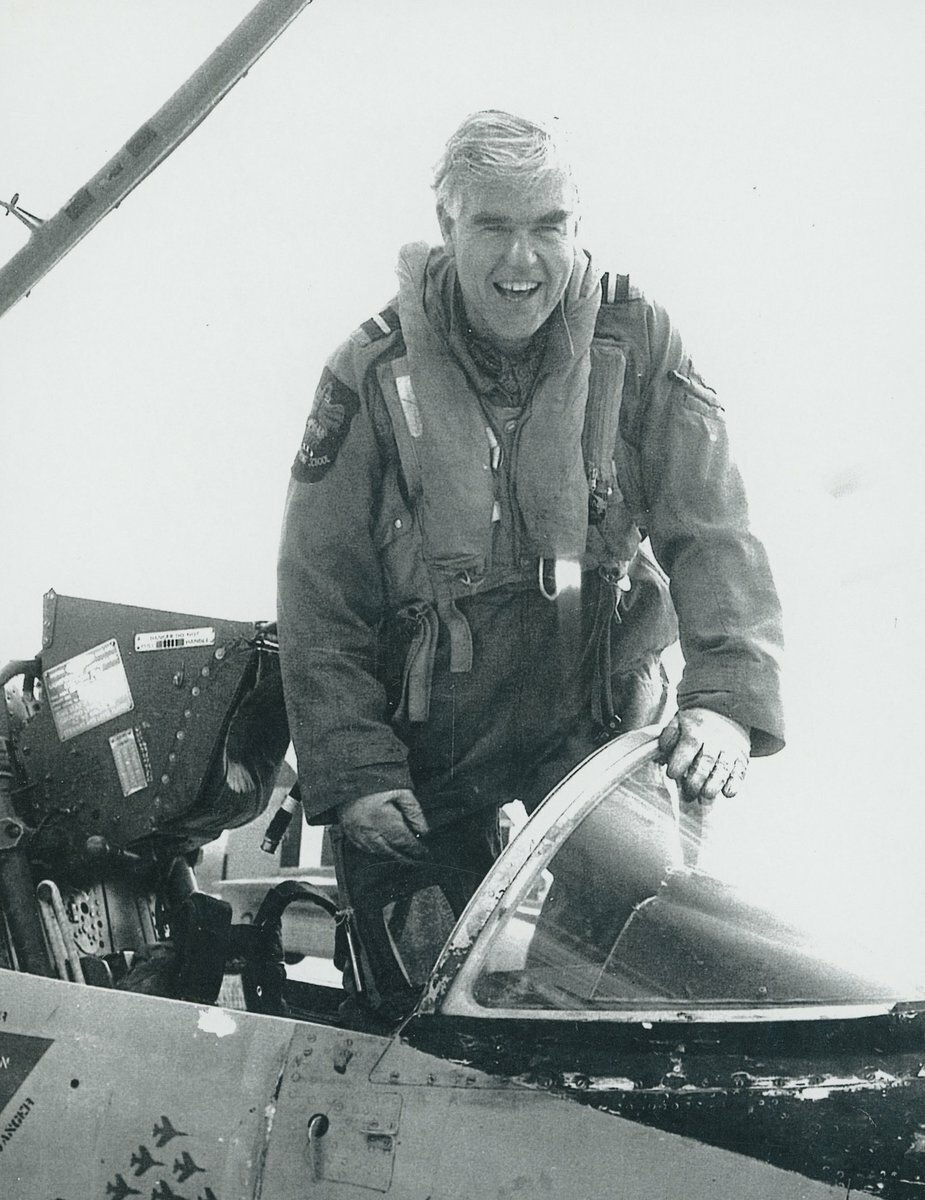
The important post-war K.C.B., C.B.E., A.F.C., Second War D.S.O., D.F.C. and Two Bars group of twelve awarded to Air Marshal Sir I. G. Broom, Royal Air Force, whose remarkable and colourful career is chronicled in the pages of Clean Sweep
A veteran of three wartime tours - and an astounding total of 103 operational sorties - he received a 'shot gun' commission in Malta after all the officer pilots in his squadron had been killed or wounded, and then undertook a spate of extremely perilous low-level attacks in Blenheims of No. 107 Squadron
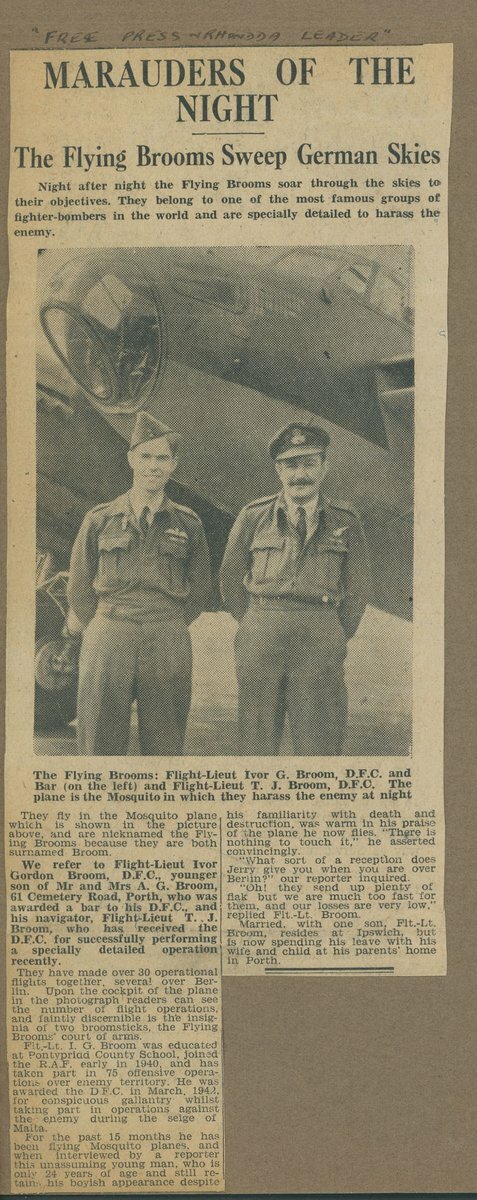
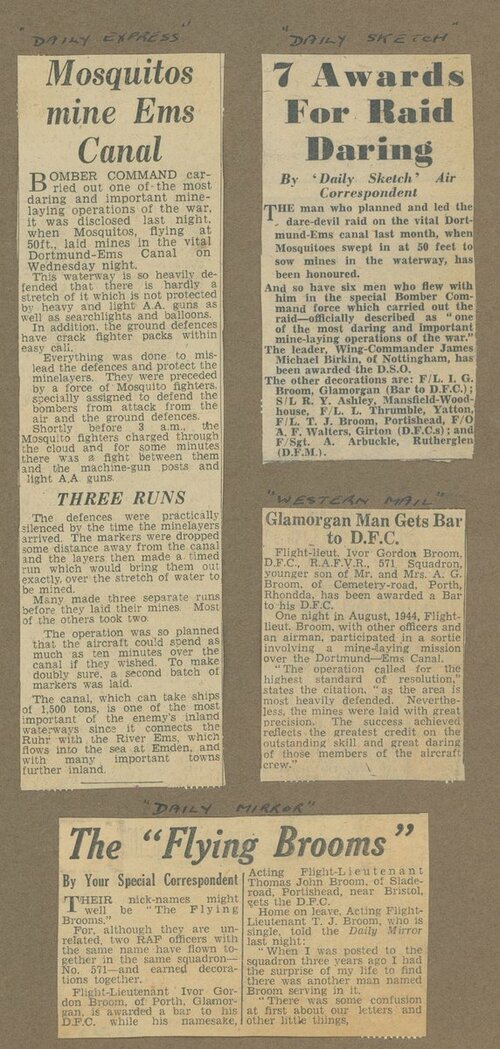
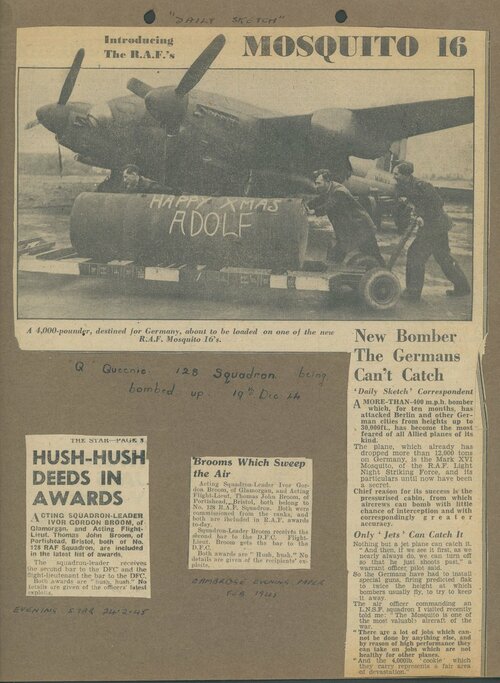
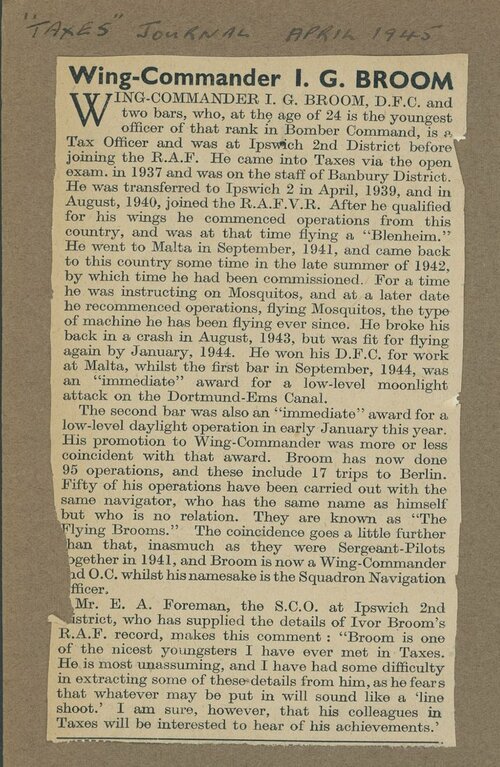
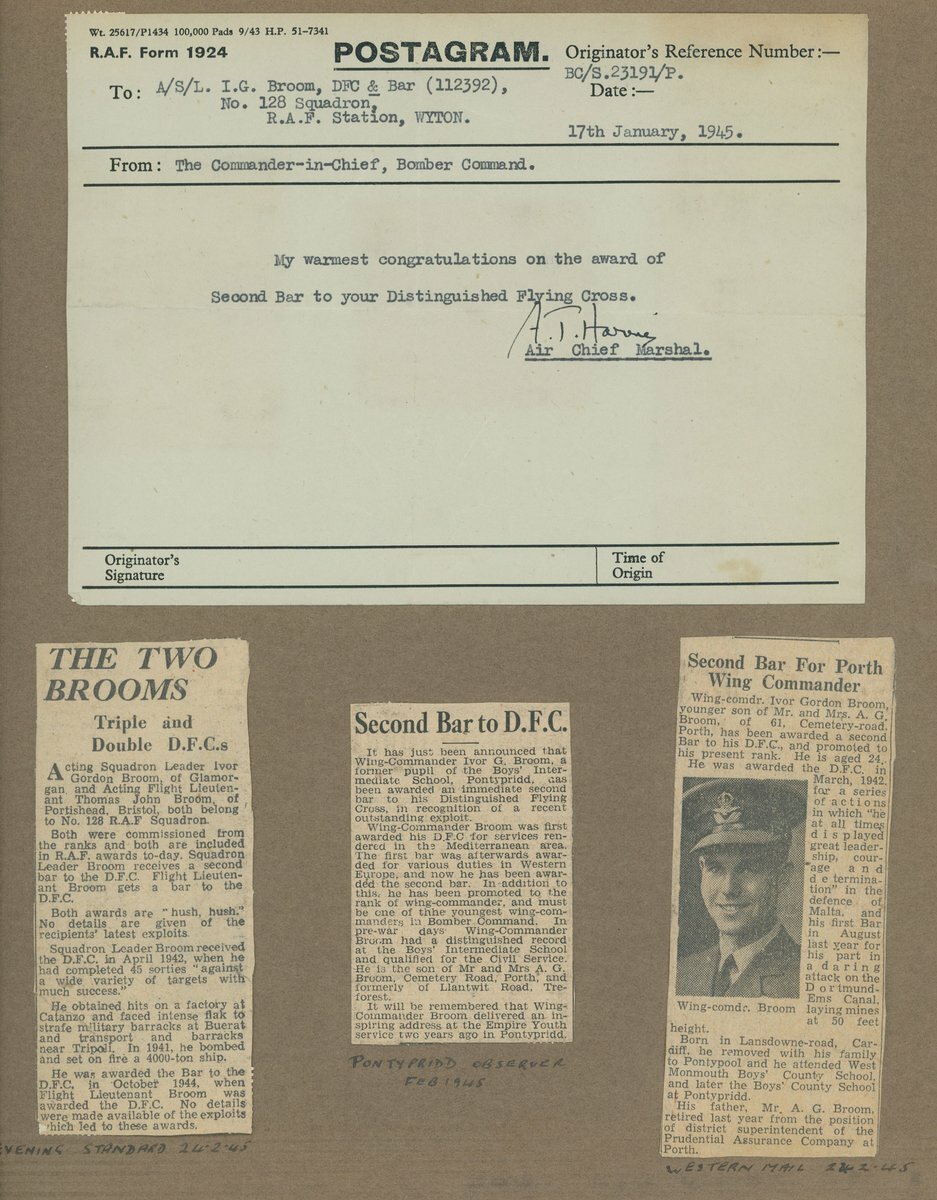
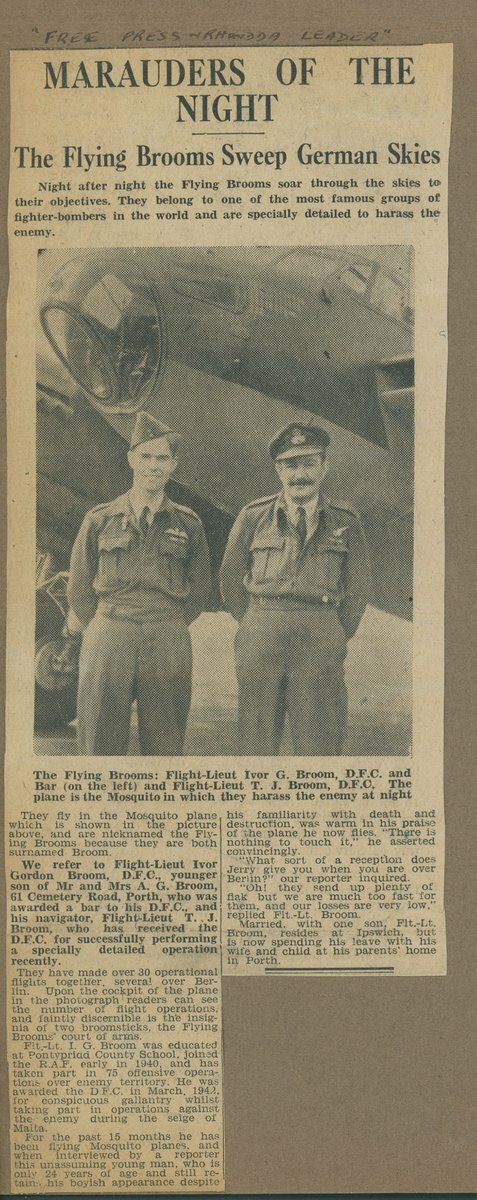
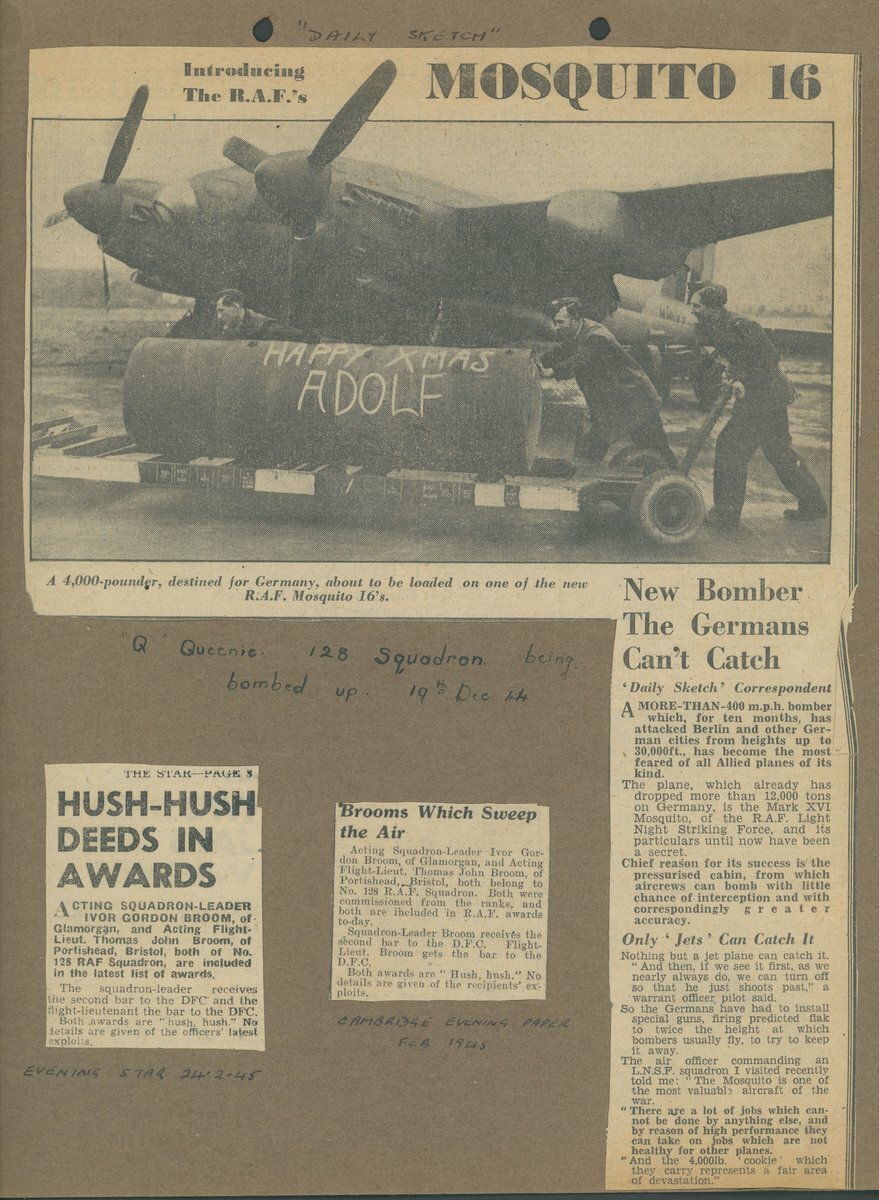
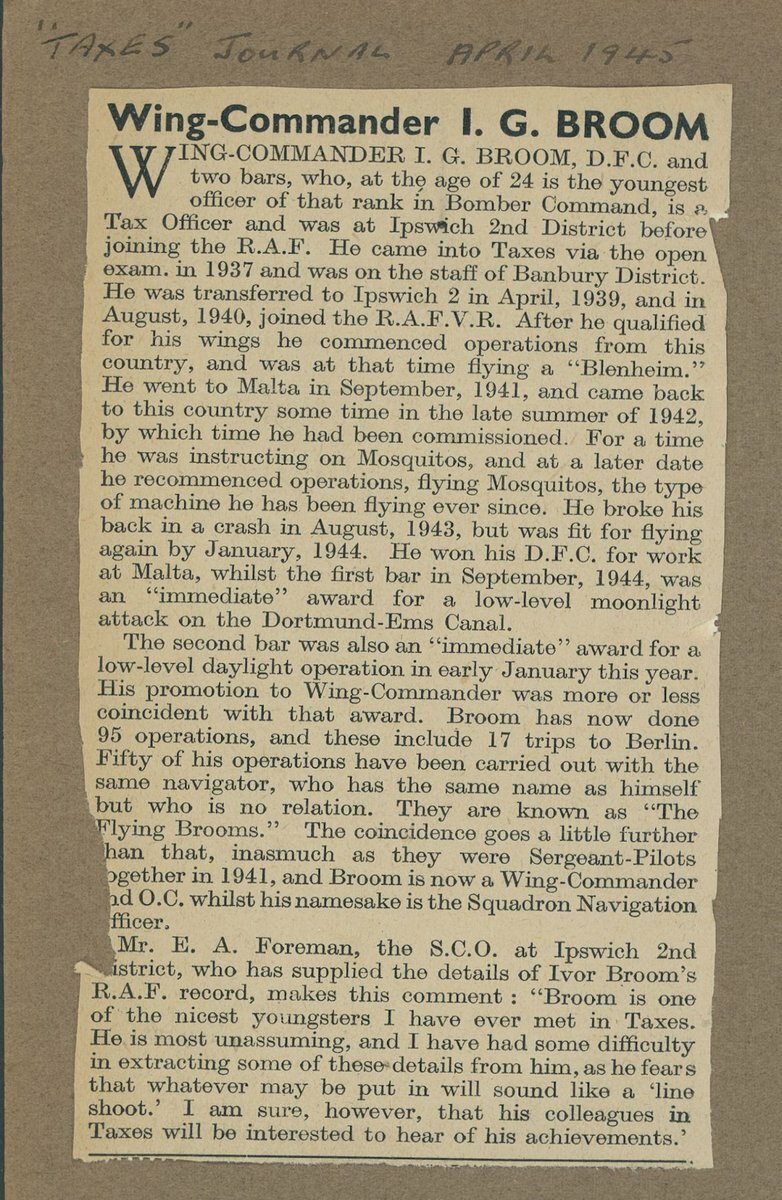
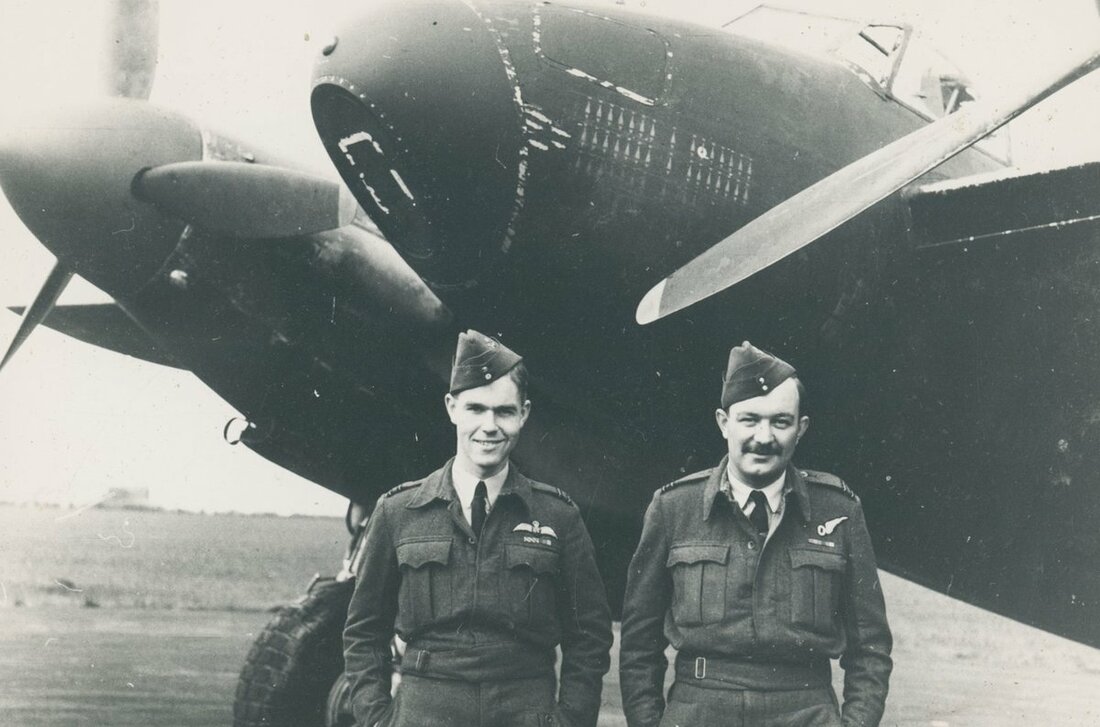
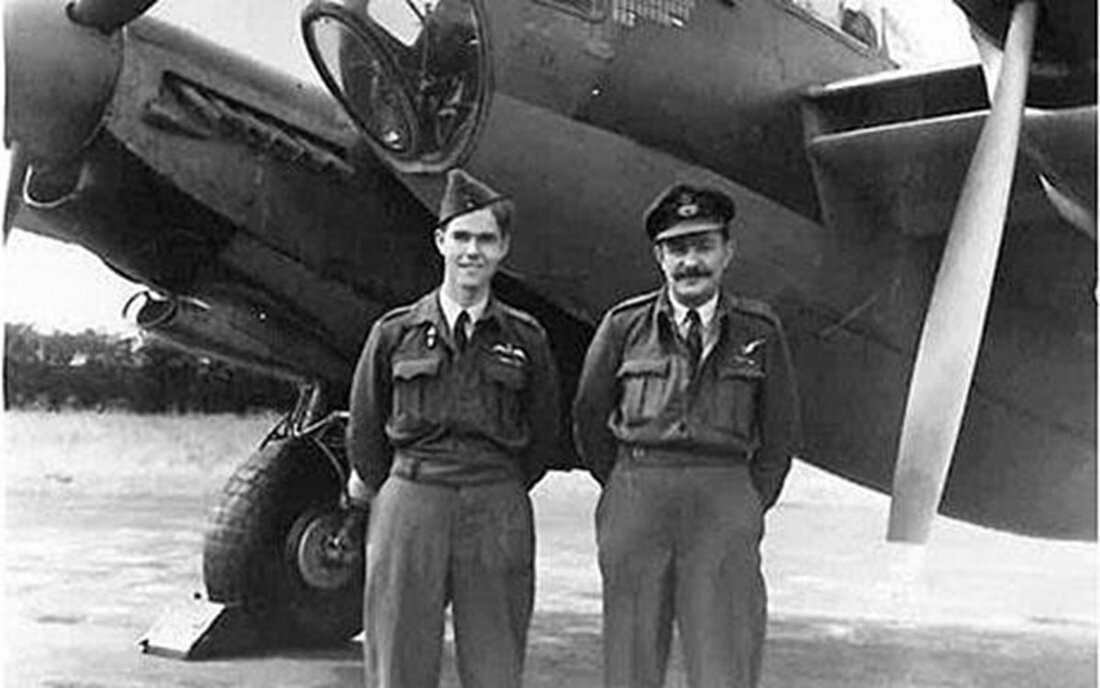
Subsequently teaming up with his namesake 'Tommy' Broom, he flew another 58 sorties in Pathfinder Mosquitos, latterly as C.O. of No. 163 Squadron, their growing fame in the Light Night Striking Force gaining them the media-inspired moniker of 'The Flying Brooms'
By the War's end, the intrepid duo had flown a hair-raising total of 22 sorties to Berlin, an extraordinary record enhanced by a precision moonlight sortie against the Dortmund-Ems Canal - in which they dropped down to 100 feet - and an equally daring attack on a railway tunnel near Kaiserslautern in January 1945, when they 'lobbed' their 4,000lb cookie into the mouth of the tunnel
Post-War, Broom added a fifth decoration to his accolades for a record flight from Ottawa to London via the North Pole in the Canberra Aries IV and held Senior Command in countering Soviet incursions of U.K. airspace
No wonder then that he was collared outside St. Clement Danes by Michael Aspel for This is Your Life in April 1995, when the Air Marshal exclaimed "Oh no! I don't believe it! I don't believe it! You rascals, this is incredible!"
The Most Honourable Order of the Bath, Military Division, Knight Commander's (K.C.B.) set of Insignia, by Garrard & Co. Ltd., London, comprising neck Badge, silver-gilt and enamel; breast Star, silver, silver-gilt and enamel, in its fitted case of issue; The Most Excellent Order of the British Empire, Military Division, Commander's (C.B.E.) neck Badge, by Garrard & Co. Ltd., London, silver-gilt and enamel, in its fitted case of issue; Distinguished Service Order, G.VI.R, the reverse of the suspension bar officially dated '1945', silver-gilt and enamel, top riband bar adapted for mounting; Distinguished Flying Cross, G.VI.R., the reverse officially dated, with Second and Third Award Bars, these officially dated '1944' and '1945'; Air Force Cross, E.II.R., the reverse officially dated '1956'; 1939-45; Air Crew Europe Star, clasp, France and Germany; Africa Star; Defence and War Medals 1939-45; Jubilee 1977; Malta Commemorative Medal 1942-92; Queen's Commendation for Valuable Services in the Air emblem, these last eleven mounted court style as worn, good very fine (Lot)
Some 15 combinations of D.S.O., D.F.C. with Second & Third Award Bars issued during the Second World War according to Maton's Honour The Air Forces. The addition of his K.C.B., C.B.E., A.F.C. & Q.C.V.S. surely make this unique.
K.C.B. London Gazette 14 June 1975.
[C.B.] London Gazette 1 June 1972.
C.B.E. London Gazette 1 January 1969.
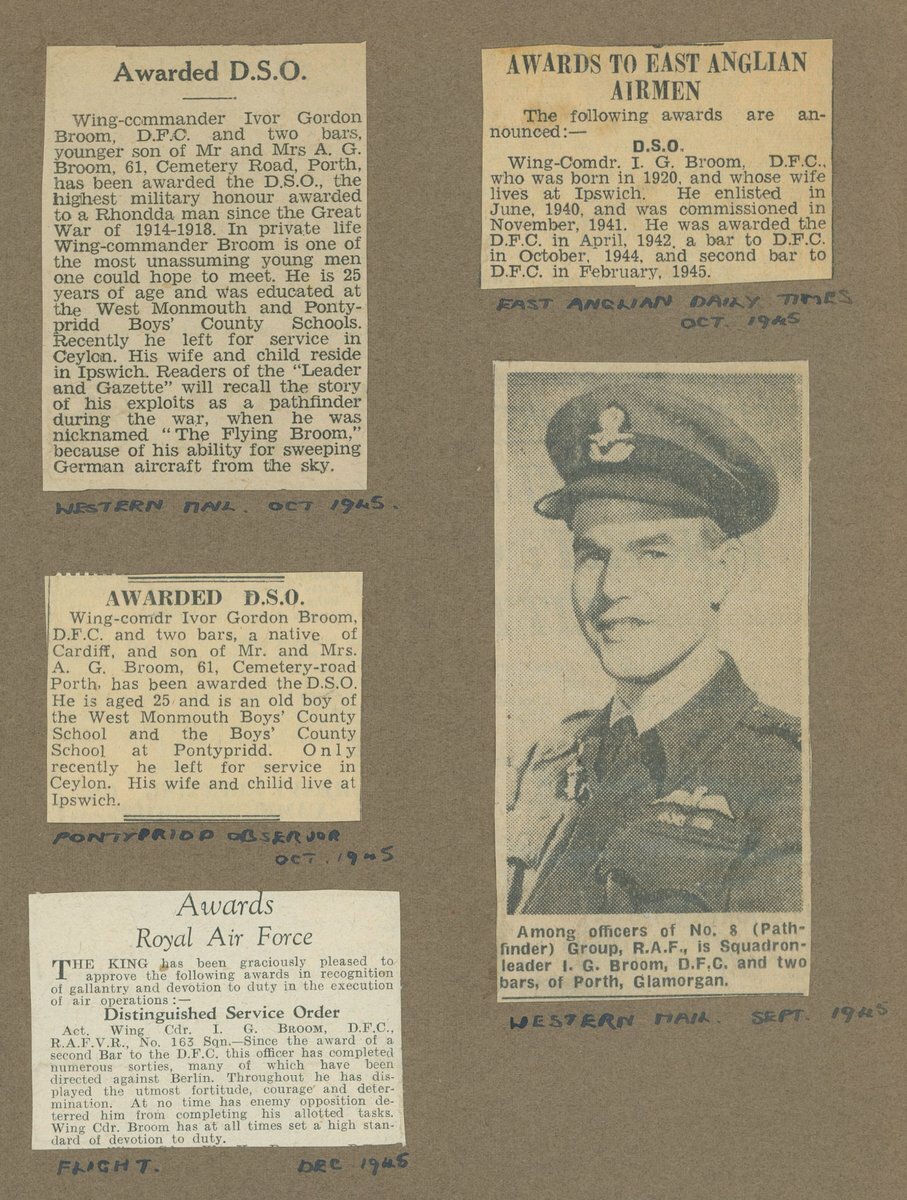
D.S.O. London Gazette 26 October 1945. The citation - at which point he had some 103 Ops to his name - states:
'Since the award of a Second Bar to the D.F.C. this officer has completed numerous sorties, many of which have been directed against Berlin. Throughout he has displayed the utmost fortitude, courage and determination.
At no time has enemy opposition deterred him from completing his allotted tasks. Wing Cdr. Broom has at all times set a high standard of devotion to duty.'
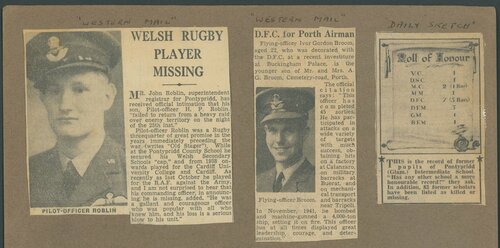
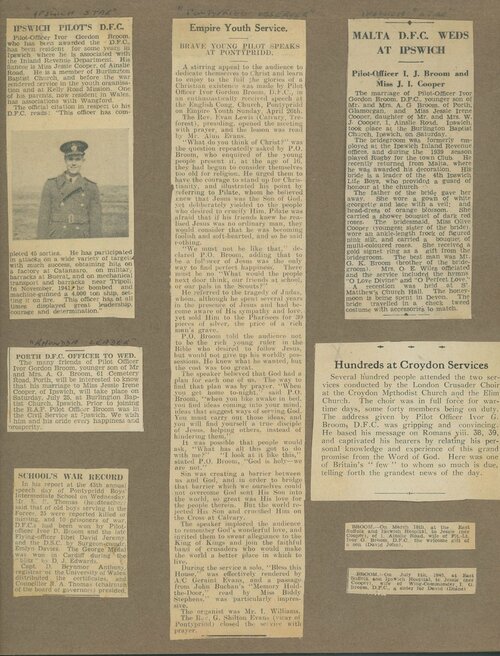
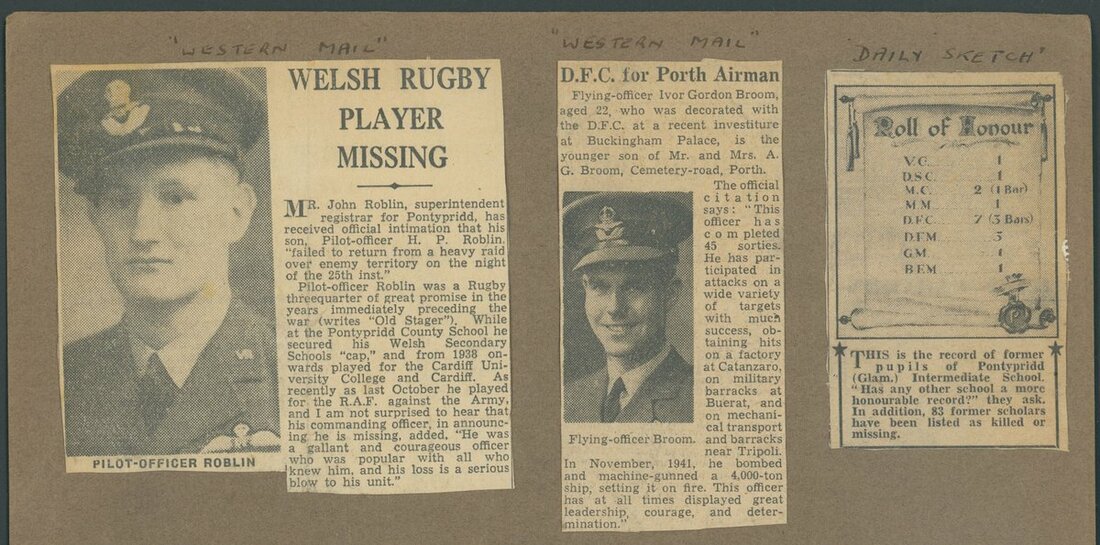
D.F.C. London Gazette 7 April 1942 (No. 107 Squadron). The citation states:
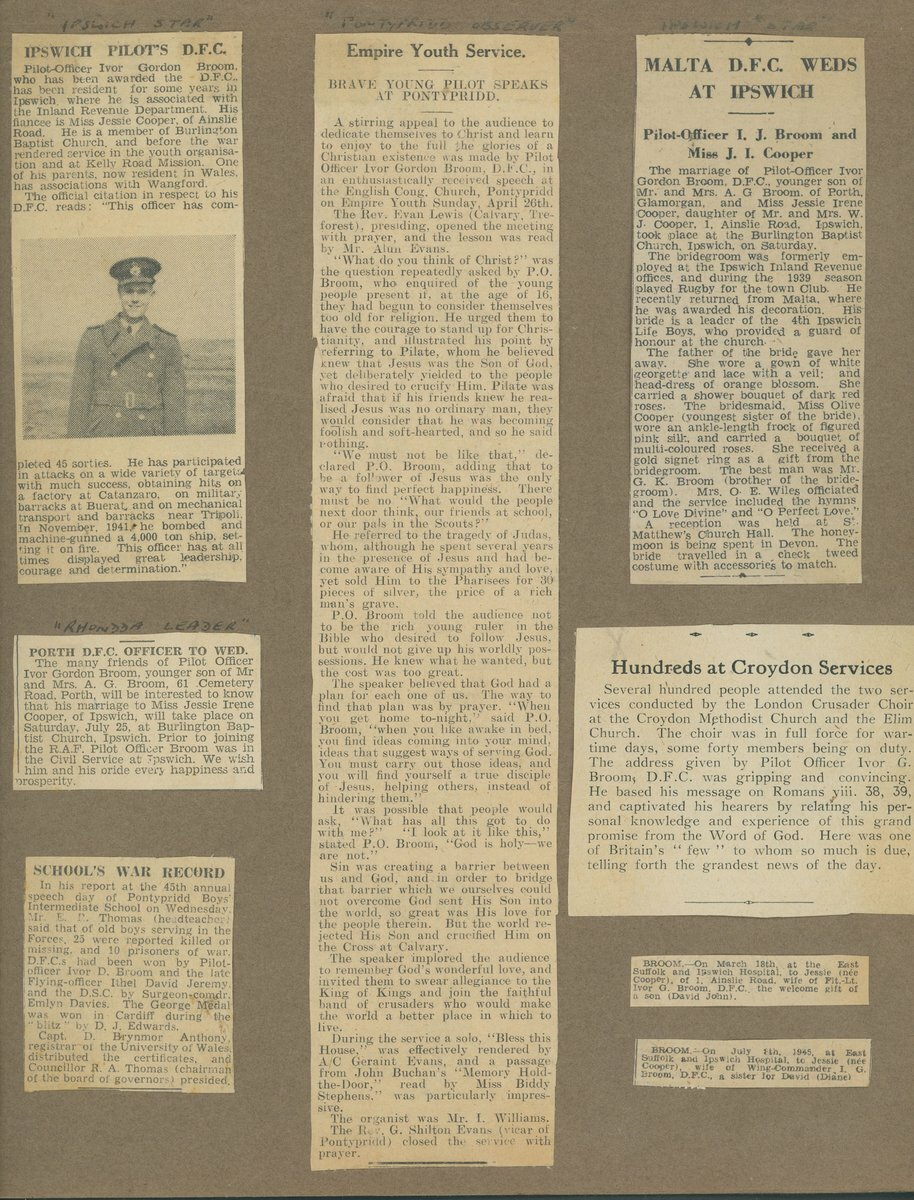
'This officer has completed 45 sorties. He has participated in attacks on a wide variety of targets with much success, obtaining hits on a factory at Catanzaro, on military barracks at Buerat, and on mechanical transport and barracks near Tripoli.
In November, 1941, he bombed and machine-gunned a 4,000 ton ship, setting it on fire. This officer has at all times displayed great leadership, courage and determination.'
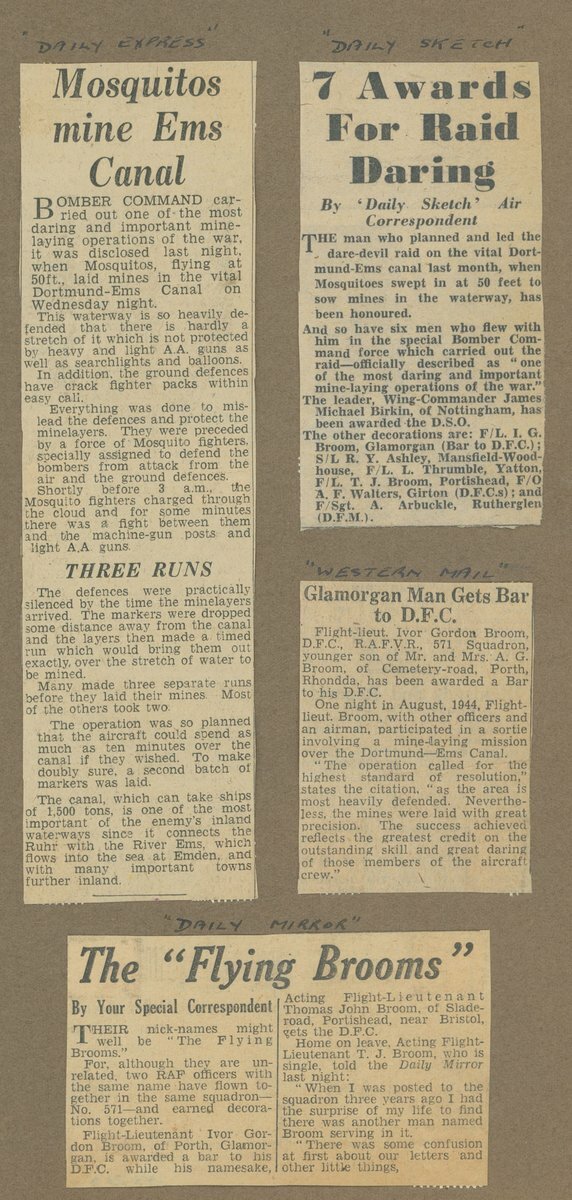
Second Award Bar to D.F.C. London Gazette 3 October 1944. The recommendation - whilst with No. 571 Squadron as part of No. 8 (Path Finder Force) Group - with some 71 Ops to his name at that time states:
'Flight Lieutenant Broom was Captain of a Mosquito aircraft detailed to lay mines in the Dortmund-Ems Canal on the night 9-10 August 1944. This mission he completed successfully with the utmost skill and daring in spite of weather conditions which were for from ideal.
He brought his aircraft down to a height of only 100 feet above the water at exactly the correct speed before releasing his mine at the place detailed. The attack was made with such swiftness and precision that the defences were surprised completely and the mine was laid before they could take action. The return from the target was made with equal skill using cloud cover and variations of height and speed to outwit the fighter and gun defences. His attack was a complete success.
This pilot has now completed 26 sorties on its second tour including 7 to Berlin. He has shown at all times a high sense of duty and leadership, and I strongly recommend him for the Immediate award of a Bar the D.F.C.'
Third Award Bar to D.F.C. London Gazette 27 February 1945. The original recommendation from No. 128 Squadron - with some 93 Ops to his name at that point - states:
'Squadron Leader Broom was the Pilot of a Mosquito aircraft detailed to place a 4000lb bomb up the mouth of a railway tunnel near Kaiserslautern on 1st January 1945, an operation requiring the greatest of skill and precision on the part of the Pilot. In spite of the fact that he was followed by two enemy fighters, this Officer, with tenacious determination, bombed his target from low level with great accuracy.
A.F.C. London Gazette 31 May 1956. The citation states:
'Wing Commander Broom has been a syndicate leader at the Flying College since December 1954.
Immediately on arrival his detailed knowledge of his aircraft, and his energy and example, combined to raise the standard of flying not only in his own syndicate, but in the College as a whole.
In spite of a number of incidents, he has always shown an enthusiasm for flying, even in the admittedly difficult position in which an instructor was placed before a dual conversion of the Canberra was made available. At the same time, his personality and originality of thought have made him an outstanding instructor on the ground in the many subjects covered in the Flying College Course.
This officer's courage, determination and skill in the air were exemplified in the highest degree in June 1955, when he piloted the Canberra "Aries 1V" on the world-record flight from Ottawa to London.
Faced by mechanical failure, which meant that he had practically no fuel reserve, and by the prospect of fog at his destination, he refused to be diverted. Shutting down one engine to conserve fuel, he carried out a confident instrument approach and made a successful landing in conditions which compelled the official observers to rely on hearing rather than sight.
Wing Commander Broom also participated as pilot of a Canberra in a series of high-latitude navigation training flights from Bodo, Northern Norway, in December 1955, for student navigators on the Flying College courses.
This officer is an outstanding pilot of modern operational aircraft and he has the determination, courage and ability to fly these aircraft to their operational limits. His high standard of personal example in the air at all times, makes him an ideal instructor to students on Flying College courses.
He has displayed great devotion to duty and has made a notable contribution to the advancement of modern aviation.'
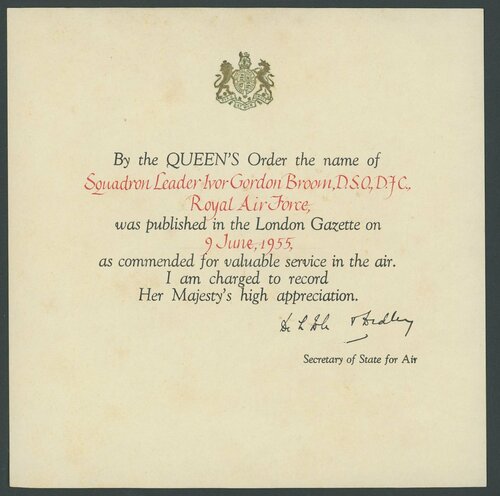
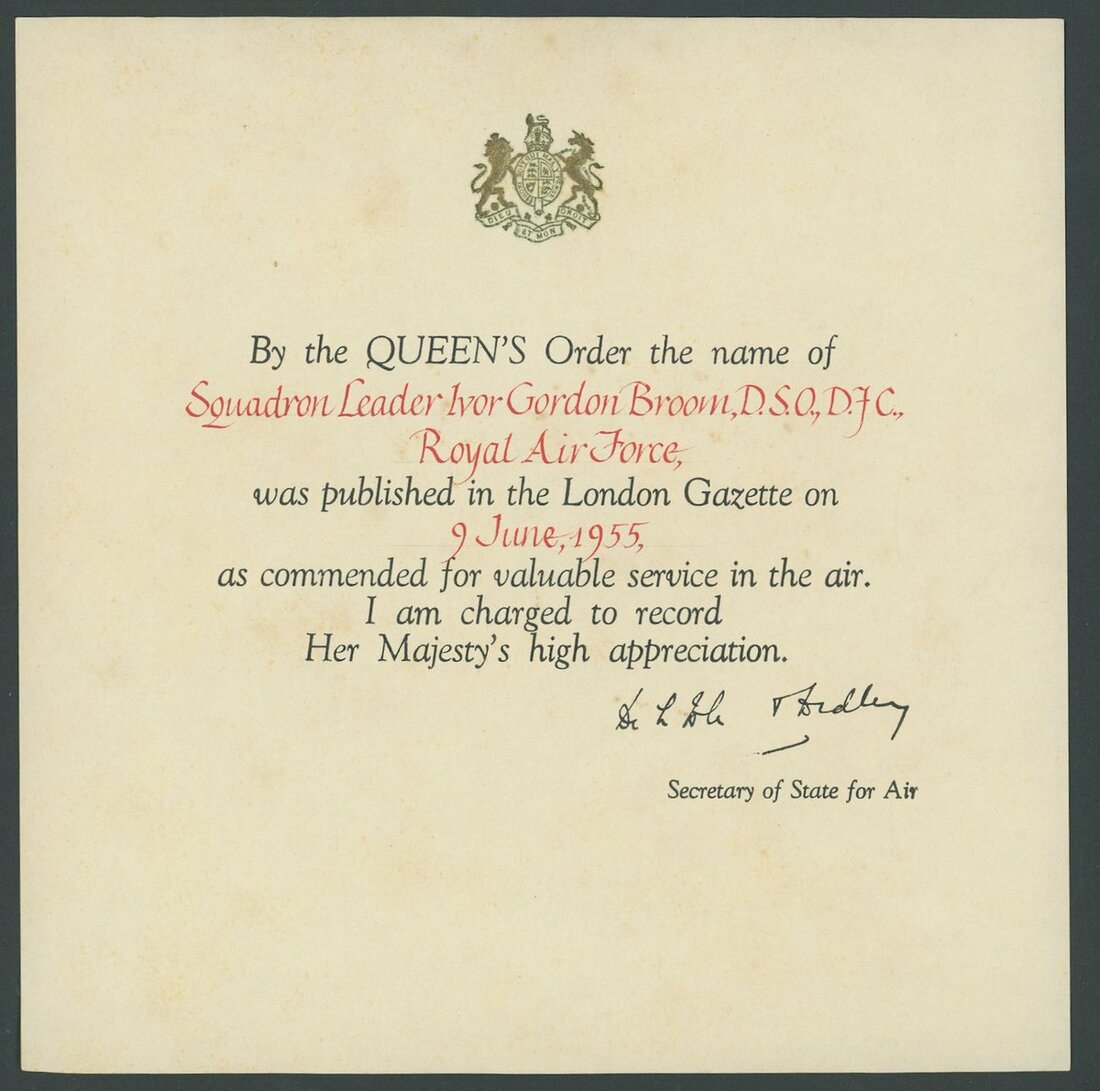
Q.C.V.S.A. London Gazette 9 June 1955.
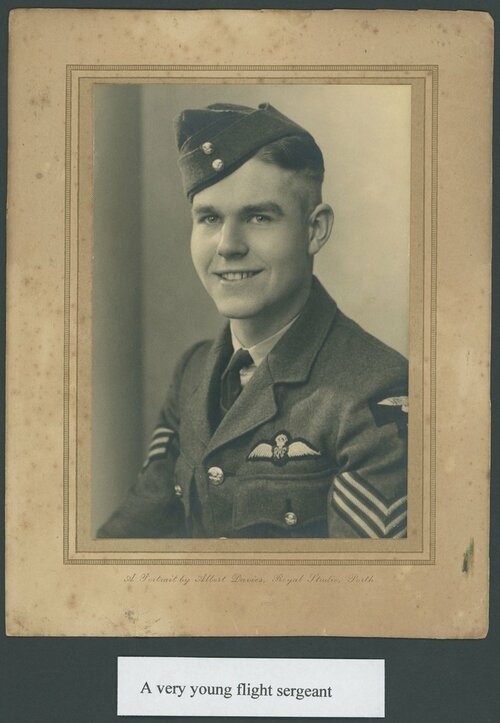
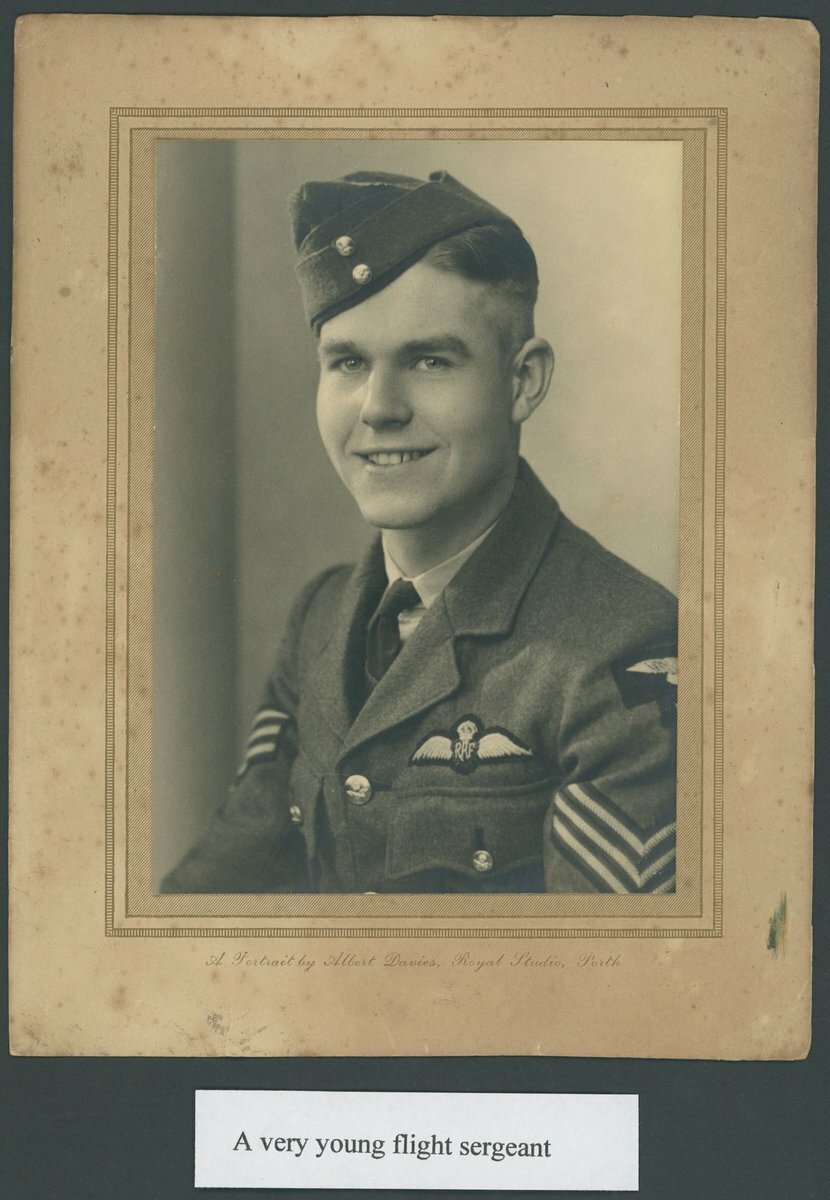
Ivor Gordon Broom was born in Cardiff, Wales on 2 June 1920 and spent much of his childhood in the Rhondda Valley, where his father worked as a district manager for the Prudential Assurance Company. Educated at the Boy's County School in Pontypridd, he passed the Civil Service Entrance Examination and secured a post as a clerical clerk, initially in Oxfordshire but later in Suffolk, where he was working on the outbreak of war in September 1939. Inspired by the sight and sound of R.A.F. aircraft setting off on operations, he enlisted in the Royal Air Force Volunteer Reserve in August 1940, aged 20.
Having then gained his 'Wings' in a Tiger Moth at White Waltham, he attended R.A.F. Cranfield, where he honed his piloting skills on Fairey Battles. Then, in July 1941, after attending an Operational Training Unit, he was posted as a Sergeant Pilot to No. 114 Squadron, a Blenheim unit operating out of R.A.F. West Raynham, Norfolk. Here, then, the commencement of his remarkable operational career.
No. 114 Squadron - Daylight Strikes - Knapsack Power Station, Cologne
The Squadron was charged with undertaking hazardous low-level daylight operations, in addition to anti-shipping strikes, against which background Broom quickly asserted himself as a skilful and aggressive pilot. Of note was the spectacular daylight strike mounted against the Knapsack Power Station in Cologne on 12 August 1941, when Broom's Blenheim was captured on camera, climbing away from the target after his bombing run. He later recalled:
'We flew at about 50 feet above the ground all the way and it was easy to tell when we crossed the Dutch border to Germany. The enthusiastic waving by the Dutch farm workers as we flew low over them was replaced by farm workers diving for cover. The reaction of the Duitch people produced a warm inward glow which brought home what the war was all about.'
Having then participated in further 'Circus' sorties and a similar daylight operation against the steel works at Ijmuiden on 21 August 1941 - and raised his tally of operational sorties to 12 - Broom was ordered to Far East.
No. 105 and No. 107 Squadrons - Malta - "We'll sort out the paperwork later"
As it transpired, Broom never got further than a stopover in Malta, where he and his Blenheim were 'hijacked' by Air Vice-Marshal Hugh Pughe Lloyd. A short spell in No. 105 Squadron ensued, his aircraft being damaged in an anti-shipping strike to Sicily on 27 September 1941, when A.A. fire shattered the instrument panel only inches from his head.
But it was in No. 107 Squadron that he undertook the majority of his 45 operational sorties from the beleaguered island. Hence a flurry of perilous low-level strikes against Axis targets on the Tunisian and Libyan coasts, in addition to anti-shipping operations in the Gulf of Sirte and elsewhere, his 'kills' including a 4,000 ship on 11 October 1941. Broom later recalled the mounting squadron casualties:
'Our losses were high - an average of one crew per ship left sinking or damaged - yet none ever questioned the job we had to do. I recall one Australian pilot with bis aircraft damaged and on fire and bound to crash, deliberately flying his crippled aircraft into the side of the ship he was attacking. Such was the calibre of the Blenheim crews.'
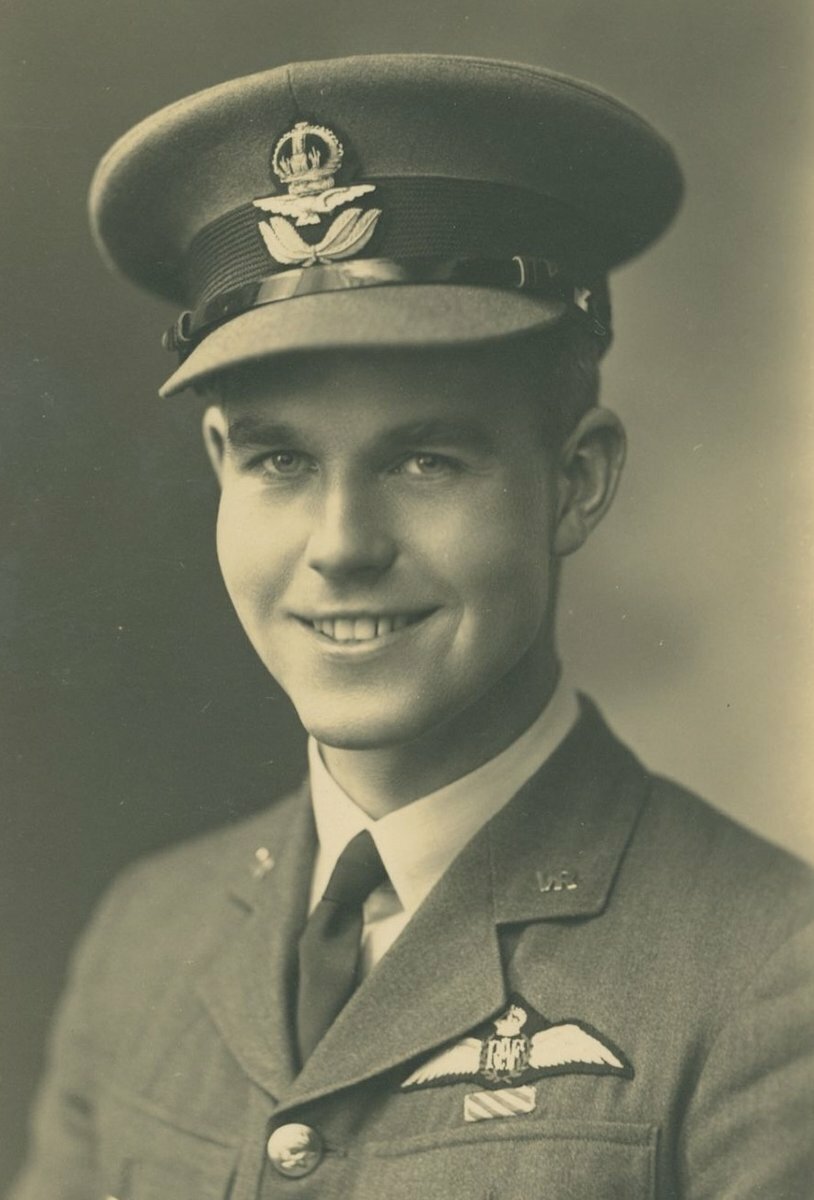
By November 1941, when most of the officers in his squadron had been killed or wounded, Broom was collared by the A.O.C., who immediately granted him a 'shot gun' commission as a Pilot Officer - "Move you kit to the Officers Mess. We'll sort the paperwork out later.' The A.O.C. also approved the recommendation for the award of Broom's first D.F.C.
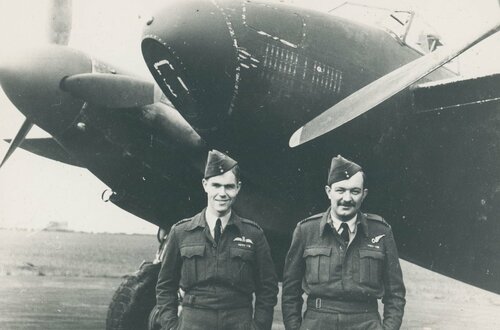
Repatriated to the U.K. in early 1942, via Egypt and West Africa, Broom served as a flying instructor, in which role he attended a Mosquito Training Unit but broke his back in a nasty crash. After several months swathed in plaster, he got airborne again and, better still, made the acquaintance of his namesake, one Flight Lieutenant 'Tommy' Broom. Thus, was born one of the enduring partnerships of the war.
Pathfinders - Light Night Striking Force - 'The Flying Brooms'
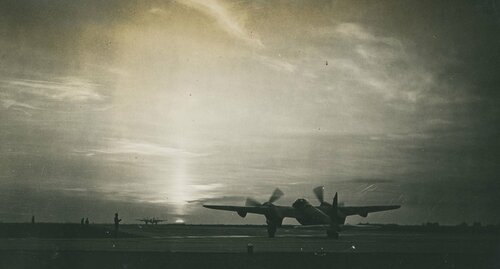
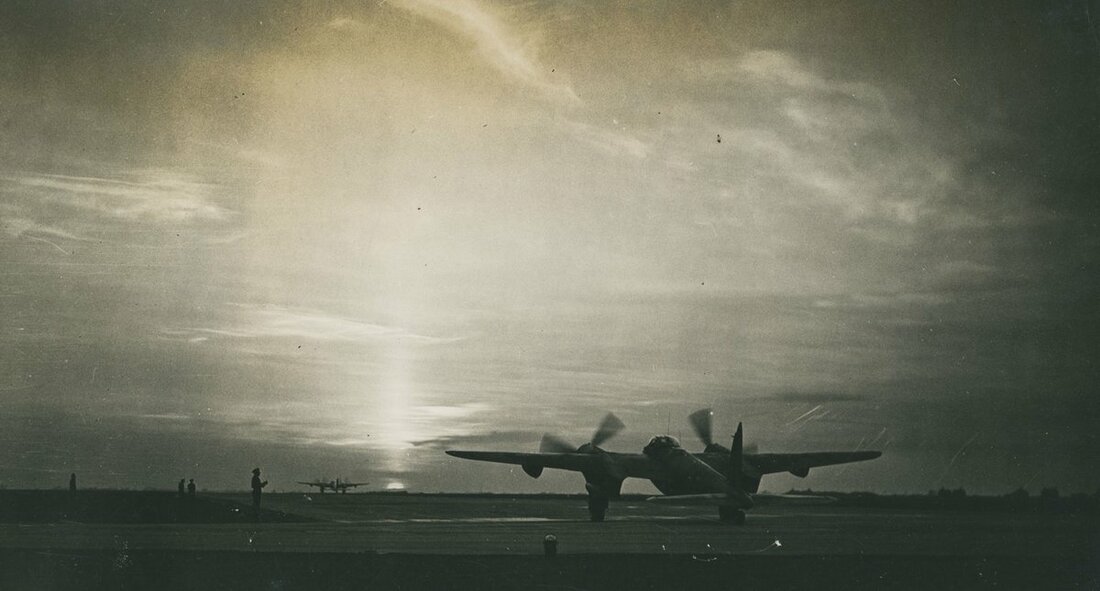
In May 1944, 'The Flying Brooms' - as they became known to fellow pilots and the press - commenced a tour of operations in Mosquito aircraft of No. 571 (P.F.F.) Squadron, a unit in Light Night Striking Force.
Briefed with precision marking and attacks - and where appropriate armed with a 4,000lb 'Cookie' - they carried out 10 sorties in the same month, four of them to Berlin, Broom noting for the first time how they were regularly coned by searchlights. Clean Sweep, by Tony Spooner, takes up the story:
'Searchlights were a perpetual annoyance and on one occasion over Berlin, they held their Mosquito for a long fourteen minutes. To avoid this exposure (and blinding light inside the aircraft), Ivor twisted and turned, dived and rose in attempts to escape their glare. When all was done and he asked Tommy for a course back to base, all Tommy could reply was "Fly West with a dash of North while I sort myself out!" '
Another memorable operation was a moonlight precision strike on the Dortmund Ems Canal on 9 August 1944, when Broom dropped to 100 or so feet to deliver his mine. Actually, it seems rather lower:
'While flying along the canal, he suddenly caught a glimpse of one of the crewmen of the barges. As his aircraft passed by at very low altitude, this man, startled by the noise, had pooped out to see what was happening outside. With the light streaming from his open door, Ivor caught a distinct, but fleeting glimpse of his head!
There can be few people serving with the Pathfinder Group of Bomber Command who came almost face to face with one of his German enemies over Germany … and lived to fly again.' (ibid).
He was recommended for a Bar to his D.F.C. and, a week later, was back on the Berlin run, his Mosquito suffering severe flak damage. So severe, in fact, that the aircraft was classified as beyond repair on making it back to Oakington.
And so the sorties continued, including further trips to the 'Big City' and attacks on such targets as Cologne, Dusseldorf, Mannheim.
Advanced to Squadron Leader in September 1944, Ivor - with Tommy in tow - was transferred to No. 128 Squadron, and between then and January 1945, they raised his tally of sorties to just over the 90-mark.
In the month of their arrival, five further trips to Berlin aside, they were detailed to such targets as Brunswick, Essen, Hannover, Nuremburg and Stuttgart, in addition to daylight raids against Duisberg and Hamborn, in which Ivor acted as formation leader.
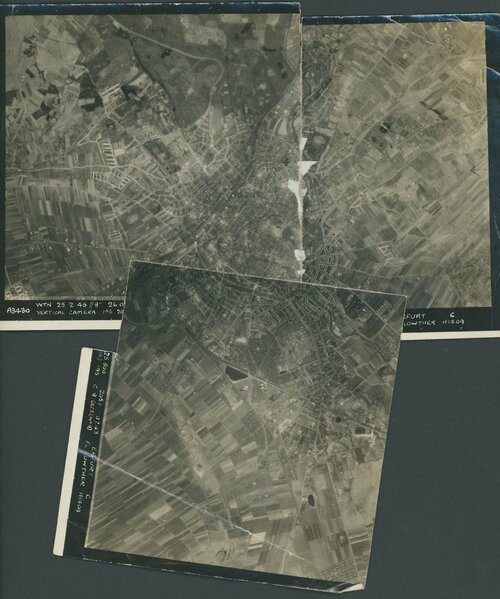
But smaller, precision targets were also on the operational agenda, one such emerging at the time of the Ardennes offensive, when 'The Flying Brooms' were detailed to attack a vital railway tunnel near Kaiserslautern on New Year's Day 1945. It was a classic trip, captured on film, the pair of them signalling 'Happy New Year' after lobbing their 'Cookie' into the tunnel entrance, immediately behind a locomotive. Pathfinder chief 'Don' Bennett was delighted and invited Ivor to dinner, followed by a viewing of prints taken from his gun camera footage. On closer inspection, Ivor noted two black dots hovering in the background, and asked Bennett if he knew what they were - "Fw. 190s" came the reply. It was another close shave.
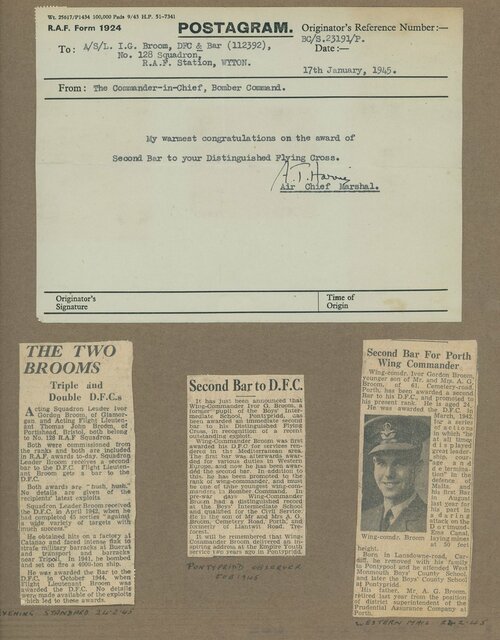
He was awarded a Second Bar to his D.F.C.
Having then left their usual 4.000lb calling card on Berlin for the sixteenth time, pilot and navigator were posted No. 163 Squadron in February 1945, for Ivor having been promoted to Wing Commander and given his first squadron command.
The war in Europe was entering its final stages but 'The Flying Brooms' was as keen as ever to get to grips with the enemy, even after Ivor notched up his 100th operational sortie. And so the 'Big City' received six further visits, in addition to Hannover and Magdeburg.
And on returning from his final mission on 18 April 1945 - his 103rd sortie - he was recommended for the D.S.O., whilst Tommy collected his third D.F.C.
Record Flight - The Cold War - Air Marshal
After VE Day, Broom was posted to Ceylon in readiness for further action, but the Japanese surrender intervened and he was posted to Singapore to take command of No. 28 Squadron, a Spitfire unit.
Having then been compelled to drop rank to attend staff college, he was re-appointed Squadron Leader and in April 1953 helped form No. 57 Squadron, one of the first to be equipped with English Electric Canberra jets. Next attending the R.A.F. Flying College at Manby, Broom made his celebrated record-breaking flight from Ottawa to London - via the North Pole - in 1955, piloting the specially modified Canberra Aries IV. He was awarded the A.F.C.
Broom - by now a substantive Wing Commander - next commanded the Bomber Command Development Unit at Wittering, in which role he led intensive trials for the fledgling nuclear deterrent V-Force. Subsequent appointments included attendance of the Imperial Defence Collage and a spell as Commandant of the Central Flying School, in which he suffered leg injuries in a 'prang'.
Promoted to Group Captain in July 1960 and to Air Commodore in July 1965, he was awarded the C.B.E. in the New Year's Honours List in 1969.
Then in 1970, he assumed command of No. 11 Fighter Group, at a time when Soviet Bear (Tu 95) aircraft were making reconnaissance incursions over Iceland and the Faroes. To ensure he was always in contact with H.Q. when pursuing his passion for golf, he rigged up a radio to his golf bag. One Saturday, he was summoned from the golf course at Stanmore, Middlesex, two Soviet aircraft having appeared over the North Sea. The 'Bears' approached St. Andrews, where the Open was in progress, but eventually turned back when about 15 miles from the coast; Broom resumed his game.
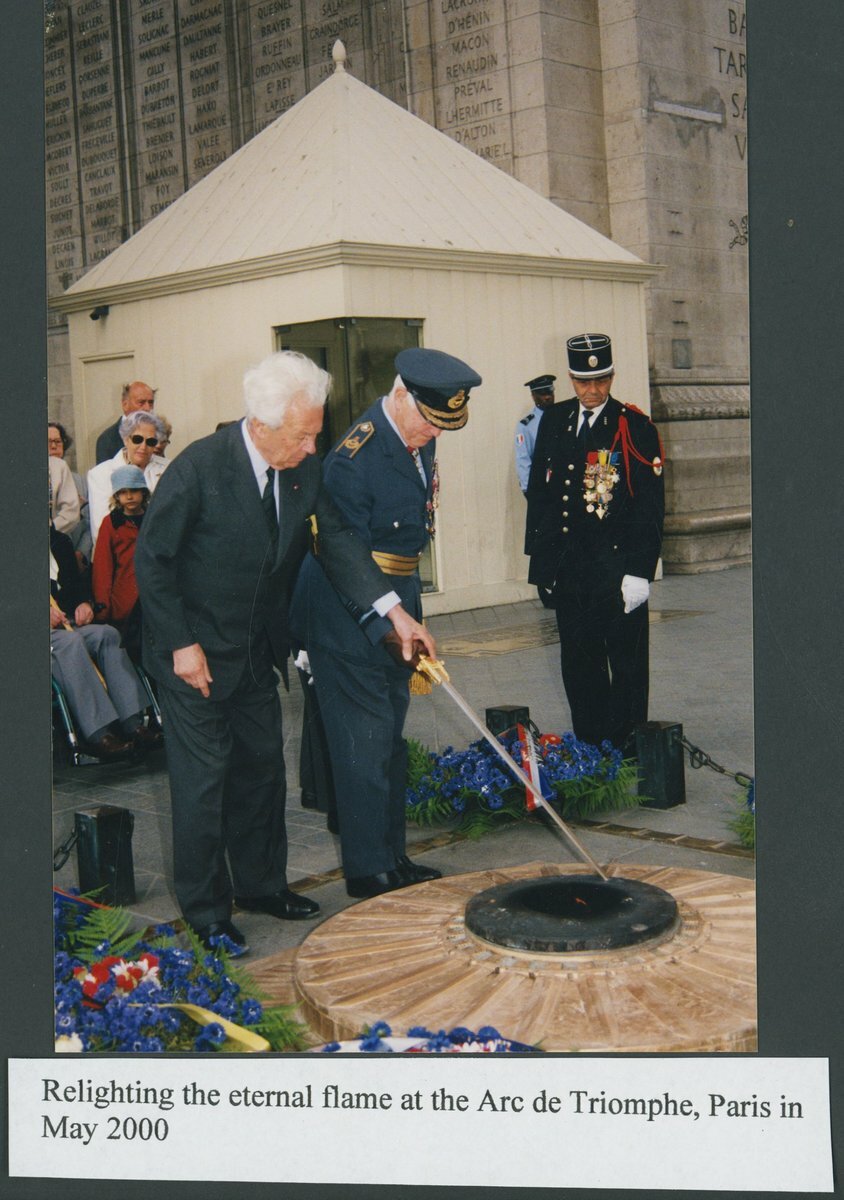
Advanced to Air Vice-Marshal and awarded the C.B. in the New Year's Honours List in 1972, his career culminated with an appointment as Controller of the National Air Traffic Services (N.A.T.S.), in which his leadership improved safety during a boom of air travel. He was confirmed in the rank of Air Marshal in May 1974 and appointed K.C.B. in the Birthday Honors List in 1975.
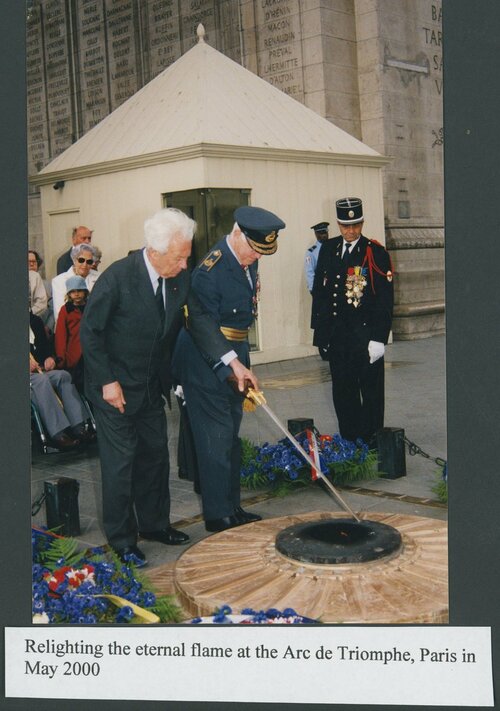
Following his retirement in July 1977, Broom remained closely linked to the world of aviation and was a stalwart supporter of R.A.F. and other charities. And he appeared in Thames TV's This is Your Life in April 1995. The Air Marshal - undoubtedly an 'R.A.F. Great' - died at Rickmansworth, Hertfordshire in January 2003, aged 82.
Sold with an impressive archive of original documentation and photographs, comprising:
(i)
A complete run of the recipient's R.A.F. Pilot's Flying Log Books (4), covering the periods 15 October 1940 to 31 July 1943, 1 August 1943 to 9 March 1953, 28 April 1953 to 4 June 1962 and 31 August 1962 to 28 November 1972, this last followed by numerous private entries and ending with a flight on 16 April 1998, with occasional pasted-down photographs, the whole bound as a single volume in blue buckram covers with gilt title 'L. G. Broom'.
(ii)
Central Chancery investiture letter, dated 30 April 1943, together with related admittance ticket.
(iii)
The warrants for his C.B.E., dated 1 January 1969, and C.B., dated 1 January 1972, the last with related Central Chancery correspondence.
(iv)
The certificate for his Queen's Commendation for Valuable Service in the Air, dated 9 June 1955.
(v)
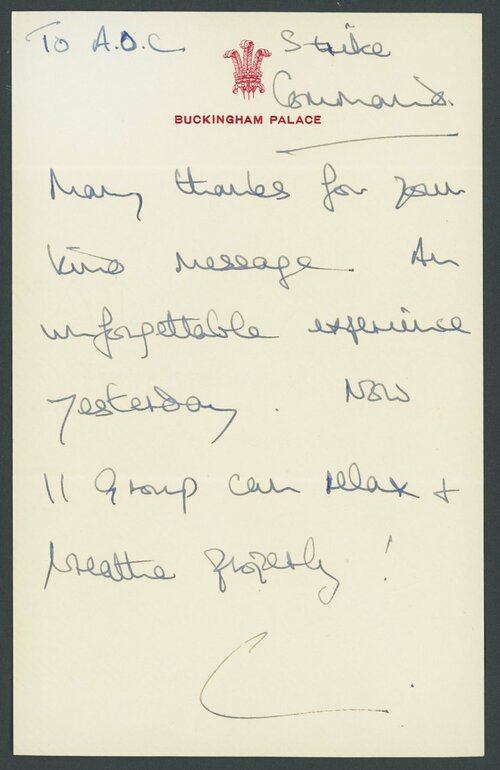
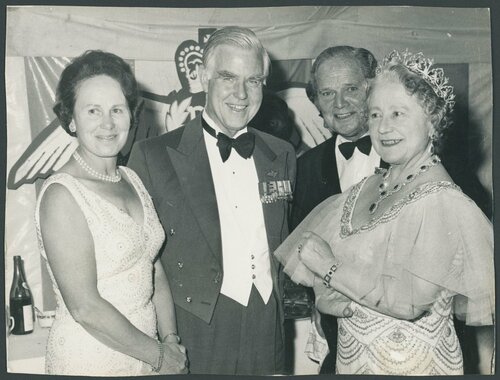
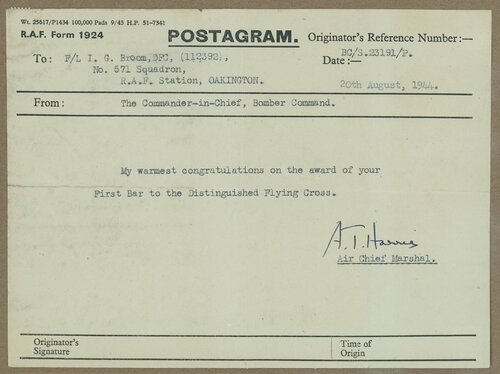
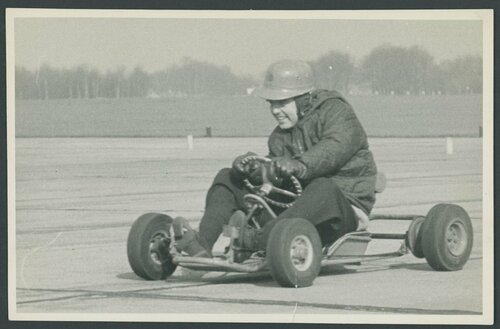
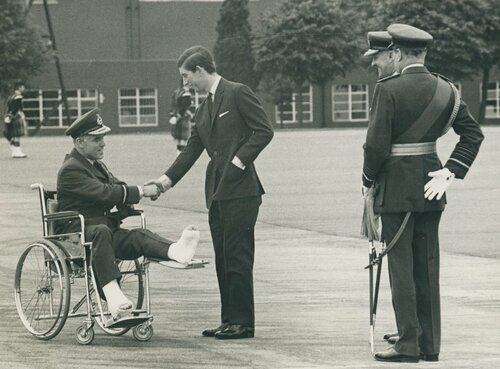
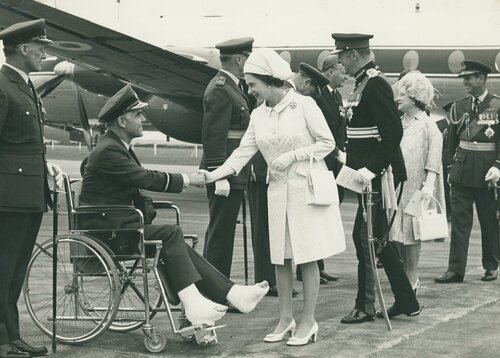
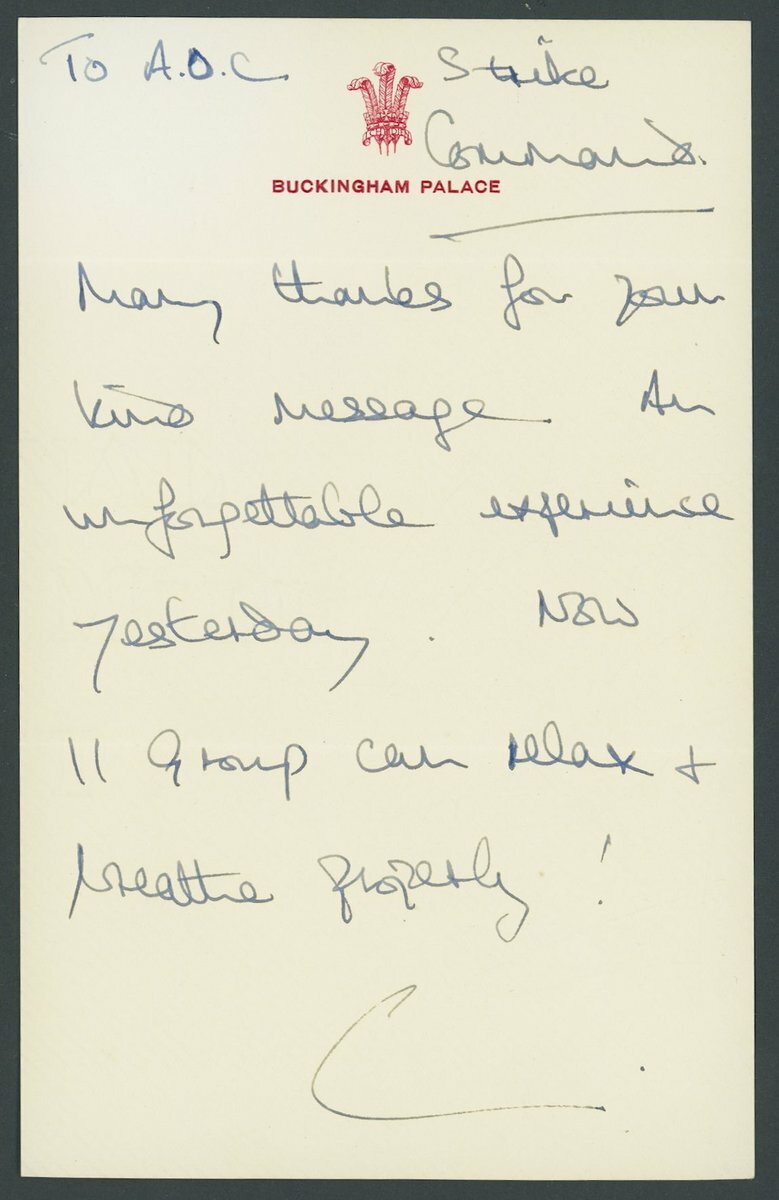
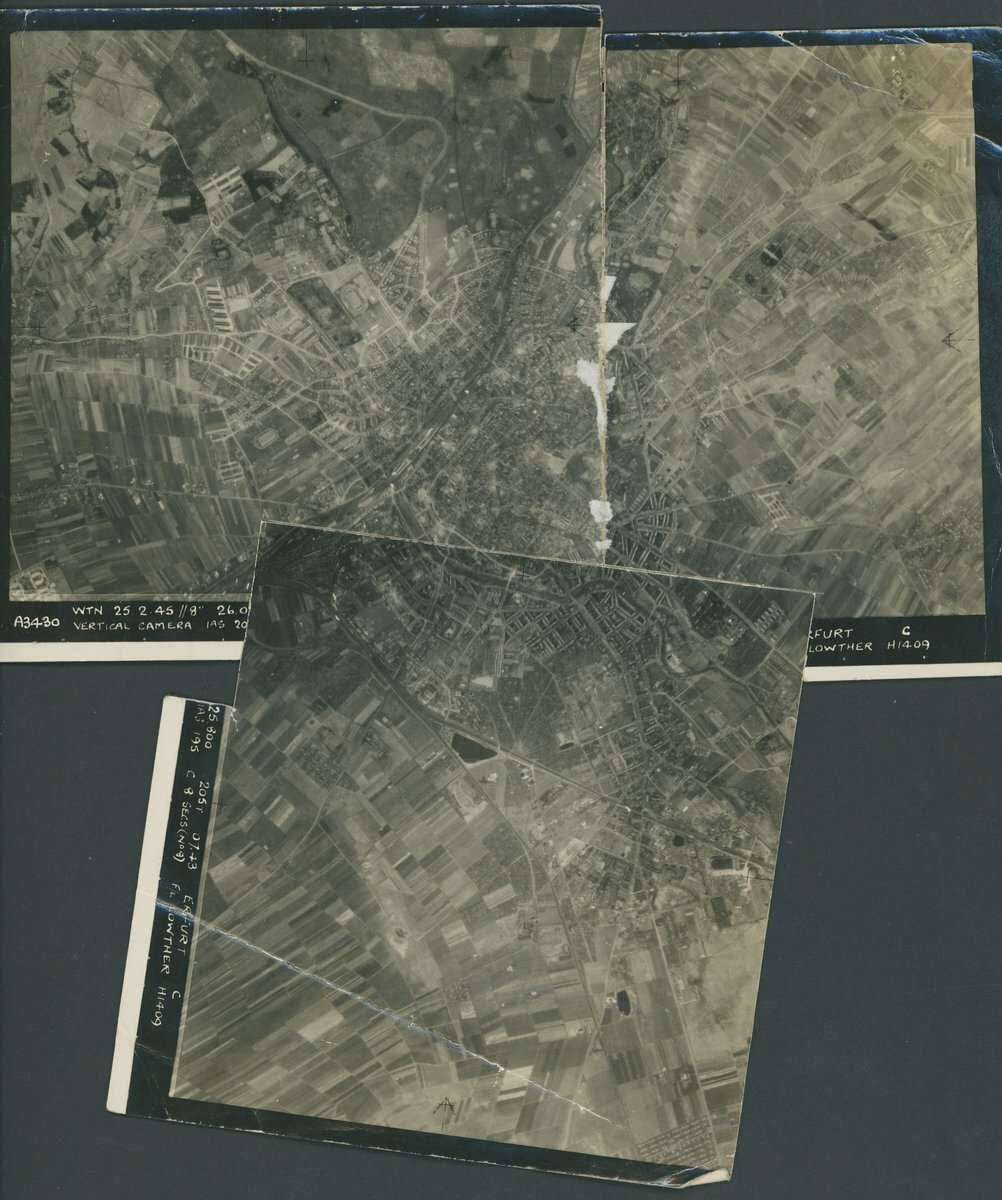
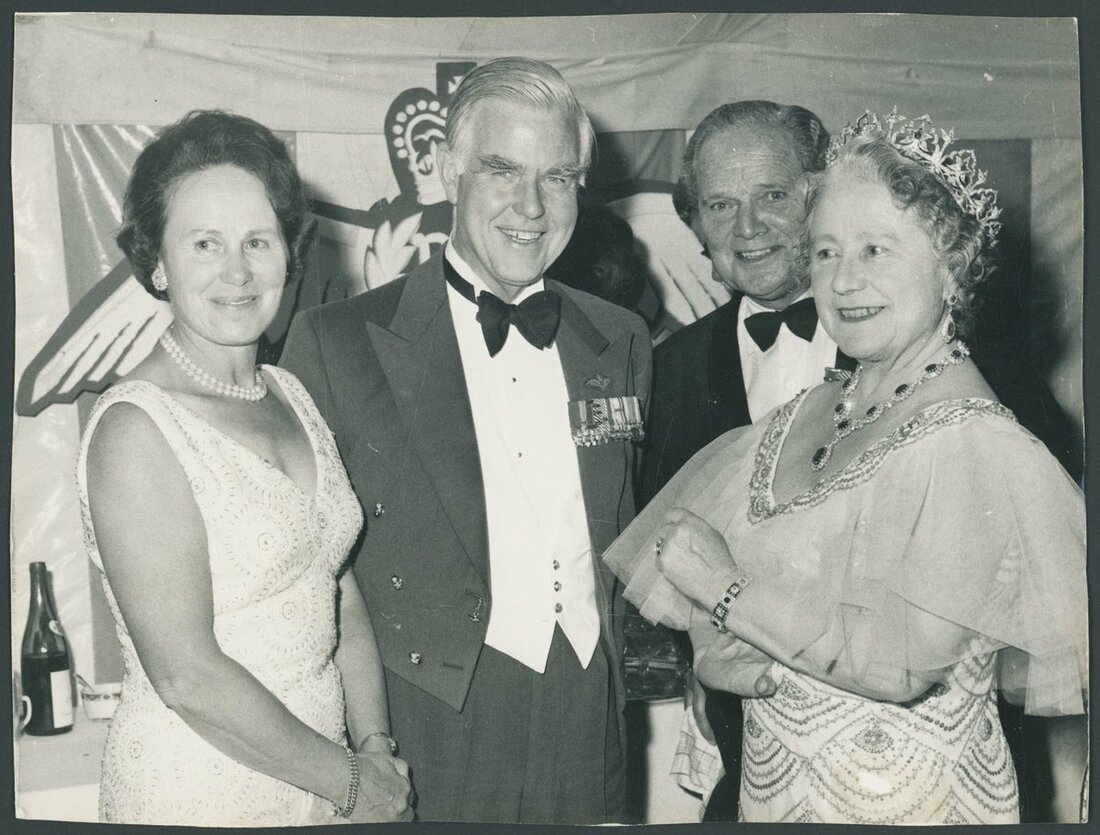
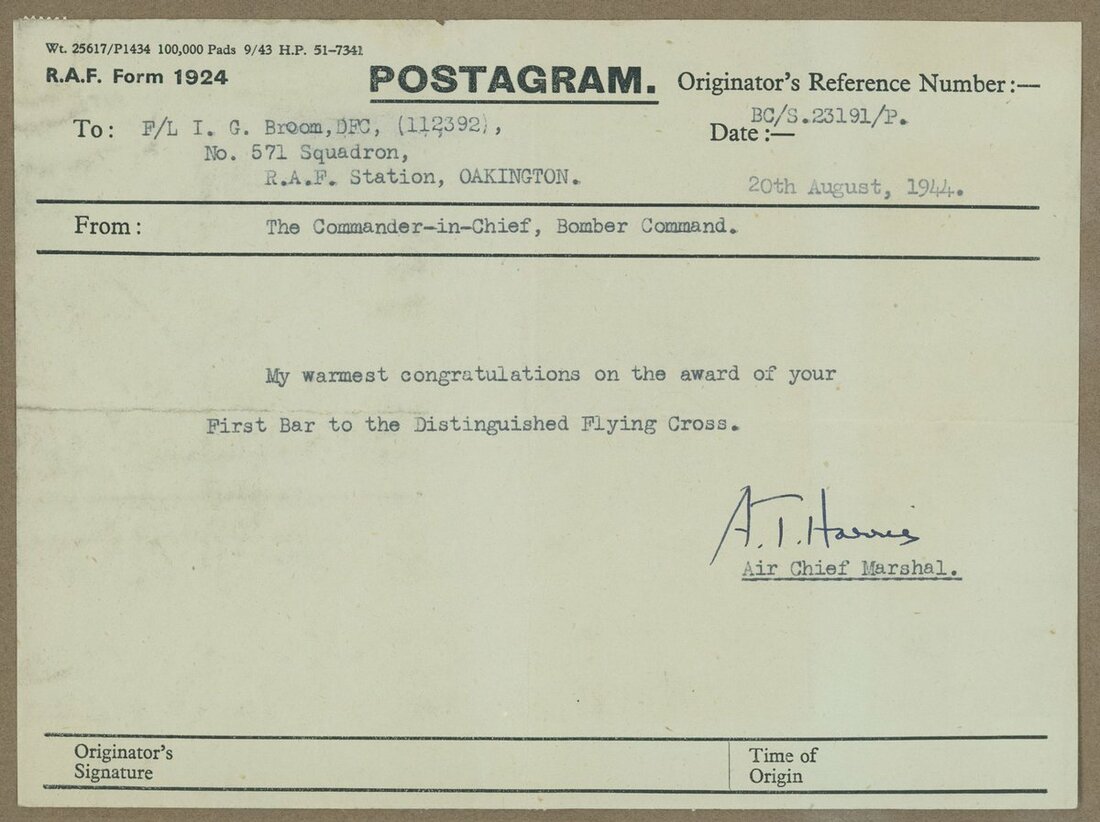
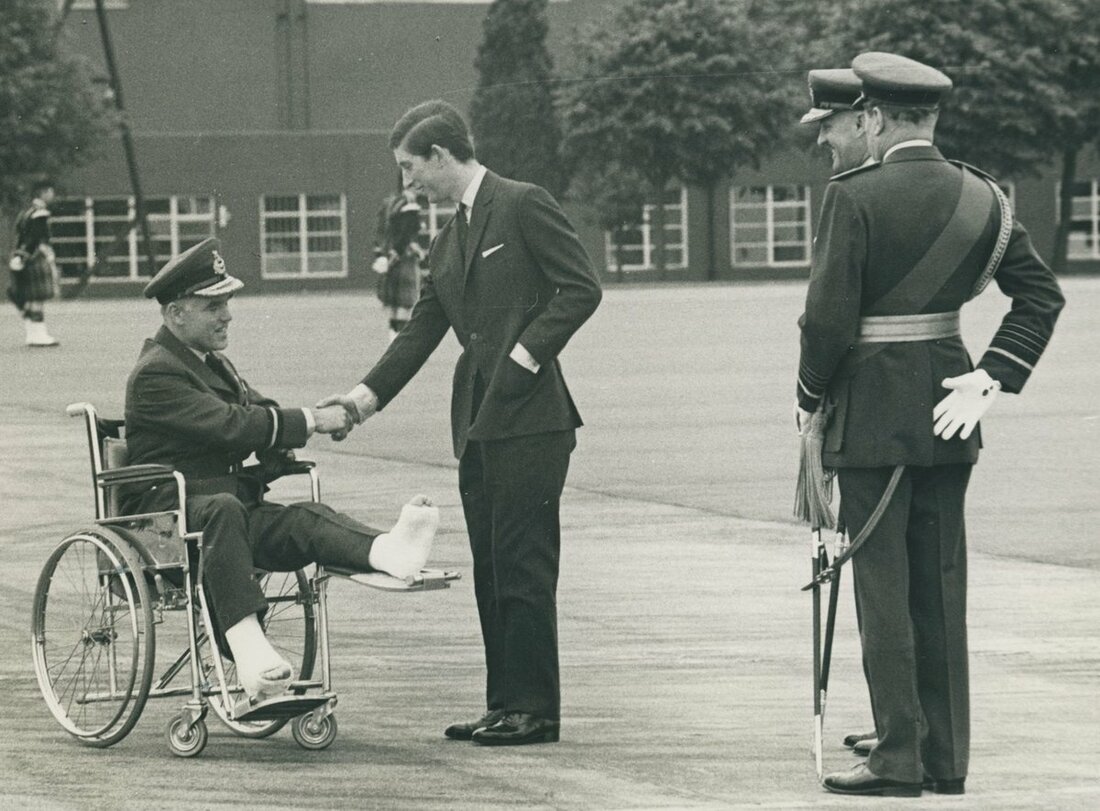
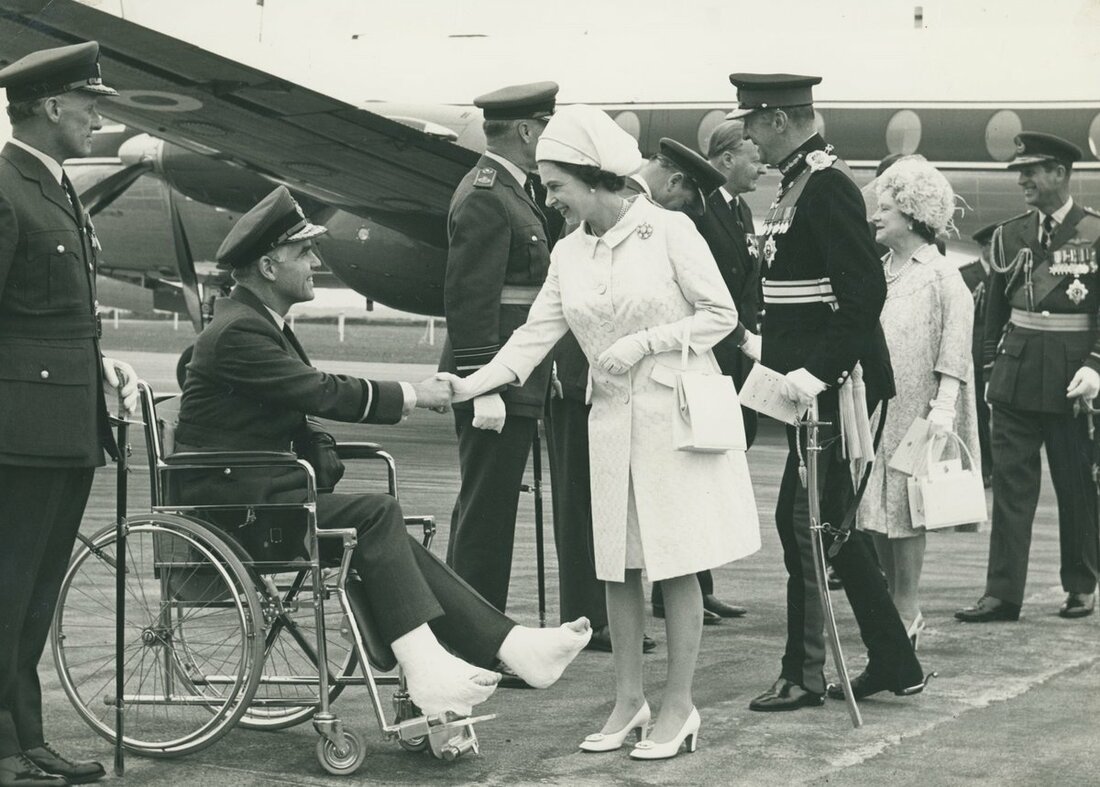
A large scrap album containing a fine array of career photographs (approx. 50), including wartime images - two or three of them of a target nature - and images of royal visits, among them a charming pair of photographs depicting a wheelchair-bound Broom, his legs in plaster after another 'prang', greeting the Queen and Prince Charles at the C.F.S. at Little Rissington; and the documentation including congratulatory Postagrams from 'Bomber' Harris on the awards of his D.F.C. and Bar, and likewise a message from the A.O.C. 2 Group.
(vi)
A quantity of congratulatory letters and telegrams (approx. 30), the whole in respect of his record-breaking Ottawa to London flight in Canberra Airies IV.
(vii)
A selection of programmes for royal visits and presentation of new Colours (6), covering the period 1962-77.
(viii)
The Thames TV script for his appearance on This is Your Life, 2 April 1995.
(ix)
A print of M.A. Kinnear's painting 'Mosquito Coast', signed by the artist and Ivor and Tommy Broom.
Subject to 20% VAT on Buyer’s Premium. For more information please view Terms and Conditions for Buyers.
Estimate
£30,000 to £50,000
Starting price
£26000
Watch, listen and bid as if you were in the room. Now available for auctions worldwide.
Click here to bid live
An exclusive and confidential service for the discerning collector or vendor.
View the Gallery
Download every Spink catalogue on your iPad, iPod or iPhone using free Spink app.
Download From iTunes© 2026 Spink & Son. All rights reserved.