Auction: 26002 - Orders, Decorations and Medals
Lot: 185
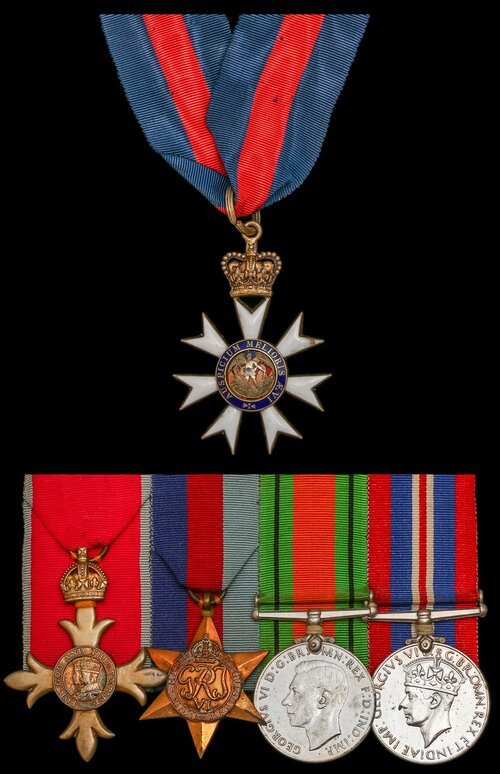
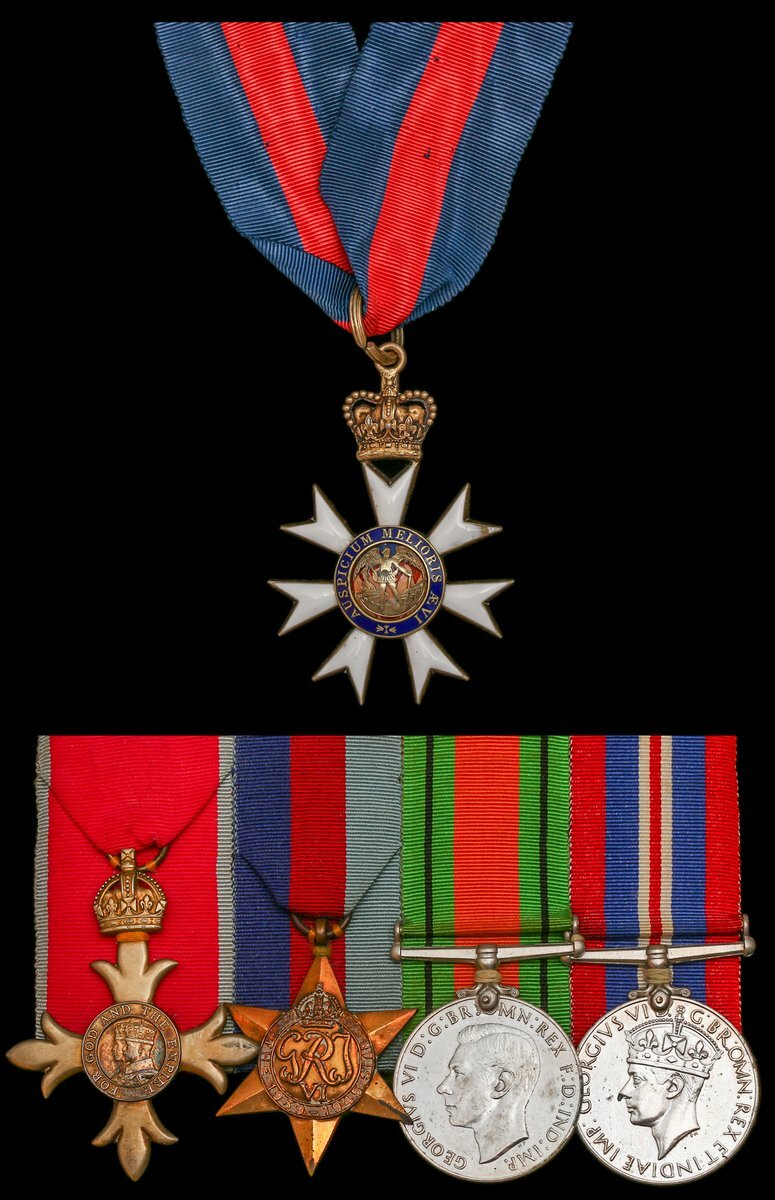
The C.M.G., O.B.E. group of five awarded to Mr J. B. Denson, late Lieutenant, Intelligence Corps
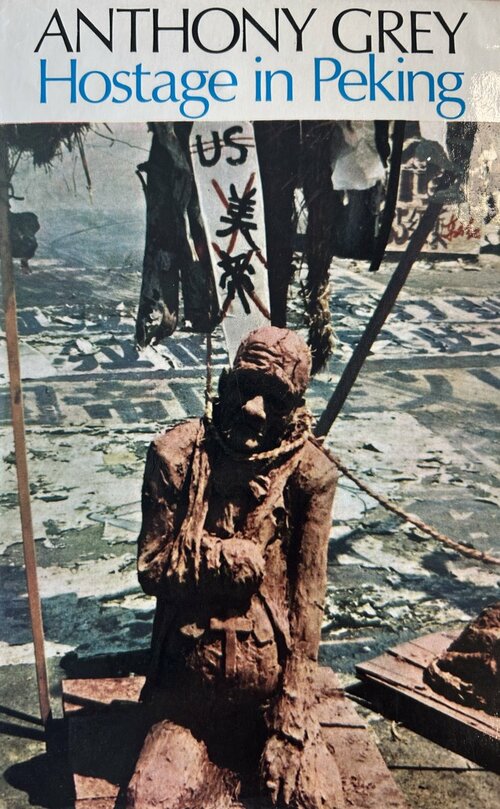
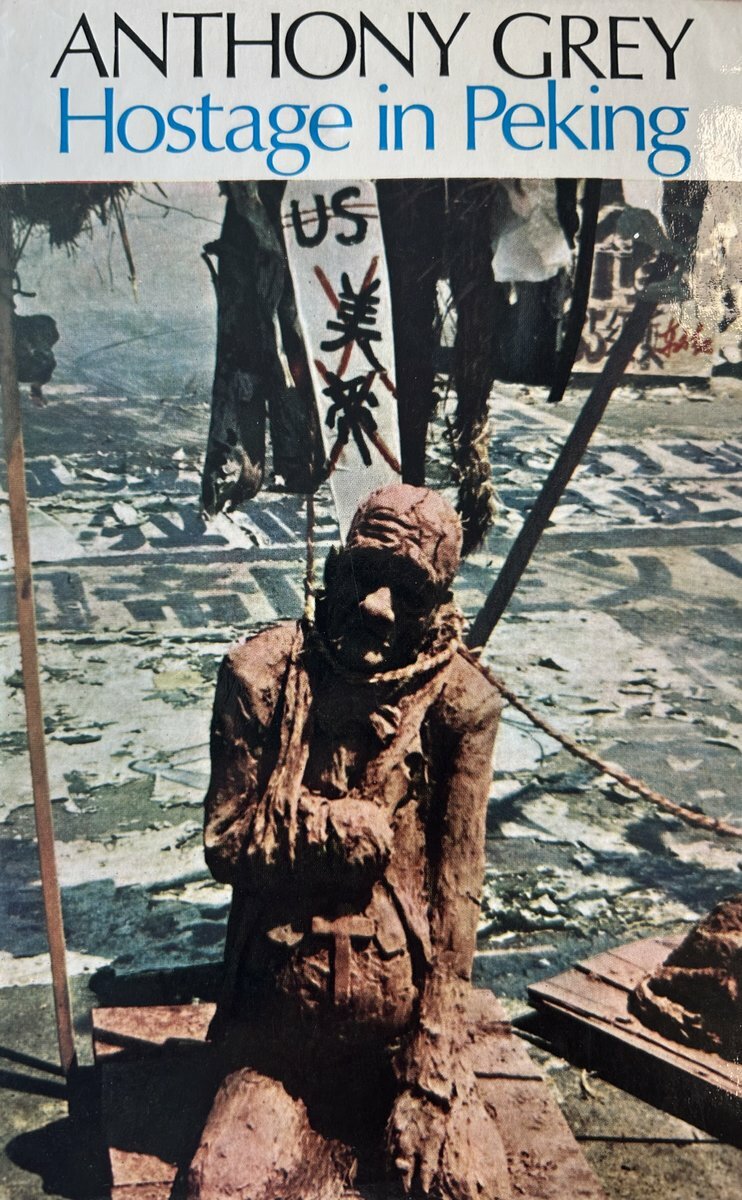
Having spent the last moments of the Second World War interrogating Japanese Prisoners of War in the Far East; he latterly became British Ambassador in Nepal and Charge d'Affaires in Peking - the latter posting came during the height of Sino-Anglo tension which saw Denson himself bundled by a mob, also notably present for the release of Reuter's journalist Anthony Grey, who penned Hostage in Peking regarding his ordeal; Denson was able to take the upper hand in an exchange with Chinese Premier Chou En-lai at a State Banquet on the events on account of his excellent handle on his hosts language
The Most Distinguished Order of St Michael & St George, Companion's (C.M.G.) breast Badge, silver-gilt and enamel; The Most Excellent Order of the British Empire, Civil Division, Officer's (O.B.E.) breast Badge, 2nd Type, silver-gilt; 1939-45 Star; Defence and War Medals 1939-45, with their card box of issue addressed to 'Capt. J.B. Denson, 169 Cherryhinton Road, Cambridge' and his calling card as First Secretary, British Embassy, Helsinki, these last four mounted court style as worn, enamel chipping to C.M.G., very fine (5)
C.M.G. London Gazette 3 June 1972 (British Charge d-Affaires, Peking).
O.B.E. London Gazette 1 January 1965 (First Secretary, Vientiane).
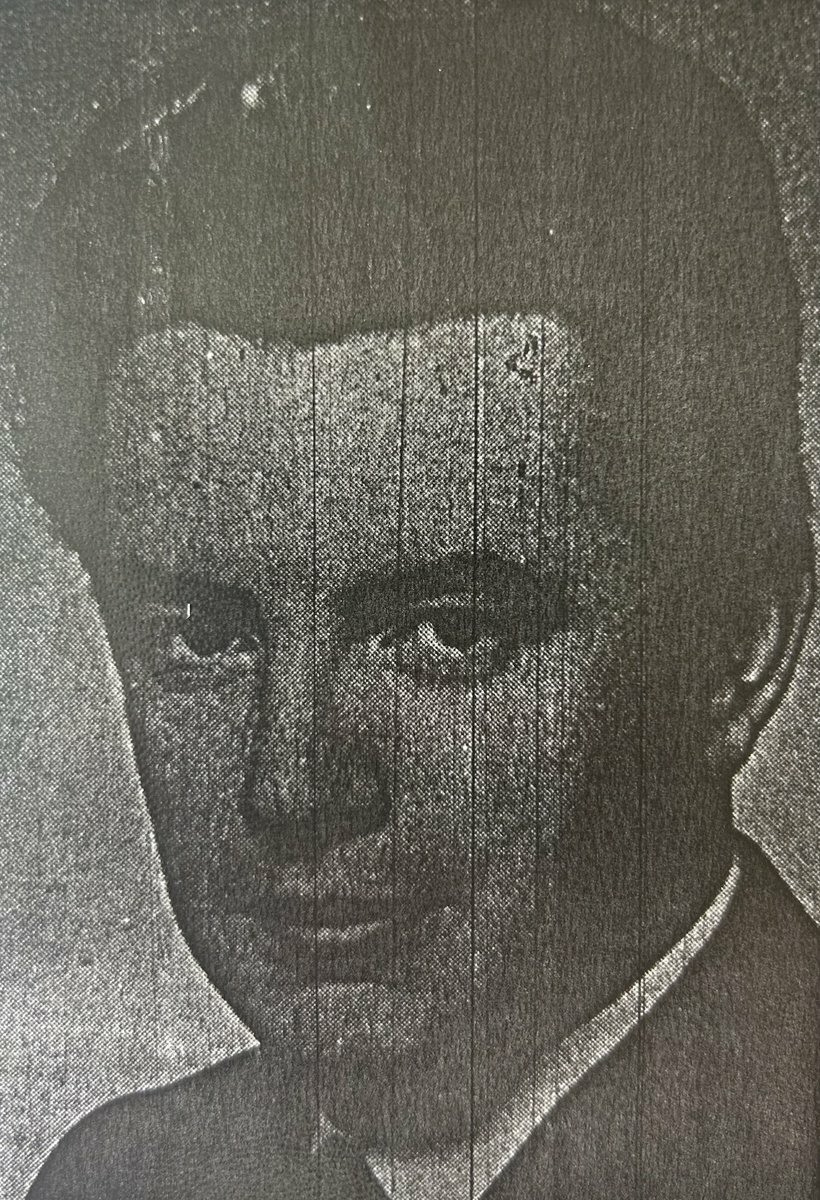
John Boyd Denson was born in Sunderland in August 1926 but soon moved to Cambridge, being educated at the Perse School. With the outbreak of the Second World War, he served in the ranks of the Royal Artillery before being commissioned 2nd Lieutenant in the Intelligence Corps, interrogating Japanese Prisoners of War in the Far East. Demonstrating his grasp of languages, he then returned home to go to St John's College, Cambridge, taking English & Oriental Languages before joining the Foreign Office and being sent to Hong Kong in 1951. He was appointed Third Secretary in Tokyo in 1952, Second Secretary in Peking in 1953, and was First Secretary in Helsinki, Washington and Vientiane - taking an O.B.E. for this final posting. Further research would perhaps reveal if Denson kept in touch with his comrades in the Intelligence world?
What is certain is that he was Britain's Charge d'Affaires in Peking towards the end of China's cultural revolution. When he arrived at the start of 1969 the British mission was still a burnt-out shell after being sacked two years before by the Red Guards, who had also beaten up his predecessor. Denson himself was once jostled and held for two hours by an angry, xenophobic mob until he was able to seek help from a police station. His three years as 'our man in Peking' will be remembered, however, as a period of developing rapprochement, not only between China and this country but between the People's Republic and the rest of the world. This was the time of 'ping pong diplomacy' and Henry Kissinger and one in which Denson himself scored something of a diplomatic triumph by being officially allowed to tour China. Among his happier duties during his first year in Peking was to welcome the Reuter's journalist Anthony Grey when he was finally released after more than two years under house arrest. Indeed, he was able to exchange his compliments with the Chinese Premier Chou En-lai at a State Banquet regarding the event, when Denson took the upper hand. He had to leave prematurely in 1971 for medical treatment for a back condition in Hong Kong.
By then he had done the job expected of him by preparing the way for his successor John Addis to become the first fully fledged British ambassador in Peking. It was a job for which Denson was singularly well qualified. A fluent Mandarin speaker and leading Foreign Office sinologist, he had spent the previous three years in Whitehall as assistant head of the Far East department. As such he had been involved in the negotiations which led to Britain's de-recognition of the nationalist Chinese government in Formosa and the re-establishment of full diplomatic relations with Peking. His appointment as Chargé d'Affaires in succession to Percy Craddock (later to become Mrs. Thatcher's special adviser on foreign affairs) was seen as a significant step forward.
At one point in his career it seemed as if trouble was John Denson's business. He served in Laos throughout two coups d'etat (with fighting across the border in Vietnam) and was consul-general in Athens from 1973 to 1977 a period which saw the British embassy attacked by government-sponsored thugs following the Turkish invasion of Cyprus in 1974. He was Britain's envoy in Katmandu between 1977 and 1983, an unusually long appointment which reflected his suitability in the job and was reflected in his being awarded the Order of the Gurkha Right Hand. But his hopes of then returning to a Chinese speaking country were frustrated by the lack of a suitably Senior vacancy. So, instead he chose early retirement.
A lover of a hearty trio - these being fine pictures, the theatre and wine - he died at Little Hermitage, Scar Hill, Gloucestershire on 24 April 1994; sold together with a good file of copied reasearch and copy of Hostage in Peking.
For his miniature dress medals, please see Lot 274. For the awards to his father, please see Lot 118.
Subject to 20% VAT on Buyer’s Premium. For more information please view Terms and Conditions for Buyers.
Estimate
£500 to £700
Starting price
£400
Watch, listen and bid as if you were in the room. Now available for auctions worldwide.
Click here to bid live
An exclusive and confidential service for the discerning collector or vendor.
View the Gallery
Download every Spink catalogue on your iPad, iPod or iPhone using free Spink app.
Download From iTunes© 2026 Spink & Son. All rights reserved.