
Auction: 26002 - Orders, Decorations and Medals
Lot: 173
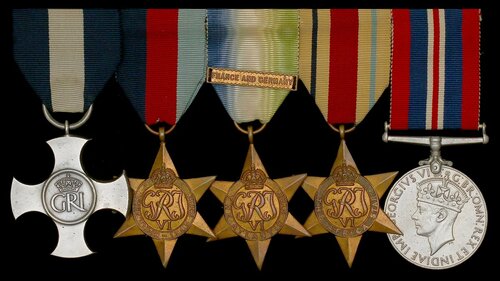
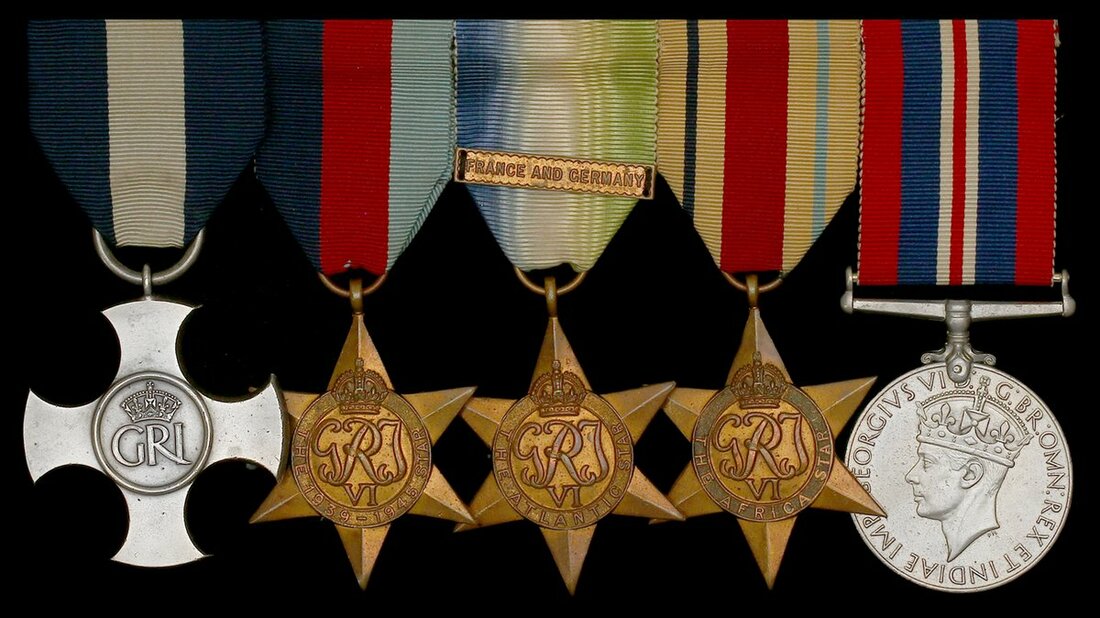
A notable Second World War Battle of North Cape D.S.C. group of five awarded to Gunner (T.) P. O'Kell, Royal Navy, who oversaw the destroyer H.M.S. Scorpion's telling eight-torpedo broadside against the Scharnhorst on Boxing Day December 1943
An accompanying - and important - archive of Naval Messages exchanged in that epic encounter charts the entire action, including his speedy and skilful deliverance of Scorpion's broadside inside 10 minutes:
1845 hours: 'Close and attack with torpedoes as soon as possible'
1849 hours: 'Am closing to attack now'
1851 hours: 'Standby to fire torpedoes, port side'
1854 hours: 'Attack completed'
It then fell to Scorpion to close the scene of Scharnhorst's demise and pick up survivors, the whole frozen, covered in fuel oil and totally exhausted: of the German battleship's complement of 1,968 men, just 36 lived to tell the tale, 30 of them thanks to Scorpion's mercy mission
Distinguished Service Cross, G.VI.R., the reverse officially dated '1944', with its Garrard & Co. Ltd. case of issue; 1939-45 Star; Atlantic Star, clasp, France and Germany; Africa Star; War Medal 1939-45, mounted as worn, very fine (5)
D.S.C. London Gazette 7 March 1944:
'For gallantry, distinguished service and devotion to duty on the staff of the Commander-in-Chief, Home Fleet, and in H.M. Ships Duke of York, Belfast, Norfolk, Sheffield, Jamaica, Savage, Saumarez, Scorpion, Musketeer, Matchless, Virago and Opportune during the action in which the Scharnhorst was engaged and sunk.'
The original recommendation states:
'For skill and devotion to duty as Gunner (T.) in charge of the tubes. By his able direction and as a result of foresight in many realistic drills, achieved the best possible results when called upon to do so in this high-speed night torpedo attack.'
Percival O'Kell was born in Liverpool on 30 April 1908 and entered the Royal Navy as an Ordinary Seaman in May 1929. Having then seen service off North Africa, he likely joined the destroyer H.M.S. Scorpion on her commissioning in May 1943, following which he was employed on the Arctic run.
When convinced of a pending attack on Convoy JW55A on 21 December 1943, Admiral Fraser, C.-in-C. of the Home Fleet, in his flagship Duke of York, hastily departed the Kola inlet with four destroyers. One of those destroyers was Scorpion, which thereafter would be indelibly linked to what came to be known as the Battle of North Cape, played out amidst high drama on Boxing Day 1943. And it was for his courageous and skilful command of Scorpion's torpedo tubes on that memorable occasion that O'Kell came to the notice of his seniors.
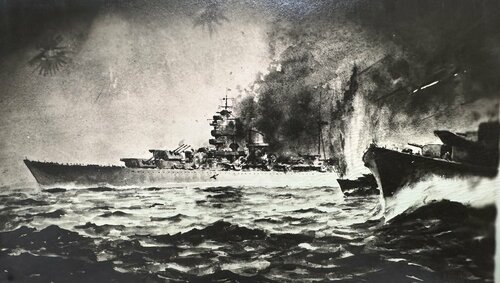
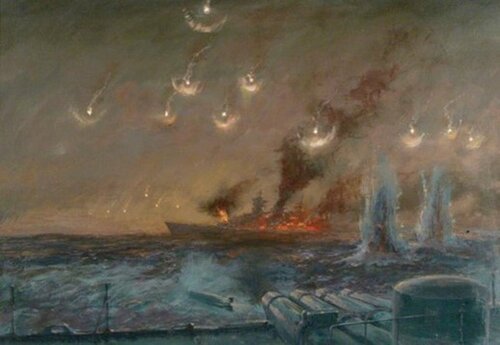
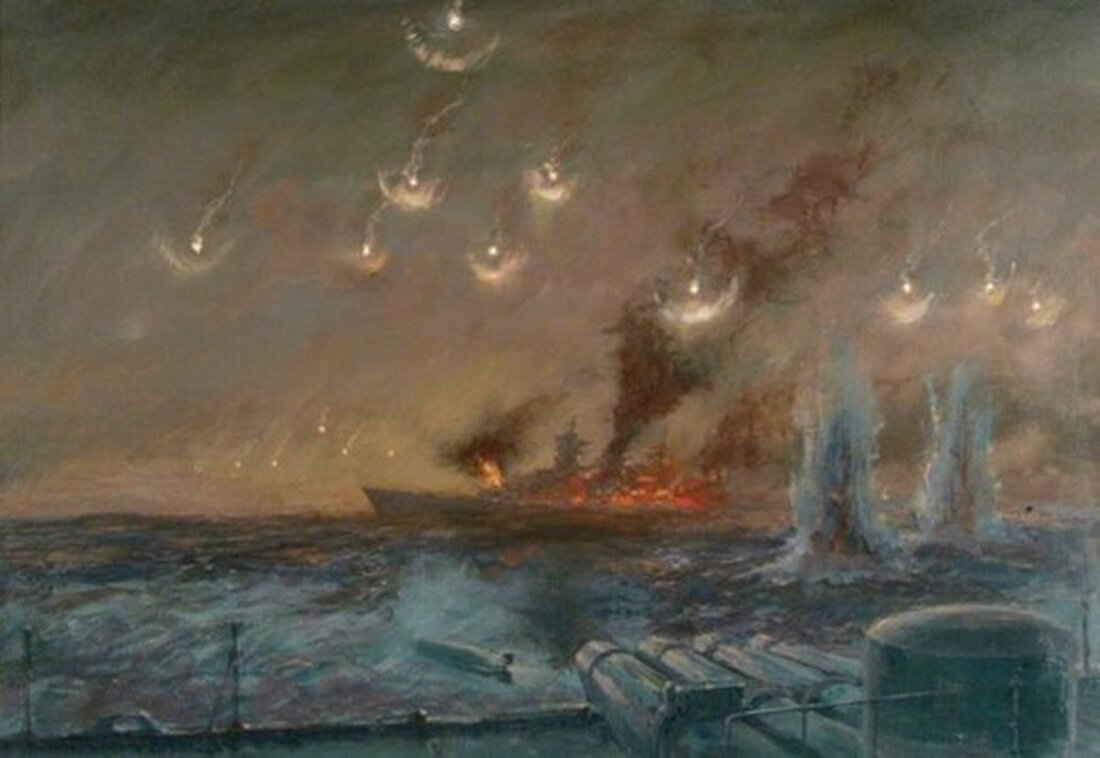
When the net started to close around the Scharnhorst, after Duke of York got in a 14-inch hit which slowed her adversary down, an opportunity arose for Fraser's destroyers to deliver a torpedo attack. And it fell to the Scorpion and Stord to deliver the first of those eight torpedo broadsides, assisted by star shells fired by the Saumarez and Savage. Here, then, O'Kell's moment of glory, Scorpion's torpedo broadside damaging Scharnhorst's port propeller shaft and reducing her speed yet further.
Much has been written about Fraser's momentous victory but from the immediate perspective of the sailors serving in Scorpion, no better account of the battle survives than that written by Telegraphist John G. Wass, as published on the BBC's 'WW2 People's War' website. In respect of Scorpion's torpedo attack, he wrote:
'Down the voice tube I heard our captain speaking to the torpedo officer about the attack, so I again went out onto the upper deck to have a quick look and received a shock. Scharnhorst was a little more than a mile away with 3 or 4 star shells hanging over her. She was a beautiful but frightening sight ploughing so smoothly through the waves. She had so many guns and I felt that her secondary armament could have blasted us out of the water in an instant. I could not help exclaiming, "My God, how are we going to get out of this mess!" A young seaman, called "Stormy" Evans shouted, "Put out wires and fenders we're going alongside the bastard." I scuttled back to my office in great haste, not that the thin sides of a destroyer would have afforded much protection…'
He continues:
'As Scharnhorst turned away from the attack she presented Scorpion with an excellent target and Scorpion fired a spread of 8 torpedoes. Scorpion sent a message to Fraser "Attack completed." Immediately Scorpion sent another message to Fraser reading "Two hits on enemy." After firing torpedoes, Scorpion turned at high speed and left the area zigzagging and laying a smokescreen as we went, with 6-inch and 4-inch shells from Scharnhorst dropping around us … '
And it was Scorpion that was one of the first to arrive at the scene of Scharnhorst's demise:
'From the time that Scorpion's searchlights illuminated the scene the captain had ordered Scorpion's crew to put scrambling nets over the side of the ship with the intention of picking up survivors. Seamen were standing on these nets in pairs pulling the survivors up to deck level, where others including myself carried them down to our mess deck. The survivors were frozen, covered in Scharnhorst's fuel oil and totally exhausted. It is generally thought that 15 minutes in the sea at these latitudes was lethal. However, we quickly stripped off their oil-soaked clothing, rubbed them down with our towels - mine never lost their oil stains - and wrapped them in blankets; after which we gave them hot cocoa to drink, which made them sick. Since they spewed up oil they felt better for it. We next provided them with clothes as we had thrown all their oil-soaked clothing over the ship's side; but not before I had collected a few souvenirs - amongst which was a life jacket, which now resides with my other artefacts in the museum on H.M.S. Belfast in London.'
Of close to 2,000 officers and ratings in Scharnhorst, just 36 survived to tell the tale, 30 of them having been picked up by Scorpion. On arrival at the Kola inlet, they were transferred to the Duke of York.
Of his subsequent wartime movements, it seems likely O'Kell was still serving in Scorpion at the time of the D-Day, when she took up a position off Quistreham to support of the landings on Sword beach. And she spent the rest of the summer of 1944 protecting convoys in the Channel.
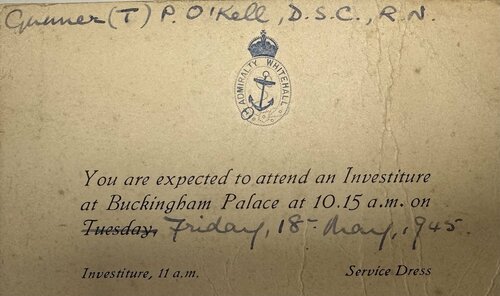
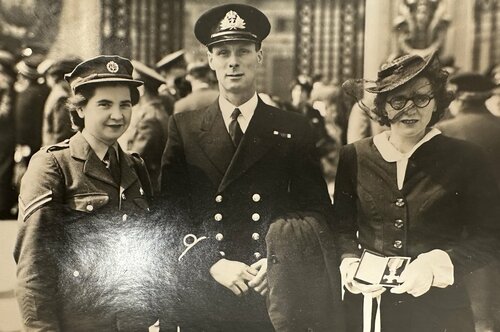
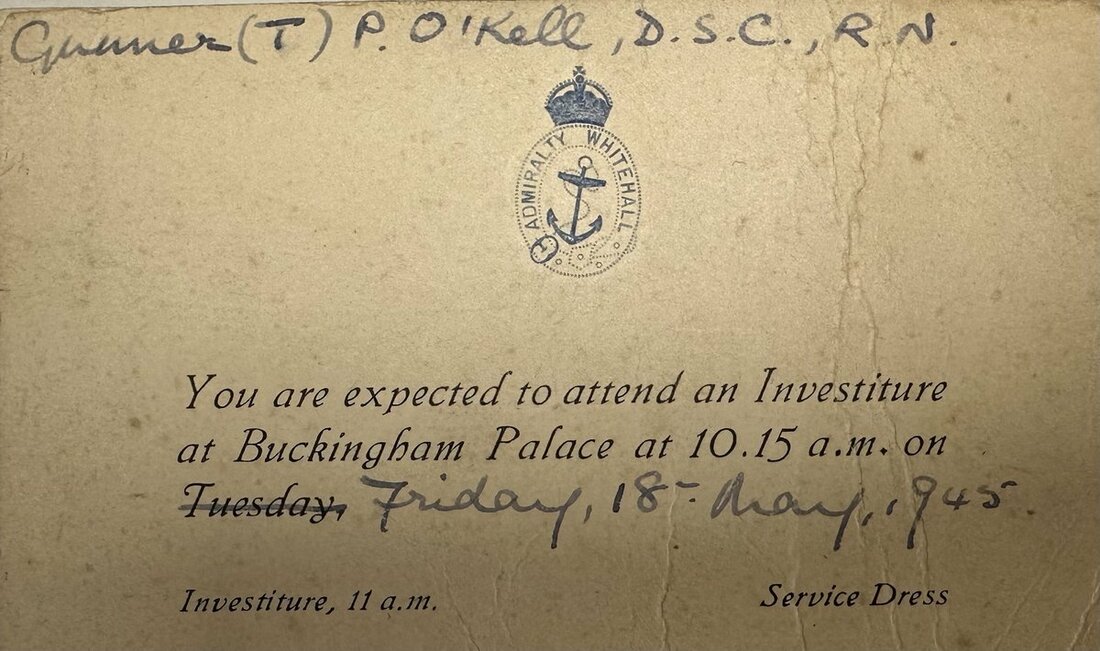
O'Kell, who was invested with his D.S.C. at Buckingham Palace on 18 May 1945, died in Windsor, Berkshire in November 1995.
Sold with an important archive of original Naval Signals (please see scans on SpinkLIVE), the opening message with a 'Signal Distributing Office, H.M.S. Scorpion' red stamp, dated 26 December 1943, and comprising 50 separate exchanges between Scorpion, her consorts and the Admiralty, covering the period of the action and subsequent messages of relevance up until New Year's Day 1944, including those of a congratulatory nature from the King, Churchill and Roosevelt. Accordingly, a virtual blueprint of the course of the battle - and entirely relevant to Scorpion's telling torpedo attack - the signals also include poignant mention of Scharnhorst's survivors: 'A lot of wreckage in sea. Am closing now … Am picking up survivors.'
Also sold with the following original documentation:
(i)
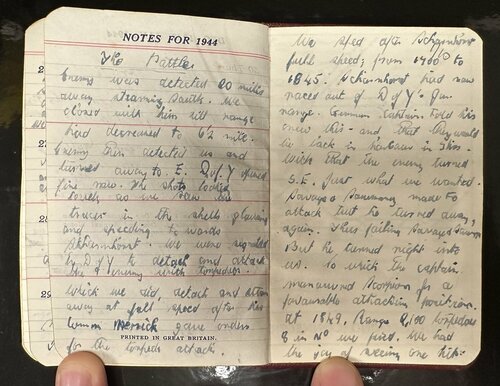
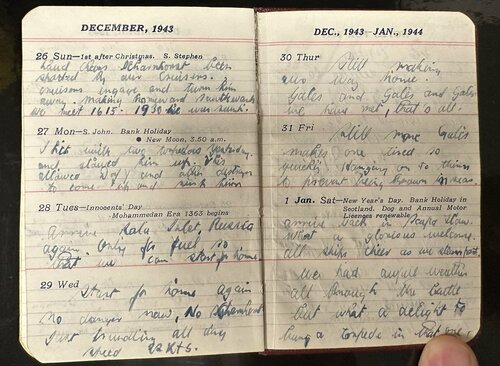
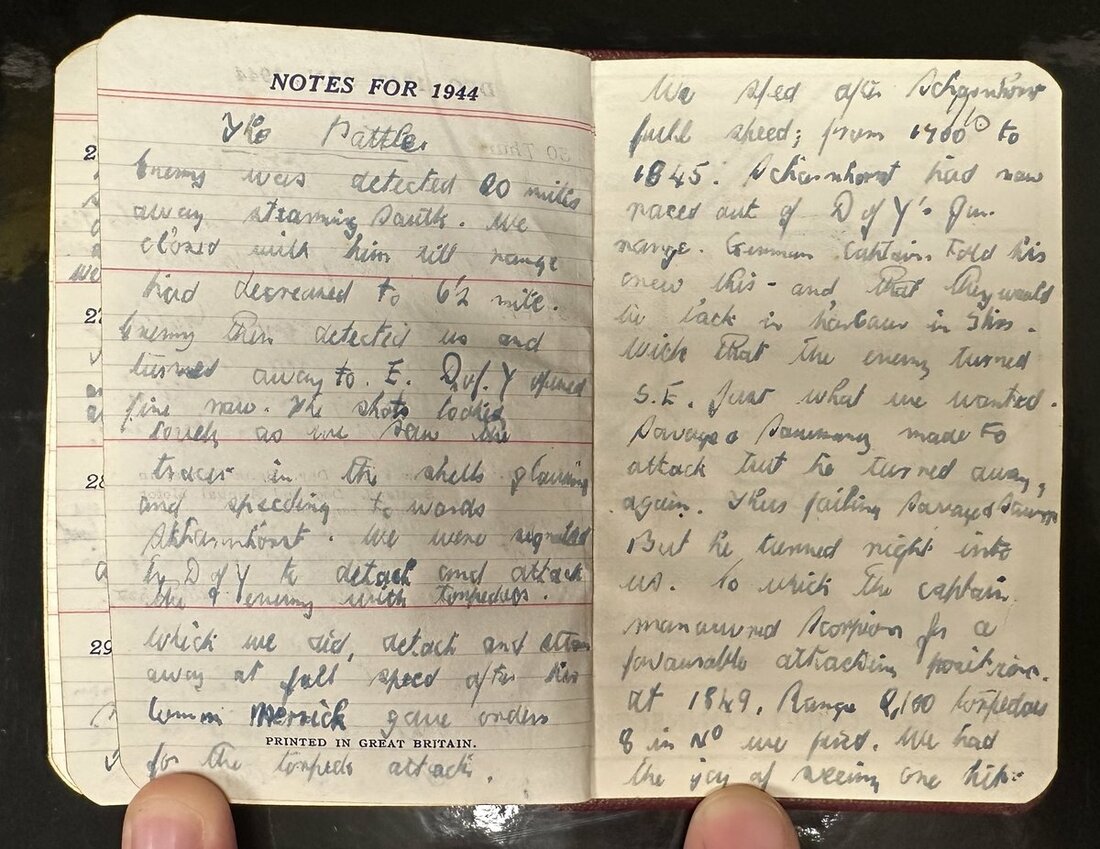
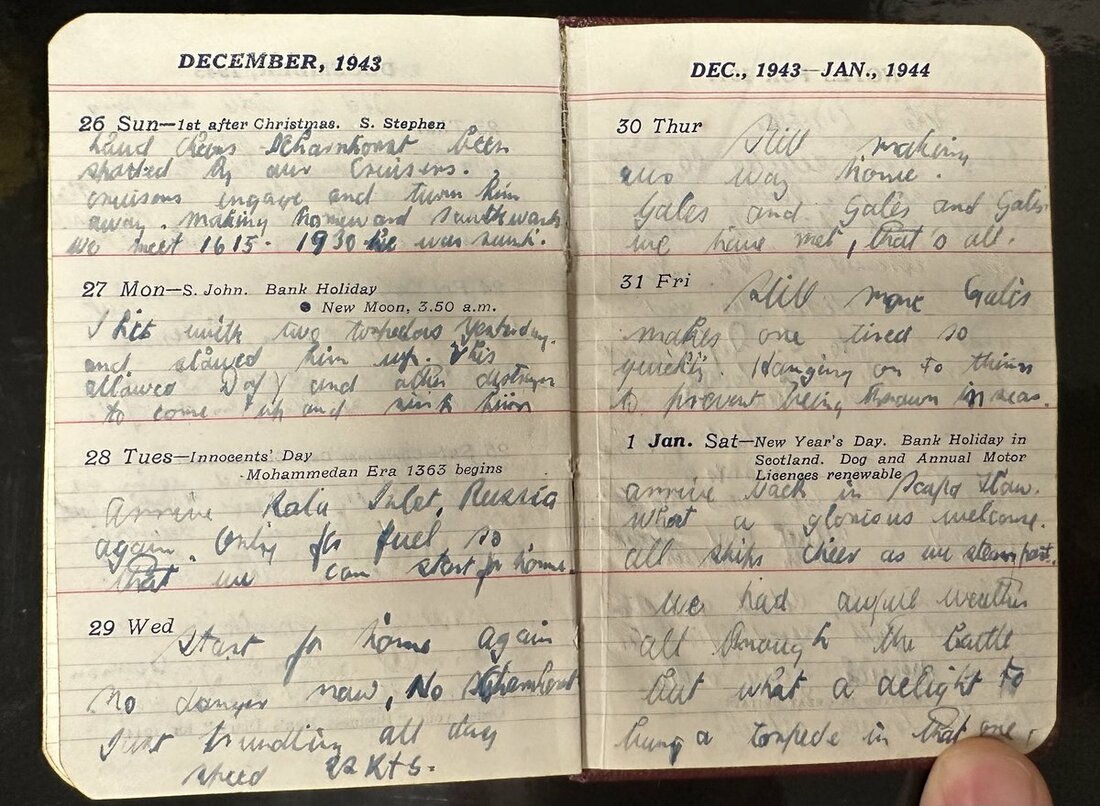
The recipient's pocket diary for 1943, with drills, movements and commentary on weather in the December, and specific mention of the Scharnhorst action on Boxing Day and the 27th: 'I hit with two torpedoes yesterday and slowed him up.'
(ii)
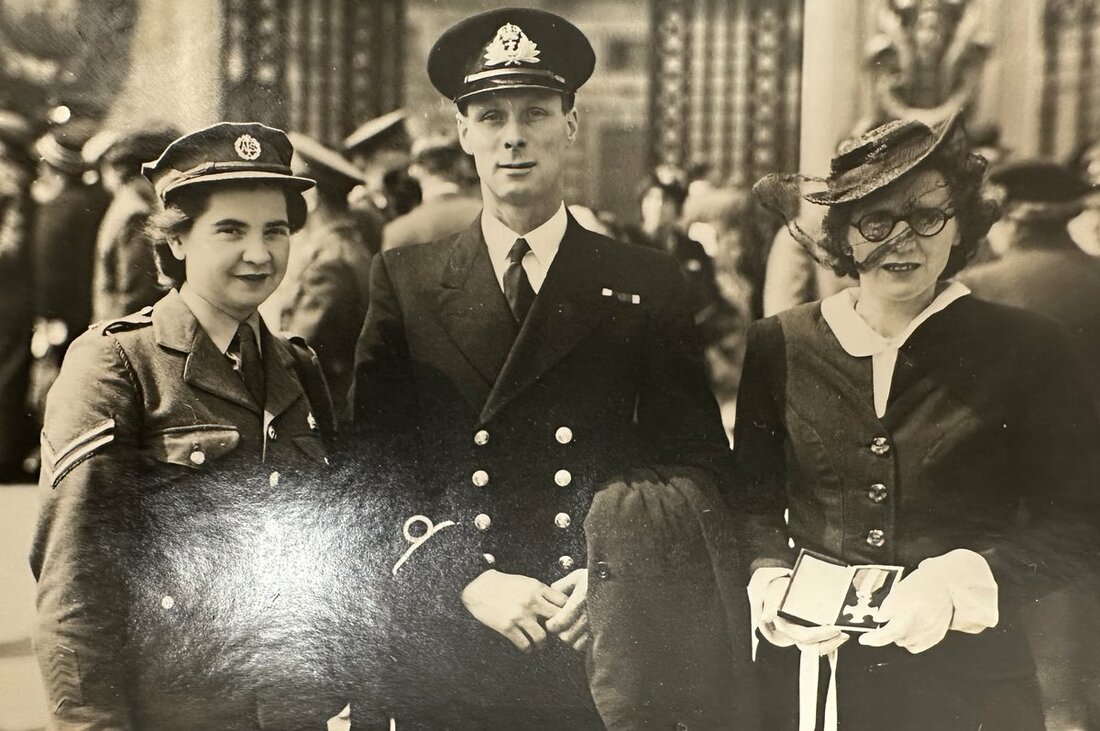
A Buckingham Palace investiture admittance ticket dated 18 May 1945, together with a photograph of the recipient with his sister and mother outside palace.
(iii)
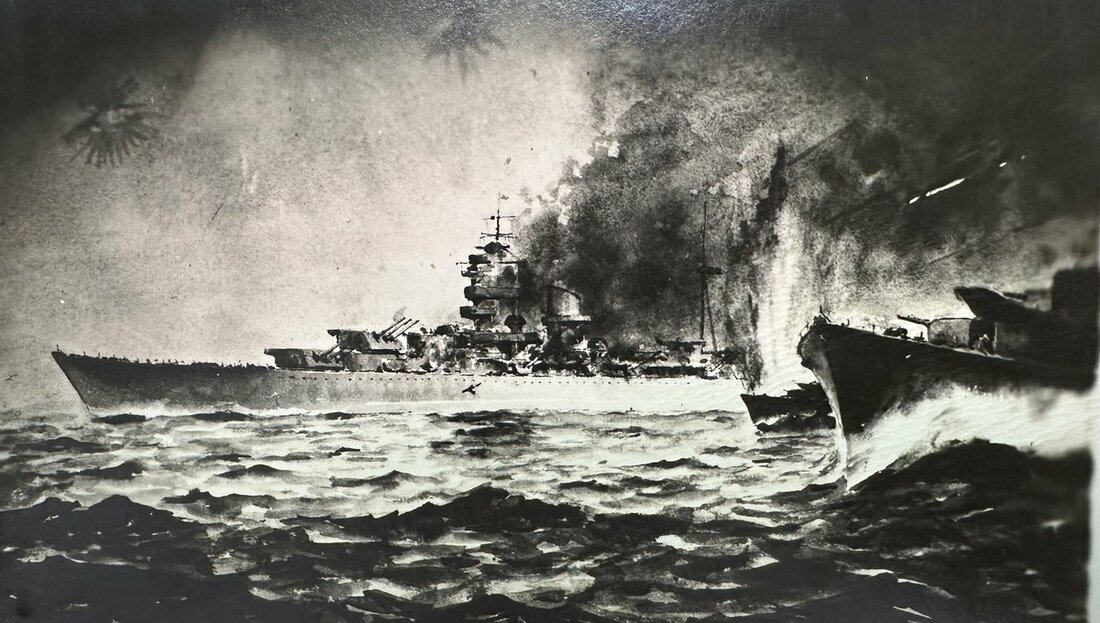
A souvenir 'For King and Country' card-mounted postcard of the Scharnhorst, together with a framed photograph of H.M.S. Scorpion and a related ship's Christmas card.
Subject to 20% VAT on Buyer’s Premium. For more information please view Terms and Conditions for Buyers.
Estimate
£3,000 to £5,000
Starting price
£2600
Watch, listen and bid as if you were in the room. Now available for auctions worldwide.
Click here to bid live
An exclusive and confidential service for the discerning collector or vendor.
View the Gallery
Download every Spink catalogue on your iPad, iPod or iPhone using free Spink app.
Download From iTunes© 2026 Spink & Son. All rights reserved.