
Auction: 26002 - Orders, Decorations and Medals
Lot: 77
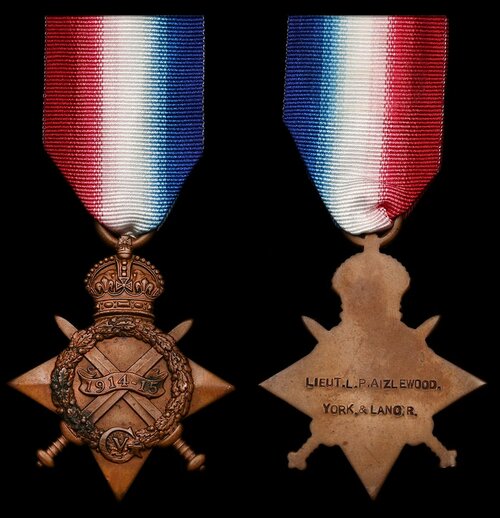
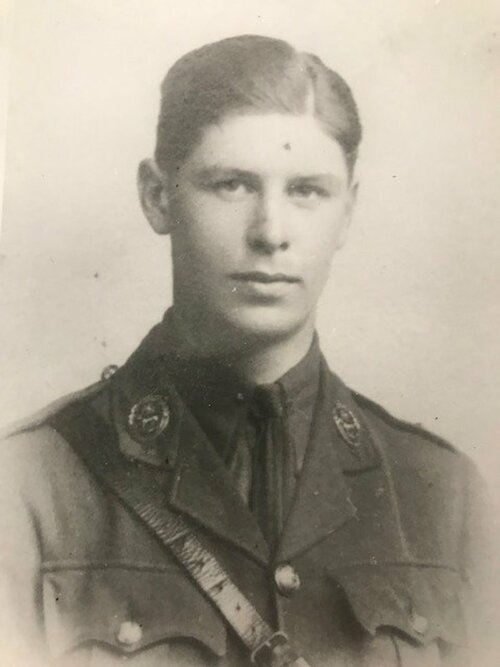
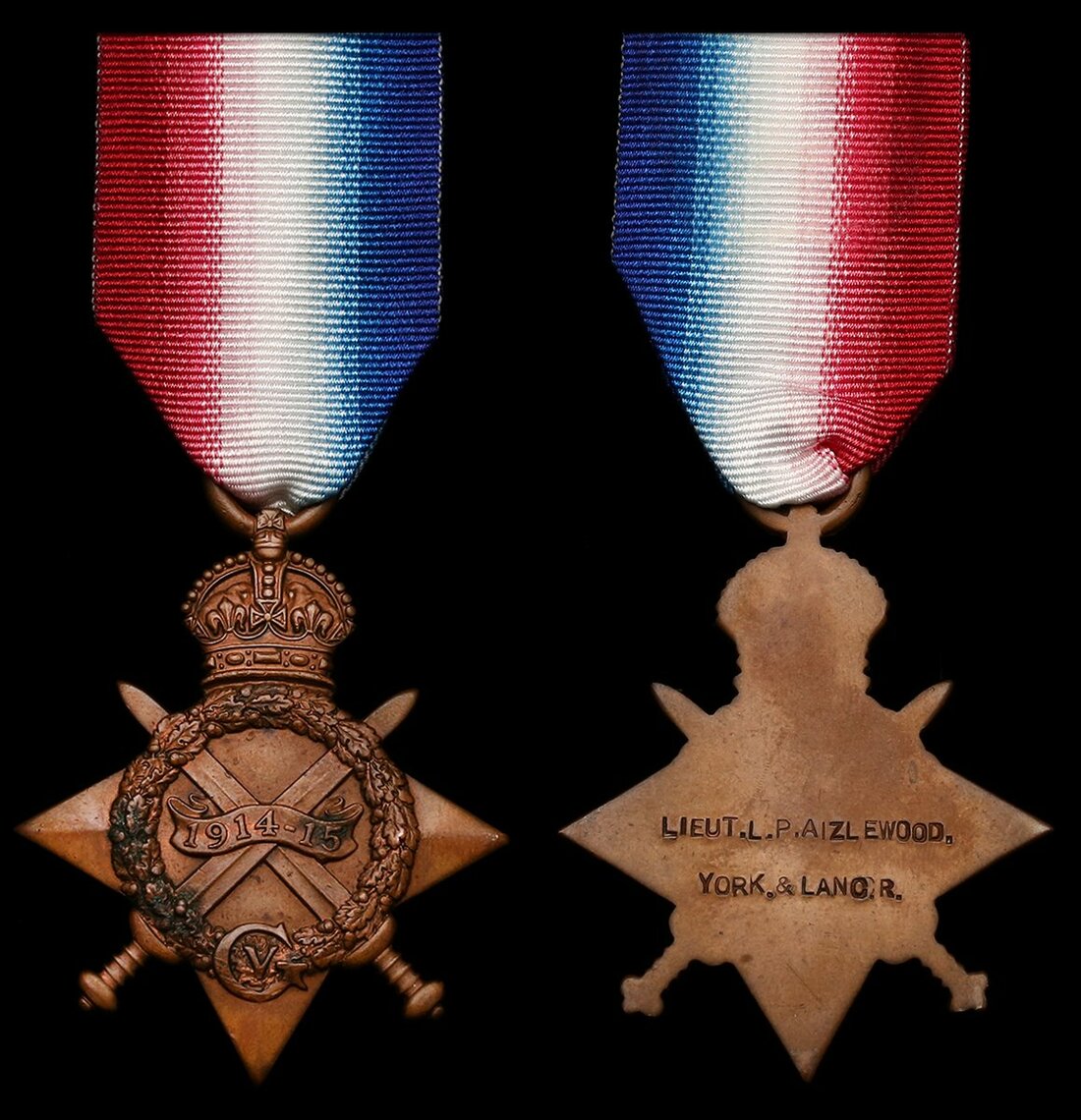
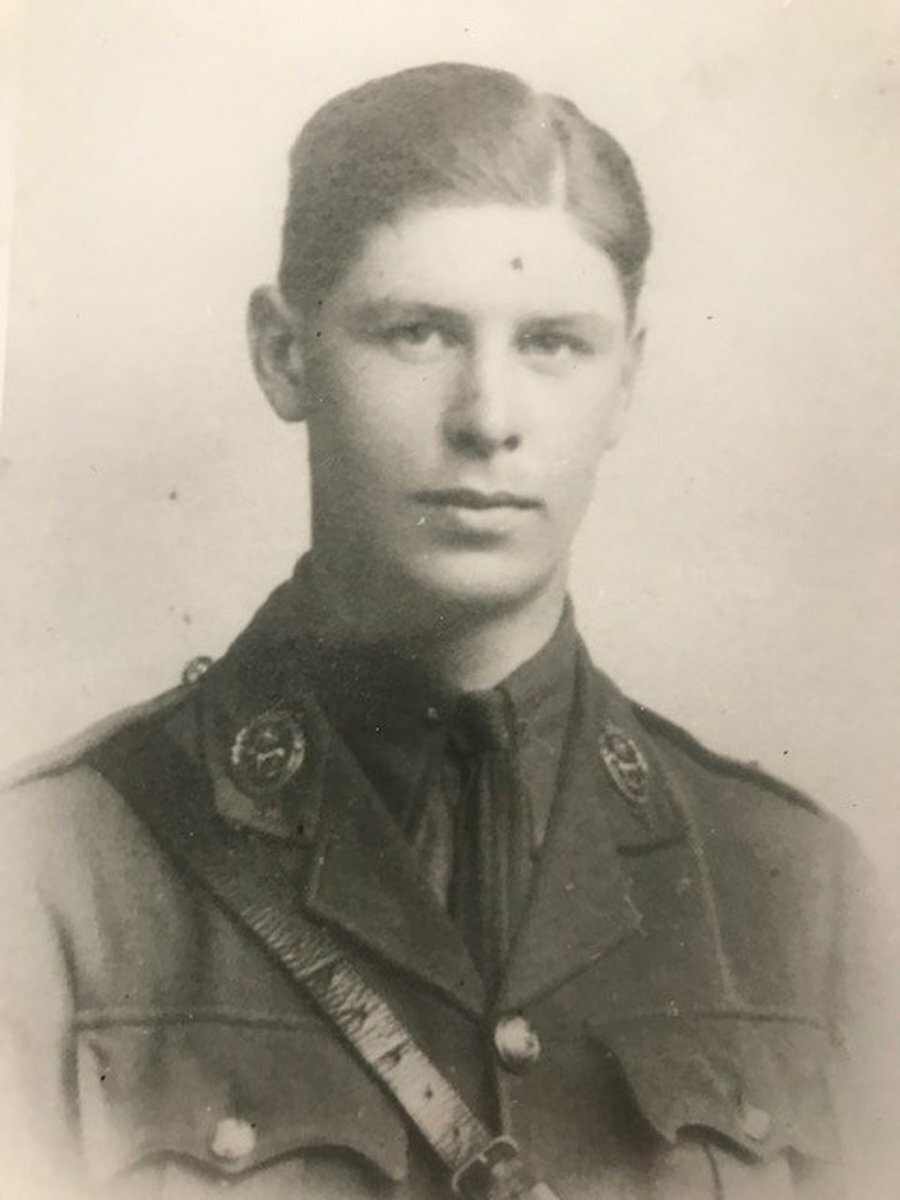
The 1914-15 Star awarded to Major L. P. Aizlewood, M.C. A.F.C., Royal Air Force, late Royal Flying Corps and York and Lancaster Regiment, who tragically lost his life when his aircraft crashed into the sea off Redcar in October 1918
1914-15 Star (Lieut. L. P. Aizlewood. York. & Lanc. R.), very fine
[M.C.] London Gazette 20 October 1916:
'For conspicuous gallantry and skill. Seeing five hostile machines, he manoeuvred to get between them and their lines, then, diving on one of them, he reserved his fire till he was only 20 yards off. The hostile machine fell out of control, but he was so close to it that he collided with it, breaking his propellor and damaging his machine. Though it was barely controllable, he managed to get back to our lines.'
[A.F.C.] London Gazette 1 January 1919.
M.I.D. London Gazette 13 March 1918.
Leslie Peech Aizlewood was the son of Albert Percy Aizlewood and Florence Shaw Aizlewood, of Blenheim House, Doncaster Road, Rotherham. He was born at Rotherham on 25 April 1895 and educated at Uppingham School. He then studied Electrical and Mechanical Engineering at Sheffield University and then worked at Parkgate Iron and Steel Works. Aizlewood joined the 5th Battalion, York and Lancaster Regiment and was commissioned Second Lieutenant on 2 September 1914.
He entered the war in France on 13 April 1915 but in July 1915 was suffering from appendicitis and invalided home for surgery and recuperation. He joined the Royal Flying Corps in January 1916 and after flying training in Norwich became a pilot in March 1916 and awarded a Royal Aero Club Aviators' Certificate (No.2742) on 18 March. He was seconded to the Royal Flying Corps on 17 May 1916 and promoted to Flying Officer in May 1916 with the rank of Temporary Captain. Returned to France in July 1916, Aizlewood served with 9 Reserve Squadron, 35 Reserve Squadron, 40 Squadron and 32 Squadron and was credited with four kills in total.
Aizlewood was attacked during a dogfight with the German Ace, Werner Voss, on 10 February 1917 and suffered a gun shot wound to the right shoulder (Voss claimed this as the sixth of his victories). Although the wound was not serious he was sent home to recuperate. After his recuperation he was posted to H.Q. Northern Group at the end of March 1917h having been appointed a Flying Instructorh and he was involved in setting up new training schools with an emphasis on gunnery skills. Aizlewood was sent to the School of Aerial Fighting and Gunnery at Turnberry, Ayr in October 1917 as the Chief Instructor, now with the rank of Major, and was made a Squadron Commander on 1 January 1918. He was 'mentioned' in March 1918 for his valuable service and work on flying schools and pilot training.
Aizlewood was posted to the 2nd Flying Training School at Marske by the Sea, North Yorkshire on 27 April 1918 and may have flown with the author W. E. Johns of 'Biggles' fame who was a pilot during Aizlewood's time there. Aizlewood, however, was accidentally killed on 29 September 1918 whilst flying a Sopwith Camel E1456 during the making of an instructional film demonstrating battle techniques at Redcar when his plane fell into the sea. His body was recovered and buried in a family grave at Marske-In-Cleveleland (St. Germain) Churchyard, Yorkshire on 23 October 1918 with full military honours, and not in a Commonwealth War Grave.
The Court of Inquiry (No.C.41992). stated:
'The cause of the accident was in our opinion that the Pilot having put the machine into a spin the Elevator controls became jambed (sic) most probably through the control levers being entangled with the Pilot's clothing, thus preventing the stick from going forward which would keep a Camel in a spin such as described by eyewitnesses.'
Sold together with a very detailed folder of copied research.
Subject to 20% VAT on Buyer’s Premium. For more information please view Terms and Conditions for Buyers.
Estimate
£200 to £300
Starting price
£160

Watch, listen and bid as if you were in the room. Now available for auctions worldwide.
Click here to bid live
An exclusive and confidential service for the discerning collector or vendor.
View the Gallery
Download every Spink catalogue on your iPad, iPod or iPhone using free Spink app.
Download From iTunes© 2026 Spink & Son. All rights reserved.