
Auction: 26002 - Orders, Decorations and Medals
Lot: 26
Sold by Order of a Direct Descendant
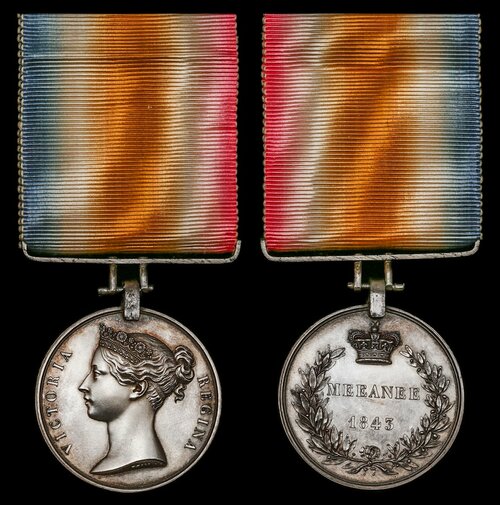
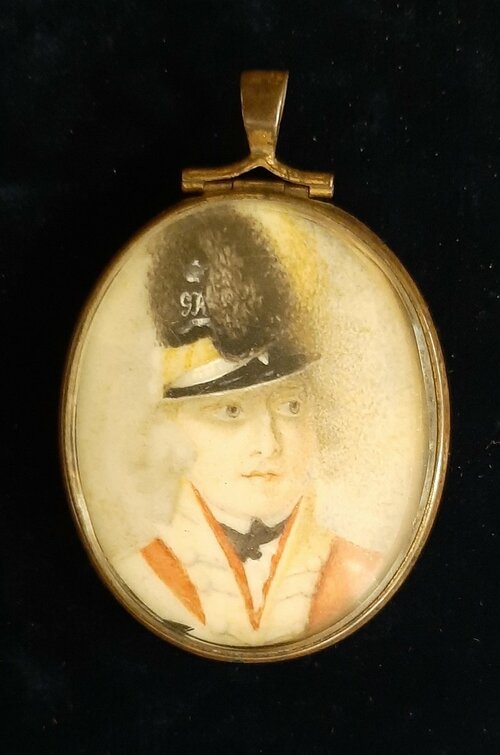
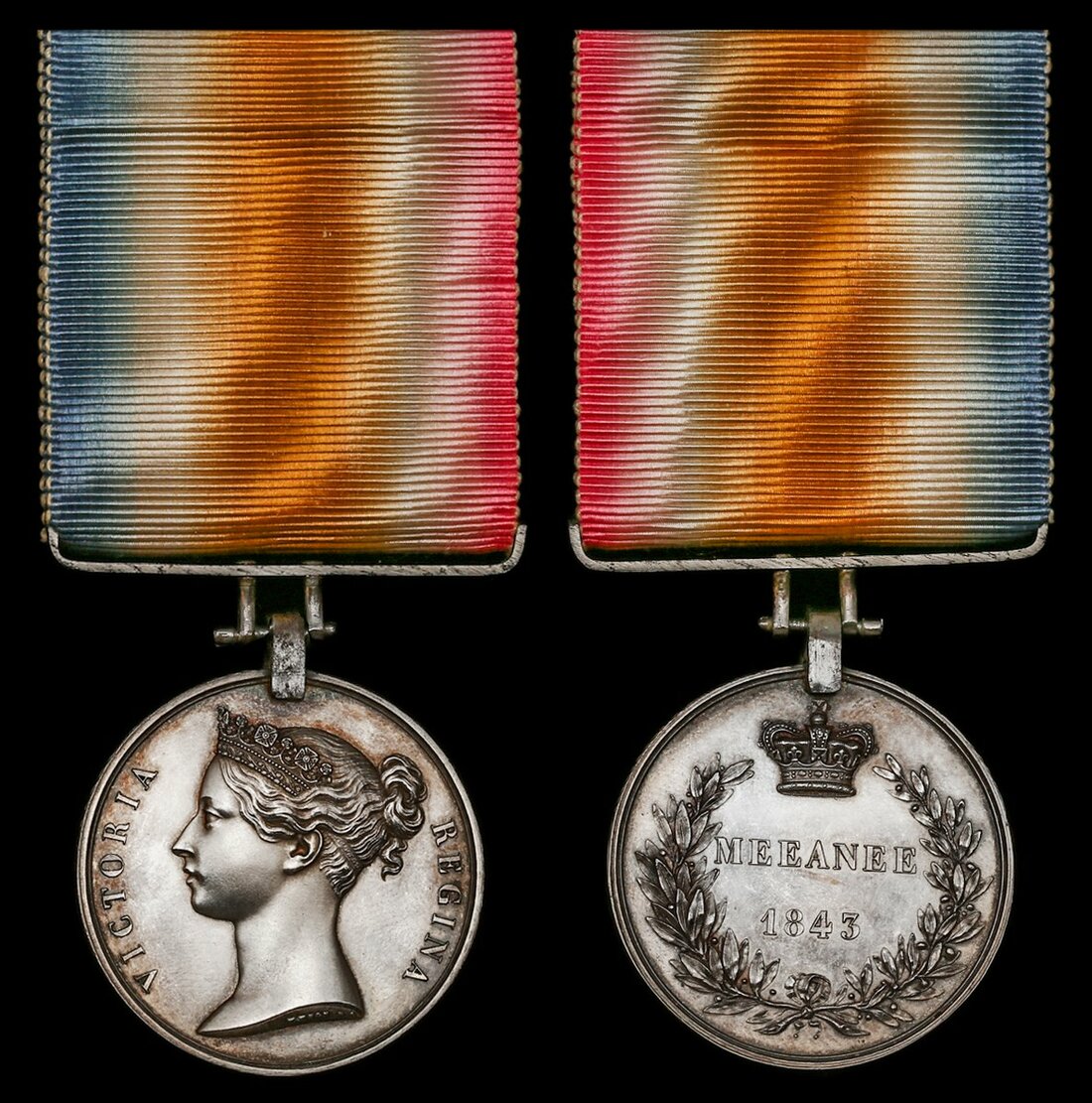
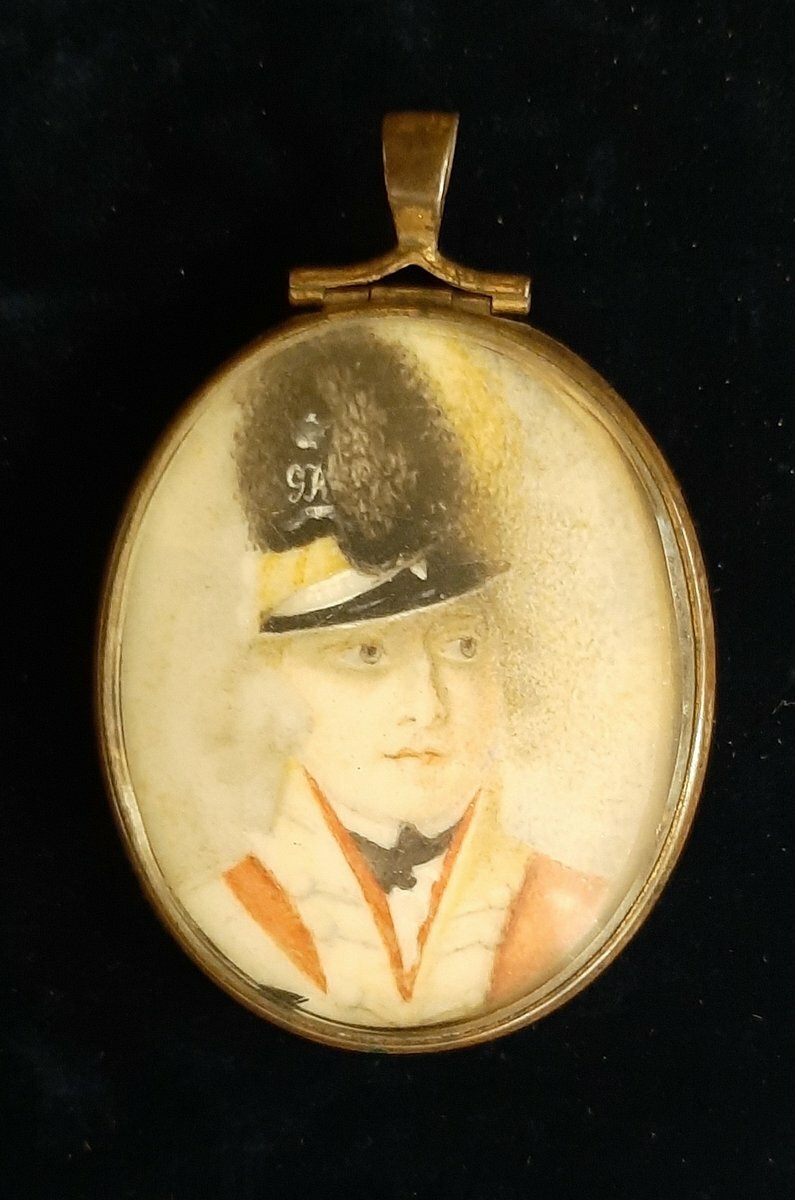
The tragic Meeanee Medal awarded to Brevet Captain & Adjutant W. Cookson, 9th Bengal Light Cavalry, a promising officer who was cut down after his horse was killed beneath him at Meeanee
Meeanee 1843 (Bt. Captn. Willm. Cookson. 9th. Cavy.), fitted with steel clip and ring suspension, good very fine
William George Cookson was born at Clapham Road, London on 13 March 1808, the son of Margret and Lieutenant-General George Cookson. When the young Cookson was six his father was placed in command of the process of the Emperor of Russia who visited Britain in 1814 and the young man certainly met the Tsar.
Educated first at Harrow and then the East India Company's Hartford College although he does not appear to have applied himself too strenuously to his studies, being rusticated in 1826. His father's diary states that he was informed of the young Cookson's selection for a commission into the Bengal Establishment by his cousin James Remintgon.
Cookson and his father went to India House in January 1827 and booked his passage to India aboard H.M.S. Repulse and the young man was gazetted Cornet in the 2nd Bengal Light Cavalry in December 1827. His father's journal hints at an emotional goodbye between father and son, both knowing that they were unlikely to see each other again.
Arriving in India he was stationed at Kurnal, West Bengal, soon transferring to the 9th Bengal Light Cavalry in 1832. Cookson earned the unusual distinction of being appointed Adjutant whilst still a Cornet on 10 June 1833.
It was at Kurnal he married Elizabeth Tucker, the sister of a brother officer on 6 February 1834. They had four children however all but one died in the climate which caused a famously high rate of child mortality particularly amongst the unaccustomed Europeans.
Advanced Lieutenant on 10 October 1836 and Brevet Captain in 1842 it was in that rank that he was to meet his fate at the Battle of Meeane. British relations with the Ameer's of the Scinde had been strained during the 1830s and diplomat was sent to establish a treaty and improve relations. This was successful however, in wake of the disastrous First Afghan War, tensions reared their head again as powers throughout India started to see the British as weak.
General Charles Napier was sent to enforce the treaty with an army and orders to crack down harshly upon any of the Ameers who broke faith with Britain. Napier is largely considered to taken the opportunity these orders presented to instead conquer the region.
The British army followed the Indus River and advanced to Muttaree where they received word that forces were being assembled against them. At this stage they were still 16 miles from Hyderabad, with the enemy assembling between them and the city at a place called Meeane.
Drawn up before a dry riverbed with woods on either side the Army of the Scinde awaited the British advance. The terrain forced the two armies into a direct and bloody confrontation with the well trained British and Sepoy troops heavily outnumbered by their ferocious opponents. It was in this melee that Cookson was killed in action, extracts from a letter by H. H. Thompson to Cookson's brother, quoted in a family history, gives further details, stating:
'I deeply regret to have to announce to you the loss of your brother Captain William Cookson whom I grieve to say was killed in action fighting bravely, poor fellow. He was cut down by one of the enemy when he was endeavouring to disentangle himself from his horse which had fallen under him from a wound.
I need not say we have to lament a brother office [SIC] beloved by all in the regiment. His lamented death and gallantry in the action have been very handsomely and conspicuously mentioned in cavalry division order of today.
I believe tomorrow we march on Hydrabad which it is supposed will open its gates as the Ameers are now coming into our camp for terms.
A monument was raised in Meeane to the officers and men who fell in this action of which we have a drawing.'
As the account states he is commemorated on the Meeane memorial, Cookson's widow and last remaining daughter returned to England. His death was lamented in General Napier's dispatch, quoted in the Bombay Gazette on 27 February 1843, which states 'In particular he has to deplore the following gallant officers, who, after having conspicuously distinguished themselves, nobly died on the field of battle'; sold together with copied research including printed extracts from a family history which references the recipient.
The diary and sword of the recipient's father are held by the National Army Museum.
Subject to 20% VAT on Buyer’s Premium. For more information please view Terms and Conditions for Buyers.
Estimate
£1,400 to £1,800
Starting price
£1100

Watch, listen and bid as if you were in the room. Now available for auctions worldwide.
Click here to bid live
An exclusive and confidential service for the discerning collector or vendor.
View the Gallery
Download every Spink catalogue on your iPad, iPod or iPhone using free Spink app.
Download From iTunes© 2026 Spink & Son. All rights reserved.