

Auction: 25113 - Orders, Decorations and Medals - e-Auction
Lot: 572
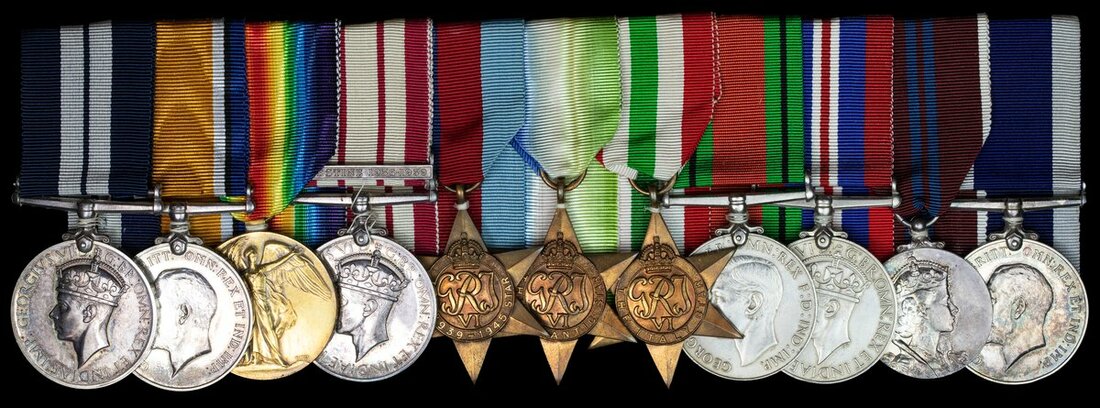
The 1944 D.S.M. group of eleven awarded to Petty Officer Telegraphist J. R. Melrose, Royal Navy, whose extensive service saw him survive the sinking of H.M.S. Royal Oak on 14 October 1939
Distinguished Service Medal, G.VI.R. (P.O. Tel. J. R. Melrose. P/J 62858); British War and Victory Medals (J.62858 J. Melrose. B. Tel. R.N.); Naval General Service 1915-62, 1 clasp, Palestine 1936-1939 (J.62858 J. R. Melrose. L. Tel. R.N.); 1939-45 Star; Atlantic Star; Italy Star; Defence and War Medals 1939-45; Coronation 1953; Royal Navy L.S. & G.C., G.V.R. (J.62858 J. R. Melrose. L. Tel. H.M.S. Greenwich.), good very fine (11)
D.S.M. London Gazette 8 June 1944.
James Russell Melrose was born at Fauldhouse, Linlithgow on 21 July 1901 and attested with the Royal Navy on 28 November 1916 as Boy Class II. He specialised as Boy Telegraphist on 13 June 1917 and served ashore until March 1918 when he was posted to the armoured cruiser Topaze Joining Castor on 15 January 1920 he remained with her until May 1920, being promoted Telegraphist whilst with her.
Advanced Leading Telegraphist with H.M.S. Concord he was serving in that rank with H.M.S. Repulse when she served at Haifa Harbour. Providing guards for the shore facilities used by the navy during the Arab Revolt that was burning at the time.
Melrose began the war with the Battleship Royal Oak stationed at Scapa Flow, a base the British believed to be impregnable to attack by submarine. Tragically this belief was proven to be entirely incorrect when U47 managed to circumvent the sunken blockships and despite briefly being caught on a cable strung from the Seriano made it into the harbour.
She made two runs at the Battleship, the first one striking her starboard and severing the starboard anchor chain. Unfortunately, while this did wake the sailors, it did not alert them to an attack and the second volley of torpedoes struck home with all three detonating amidships. The blast tore three large holes in the vessel and she sank in just thirteen minutes with a loss of life of over half the crew. Many of those who survived did so only because the tender Daisy II had been tied to Royal Oak's side and after cutting herself loose she began to rescue the survivors from the freezing water.
Melrose managed to survive the sinking and was transferred to the books of the Victory I on 15 October 1939, the day after the sinking. Having recovered from the experience he joined the destroyer Atherstone serving with her on convoy escort duties from March-August 1940 before transferring to her sister ship Blencathra This vessel served in Home Waters between 1941-43 escorting convoys, during which Melorse was advanced Petty Officer Telegrapher on 7 August 1941 however transferred to the Mediterranean in May 1943. There she provided further convoy escorts off Gibraltar and Malta before joining the allied Dodecanese Campaign in October 1943.
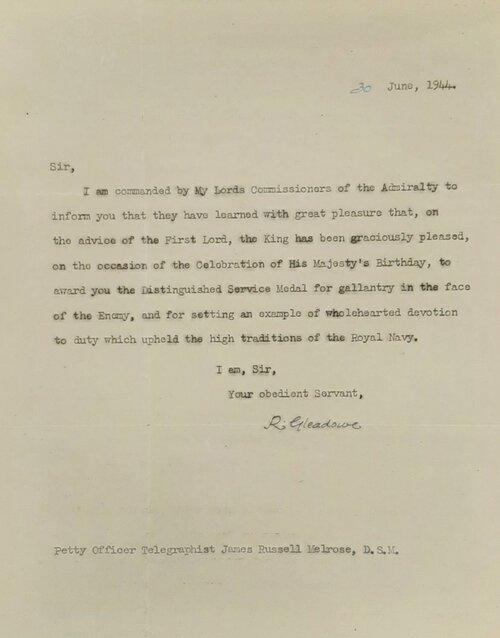
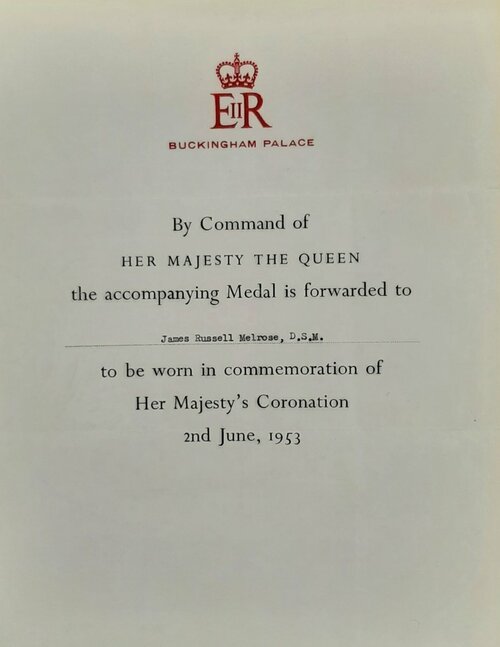
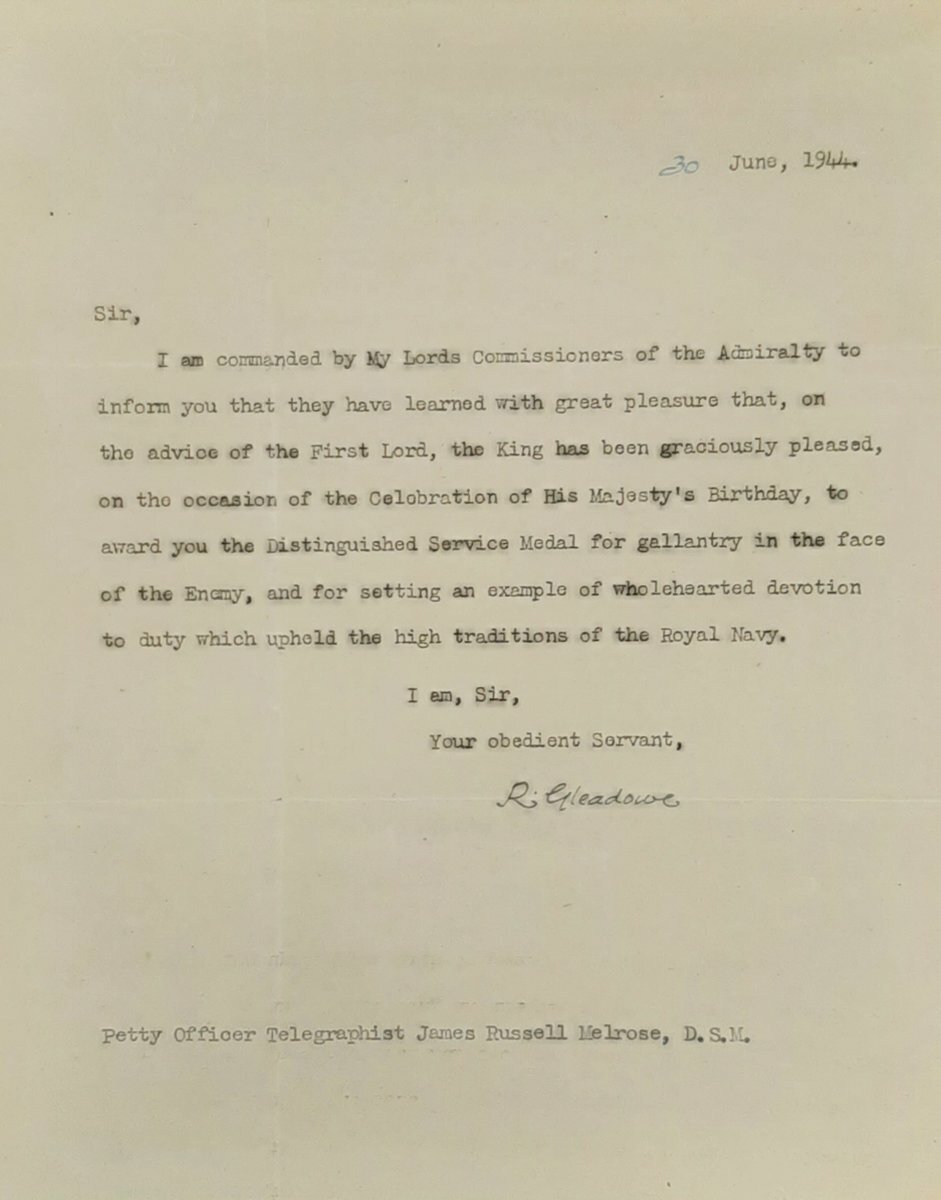
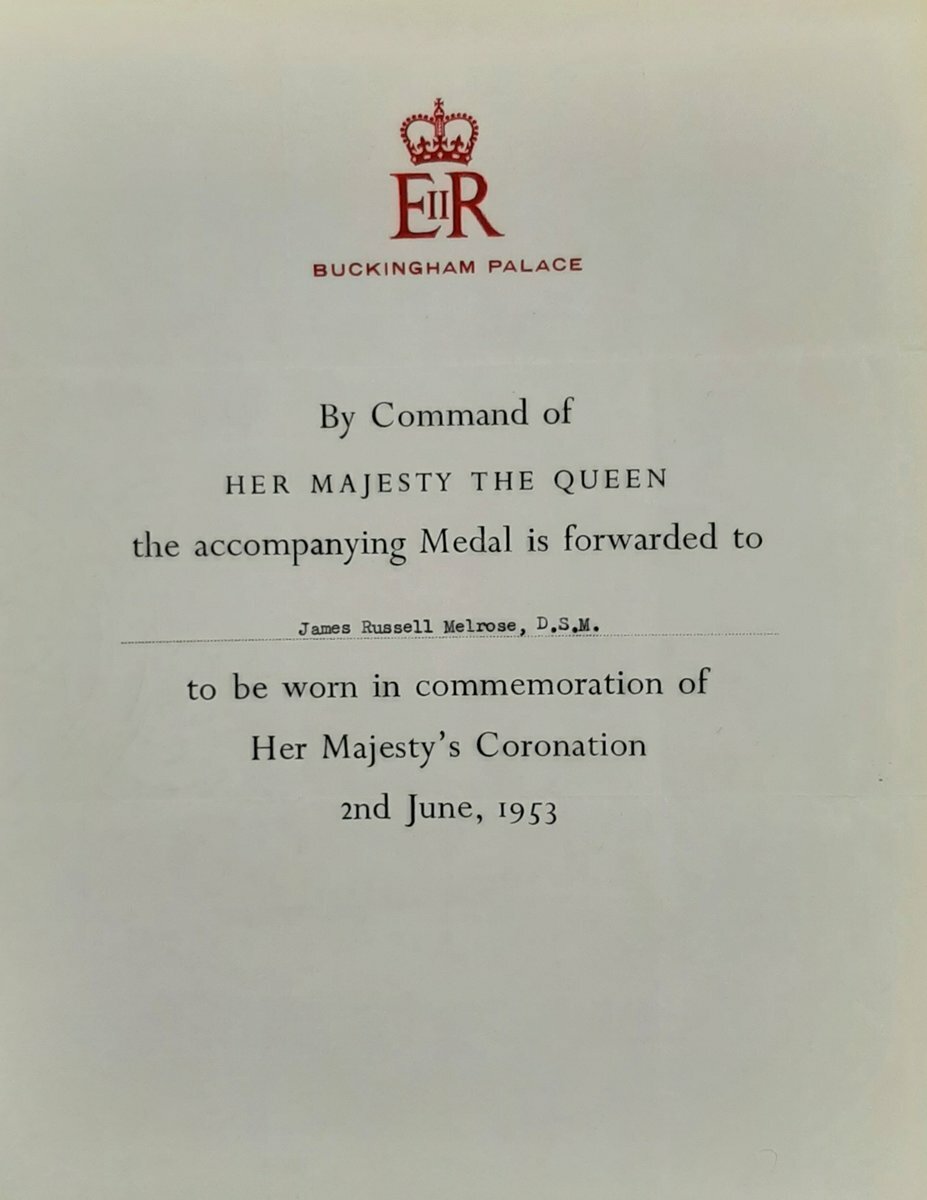
Returning to Malta in January 1944 she was posted to provide support for shipping during Operation Shingle, the Allied invasion of Italy at Anzio. During these operations her flotilla forced U-450 to surface and scuttle, this marked the high point of her service in the Mediterranean. She was posted back to Home Waters in May 1944 supporting the Allied landings in Normandy and the following up operations. Melrose was posted ashore on 12 August 1945 and was released to the reserves on 14 October 1945, sold together with copied research and the recipient's original Admiralty Telegram congratulating him on the award of the D.S.M. as well as the certificate of issue for the Coronation medal.
Subject to 20% VAT on Buyer’s Premium. For more information please view Terms and Conditions for Buyers.
Estimate
Starting price
£800

Watch, listen and bid as if you were in the room. Now available for auctions worldwide.
Click here to bid live
An exclusive and confidential service for the discerning collector or vendor.
View the Gallery
Download every Spink catalogue on your iPad, iPod or iPhone using free Spink app.
Download From iTunes© 2026 Spink & Son. All rights reserved.