
Auction: 25113 - Orders, Decorations and Medals - e-Auction
Lot: 565
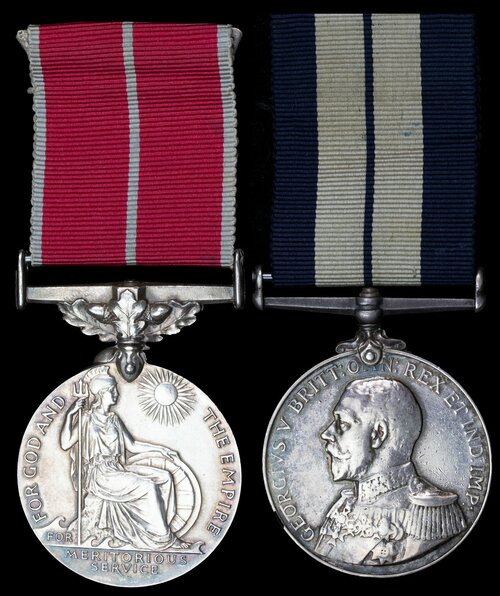
A notable and well-documented Great War D.S.M., Second World War B.E.M. pair awarded to Chief Petty Officer Writer W. C. Bond, later Lieutenant, Royal Navy, who was decorated for his gallantry in the 'Nelsonian duel' between the armed merchant cruiser Alcantara and the German raider S.M.S. Greif in February 1916
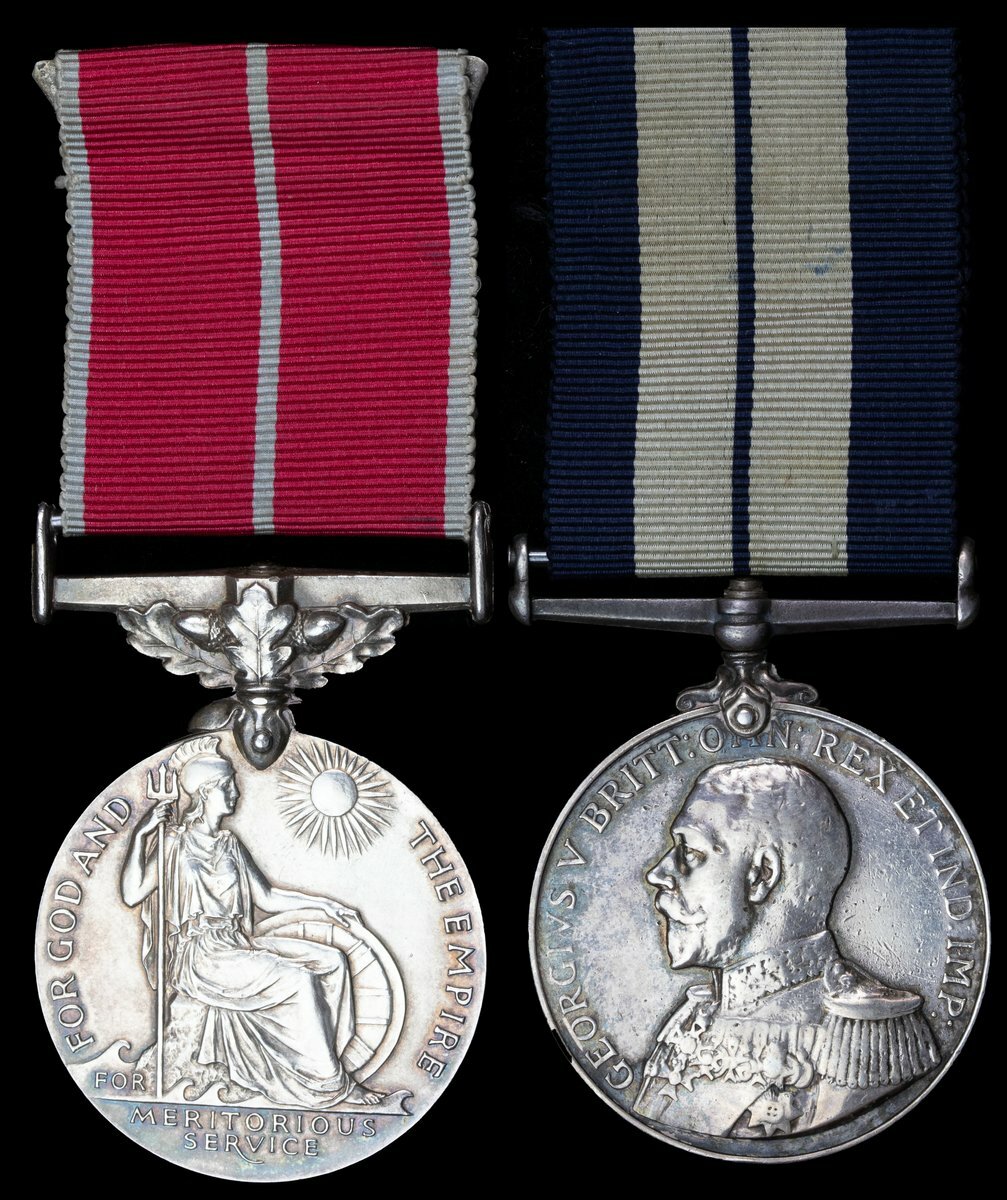
Distinguished Service Medal, G.V.R. (M. 10262 W. C. F. Bond, 3rd Wr., H.M.S. Alcantara, 29 Feb. 1916); British Empire Medal, Military Division, G.VI.R. (C.P.O. Wr. William C. Bond, D.S.M., P/MX. 5371), the first with officially corrected rate, contact marks and polished, thus good fine, the second extremely fine (2)
D.S.M. London Gazette 22 June 1916.
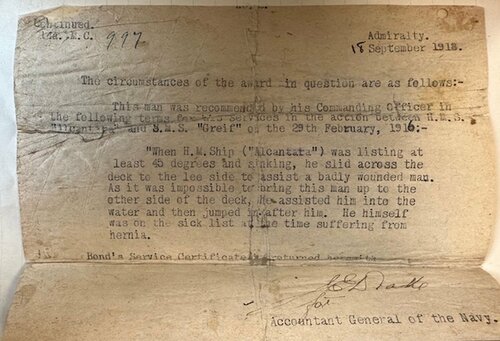
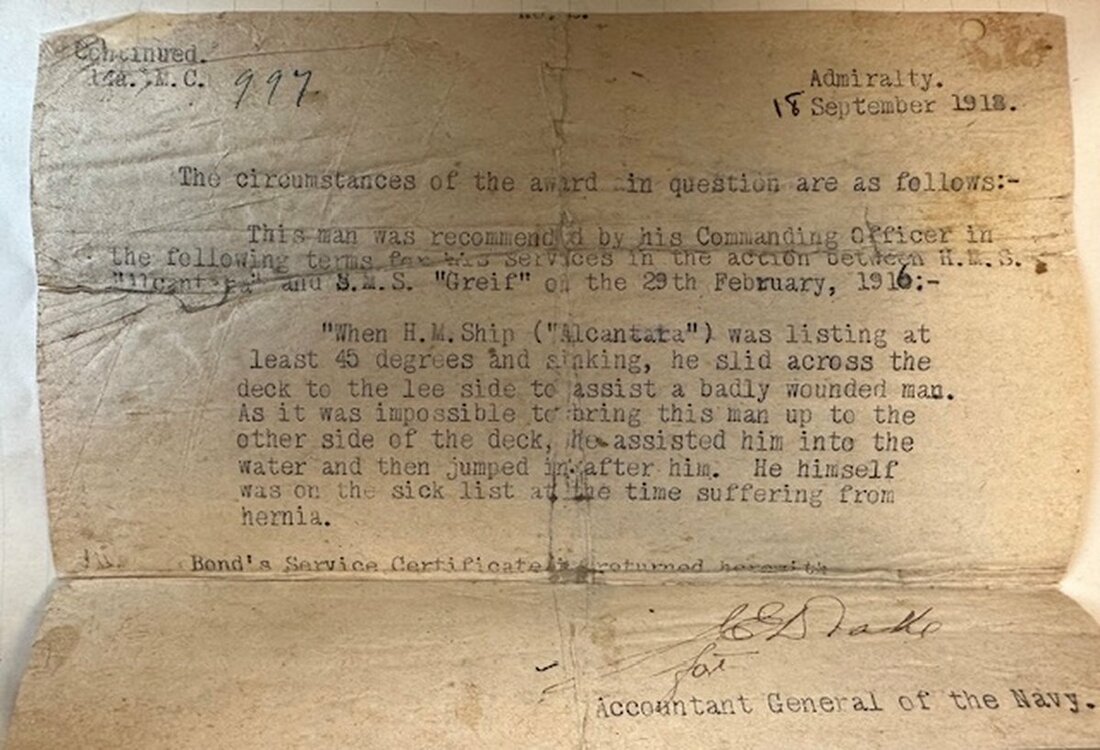
The original recommendation states:
'H.M.S. Alcantara action with the S.M.S. Greif on 29 February 1916:
When H.M. ship was listing at 45 degrees and sinking, he slid across the deck to the lee side to assist a badly wounded man. As it was impossible to bring this man up to the other side of the deck, he assisted him into the water and then jumped in after him. He himself was on the sick list at the time suffering from a hernia.'
B.E.M. London Gazette 11 July 1940:
'In recognition of services in the war.'
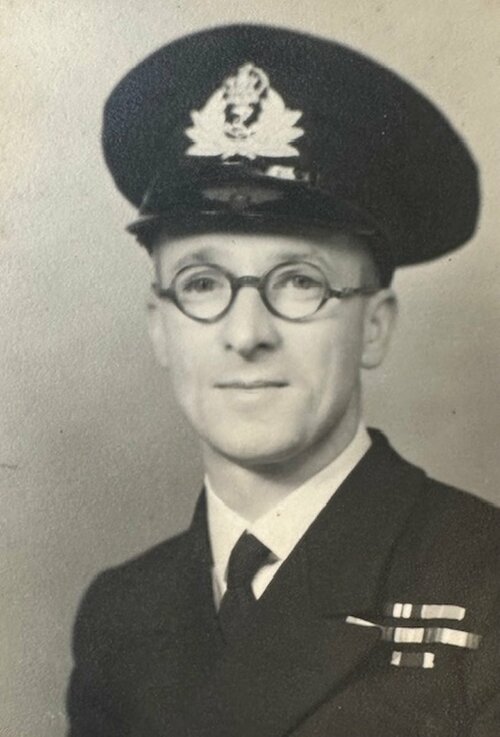
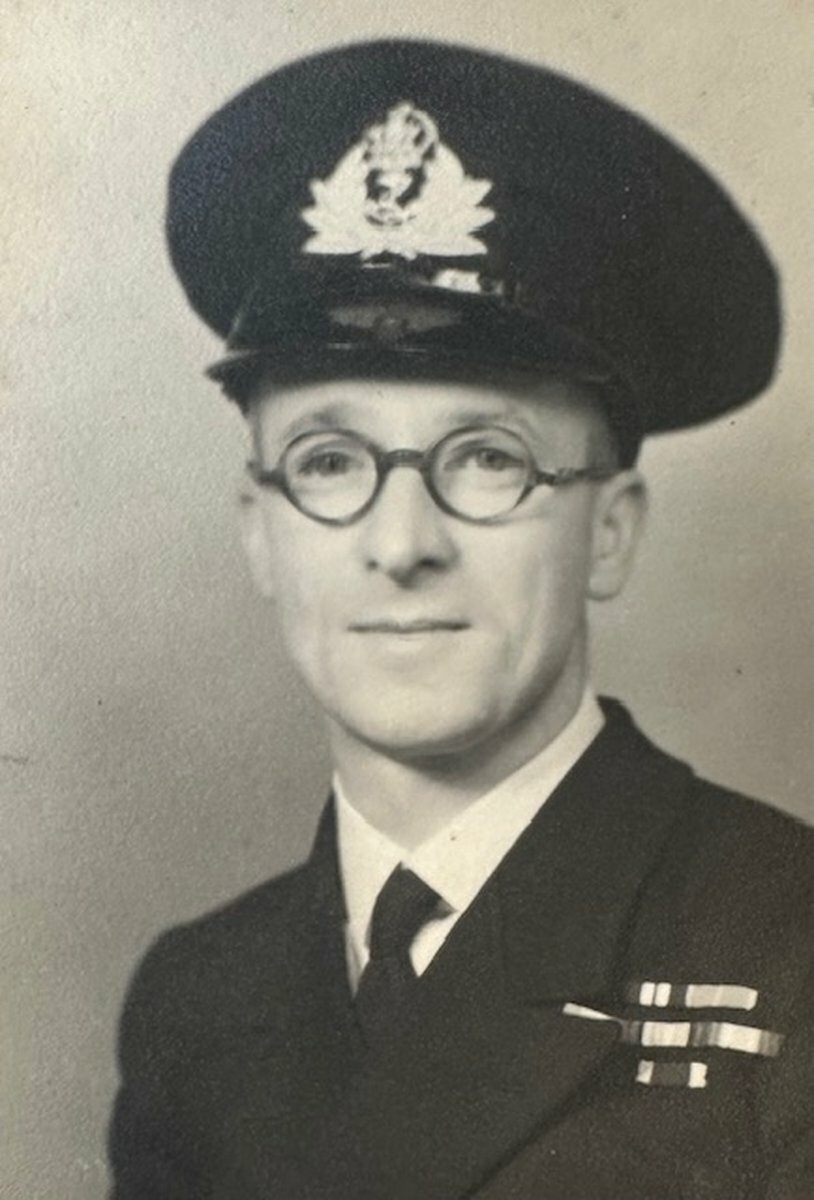
William Charles Francis Bond was born in Portsmouth on 7 September 1896 and entered the Royal Navy as a Writer 3rd Class in November 1914, direct from his job in the Caledonian Railway.
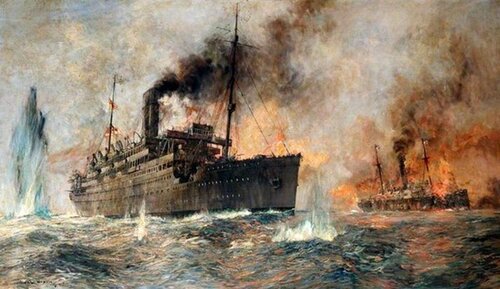
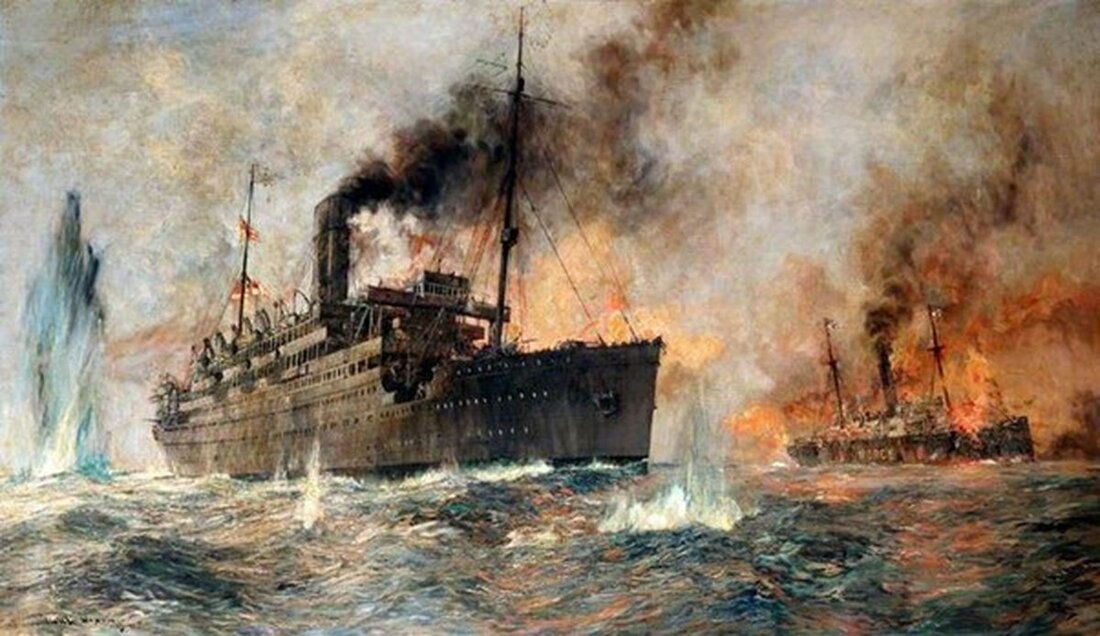
He subsequently served in the armed merchant cruiser H.M.S. Alcantara from April 1915 until her loss on 29 February 1916, following a hotly contested action with the enemy raider Greif, 'an action which savoured of the days of Nelson, the two ships being engaged at point blank range': both were sunk.
At about midday on 28 February 1916, in a position of 60 miles E. of the North of the Shetlands, the Alcantara was due to rendezvous with her relief ship, the Andes, when a wireless message instructed her to remain thereabouts and keep a sharp lookout for a suspicious steamship coming out of the Skagerrak. But it was not until about 8.45 a.m. on the following morning that Captain Wardle spotted smoke on the horizon on his port beam. During the course of making passage to this unidentified steamship, he received a wireless warning from the Andes that this was in all probability the vessel he was seeking, so Wardle signalled to the latter to stop, and fired two rounds of blank ammunition. By this stage the two ships had approached to within 1,000 yards of each other, the Alcantara coming up astern and lowering a boarding boat. At that moment, however, the "stranger" - which had Norwegian colours painted on her side and the name Rena-Tonsberg - dropped her bulwarks and ran out her guns. She was, in fact, the enemy raider Greif. The point-blank nature of the ensuing 20-minute duel is best summarised in Deeds That Thrill the Empire:
'From the very first the British gunners got home on the enemy. His bridge was carried away at the first broadside, and then, systematically, our guns searched yard by yard along the upper works of the enemy, seeking out the wireless room from which were emanating the meaningless jargons that "jammed" the Alcantara's wireless. This had been set to work at once to call up assistance - a proper fighting precaution in any event, but doubly so in this case, seeing that it was quickly apparent the Greif carried considerably heavier ordnance than her own. Before long the enemy's wireless was smashed, and our guns promptly turned themselves upon the hull and water-line of their opponent. In a few minutes the Greif had a great fire blazing aft; a few more, and she began to settle down by the stern; and as the Alcantara's guns methodically and relentlessly searched her from stem to stern her return fire grew more and more feeble until, after about fifteen minutes' fighting, it died away almost entirely. On paper, judging by the difference between the armaments, the Alcantara ought to have been blown out of the water by this time; but, although she was hit frequently, the actual damage she sustained was almost negligible. The Greif was already a beaten and doomed craft when other vessels came up in answer to Alcantara's wireless. The first to arrive was the Andes, Captain George B. W. Young (another converted unit of the Royal Mail Steam Packet Line), and a few rounds from her apparently completed the enemy's discomfort. Not long after, a "pukka" cruiser appeared on the scene; but it is reported that, seeing the Alcantara had already made a hopeless mess of her opponent, this cruiser clicked out the signal "Your Bird" and went about her other business!
But the fight was not yet over. The Greif had again begun to blaze away with the one or two guns that remained intact when there happened one of those misfortunes that are apt to occur to the most efficiently handled ships. An unlucky shot carried away the Alcantara's steering-gear, and her captain was immediately robbed of the weapon upon which he had chiefly depended for the destruction of his enemy - his seamanship. The Alcantara, though nearly all her guns were intact, became unmanageable, and for the first time in the action she was swung round by the seas into such a position that her full broadside was exposed to the enemy. There had, too, been no half-measures in fitting out the Greif for her work. She carried not only a powerful equipment of guns, but also torpedo tubes, and, although she was fast settling down in the water, she was able to bring them to bear now on a most favourable target - a big ship lying broadside on with disabled steering-gear. The first two torpedoes that were fired missed - in spite of the short range. The third caught the Alcantara squarely.
Whereby it happened that after some twenty minutes of the most fierce and closely contested fighting the naval campaign had seen, the two principal combatants found themselves making headway towards the bottom in company. The Greif was the first to go. It is believed that, like the Moewe, she carried a big cargo of mines to be strewed where they would be most likely to entrap our warships. However that may be, she blew up with a tremendous explosion and went to the bottom, just a few minutes before the mortally injured Alcantara turned over on her side to find a resting place within a few hundred yards of her ... '
The Alcantara's loss amounted to five officers and 69 men, of whom nearly all were killed by the final torpedo, and of the 321 officers and men with which the Greif entered the fight, five officers and 115 men were rescued from the sea and taken prisoners by the British destroyers that came upon the scene.
Awarded the D.S.M. for his part in rescuing a wounded shipmate, Bond next joined the rescue tug and survey ship Seahorse in Portsmouth, in which capacity he served from September 1916 until July 1919.
Having then come ashore 'time expired', he was re-engaged as a Chief Petty Officer Writer (Pensioner) in November 1936, and was serving at the R.N. Barracks, Portsmouth on being awarded the B.E.M. in the summer of 1940. Further details of his career have yet to be released and he died at Gosport, Hampshire in October 1965.
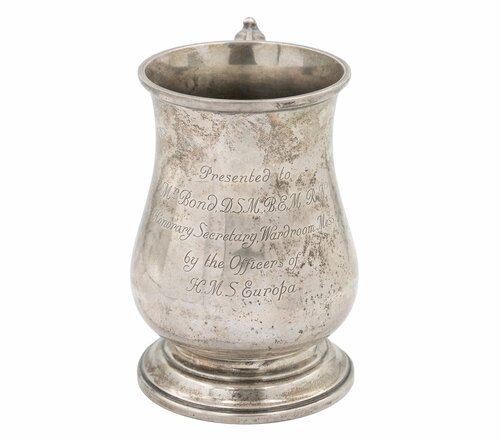
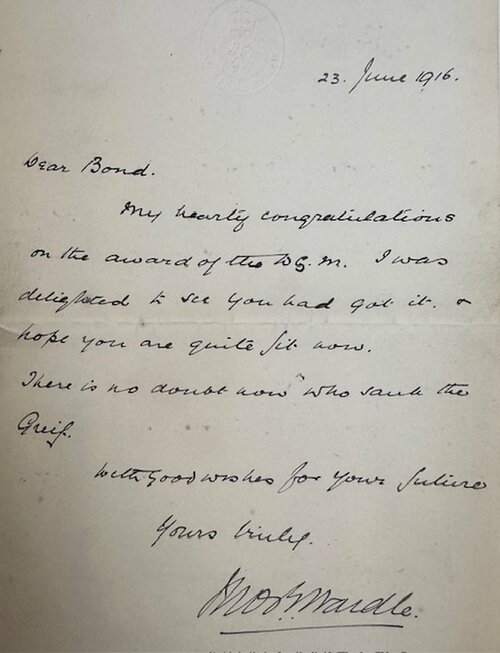
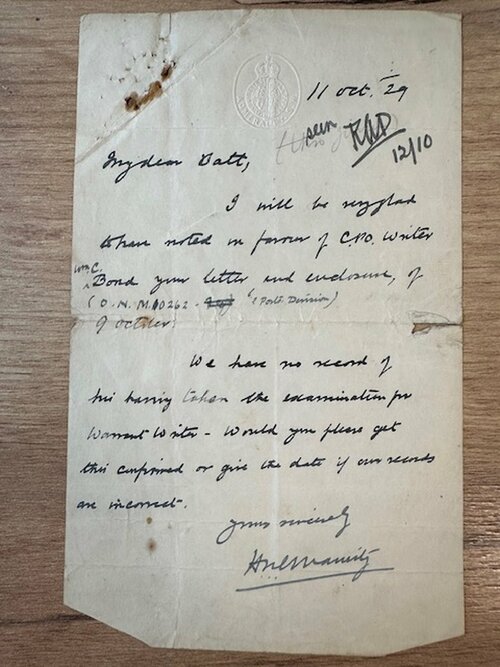
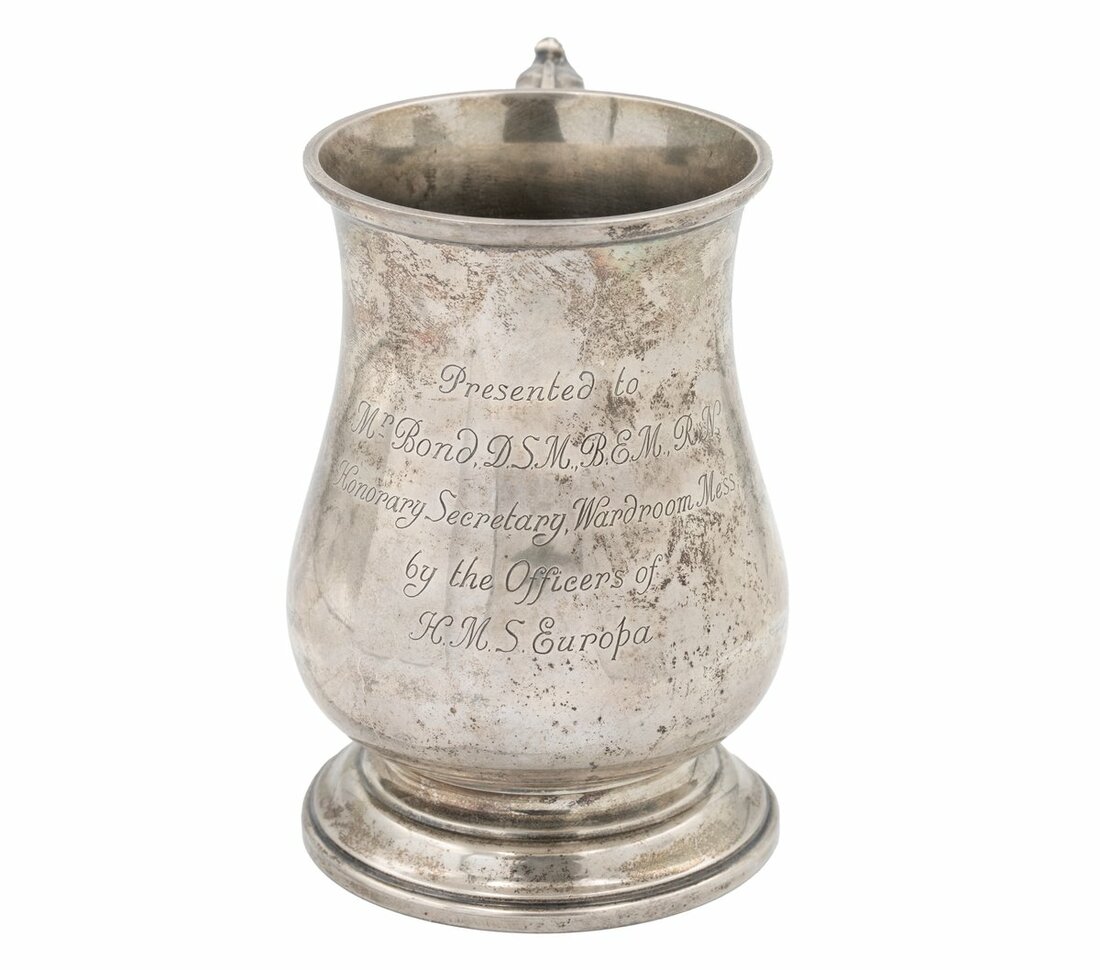
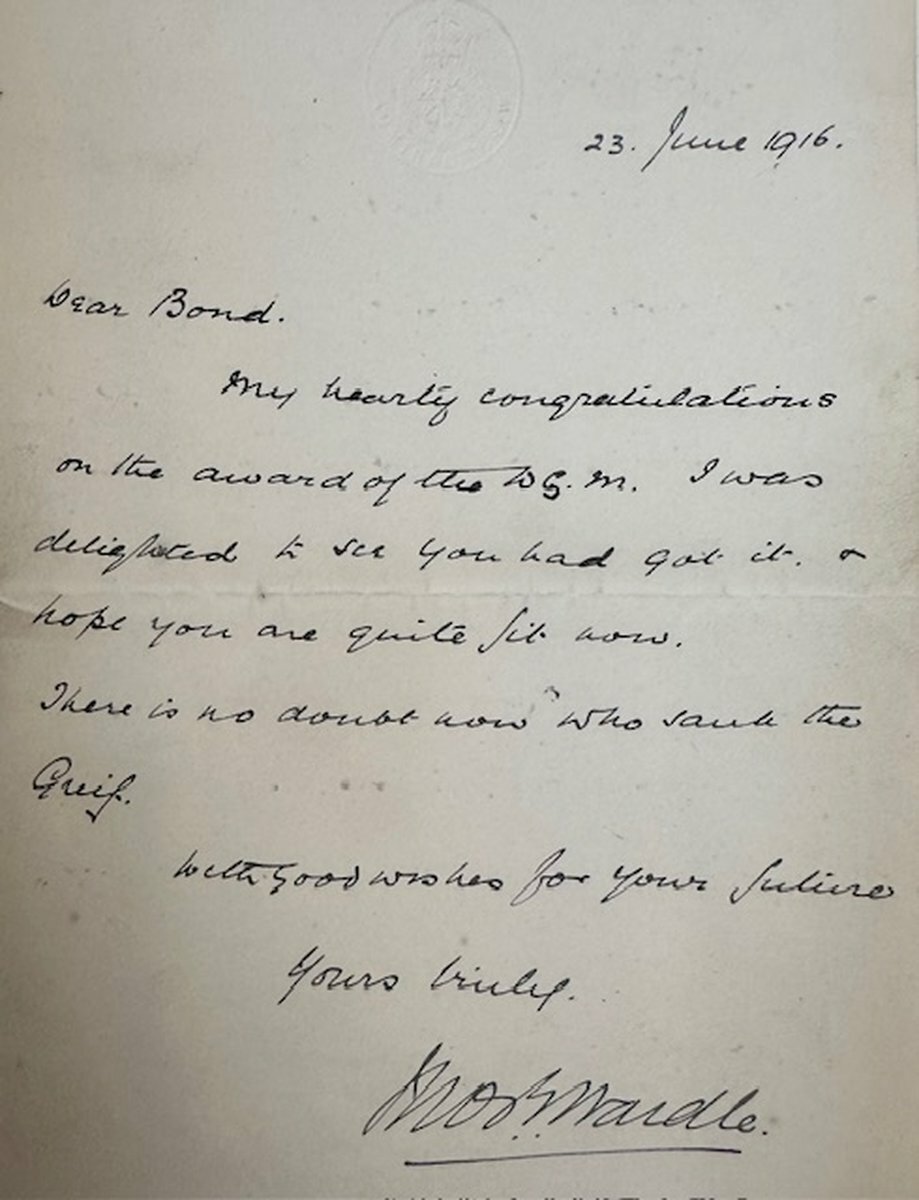
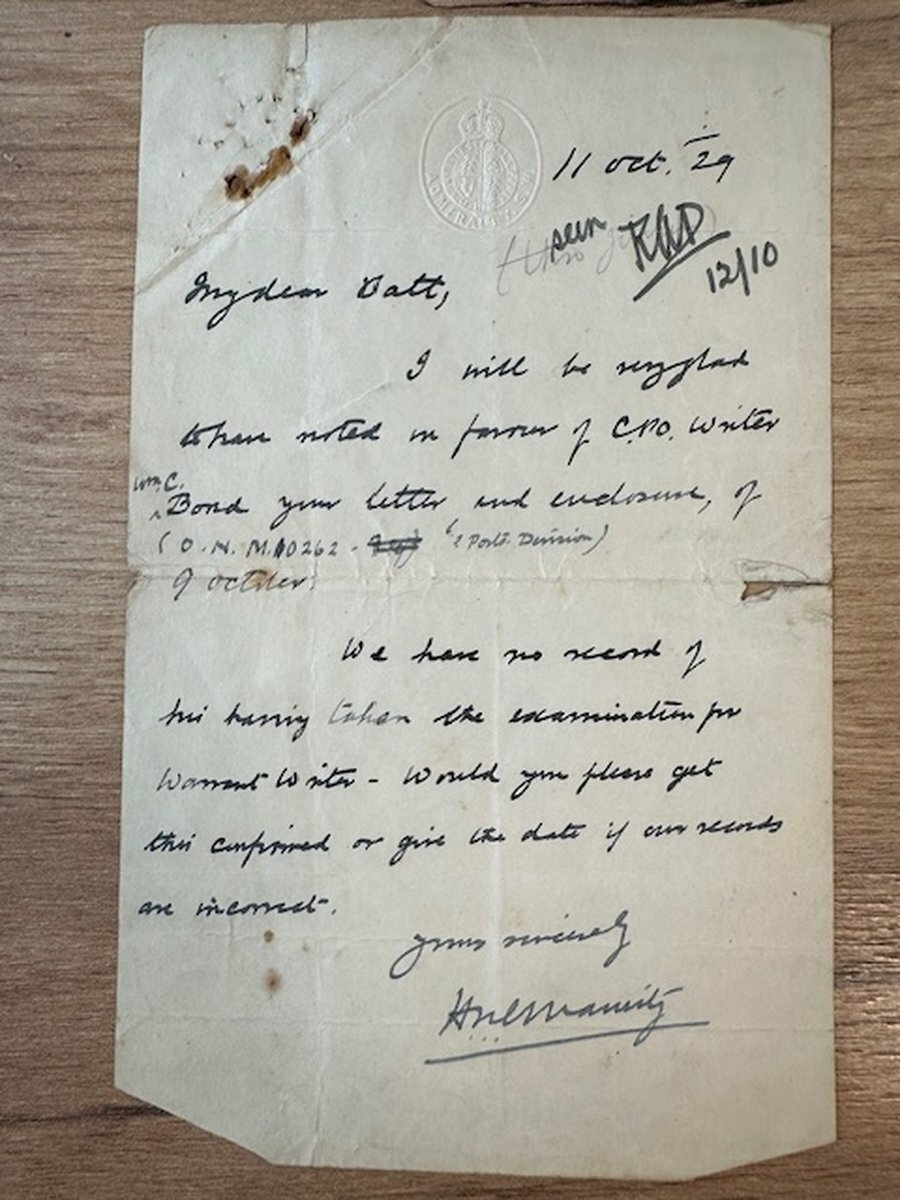
Sold with the recipient's Great War scrap book, the contents largely comprising letters and newspaper cuttings regarding the Alcantara action, the former including examples from Assistant Paymaster James Duffill, R.N.R. ('I was delighted to learn yesterday that you came out of the ordeal safe … hoping you are not the worse for the experience'), another to the captain of the Seahorse, dated 18 September 1918, providing a requested copy of the recommendation for Bond's D.S.M., and several of a congratulatory nature on news of the award, among them examples from Alcantara's C.O., Captain T. E. Wardle, D.S.O., R.N., dated 23 June 1916 ('I was delighted to see that you got it and hope you are quite fit now') and from the Secretaries of the Caledonian Railway and the R.N. Warrant Writers' Club, together with a letter from the man he saved: Private A. A. Reed, R.M.L.I., dated at Haslar Hospital in June 1917, besides presentation engraved tankard and trophy, documents a photographs.
Subject to 20% VAT on Buyer’s Premium. For more information please view Terms and Conditions for Buyers.
Estimate
Starting price
£700
Watch, listen and bid as if you were in the room. Now available for auctions worldwide.
Click here to bid live
An exclusive and confidential service for the discerning collector or vendor.
View the Gallery
Download every Spink catalogue on your iPad, iPod or iPhone using free Spink app.
Download From iTunes© 2026 Spink & Son. All rights reserved.