Auction: 25113 - Orders, Decorations and Medals - e-Auction
Lot: 294
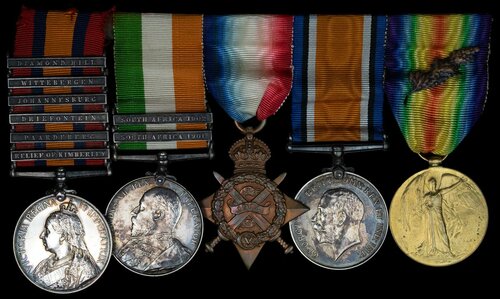
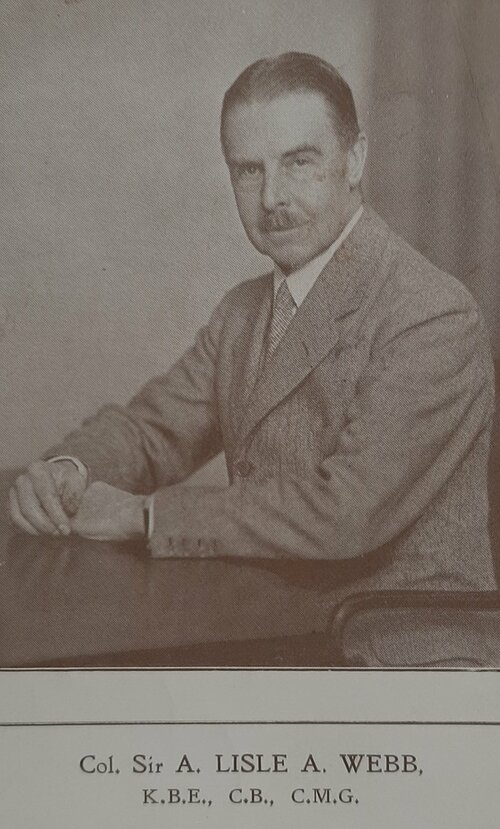
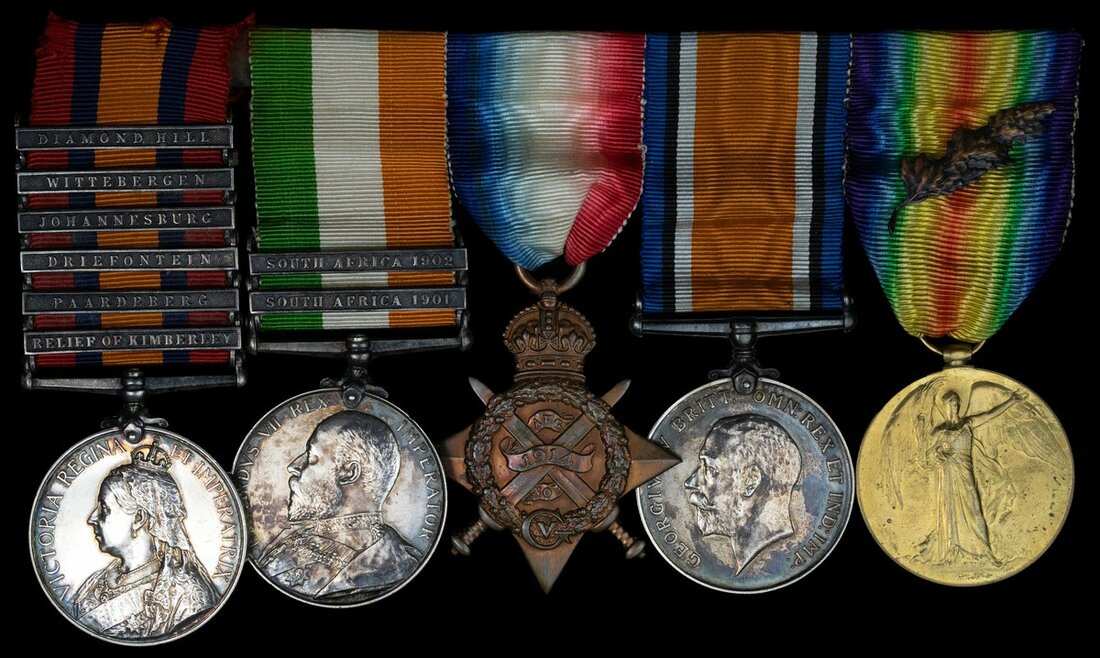
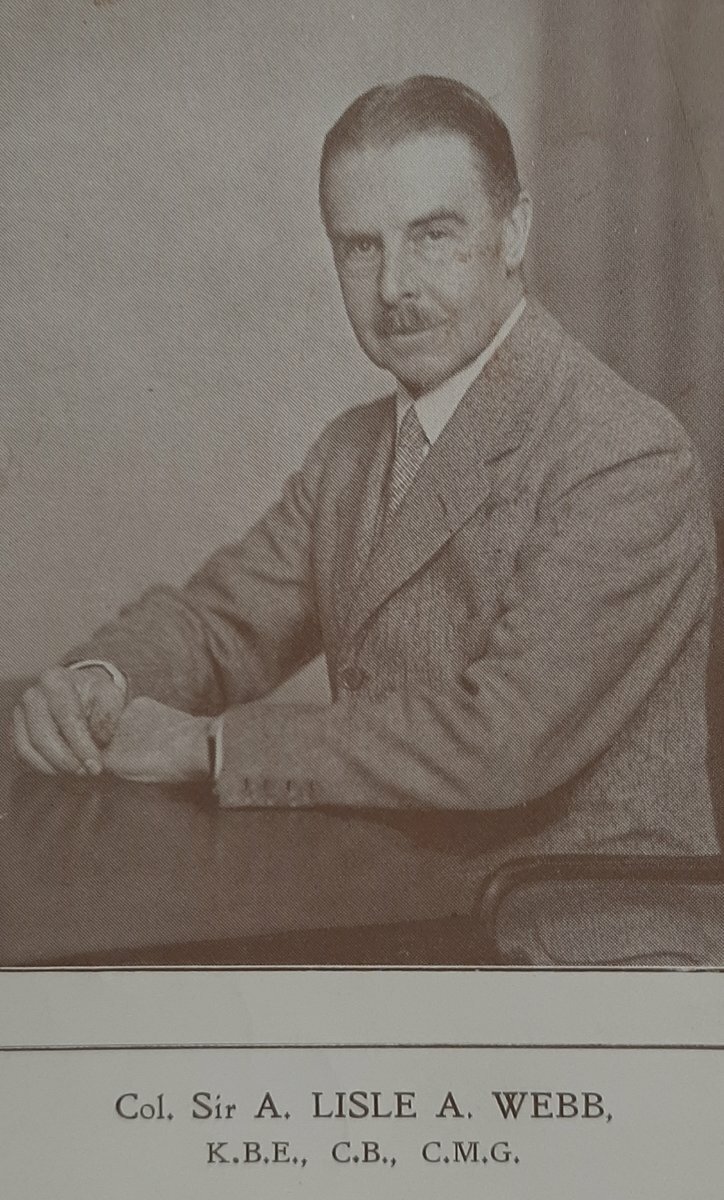
The campaign group of five awarded to Colonel Sir A. L. A. Webb, K.B.E., C.B., C.M.G., K.St.J., Royal Army Medical Corps, who formed No. 1 Sanitary Company in 1914, earning 2 'mentions' throughout the war, it was Webb in the post of Director-General of Medical Services who organised and performed the unenviable task of assessing the pension applications of tens of thousands of returning servicemen
Queen's South Africa 1899-1902, 6 clasps, Relief of Kimberley, Paardeberg, Driefontein, Johannesburg, Wittebergen, Diamond Hill (Capt: A. L. A. Webb. R.A.M.C.); King's South Africa 1901-1902, 2 clasps, South Africa 1901, South Africa 1902 (Capt. A. L. A. Webb. R.A.M.C.); 1914 Star (Major A. L. A. Webb. R.A.M.C.); British War and Victory Medals (Lt. Col. A. L. A. Webb.), with M.I.D. oak leaves, mounted as worn, good very fine (5)
[K.B.E.] London Gazette 20 March 1920.
[C.M.G.] London Gazette 23 June 1915.
[C.B.] London Gazette 3 June 1919.
M.I.D. London Gazette 19 October 1914, 22 June 1915.
Arthur Lisle Ambrose Webb was born at Brixton on 19 July 1871 educated at University College Hospital he qualified as a Surgeon in 1895. Webb travelled in that role to Basutoland where he began to work as District Surgeon under the auspices of the local government. Volunteering for service as the Anglo-Boer War loomed and he was swiftly commissioned Lieutenant with the Royal Army Medical Corps on 27 July 1899.
Joining the advance to relieve Kimberley he saw further action at Paardeberg, Poplar's Grove Karee Siding and Zand River. Moving onto the Transvaal after the capture of Pretoria he saw action at Diamond Hill and Elands River. Further action at Wittebergen and Colesburg River saw Webb advanced Captain on 27 July 1902 a rank he retained upon the end of the war.
Posted to India at the end of hostilities this gave Webb the impetus to focus his studies upon tropical diseases and opened the way to his role in the field of Public Health. These he followed up with a Diploma in Public Health in 1907 and a Diploma in Tropical Medicine and Hygiene in 1908. Webb followed up his studies with a posting to West Africa in 1910 where his newly developed skills were doubtless tested thoroughly. Advanced Major on 27 January 1911 he left West Africa in 1912 and was in Britain on the outbreak of the Great War.
Webb was swiftly tasked with the formation of a new unit, No. 1 Sanitary Section, entering the war with them on 14 August 1914. This role was followed up with an appointment as Deputy Assistant Director of Medical Services of Railheads on 18 August. Webb's appointment was in connection with the growing issue of sanitation at railheads across France as British troops where concentrated in preparation for deployment to the front. He clearly performed well there, earning his first 'mention' in 1914 (London Gazette 19 October 1914 refers).
Since his was a Staff role Webb was advanced to Lieutenant Colonel on 1 March 1915, the position expanded as the war grew, soon encompassing the sanitation of front areas and motor ambulances. Continuing to perform to an extremely high-level Webb was again 'mentioned' (London Gazette 22 June 1915 refers) an accolade to go with his appointment to the C.M.G.
Moving on from France he joined the War Office as Deputy Assistant Director General of Medical Services with responsibility for hospital accommodation, sanitation, and statistics in June 1916. Further appointed Assistant Director General in April 1917 he earned promotion to Brevet Colonel on 3 June 1918 to go with the appointment as Companion of the Order of the Bath.
The end of the war saw Webb seconded to Ministry of Pensions to help the mammoth task of assessing and grading the pension claims of the many wounded ex-servicemen. His proficiency in this role saw him appointed to the role of Director-General of Medical Services which earned him the K.B.E., he eventually retired from the Military on 31 January 1922 continuing his work with the Civil Service.
Webb retired in 1933 but retained his role as Secretary and Treasurer at Queen Mary's Hospital, Roehampton. Leaving the position in 1942 he settled in Balcombe Forest, Sussex where he died on 7 October 1945; sold together with copied research and several original items including:
i)
George V Soldier's Welcome Home Letter.
ii)
Retirement dinner menu, with a portrait of the recipient.
iii)
Two letters written between the Ministry of Pensions and a Mrs Bromley relating to the donation of Webb's sword.
iv)
An original newspaper cutting relating to the recipient's funeral.
Subject to 20% VAT on Buyer’s Premium. For more information please view Terms and Conditions for Buyers.
Estimate
Starting price
£420
Watch, listen and bid as if you were in the room. Now available for auctions worldwide.
Click here to bid live
An exclusive and confidential service for the discerning collector or vendor.
View the Gallery
Download every Spink catalogue on your iPad, iPod or iPhone using free Spink app.
Download From iTunes© 2026 Spink & Son. All rights reserved.