Auction: 25112 - Orders, Decorations and Medals - e-Auction
Lot: 371
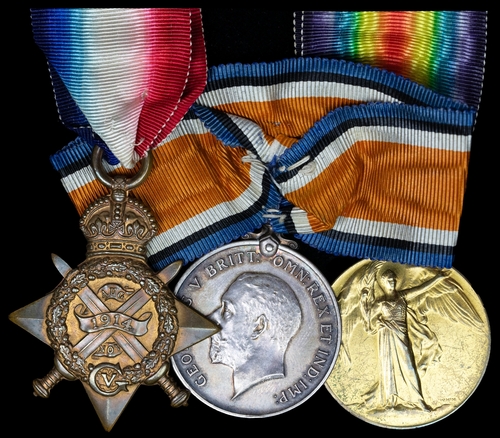
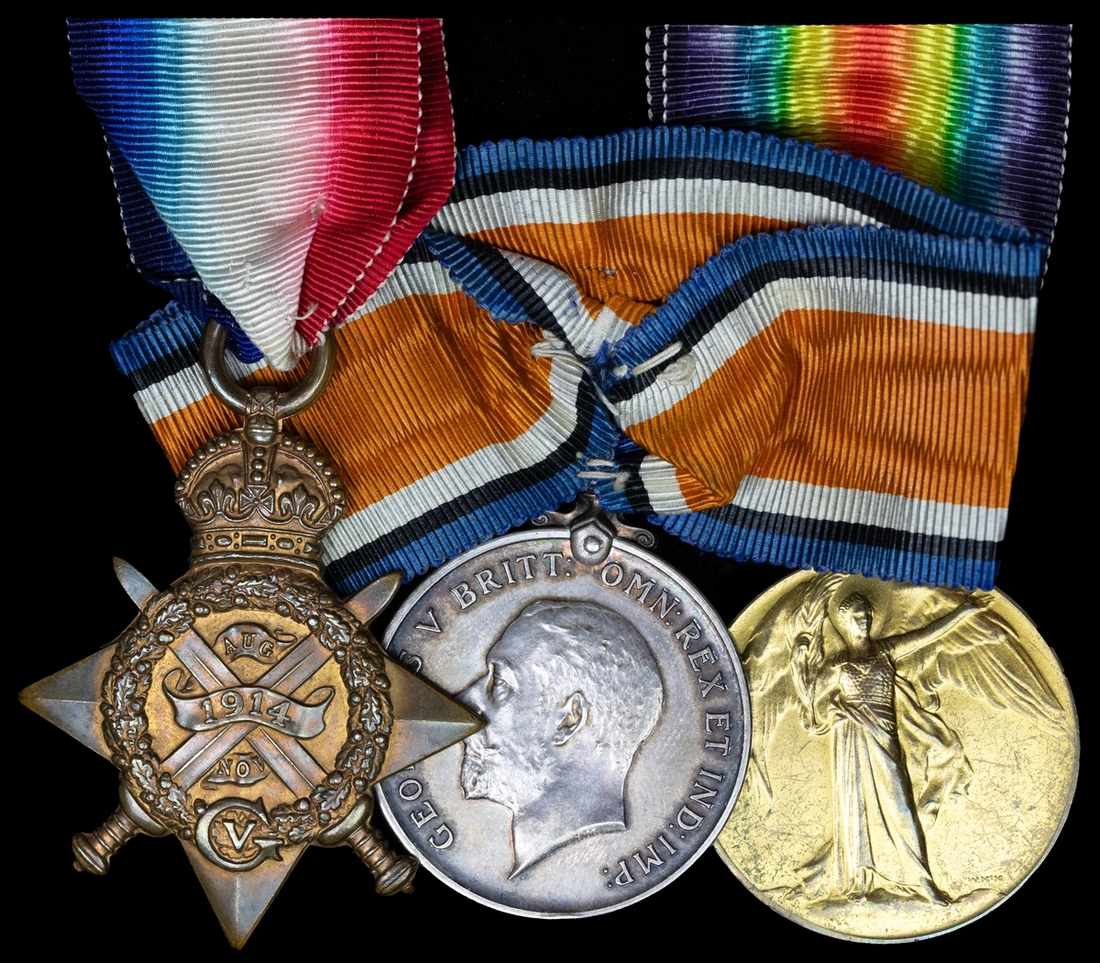
Three: Corporal M. W. Grant, 1/1st Battalion, North Somerset Yeomanry, the unit which inspired 'War Horse'
1914 Star (165231 Pte. M. W. Grant. 1/1 N. Som: Yeo.); British War and Victory Medals (801 Cpl. M. W. Grant. N. Som. Yeo.), good very fine (3)
Marcus William Grant was born on 16 August 1892 at North Wootton, Shepton Mallett, the first of eleven children of William Henry and Ada Grant of Home Farm. By 1911 he was working with his father their dairy farm. He served with the 1/1st Battalion in France from 2 November 1914, when the unit formed part of the 6th Cavalry Brigade, 3rd Cavalry Division.
The unit during the 1914 campaign were the inspiration for Michael Morpurgo's 1982 book War Horse, which was later adapted for Steven Spielberg's 2012 movie of the same name and also on the stage.
Grant would have shared in their actions and would have been thrown into the Second Battle of Ypres in May 1915, when:
'‘Three hundred men of the North Somerset Yeomanry took over the front line on the left of Bellwaarde Lake on the 12th, and accommodated themselves in the shallow holes among the trees which fringed the lake. This position, they were told, they must hold at all costs. The 13th found the men soaked to the skin, for rain had fallen without ceasing for two days. At 1 o'clock in the morning they were warned that the enemy might attack later in the day. There was no protection in the scooped-out holes in which they crouched, and when they asked for sandbags to build up parapets they were told there were none.
At 4 a.m. the enemy bombardment began. Shell after shell burst in the trenches. Men were buried, while others crept out of their shattered ditches and manned the craters the high explosives had made. The dead lay about in all directions. At 5.15 a.m. the shelling ceased, but half-an-hour later the heavens opened once more, and iron and lead rained down with redoubled fury.
The thunder continued long after a feeble dawn had made its appearance. At 7 a.m. the line on the left had fallen back, but the North Somersets with the 3rd Dragoons Guard still clung to their craters and ditches, dazed and shattered though they were. Not one thought of death that was imminent; they knew only that they must hang on at all costs, for such were their orders. About 8.30 the enemy swarmed out of his trenches, confident that few men could live through such a cannonade. Few there were, indeed, but the little groups of Yeomen were not dismayed. German bombers were met with bombs, and the wounded picked up their rifles and fired incessantly. The enemy fell back, and, angered at the repulse, his guns began the shelling once more. At 11 a.m. the bombardment lessened, and the Germans began to concentrate on the left where the line had weakened. Here most of the fighting for the remainder of the day occurred, and, because the North Somersets had held their ground, the Royal Horse Guards were able to restore the line in the afternoons. About midnight the North Somersets were relieved having lost more than half their number.’
Having survived the Great War, he had taken over the family farm and by 1939 was also a wholesale butcher, living there with his wife. He died in March 1985.
Subject to 20% VAT on Buyer’s Premium. For more information please view Terms and Conditions for Buyers.
Sold for
£180
Starting price
£70

Watch, listen and bid as if you were in the room. Now available for auctions worldwide.
Click here to bid live
An exclusive and confidential service for the discerning collector or vendor.
View the Gallery
Download every Spink catalogue on your iPad, iPod or iPhone using free Spink app.
Download From iTunes© 2026 Spink & Son. All rights reserved.