

Auction: 24112 - Orders, Decorations and Medals - e-Auction
Lot: 663
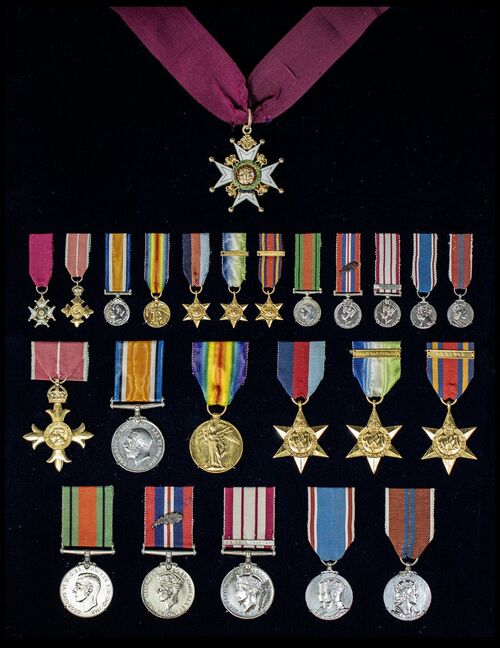
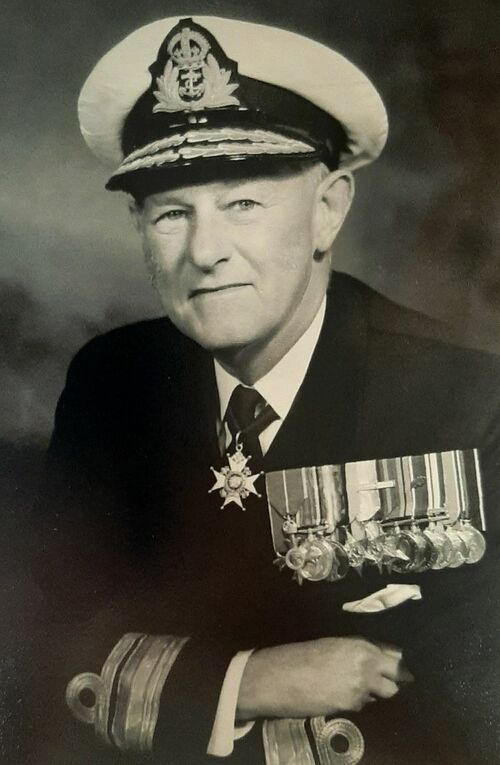
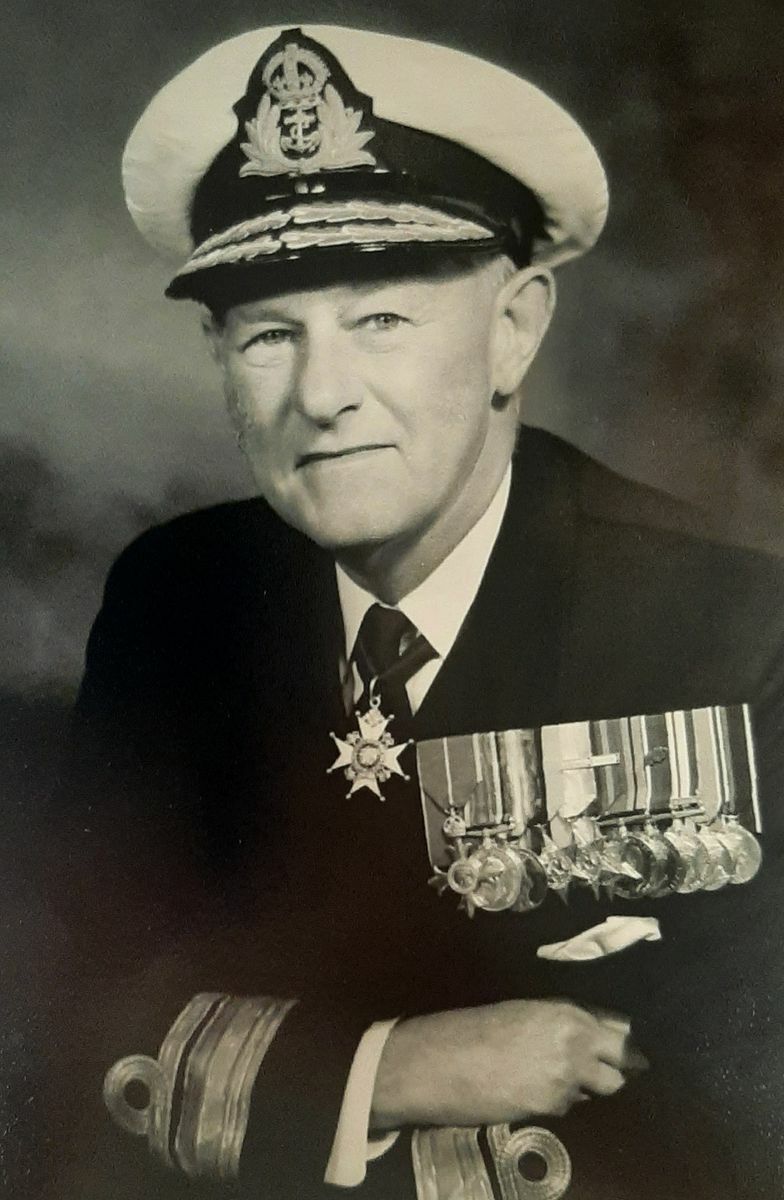
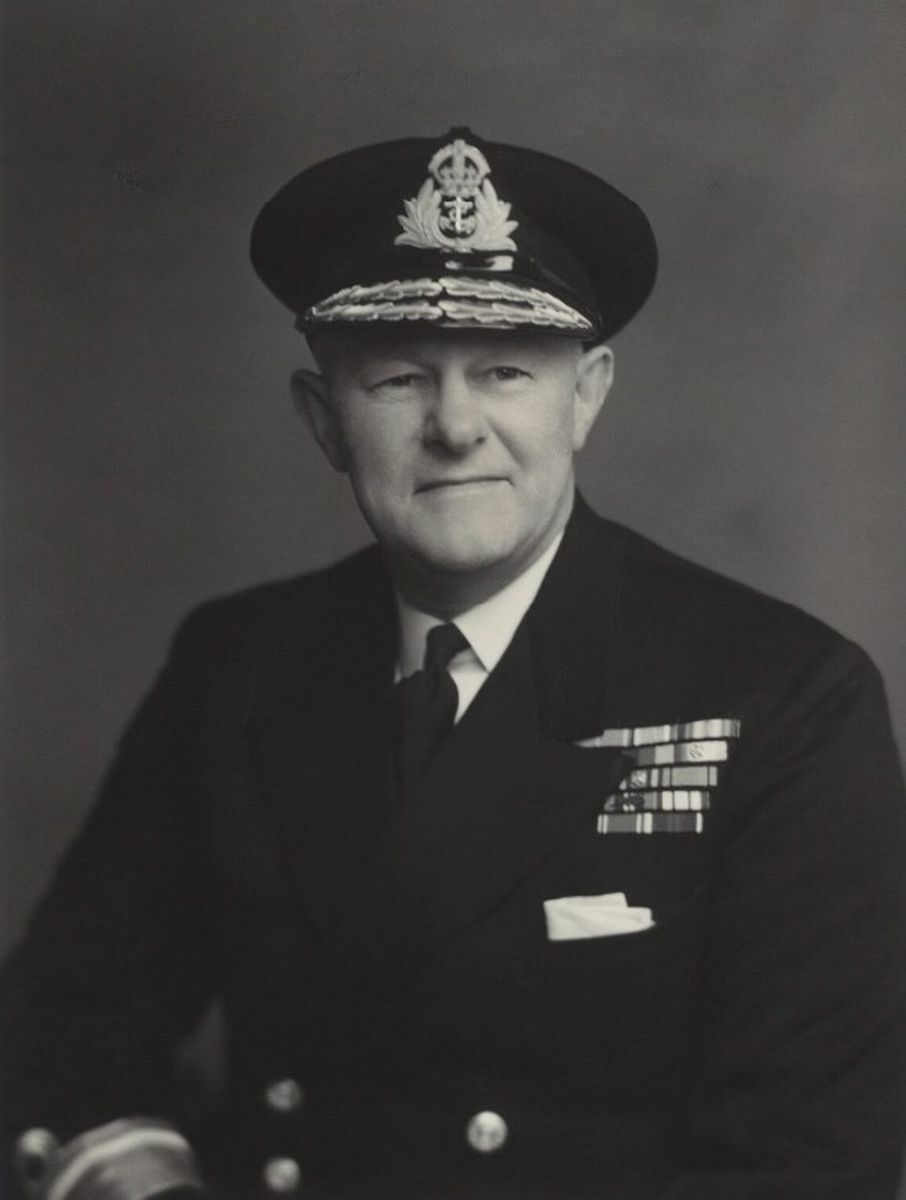
The '1956' C.B., 'Western Approaches 1941' O.B.E. group of twelve awarded to Rear-Admiral J. Dent, Royal Navy, who served in Constantinople during the Greco-Turkish War, on the Western Approaches during 1941 and with the Devonshire from 1943 before being appointed Senior British Officer in Singapore in 1945
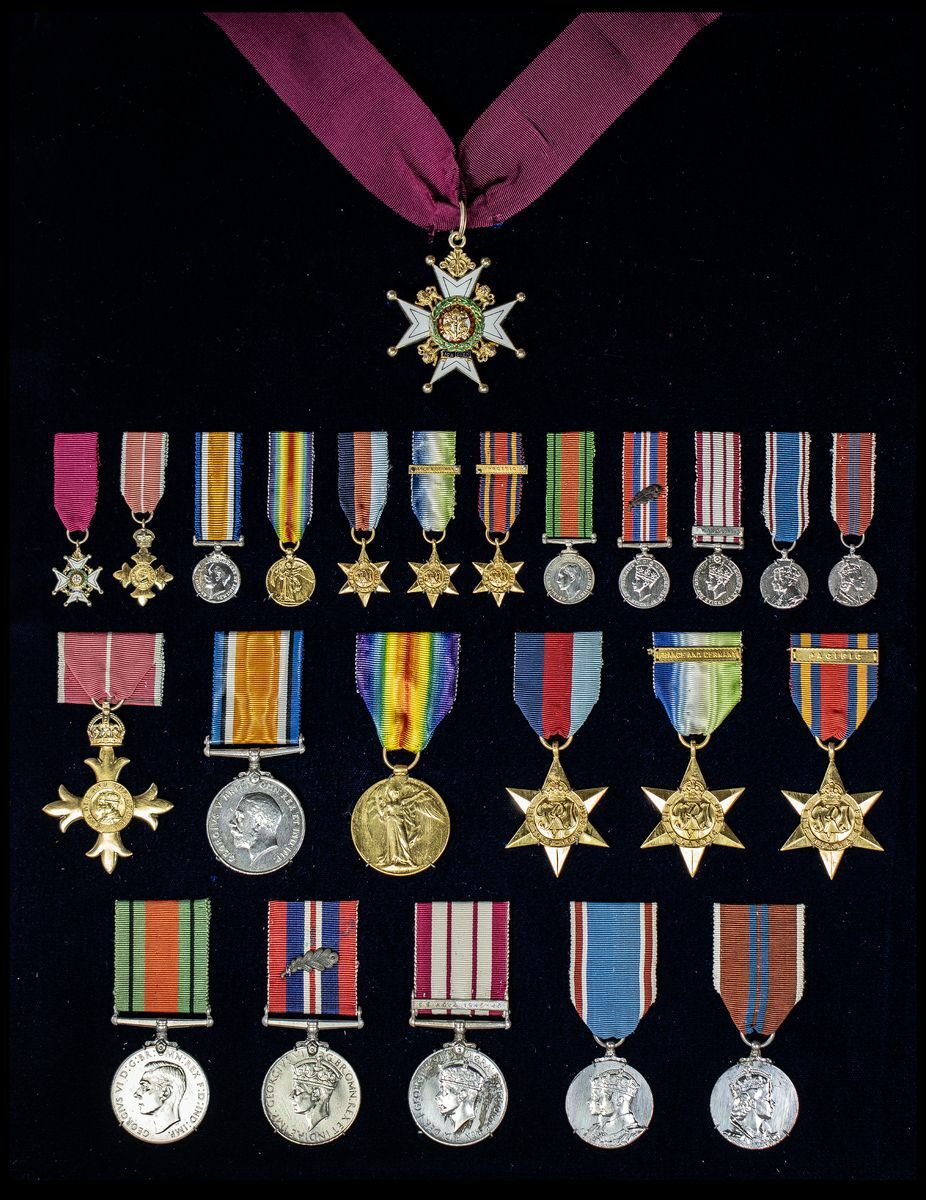
The Most Honourable Order of the Bath, Military Division, Companion's (C.B.) neck Badge, silver-gilt and enamel; The Most Excellent Order of the British Empire, 2nd Type, Military Division, Officer's (O.B.E.) breast Badge, silver-gilt; British War and Victory Medals (Payr. Mid. J. Dent. R.N.); 1939-45 Star; Atlantic Star, with France and Germany clasp; Burma Star, with Pacific clasp; Defence and War Medals 1939-45, with M.I.D. oakleaf; Naval General Service Medal 1915-62, 1 clasp, S. E. Asia 1945-46 (Cdr. (S) J. Dent. O.B.E. .R.N.); Jubilee 1935; Coronation 1953, mounted in a frame by Spink & Son with the corresponding miniature dress medals, very fine (12)
C.B. London Gazette 31 May 1956.
O.B.E. London Gazette 1 July 1941.
John Dent was born at Sedbergh, Yorkshire on 5 August 1899 the son of Thomas and Mary Dent of Bainbridge Road, Sedbergh. Living in Sedbergh on the outbreak of the Great War, Dent enrolled as an Assistant Clerk in the Royal Navy on 15 July 1917, being commissioned as Paymaster Midshipman on 15 July 1918. Posted to the Battlecruiser Princess Royal in 1917, this ship was present at the Second Battle of Heligoland Bight, although she did not enter range herself. Remaining in port in 1918, the ship suffered heavily during the Spanish Flu epidemic, not having enough healthy crew to put to sea.
Present for the surrender of the High Seas Fleet at Scapa Flow in November 1918 Dent was posted away to Constantnople from 1919. He was present there during the Allied Intervention in the Russian Civil War, likely seeing the aftermath of the evacuation of the White Army from the Black Sea. From this position Dent also witnessed the Greco-Turkish War and would likely have been present during the Chanak Crisis.
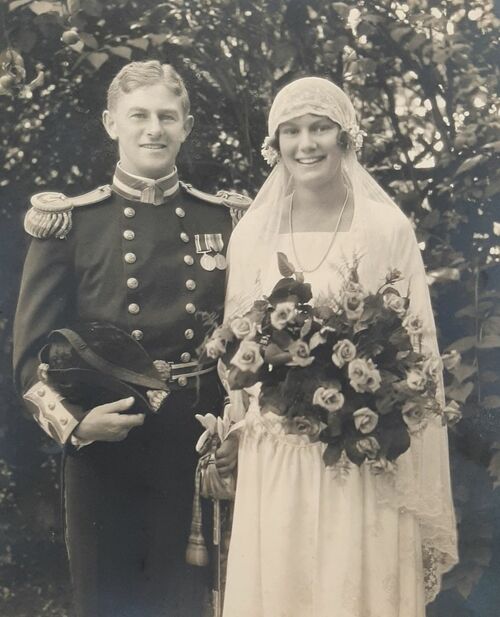
Posted to the Royal Naval College, Dartmouth in 1924 he was married whilst service there on 3 August 1927 to Betty Cayless at Christ Church, Richmond. At the time of his wedding he had been advanced Paymaster Lieutenant.
Whilst at Dartmouth Dent met and began an association with Martin Dunbar-Nasmith V.C., later being appointed as his Secretary when Dunbar-Nasmith became Flag Officer of Submarines in 1929. He continued to follow him throughout his career, including posts as Commander-in-Chief of the East Indies between 1932-34 and Second Sea Lord and Chief of Naval Personnel from 1935. In this role Dent was awarded the Coronation Medal in 1937 joining Dunbar-Nasmith in his new role as Commander-in-Chief at Plymouth the next year in 1939.
Dunbar-Nasmith's role there was also Commander-in-Chief Western Approaches and it was in his position as Secretary in 1940 that Dent was appoint O.B.E. The goal of this command was to ensure the safe arrival of conveys over the Atlantic, it was to play a major role in the Battle of the Atlantic as the war progressed.
Leaving Dunbar-Nasmith in 1940 Dent was appointed Secretary to Vice-Admiral, later Admiral of the Fleet, Sir Bruce Fraser, who was then Vice Controller of the Navy. In 1943 he was posted to the heavy cruiser Devonshire on convoy duty in the Atlantic. She was later to be posted to the Indian Ocean, Australia and then the Far East as part of an effort to protect Allied troop convoys.
Returning to Britian in 1944 Devonshire was to remain in Northern Europe for the rest of the war. She took part in Operations Mascot and Goodwood, the carrier-based attacks against Tirpitz in Kaafjord and later Operation Hardy. The end of the war in Europe saw Devonshire remaining in Scandinavian waters, she escorted the cruisers Prinz Eugen and Nurnberg from Copenhagen back to Wilhelmshaven in May 1945 and was later the ship which returned King Haakon back to Norway.
Promoted to the rank of Commander with the Secretarial branch Dent was posted to Singapore later in 1945. Here he was Senior British Officer at Singapore in the immediate aftermath of the war, during which time the city was under Military Administration. There were a great many internal issues as a result of the Japanese occupation and the ongoing war effort as well as the post-war colonial tensions which were affecting the rest of the world. Dent not only had these to contend with but he was also required to operate in support of the various operations in South East Asia.
Returning to Britian he joined the shore establishment Ceres in 1946, remaining there until 1947. Dent was appointed Assistant Director of Plans at the Admiralty in 1949 before being posted to the Royal Naval Barracks at Portsmouth in 1953. Awarded the coronation medal here he later joined the Staff of the Commander-in-Chief Mediterranean, at the time a duel role which made the incumbent to also NATO Commander-in-Chief of Allied Forces Mediterranean.
Performing well in this role Dent was appointed Chief Staff Officer (Administrative) to the Commander-in-Chief at the Nore, a position he served in between 1954-1958. It was in this position that he was appointed C.B. in the Queen's Birthday Honours list. Dent retired with the rank of Rear-Admiral in August 1958. He retired to Sway, Hampshire where he died on 16 January 1973, he was survived by his son Sir Robin John Dent, K.C.V.O. a distinguished Banker and director of the Florence Nightingale Museum Trust.
Sold together with copied research and photographs.
Subject to 20% VAT on Buyer’s Premium. For more information please view Terms and Conditions for Buyers.
Sold for
£1,200
Starting price
£1200

Watch, listen and bid as if you were in the room. Now available for auctions worldwide.
Click here to bid live
An exclusive and confidential service for the discerning collector or vendor.
View the Gallery
Download every Spink catalogue on your iPad, iPod or iPhone using free Spink app.
Download From iTunes© 2026 Spink & Son. All rights reserved.