
Auction: 23231 - World Banknotes - e-Auction
Lot: 124
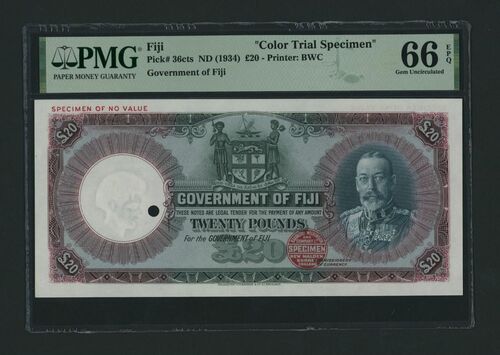
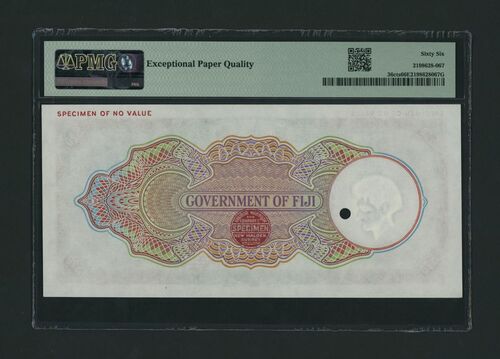
(x) Government of Fiji, [Top Pop] colour trial specimen £20, ND (1934), the islands of Fiji in the South Pacific found themselves at a historical crossroads in the late 19th century. European explorers, enamoured by the beauty of the archipelago, laid the groundwork for what would soon become a British colony. By the early 20th century, Fiji was under the rule of the British Empire.
The Fijian chiefs, recognising the changing tides of power, ceded their islands to Queen Victoria in 1874. Fiji became a vital outpost in the vast British colonial network, with the British presence bringing about administrative changes alongside missionaries, traders, and settlers.
The early 1900s witnessed Fiji shift from its indigenous roots towards a more globally connected society. The sugar industry boomed, driven by European demand. Indentured labourers from India arrived to work on the burgeoning sugar plantations, bringing their own cultural tapestry. This infusion of Indian culture forever altered Fiji's demographic and social fabric, impacting not only the cultural landscape but also the economic dynamics intricately tied to the financial system.
Amidst this period of transition, King George V ascended to the throne and ushered in a new era for the British Empire. His reign coincided with a time when Fiji was grappling with the effects of colonialism and societal transformation. European influence seeped into the daily lives of Fijians, altering traditional practices and introducing new systems of governance, including in the financial sector.
King George V's reign cast a distant but influential shadow over Fiji. His commitment to the economic stability of the Empire resonated even in the financial structures of remote colonial outposts like Fiji. As Fiji became a significant player in global trade, the need for a stable financial system arose. Fijian authorities, influenced by British economic practices, established a banking and currency system. Banknotes, bearing symbols of the empire and featuring the likes of King George V, were issued and became tangible representations of Fiji's economic ties to the British Empire and to the broader currents of global history.
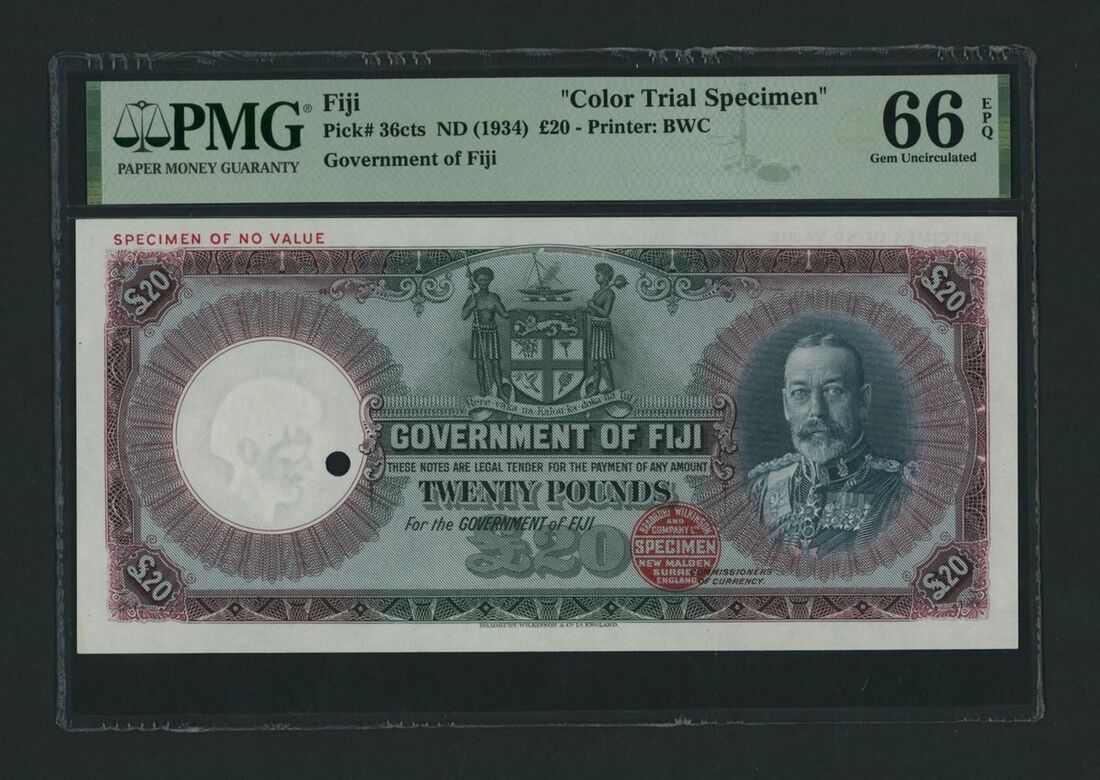
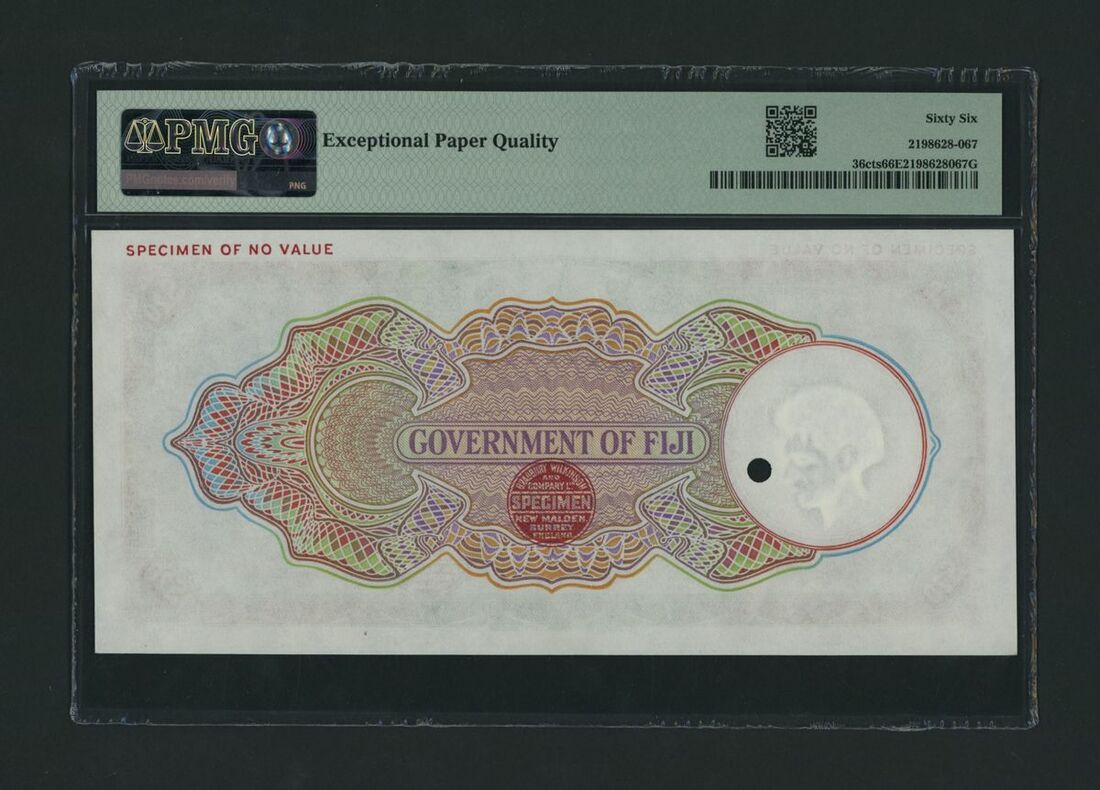
One notable banknote from this era is the Fiji £20 colour trial specimen, ND (1934), printed by Bradbury, Wilkinson & Company. This specific banknote, lacking both signatures and a serial number, is graded by PMG as 66 EPQ Gem Uncirculated and is currently Top Pop, signifying it as the finest known example graded by PMG and the best available on the market
(Pick 36cts, BNB 312t), in PMG holder 66 EPQ Gem Uncirculated, rare
Subject to 5% tax on Hammer Price in addition to 20% VAT on Buyer’s Premium.
Sold for
£1,800
Starting price
£2100

Watch, listen and bid as if you were in the room. Now available for auctions worldwide.
Click here to bid live
An exclusive and confidential service for the discerning collector or vendor.
View the Gallery
Download every Spink catalogue on your iPad, iPod or iPhone using free Spink app.
Download From iTunes© 2026 Spink & Son. All rights reserved.