Auction: 11008 - Ancient, British & Foreign Coins & Com Medals
Lot: 1112
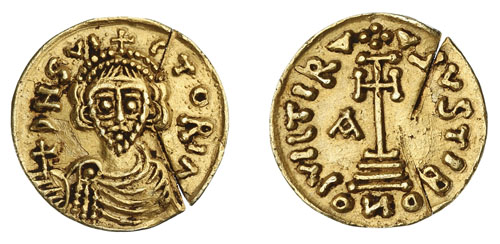
Duchy of Beneventum, Arichis II as Duke, 764-774, Solidus, 3.79g, diademed facing bust holding globus cruciger to left, dnsvi-ctoria, rev. victir-gvsti, cross on steps cross of four pellets above, letter a in field to left, conob below (cf. BMC 4-5, XXII, 10-11; MEC I, class II, cf. 1094-5; CNI, XVIII, pp.151-2, nos. 7-13), test mark on edge, cut marks on flan, most likely an English find, very fine, an important historical and archaeological find from Anglo-Saxon England Estimate £ 800-1,000 provenance Said to have been found by a gardener near Alnwick, Northumberland, c.1960. This coin was found with other small metal items of no value that had been collected by a gardener working for the council and on a farm in the Alnwick area of Northumberland. On his death this coin came to light and was examined by a specialist from the Portable Antiquities scheme. It has since been examined by leading specialists in coinage of this period at the Fitzwilliam Museum in Cambridge and in Italy. This has concluded that an English context for the loss of this coin is feasible and makes this the first example of a Duchy of Beneventum gold coin from England. Finds of gold coins in England from the eighth and ninth century struck by authorities outside the British Isles are not unknown with examples of the Carolingian Solidi and their imitations recorded from several locations. Equally the presence of gold coins from overseas circulating in England in late eighth century England is suggested by the famous imitation Arabic gold Dinar in the name of Offa and a plated gold Dinar found allegedly recently in Yorkshire. Contact between England and Italy in the seventh-ninth centuries is noted in Bede´ s Historia Eccelesiastica, the Anglo-Saxon Chronicle and other sources with St Willibald (d.787) known to have spent time at Beneventum. However what sets this coin apart from other Duchy of Beneventum gold coins are the two cut marks. The cutting of gold coins and other precious metal objects either to test the metal or to divide into fractions, known as hacking, is a practice associated in the seventh-tenth centuries with North Sea trade area. The most well known examples being from the early tenth century Cuerdale hoard and coins found in Viking contexts at Torksey in Lincolnshire and Birka in Denmark. The cutting of coins may predate the Viking invasions with examples of cut Thyrmsas known from the seventh-eighth centuries. A small number of Duchy of Beneventum coins have been found outside Italy but none as far north as this example. No other example of a ´hacked´ coin from this series has been recorded before or an example from Northern Europe. On balance it is quite possible that this coin reached England through trade and was subsequently lost in Northumbria.
Sold for
£1,800

Watch, listen and bid as if you were in the room. Now available for auctions worldwide.
Click here to bid live
An exclusive and confidential service for the discerning collector or vendor.
View the Gallery
Download every Spink catalogue on your iPad, iPod or iPhone using free Spink app.
Download From iTunes© 2026 Spink & Son. All rights reserved.